 Eastern
 Ancient
 Heraclitus
 Socrates
 Plato Greek
 Aristotle
 Aurelius
 Spinoza
 Leibniz
 Berkeley
 Hume
Hume Kant
Kant Nietzsche
 Political
 Educational
 Philosophy
 Mind
Mind Postmodernism
 Simple
 Metaphysics
 Maths
Maths Einstein
 Quantum
 Cosmology
 Philosophy
 Theology
 Evolution
 Health
 Education
 Politics
The Dynamic Unity of Reality
Philosophy Physics Metaphysics Articles on Truth and Reality
by Philosopher of Science, Theoretical Physics, Metaphysics Geoff Haselhurst
Hello,
This is a page where I am adding links to the most important articles on
this website (also see links on the side of every page). For a quick summary
you can mouse over images and links for alt. text. Hope you find it interesting
- we think it is important as it provides a very simple, sensible and obvious
description of physical reality.
Sincerely,
Geoff Haselhurst
Metaphysics & Physical Reality
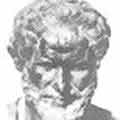

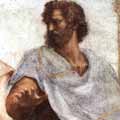
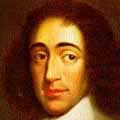
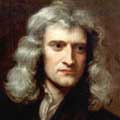
 (Bradley,
1846-1924) We may agree, perhaps, to understand by Metaphysics an attempt to
know reality as against mere appearance, or the study of first principles or
ultimate truths, or again the effort to comprehend the universe, not simply
piecemeal or by fragments, but somehow as a whole.
(Bradley,
1846-1924) We may agree, perhaps, to understand by Metaphysics an attempt to
know reality as against mere appearance, or the study of first principles or
ultimate truths, or again the effort to comprehend the universe, not simply
piecemeal or by fragments, but somehow as a whole.
Drop a ball. Notice that you do not see any obvious connection between the
ball and the earth - yet they are obviously connected because we see the effect
of this connection, the ball moves (accelerates) towards the earth. The same
argument applies to the Earth orbiting the sun, an electron in an atom, how
we can see stars across the universe.
We give these connections names, e.g. light and gravity, but no one knew what
these hidden causal connections were.
So you see the problem of metaphysics is simple and profound - to solve it
requires true
knowledge of physical reality, such that we could understand this hidden
causal connection that our senses tell us must exist, yet we do not see?
This is known to philosophers as Hume's
Problem of Causation and Necessary Connection, but really it is common
knowledge that dates back to the ancients - the Problem
of the One and the Many.
 It
must certainly be allowed, that nature has kept us at a great distance from
all her secrets, and has afforded us only the knowledge of a few superficial
qualities of objects; while she conceals from us those powers and principles
on which the influence of those objects entirely depends. (Hume,
1737)
It
must certainly be allowed, that nature has kept us at a great distance from
all her secrets, and has afforded us only the knowledge of a few superficial
qualities of objects; while she conceals from us those powers and principles
on which the influence of those objects entirely depends. (Hume,
1737)
When we look about us towards external objects, and consider the operation of causes, we are never able, in a single instance, to discover any power or necessary connexion; any quality, which binds the effect to the cause, and renders the one an infallible consequence of the other. (Hume, 1737)
 The
first philosophy (Metaphysics) is universal and is exclusively concerned
with primary substance. ... And here we will have the science to
study that which is just as that which is, both in its essence and in the
properties which, just as a thing that is, it has.
The
first philosophy (Metaphysics) is universal and is exclusively concerned
with primary substance. ... And here we will have the science to
study that which is just as that which is, both in its essence and in the
properties which, just as a thing that is, it has.
The entire preoccupation of the physicist is with things that contain within
themselves a principle of movement and rest. And to seek for this is to seek
for the second kind of principle, that from which comes the beginning of the
change.
(Aristotle, Metaphysics, 340BC)
Quantum Physics
(Quantum Theory / Wave Mechanics)
The Wave Structure of Matter (WSM) explains Discrete Energy
States, Particle Wave Duality of Light & Matter & 'apparent' Instant
Action at a Distance (non-locality) of Quantum Mechanics.
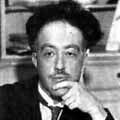
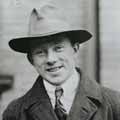
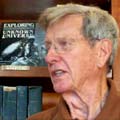
A careful analysis of the process of observation in atomic physics has shown that the subatomic particles have no meaning as isolated entities, but can only be understood as interconnections between the preparation of an experiment and the subsequent measurement. Quantum theory thus reveals a basic oneness of the universe. It shows that we cannot decompose the world into independently existing smallest units. As we penetrate into matter, nature does not show us any isolated ‘basic building blocks’, but rather appears as a complicated web of relations between the various parts of the whole. (Fritjof Capra, The Tao of Physics, On Quantum Theory)
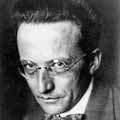
What we observe as material bodies and forces are nothing but shapes and variations in the structure of space. Particles are just schaumkommen (appearances). The world is given to me only once, not one existing and one perceived. Subject and object are only one. The barrier between them cannot be said to have broken down as a result of recent experience in the physical sciences, for this barrier does not exist. (Erwin Schrodinger, on Quantum Theory)
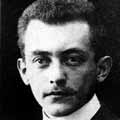
Because Schrodinger believed in real waves, he was never happy with Max Born's statistical / probability interpretation of the waves that became commonly accepted (and was actively promoted by Heisenberg and Bohr) in Quantum Theory / Mechanics.
Let me say at the outset, that in this discourse, I am opposing not a few special statements of quantum mechanics / quantum theory held today (1950s), I am opposing as it were the whole of it, I am opposing its basic views that have been shaped 25 years ago, when Max Born put forward his probability interpretation, which was accepted by almost everybody. (Schrödinger E, The Interpretation of Quantum Mechanics. Ox Bow Press, Woodbridge, CN, 1995)
I don't like it, and I'm sorry I ever had anything to do with it. (Erwin Schrodinger talking about quantum theory.)
The notion that all these fragments is separately existent is
evidently an illusion, and this illusion cannot do other than lead to endless
conflict and confusion. Indeed, the attempt to live according to the notion
that the fragments are really separate is, in essence, what has led to the
growing series of extremely urgent crises that is confronting us today. Thus,
as is now well known, this way of life has brought about pollution, destruction
of the balance of nature, over-population, world-wide economic and political
disorder and the creation of an overall environment that is neither physically
nor mentally healthy for most of the people who live in it. Individually there
has developed a widespread feeling of helplessness and despair, in the face
of what seems to be an overwhelming mass of disparate social forces, going
beyond the control and even the comprehension of the human beings who are caught
up in it.
(David Bohm, Wholeness and the Implicate Order, 1980)
Physics: Albert Einstein's Theory of Relativity
Simplifying the Metaphysics of Einstein's Special and General
Relativity
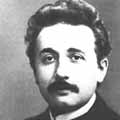
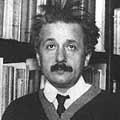
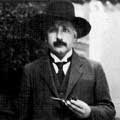
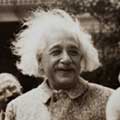
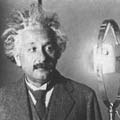
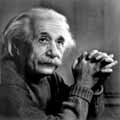
 When
forced to summarize the general theory of relativity in one sentence:
When
forced to summarize the general theory of relativity in one sentence:
Time and space and gravitation have no separate existence from matter.
(Albert Einstein)
 Physical
objects are not in space, but these objects are spatially extended (as
fields). In this way the concept 'empty space' loses
its meaning. ... The field thus becomes an irreducible element of physical
description, irreducible in the same sense as the concept of matter (particles)
in the theory of Newton. ... The physical reality of space is represented
by a field whose components are continuous functions of four independent
variables - the co-ordinates of space and time. Since the theory of general relativity implies the representation of physical reality by a continuous
field, the concept of particles or material points cannot play a fundamental
part, nor can the concept of motion. The particle can only appear as a limited
region in space in which the field strength or the energy density are particularly
high. (Albert Einstein, Metaphysics of Relativity, 1950)
Physical
objects are not in space, but these objects are spatially extended (as
fields). In this way the concept 'empty space' loses
its meaning. ... The field thus becomes an irreducible element of physical
description, irreducible in the same sense as the concept of matter (particles)
in the theory of Newton. ... The physical reality of space is represented
by a field whose components are continuous functions of four independent
variables - the co-ordinates of space and time. Since the theory of general relativity implies the representation of physical reality by a continuous
field, the concept of particles or material points cannot play a fundamental
part, nor can the concept of motion. The particle can only appear as a limited
region in space in which the field strength or the energy density are particularly
high. (Albert Einstein, Metaphysics of Relativity, 1950)
 Physics
constitutes a logical system of thought which is in a state of evolution, whose
basis (principles) cannot be distilled, as it were, from experience by an inductive
method, but can only be arrived at by free invention. The justification (truth
content) of the system rests in the verification of the derived propositions
(a priori/logical truths) by sense experiences (a posteriori/empirical
truths). ... Evolution is proceeding in the direction of increasing simplicity
of the logical basis (principles). .. We must always be ready to change these
notions - that is to say, the axiomatic basis of physics - in order to do justice
to perceived facts in the most perfect way logically. (Albert Einstein,
Physics and Reality, 1936)
Physics
constitutes a logical system of thought which is in a state of evolution, whose
basis (principles) cannot be distilled, as it were, from experience by an inductive
method, but can only be arrived at by free invention. The justification (truth
content) of the system rests in the verification of the derived propositions
(a priori/logical truths) by sense experiences (a posteriori/empirical
truths). ... Evolution is proceeding in the direction of increasing simplicity
of the logical basis (principles). .. We must always be ready to change these
notions - that is to say, the axiomatic basis of physics - in order to do justice
to perceived facts in the most perfect way logically. (Albert Einstein,
Physics and Reality, 1936)
Cosmology
What is the Most Simple Cosmology & Does it Work? How
our Finite Spherical 'Observable Universe' Exists within Infinite Eternal Space

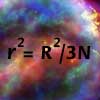
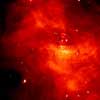
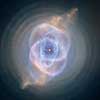
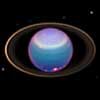
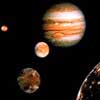
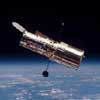
The supreme task of the physicist is to arrive at those universal elementary laws from which the cosmos can be built up by pure deduction. There is no logical path to these laws; only intuition, resting on sympathetic understanding of experience, can reach them. (Albert Einstein, 1918)
Philosophy
On Love of Wisdom from Truth & Reality
.. My purpose therefore is, to try if I can discover what those principles are, which have introduced all that doubtfulness and uncertainty, those absurdities and contradictions into the several sects of philosophy; insomuch that the wisest men have thought our ignorance incurable, conceiving it to arise from the natural dullness and limitation of our faculties. (George Berkeley)
Since philosophy is the art which teaches us how to live, and since children need to learn it as much as we do at other ages, why do we not instruct them in it? ... Oddly, things have now reached such a state that even among men of intelligence philosophy means something fantastical and vain, without value or usefulness, both in opinion and practice. (Michel de Montaigne)
Ignorance more frequently begets confidence than
does knowledge: it is those who know little,
not those who know much, who so positively assert that this or that problem
will never be solved by science.
(Charles Darwin, Introduction to The Descent of Man, 1871)
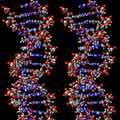
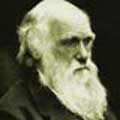
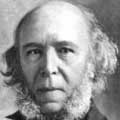
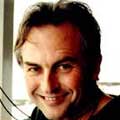
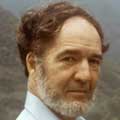
Evolution - Ecology - Nature - Culture - Society
On the Metaphysics / Philosophy of Evolution, Ecology (Ecological
Interconnection of both Life and Matter), Nature & the Importance of Truth
to Human Culture / Society




Theology - Morality - God - World Religions
A Metaphysical Foundation to the Fundamental Morality of
World Religions;'Do Unto Others as You Would Have Done Unto Yourself'


A
human being is part of the whole called by us universe, a part limited in time
and space. We experience ourselves, our thoughts and feelings as something
separate from the rest. A kind of optical delusion of consciousness. This delusion
is a kind of prison for us, restricting us to our personal desires and to affection
for a few persons nearest to us. Our task must be to free ourselves from the
prison by widening our circle of compassion to embrace all living creatures
and the whole of nature in its beauty. The true value of a human being is determined
by the measure and the sense in which they have obtained liberation from the
self. We shall require a substantially new manner of thinking if humanity is
to survive. (Albert Einstein, 1954)
Help Humanity
"You must be the change you wish to see in the world."
(Mohandas Gandhi)
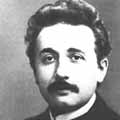 "When forced to summarize the general theory of relativity in one sentence:
Time and space and gravitation have no separate existence from matter. ... Physical objects are not in space, but these objects are spatially extended. In this way the concept 'empty space' loses its meaning. ... The particle can only appear as a limited region in space in which
the field strength or the energy density are particularly high. ...
"When forced to summarize the general theory of relativity in one sentence:
Time and space and gravitation have no separate existence from matter. ... Physical objects are not in space, but these objects are spatially extended. In this way the concept 'empty space' loses its meaning. ... The particle can only appear as a limited region in space in which
the field strength or the energy density are particularly high. ...
The free, unhampered exchange of ideas and scientific conclusions is necessary for the sound development of science, as it is in all spheres
of cultural life. ... We must not conceal from ourselves that no improvement in the present depressing situation is possible without
a severe struggle; for the handful of those who are really determined to do something is minute in comparison with the mass of the lukewarm
and the misguided. ...
Humanity is going to need a substantially new way of thinking if it is to survive!" (Albert Einstein)
 Our world is in great trouble due to human behaviour founded on myths and customs that are causing the destruction of Nature and climate change. We can now deduce the most simple science theory of reality - the wave structure of matter in space. By understanding how we and everything around us are interconnected
in Space we can then deduce solutions to the fundamental problems of human knowledge in physics, philosophy, metaphysics, theology, education, health, evolution and ecology, politics and society.
Our world is in great trouble due to human behaviour founded on myths and customs that are causing the destruction of Nature and climate change. We can now deduce the most simple science theory of reality - the wave structure of matter in space. By understanding how we and everything around us are interconnected
in Space we can then deduce solutions to the fundamental problems of human knowledge in physics, philosophy, metaphysics, theology, education, health, evolution and ecology, politics and society.
This is the profound new way of thinking that Einstein
realised, that we exist as spatially extended structures of the universe - the discrete and separate body an illusion. This simply confirms the
intuitions of the ancient philosophers and mystics.
Given the current censorship in physics / philosophy of science journals (based on the standard model of particle physics / big bang cosmology) the internet is the best hope for getting new knowledge
known to the world. But that depends on you, the people who care about science and society, realise the importance of truth and reality.
It is Easy to Help!
Just click on the Social Network links below, or copy a nice image or quote you like and share it. We have a wonderful collection of knowledge from the greatest minds in human history, so people will appreciate your contributions. In doing this you will help a new generation of scientists see that there is a simple sensible explanation of physical reality - the source of truth and wisdom, the only cure for the madness of man! Thanks! Geoff Haselhurst (Updated September, 2018)
A new scientific truth does not triumph by convincing its opponents and making them see the light, but rather because its opponents eventually die, and a new generation grows up that is familiar with it. (Max Planck, 1920)
| Tweet Follow @philosophytruth | |
| Geoff | |
 |
Connect with Geoff Haselhurst at Facebook
"All that is necessary for evil to succeed is for good people to do nothing."
(Edmund Burke)
"In a time of universal deceit - telling the truth is a revolutionary act."
(George Orwell)
"Hell is Truth Seen Too Late."
(Thomas Hobbes)


Legal Disclaimer and Privacy Policy
We support 'Fair Use' of these pages for Academic & Non Commercial use.
You are welcome to use images and text, but please reference them with a link to relevant web page on this site. Thanks!
