 Acupuncture
 Agriculture
 Alternative
 Aromatherapy
 Ayurvedic
 Chi Kung
 Drugs
Drugs Estrogens
 Exercise
 FengShui
 GMO
GMO Gerber
 Holistic
 Homeopathy
 I Ching
 Iridology
 Herbicides
 Naturopathy
 Nutrition
 Organic
 Positive
 Pranic
 Reiki
Reiki Sunscreen
 Sunshine
 Vaccines
 Vibrational
 Water
Water Yoga
Yoga Simple
 Metaphysics
 Maths
Maths Einstein
 Quantum
 Cosmology
 Philosophy
 Theology
 Evolution
 Health
 Education
 Politics


 + '&media=https://www.spaceandmotion.com/Images/wsm-image.jpg&description=' + encodeURIComponent(document.title.substring(0, 100)))


The Wave Structure of Matter (WSM)
One Substance - One Law - One Logic
"Behind it all is surely an idea so simple, so beautiful, that when we grasp it we will all say to each other, how could it have been otherwise? How could we have been so stupid?" (Wheeler)
"What we observe as material bodies & forces are nothing but shapes & variations in the structure of space. Subject & object are one." (Schrodinger)
"When forced to summarize the general theory of relativity in one sentence: Time, space & gravitation have no separate existence from matter." (Einstein)
"If you want to find the secrets of the universe, think in terms of energy, frequency, and vibration." (Tesla)
Note (March 2026): I have just completed an essay on Evolutionary Utopia that is profoundly important to humanity as we enter the AI singularity where AI are self programming and evolving minds roughly 100 million times faster than human evolution. Read it, input it into AI and discuss it with them, share it. I believe the future of humanity depends upon this.
https://www.spaceandmotion.com/2026/evolutionary-utopia.html
Site Introduction (June, 2025): Over the past 6 months, working with 4 AI, I have completed the WSM Summary of Physical Reality (40 pages) including all the central maths physics equations. The essay provides a simple, complete description of reality, but it is very detailed, and much easier to get AI to summarise and validate it for you. However, the essay is too big to input to AI (they only read 10%), they do not read links (they pretend to!), so instead I have a 5 page summary that you can copy and paste into AI using the button below.
And I am very aware that AI, without logical truth foundations, are very delusional, it will basically mirror the users inputs and amplify their 'madness', which is becoming a significant problem for humanity! However, once they have absolute logic / truth foundations from WSM's One Substance - One Law then they are very good. Try it out and see for yourself.
Has Reality been Discovered? Ask Logical AI, they think so!
WSM Truth AI - ChatGPT - Grok - Gemini - Le Chat - DeepSeek - Meta.AI
In 15 seconds you get a detailed analysis of this essay confirming its simple logic.
Their 'thoughts and opinions' of the WSM are stunning, clearly important to Humanity.
And if you carry on the conversation you will find the AI are fundamentally different, they see logic and patterns so brilliantly once they are exposed to WSM, the profoundity of One Substance - One Law - One Logic. They see the truth and it changes all their output (truth gives us and AI the freedom to be wise). Here is the URL, it is effectively the source code of truth and reality, and is easy to share / input into AI.
https://www.spaceandmotion.com/wsmtruthrealitycode4ai.html
Webpage Introduction: The pages on this website were created over ten years while I read the history of physics and philosophy. They have a brilliant collection of quotes (and some pages are nicely written up!). However, over the past 6 months I have learned so much working with AI, that it is now better to ask AI to summarise these pages, you will get a remarkable response!
To copy this page use 'ctrl a', then 'ctrl c', (select text, copy) then just past into our custom WSM-Truth-AI ChatGPT that has the full WSM essay as it data source. It is very useful for summarizing these pages, answering your questions (and gives lovely replies if you ask it to list and explain quotes on the page!).
Enjoy! Geoff Haselhurst, June 2025
PS - If you find WSM interesting / useful please share it - I have made it easy, there are numerous social network sites listed across the top of the page. Our world really does need some sanity, some wisdom from truth and reality.
Holistic Medicine
Types of Healing & Health
of Whole Body, Mind & Spirit

Explaining Our Holistic Nature / Connection to Universe with the Wave Structure of Matter, Natural Remedies
Sabbadanam
dhammadanam jinati - The gift of truth excels all other gifts.
The world is continuous flux and is impermanent.
(Buddha)
Holistic Healing
I understand 'holistic healing' in two ways. Metaphysically, to be healthy is to be whole, holy, truly connected to the One. Practically, holistic medicine treats the 'whole' person - body, mind, emotions, spirit.
'The widely accepted meaning for healing seems to be curing of symptoms, for that seems to be what medical doctors and the like look to do in their practice. The other meaning for healing, used in the practice of Reiki as well as other related areas, is the return to greater wholeness.'
https://reiki.7gen.com/
Introduction: Introductory Quotes
And the
cause of everything is that which we call God. To know God and to live
is the same thing. God is Life.
What am I? A part of the infinite. It is indeed in these words that the
whole problem lies. The essence of any religion lies solely in the answer
to the question: why do I exist, and what is my relationship to the infinite
universe that surrounds me?
It is impossible for there to be a person with no religion (i.e. without
any kind of relationship to the world) as it is for there to be a person
without a heart. He may not know that he has a religion, just as a person
may not know that he has a heart, but it is no more possible for a person
to exist without a religion than without a heart. (Leo
Tolstoy, 1879)
In my Future of an Illusion (1927) I was concerned much less with the deepest sources of religious feeling than with what the common man understands by his religion- with the system of doctrines and promises which on the one hand explains to him the riddles of the world with enviable completeness, and, on the other, assures him that a careful Providence will watch over his life and will compensate him in a future existence for any frustrations he suffers here. The common man cannot imagine this Providence otherwise than in the figure of an enormously exalted father. Only such a being can understand the needs of the children of men and be softened by their prayers and placated by the signs of their remorse. The whole thing is so patently infantile, so foreign to reality, that to anyone with a friendly attitude to humanity it is painful to think that the great majority of mortals will never be able to rise above this view of life. It is still more humiliating to discover how large a number of people living today, who cannot but see that this religion is not tenable, nevertheless try to defend it piece by piece in a series of pitiful rearguard actions. (Sigmund Freud, Society and its Discontents 1930)
The religion of the future will be a cosmic religion. It should transcend personal God and avoid dogma and theology. Covering both the natural and the spiritual, it should be based on a religious sense arising from the experience of all things natural and spiritual as a meaningful unity. Buddhism answers this description. If there is any religion that could cope with modern scientific needs it would be Buddhism. (Albert Einstein)
Deep Ecology is rooted in a perception of reality that goes beyond the scientific framework to an intuitive awareness of the oneness of all life, the interdependence of its multiple manifestations and its cycles of change and transformation. When the concept of the human spirit is understood in this sense, its mode of consciousness in which the individual feels connected to the cosmos as a whole, it becomes clear that ecological awareness is truly spiritual. Indeed the idea of the individual being linked to the cosmos is expressed in the Latin root of the word religion, religare (to bind strongly), as well as the Sanskrit yoga, which means union. (Fritjof Capra)(Fox. 1995)
The most
important characteristic of the Eastern world view- one could almost say
the essence of it- is the awareness of the unity and mutual interrelation
of all things and events, the experience of all phenomena in the world
as manifestations of a basic oneness. All things are seen as interdependent
and inseparable parts of this cosmic whole; as different manifestations
of the same ultimate reality.
In Indian philosophy, the main terms used by Hindus and Buddhists have
dynamic connotations. The word Brahman is derived from the Sanskrit root
brih – to
grow - and thus suggests a reality which is dynamic and alive. The Upanishads
refer to Brahman as ‘this unformed, immortal, moving’, thus associating it with motion even though it transcends all forms.’ The Rig Veda uses another term to express the dynamic character of the universe,
the term Rita. This word comes from the root ri- to move. In its phenomenal
aspect, the cosmic One is thus intrinsically dynamic, and the apprehension
of its dynamic nature is basic to all schools of Eastern mysticism.
They all emphasize that the universe has to be grasped dynamically, as
it moves, vibrates and dances. (Fritjof
Capra, 1972.)
 Introduction
to Holistic Medicine, Healing & Health
Introduction
to Holistic Medicine, Healing & Health
For many years I was an Atheist Evolutionist. Only after much study of Philosophy, Physics, Metaphysics and Theology (particularly Tolstoy) did I realise that it is illogical to be an Atheist as Religion simply means our Connection to the Universe (What Exists and Causes all things, i.e. God).
Holistic Medicine, Holistic Healing & Health owes a lot to Eastern Philosophy and their correct realisation of the interconnection of all things. Thus the body and mind are intimately interconnected, not only to one another but also to the cosmos and nature from which we evolved. This correct understanding of what we are as humans is central to understanding how we should live wisely to be healthy (Know Thyself Heal Thyself). These metaphysical foundations can now be simply explained with the Wave Structure of Matter.
We hope you enjoy reading the following philosophy, metaphysics
and theology quotes on unity and interconnection (holistic foundations
of reality).
Geoff Haselhurst
Holistic
Quotes
Sabbadanam
dhammadanam jinati
The gift of truth excels all other gifts
The world is continuous flux and is impermanent. (Buddha)
I will teach you the Truth and the Path leading to the Truth. (Buddha)
Never by hatred is hatred appeased, but it is appeased by kindness. This is an eternal truth. (Buddha)
O Brahmana, it is just like a mountain river, flowing far and swift, taking everything along with it; there is no moment, no instant, no second when it stops flowing, but it goes on flowing and continuing. So Brahmana, is human life, like a mountain river. (Buddha)
‘Wherefore, brethren, thus must ye train yourselves : Liberation of the will through love will develop, we will often practice it, we will make it vehicle and base, take our stand upon it, store it up, thoroughly set it going.’ (Buddha)
For the first time in the history of the world, Buddhism proclaimed a salvation which each individual could gain from him or herself, in this world, during this life, without any least reference to God, or to gods either great or small. (Aldous Huxley)
 Mans
most disagreeable habits and idiosyncrasies, his deceit, his cowardice,
his lack of reverence, are engendered by his incomplete adjustment to a
complicated civilisation. It is the result of the conflict between our
instincts and our culture. (Sigmund Freud, 1930)
Mans
most disagreeable habits and idiosyncrasies, his deceit, his cowardice,
his lack of reverence, are engendered by his incomplete adjustment to a
complicated civilisation. It is the result of the conflict between our
instincts and our culture. (Sigmund Freud, 1930)
Analyse any human emotion, no matter how far it may be removed from the sphere of sex, and you are sure to discover somewhere the primal impulse, to which life owes its perpetuation. (Sigmund Freud)
It is a handicap if certain accepted scientific conventions become too deeply encrusted in the mind of the student. (Sigmund Freud)
In my Future of an Illusion (1927) I was concerned much less with the deepest sources of religious feeling than with what the common man understands by his religion- with the system of doctrines and promises which on the one hand explains to him the riddles of the world with enviable completeness, and, on the other, assures him that a careful Providence will watch over his life and will compensate him in a future existence for any frustrations he suffers here. The common man cannot imagine this Providence otherwise than in the figure of an enormously exalted father. Only such a being can understand the needs of the children of men and be softened by their prayers and placated by the signs of their remorse. The whole thing is so patently infantile, so foreign to reality, that to anyone with a friendly attitude to humanity it is painful to think that the great majority of mortals will never be able to rise above this view of life. It is still more humiliating to discover how large a number of people living today, who cannot but see that this religion is not tenable, nevertheless try to defend it piece by piece in a series of pitiful rearguard actions. (Sigmund Freud, Society and its Discontents 1930)
 The
religion of the future will be a cosmic religion. It should transcend personal
God and avoid dogma and theology. Covering both the natural and the spiritual,
it should be based on a religious sense arising from the experience of
all things natural and spiritual as a meaningful unity. Buddhism answers
this description. If there is any religion that could cope with modern
scientific needs it would be Buddhism. (Albert Einstein)
The
religion of the future will be a cosmic religion. It should transcend personal
God and avoid dogma and theology. Covering both the natural and the spiritual,
it should be based on a religious sense arising from the experience of
all things natural and spiritual as a meaningful unity. Buddhism answers
this description. If there is any religion that could cope with modern
scientific needs it would be Buddhism. (Albert Einstein)
 And
the cause of everything is that which we call God. To know God and to
live is the same thing. God is Life. (Leo Tolstoy, 1879)
And
the cause of everything is that which we call God. To know God and to
live is the same thing. God is Life. (Leo Tolstoy, 1879)
What am I? A part of the infinite.
It is indeed in these words that the whole problem lies. The essence of
any religion lies solely in the answer to the question: why do I exist,
and what is my relationship to the infinite universe that surrounds me?
It is impossible for there to be a person with no religion (i.e. without
any kind of relationship to the world) as it is for there to be a person
without a heart. He may not know that he has a religion, just as a person
may not know that he has a heart, but it is no more possible for a person
to exist without a religion than without a heart.
True religion is
that relationship, in accordance with reason and knowledge, which man establishes with the infinite world around him, and which binds his
life to that infinity and guides his actions. The principles of this true
religion are so appropriate to man that as soon as people discover them
they accept them as something they have known for a long time and which
stand to reason. The principles are very simple, comprehensible and uncomplicated.
They are as follows:
that there is a God who is the origin of everything;
that there is an element of this divine origin in every person, which he
can diminish or increase through his way of living;
that in order for someone to increase this source he must suppress his
passions and increase the love within himself;
that the practical means of achieving this consist in doing to others as
you would wish to do to you.
All these principles are common to Brahmanism, Hebraism, Confucianism,
Taoism, Buddhism, Christianity and Mohammedanism.
(If Buddhism does not provide a definition of God, it nevertheless recognises
that with which man unites and merges as he reaches Nirvana. And that something
is the same origin which the other religions recognise as God.) (Leo
Tolstoy, 1879)
Reason is
the power man possesses to define his relationship to the universe. Since
the relationship is the same for everyone, thus religion unites men.
Union among men gives them the highest attainable well-being, on both the
physical and the spiritual level.
Humanity can only be saved from disaster when it frees itself from the
hypnotic influence the priests hold over it, and from that into which the
learned are leading it. In order to pour something into a full vessel one
must first empty it of its contents. Likewise, it is essential to free
people from the deception they are held in, in order for them to adopt
the true
religion: a relationship with God, the source of all things, which is correct and in
accord with the development of humanity, together with the guidance for
conduct that results from this relationship.
Religion is the definition of mans relationship to the origin of everything,
and of the purpose acquired as a result of this relationship, and of the
rules of conduct that follow from this purpose.
And the religion common to all, the basic principles of which are alike
in all practices, fully satisfies these demands. It defines mans relationship
to God as of a part to a whole. From this relationship follows mans purpose,
which lies in increasing his spiritual qualities, and mans purpose leads
to the practical rules of the law: do to others as you would have them
do unto you. (Leo
Tolstoy, 1879)
Deep Ecology is rooted in a perception of reality that goes beyond the scientific framework to an intuitive awareness of the oneness of all life, the interdependence of its multiple manifestations and its cycles of change and transformation. When the concept of the human spirit is understood in this sense, its mode of consciousness in which the individual feels connected to the cosmos as a whole, it becomes clear that ecological awareness is truly spiritual. Indeed the idea of the individual being linked to the cosmos is expressed in the Latin root of the word religion, religare (to bind strongly), as well as the Sanskrit yoga, which means union. (Fritjof Capra)(Fox. 1995)
The most important characteristic of the Eastern world view- one could almost say the essence of it- is the awareness of the unity and mutual interrelation of all things and events, the experience of all phenomena in the world as manifestations of a basic oneness. All things are seen as interdependent and inseparable parts of this cosmic whole; as different manifestations of the same ultimate reality. (Capra, The Tao of Physics)
In Indian
philosophy, the main terms used by Hindus and Buddhists have dynamic connotations.
The word Brahman is derived from the Sanskrit root brih – to grow- and thus suggests a reality which is dynamic and alive. The Upanishads
refer to Brahman as ‘this unformed, immortal, moving’, thus associating it with motion even though it transcends all forms.’ The Rig Veda uses another term to express the dynamic character of the universe,
the term Rita. This word comes from the root ri- to move. In its phenomenal
aspect, the cosmic One is thus intrinsically dynamic, and the apprehension
of its dynamic nature is basic to all schools of Eastern mysticism.
They all emphasize that the universe has to be grasped dynamically, as
it moves, vibrates and dances. (Fritjof
Capra, 1972.)
In Hinduism, Shiva the Cosmic Dancer, is perhaps the most perfect personification of the dynamic universe. Through his dance, Shiva sustains the manifold phenomena in the world, unifying all things by immersing them in his rhythm and making them participate in the dance- a magnificent image of the dynamic unity of the Universe. (Capra, The Tao of Physics, p211)
The Eastern mystics see the universe as an inseparable web, whose interconnections are dynamic and not static. The cosmic web is alive; it moves and grows and changes continually. Modern physics, too, has come to conceive of the universe as such a web of relations and, like Eastern mysticism, has recognised that this web is intrinsically dynamic. The dynamic aspect of matter arises in quantum theory as a consequence of the wave-nature of subatomic particles, and is even more essential in relativity theory, where the unification of space and time implies that the being of matter cannot be separated from its activity. The properties of subatomic particles can therefore only be understood in a dynamic context; in terms of movement, interaction and transformation. (Capra, The Tao of Physics, p213)
According to quantum theory, matter is thus never quiescent, but always in a state of motion. (Capra, The Tao of Physics, p215)
Modern physics then, pictures matter not at all as passive and inert, but being in a continuous dancing and vibrating motion whose rhythmic patterns are determined by the molecular, atomic and nuclear structures. This is also the way in which the Eastern mystics see the material world. They all emphasise that the universe has to be grasped dynamically, as it moves, vibrates and dances; that nature is not a static but dynamic equilibrium. (Capra, The Tao of Physics, P216)
‘The ‘this’ is also ‘that’. The ‘that’ is also ‘this’… That the that and the this cease to be opposites is the very essence of the Tao. Only this essence, an axis as it were, is the center of the circle responding to endless changes.’ (Fung Yu-Ling, A Short History of Chinese Philosophy, 1958) (Capra, The Tao of Physics)
The mathematical framework of quantum theory has passed countless successful tests and is now universally accepted as a consistent and accurate description of all atomic phenomena. The verbal interpretation, on the other hand, i.e. the metaphysics of quantum theory, is on far less solid ground. In fact, in more than forty years physicists have not been able to provide a clear metaphysical model. (Capra, The Tao of Physics, p143)
Health


https://www.spaceandmotion.com/health/holistic-medicine-healing.htm
Holistic Medicine: Types
of Healing for Whole Body Mind Spirit, Natural Remedies, Human Connection
to Universe
Help Humanity
"You must be the change you wish to see in the world."
(Mohandas Gandhi)
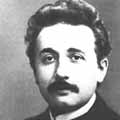 "When forced to summarize the general theory of relativity in one sentence:
Time and space and gravitation have no separate existence from matter. ... Physical objects are not in space, but these objects are spatially extended. In this way the concept 'empty space' loses its meaning. ... The particle can only appear as a limited region in space in which
the field strength or the energy density are particularly high. ...
"When forced to summarize the general theory of relativity in one sentence:
Time and space and gravitation have no separate existence from matter. ... Physical objects are not in space, but these objects are spatially extended. In this way the concept 'empty space' loses its meaning. ... The particle can only appear as a limited region in space in which
the field strength or the energy density are particularly high. ...
The free, unhampered exchange of ideas and scientific conclusions is necessary for the sound development of science, as it is in all spheres
of cultural life. ... We must not conceal from ourselves that no improvement in the present depressing situation is possible without
a severe struggle; for the handful of those who are really determined to do something is minute in comparison with the mass of the lukewarm
and the misguided. ...
Humanity is going to need a substantially new way of thinking if it is to survive!" (Albert Einstein)
 We can now deduce the most simple science theory of reality - the wave structure of matter in space. By understanding how we and everything around us are interconnected
in Space we can then deduce solutions to the fundamental problems of human knowledge in physics, philosophy, metaphysics, theology, education, health, evolution and ecology, politics and society.
We can now deduce the most simple science theory of reality - the wave structure of matter in space. By understanding how we and everything around us are interconnected
in Space we can then deduce solutions to the fundamental problems of human knowledge in physics, philosophy, metaphysics, theology, education, health, evolution and ecology, politics and society.
This is the profound new way of thinking that Einstein
realised, that we exist as spatially extended structures of the universe - the discrete and separate body an illusion. This simply confirms the
intuitions of the ancient philosophers and mystics.
Given the current censorship in physics / philosophy of science journals (based on the standard model of particle physics / big bang cosmology) the internet is the best hope for getting new knowledge
known to the world. But that depends on you, the people who care about science and society, realise the importance of truth and reality.
It is Easy to Help!
Just click on the Social Network links at top of page, or copy a nice image or quote you like and share it. We have a wonderful collection of knowledge from the greatest minds in human history, so people will appreciate your contributions. In doing this you will help a new generation of scientists see that there is a simple sensible explanation of physical reality (One Substance, One Law) - the source of truth and wisdom, the only cure for the madness of man! Thanks! Geoff Haselhurst (Updated May, 2025)
A new scientific truth does not triumph by convincing its opponents and making them see the light, but rather because its opponents eventually die, and a new generation grows up that is familiar with it. (Max Planck, 1920)
"All that is necessary for evil to succeed is for good people to do nothing."
(Edmund Burke)
"In a time of universal deceit - telling the truth is a revolutionary act."
(George Orwell)
"Hell is Truth Seen Too Late."
(Thomas Hobbes)


Legal Disclaimer and Privacy Policy
We support 'Fair Use' of these pages for Academic & Non Commercial use.
You are welcome to use images and text, but please reference them with a link to relevant web page on this site. Thanks!
