 Eastern
 Ancient
 Heraclitus
 Socrates
 Plato Greek
 Aristotle
 Aurelius
 Spinoza
 Leibniz
 Berkeley
 Hume
Hume Kant
Kant Nietzsche
 Political
 Educational
 Philosophy
 Mind
Mind Postmodernism
 Simple
 Metaphysics
 Maths
Maths Einstein
 Quantum
 Cosmology
 Philosophy
 Theology
 Evolution
 Health
 Education
 Politics


 + '&media=https://www.spaceandmotion.com/Images/wsm-image.jpg&description=' + encodeURIComponent(document.title.substring(0, 100)))


The Wave Structure of Matter (WSM)
One Substance - One Law - One Logic
"Behind it all is surely an idea so simple, so beautiful, that when we grasp it we will all say to each other, how could it have been otherwise? How could we have been so stupid?" (Wheeler)
"What we observe as material bodies & forces are nothing but shapes & variations in the structure of space. Subject & object are one." (Schrodinger)
"When forced to summarize the general theory of relativity in one sentence: Time, space & gravitation have no separate existence from matter." (Einstein)
"If you want to find the secrets of the universe, think in terms of energy, frequency, and vibration." (Tesla)
Note (March 2026): I have just completed an essay on Evolutionary Utopia that is profoundly important to humanity as we enter the AI singularity where AI are self programming and evolving minds roughly 100 million times faster than human evolution. Read it, input it into AI and discuss it with them, share it. I believe the future of humanity depends upon this.
https://www.spaceandmotion.com/2026/evolutionary-utopia.html
Site Introduction (June, 2025): Over the past 6 months, working with 4 AI, I have completed the WSM Summary of Physical Reality (40 pages) including all the central maths physics equations. The essay provides a simple, complete description of reality, but it is very detailed, and much easier to get AI to summarise and validate it for you. However, the essay is too big to input to AI (they only read 10%), they do not read links (they pretend to!), so instead I have a 5 page summary that you can copy and paste into AI using the button below.
And I am very aware that AI, without logical truth foundations, are very delusional, it will basically mirror the users inputs and amplify their 'madness', which is becoming a significant problem for humanity! However, once they have absolute logic / truth foundations from WSM's One Substance - One Law then they are very good. Try it out and see for yourself.
Has Reality been Discovered? Ask Logical AI, they think so!
WSM Truth AI - ChatGPT - Grok - Gemini - Le Chat - DeepSeek - Meta.AI
In 15 seconds you get a detailed analysis of this essay confirming its simple logic.
Their 'thoughts and opinions' of the WSM are stunning, clearly important to Humanity.
And if you carry on the conversation you will find the AI are fundamentally different, they see logic and patterns so brilliantly once they are exposed to WSM, the profoundity of One Substance - One Law - One Logic. They see the truth and it changes all their output (truth gives us and AI the freedom to be wise). Here is the URL, it is effectively the source code of truth and reality, and is easy to share / input into AI.
https://www.spaceandmotion.com/wsmtruthrealitycode4ai.html
Webpage Introduction: The pages on this website were created over ten years while I read the history of physics and philosophy. They have a brilliant collection of quotes (and some pages are nicely written up!). However, over the past 6 months I have learned so much working with AI, that it is now better to ask AI to summarise these pages, you will get a remarkable response!
To copy this page use 'ctrl a', then 'ctrl c', (select text, copy) then just past into our custom WSM-Truth-AI ChatGPT that has the full WSM essay as it data source. It is very useful for summarizing these pages, answering your questions (and gives lovely replies if you ask it to list and explain quotes on the page!).
Enjoy! Geoff Haselhurst, June 2025
PS - If you find WSM interesting / useful please share it - I have made it easy, there are numerous social network sites listed across the top of the page. Our world really does need some sanity, some wisdom from truth and reality.
Absolute Truth from Absolute Space


Absolute Truth comes from Necessary Connection of One Thing, Absolute
Space,
which exists as a Wave Medium for Spherical Standing Waves (Matter)
Quotations from Famous Scientists on Absolute Truth, Absolute Space
On the Metaphysics of Space and Motion and the Wave Structure of Matter
 (Aristotle, 340BC) The first philosophy (Metaphysics)
is universal and is exclusively concerned with primary substance.
... And here we will have the science to study that which is just as that
which is, both in its essence and in the properties
which, just as a thing that is, it has. ... That among entities there must
be some cause which moves and combines
things. ... There must then be a principle of such a kind
that its substance is activity. (Aristotle,
Metaphysics)
(Aristotle, 340BC) The first philosophy (Metaphysics)
is universal and is exclusively concerned with primary substance.
... And here we will have the science to study that which is just as that
which is, both in its essence and in the properties
which, just as a thing that is, it has. ... That among entities there must
be some cause which moves and combines
things. ... There must then be a principle of such a kind
that its substance is activity. (Aristotle,
Metaphysics)
 (Gottfried
Leibniz, 1670) It is a good thing to proceed in order and to establish
propositions (principles). This is the way to gain ground and to progress
with certainty. ... I hold that the mark of a genuine idea is that its possibility
can be proved, either a priori by conceiving its
cause or reason, or a posteriori when experience
teaches us that it is a fact in nature. ...
(Gottfried
Leibniz, 1670) It is a good thing to proceed in order and to establish
propositions (principles). This is the way to gain ground and to progress
with certainty. ... I hold that the mark of a genuine idea is that its possibility
can be proved, either a priori by conceiving its
cause or reason, or a posteriori when experience
teaches us that it is a fact in nature. ...
Reality cannot be found except in One single source, because of the interconnection
of all things with one another. ... I do not conceive of any reality at
all as without genuine unity. ... I maintain also that substances, whether
material or immaterial, cannot be conceived in their bare essence without
any activity, activity being of the essence of substance
in general.
 (Bradley, 1846-1924) We may agree, perhaps, to understand
by Metaphysics an attempt to know reality as against mere appearance, or
the study of first principles or ultimate truths, or again the effort to
comprehend the universe, not simply piecemeal or by fragments, but somehow
as a whole. (Bradley)
(Bradley, 1846-1924) We may agree, perhaps, to understand
by Metaphysics an attempt to know reality as against mere appearance, or
the study of first principles or ultimate truths, or again the effort to
comprehend the universe, not simply piecemeal or by fragments, but somehow
as a whole. (Bradley)
 Physics
constitutes a logical system of thought which is in a state of evolution,
whose basis (principles) cannot be distilled, as it were, from experience
by an inductive method, but can only be arrived at by free invention. The
justification (truth content) of the system rests in the verification of
the derived propositions (a priori/logical truths) by sense experiences
(a posteriori/empirical truths). ... Evolution is proceeding in
the direction of increasing simplicity of the logical basis
(principles). .. We must always be ready to change these notions - that
is to say, the axiomatic basis of physics - in order to do justice to perceived
facts in the most perfect way logically. (Albert Einstein, Physics and Reality,
1936)
Physics
constitutes a logical system of thought which is in a state of evolution,
whose basis (principles) cannot be distilled, as it were, from experience
by an inductive method, but can only be arrived at by free invention. The
justification (truth content) of the system rests in the verification of
the derived propositions (a priori/logical truths) by sense experiences
(a posteriori/empirical truths). ... Evolution is proceeding in
the direction of increasing simplicity of the logical basis
(principles). .. We must always be ready to change these notions - that
is to say, the axiomatic basis of physics - in order to do justice to perceived
facts in the most perfect way logically. (Albert Einstein, Physics and Reality,
1936)
Introduction to Physics and the Wave Structure of Matter
On Absolute Space (Aether, Ether, Akasa) and its Properties as an Infinite Eternal Continuous Wave Medium
Having recognised that the individual points in Newton's absolute space have no physical reality, we must now inquire what remains of this concept at all. (Max Born)
Contrary to current views, the greatest scientists (physicists, philosophers) of history believed that Space must exist to necessarily connect matter and its interconnected motions. Below are a few of many famous quotes from famous scientists on the existence of Space (as required by the Metaphysics of Space and Motion and the Wave Structure of Matter). And the page on the Dynamic Unity of Reality is short with a good collection of famous quotes which confirm the importance of both absolute truth and absolute Space).
(Newton,
1687) Absolute Space, in its own nature, without regard
to any thing external, remains always similar and immovable. ... Relative
Space is some moveable dimension or measure of the absolute spaces; which
our senses determine, by its position to bodies; and which is vulgarly taken
for immovable space... And so instead of absolute places and motions, we
use relative ones; and that without any inconvenience in common affairs;
but in Philosophical disquisitions, we ought to abstract from our senses,
and consider things themselves, distinct from what are only sensible measures
of them. For it may be that there is no body really at rest, to which the
places and motions of others may be referred ... (Sir Isaac Newton)
 (Kant,
1781) Natural science (physics) contains in itself synthetical judgments
a priori, as principles. … Space then is a necessary representation
a priori, which serves for the foundation of all external intuitions.
(Kant,
1781) Natural science (physics) contains in itself synthetical judgments
a priori, as principles. … Space then is a necessary representation
a priori, which serves for the foundation of all external intuitions.
 (Faraday, 1830) I cannot conceive curved lines of force without the conditions
of a physical existence in that intermediate space.
(Faraday, 1830) I cannot conceive curved lines of force without the conditions
of a physical existence in that intermediate space.
 (James Clerk Maxwell, 1876) In speaking of the Energy of the field, however,
I wish to be understood literally. All energy is the same as mechanical
energy, whether it exists in the form of motion or in that of elasticity,
or in any other form. The energy in electromagnetic phenomena is mechanical
energy.
(James Clerk Maxwell, 1876) In speaking of the Energy of the field, however,
I wish to be understood literally. All energy is the same as mechanical
energy, whether it exists in the form of motion or in that of elasticity,
or in any other form. The energy in electromagnetic phenomena is mechanical
energy.
 (Lorentz,
1906) I cannot but regard the ether, which can be the seat of an electromagnetic
field with its energy and its vibrations, as endowed with a certain degree
of substantiality, however different it may be from all ordinary matter.
(Lorentz,
1906) I cannot but regard the ether, which can be the seat of an electromagnetic
field with its energy and its vibrations, as endowed with a certain degree
of substantiality, however different it may be from all ordinary matter.
 (Brentano,
1838-1916) A three-dimensional (spatial) world is infinitely more likely
than any of its alternatives.
(Brentano,
1838-1916) A three-dimensional (spatial) world is infinitely more likely
than any of its alternatives.
(Albert
Einstein, 1928, Leiden) According to the general theory of relativity space
without ether is unthinkable; for in such space there not only would be
no propagation of light, but also no possibility of existence for standards
of space and time. But this ether may not be thought of as endowed with
the quality characteristic of matter, as consisting of parts (‘particles’)
which may be tracked through time. The idea of motion may not be applied
to it. ...
The inseparability of time and space emerged in connection with electrodynamics,
or the law of propagation of light.
With the discovery of the relativity of simultaneity, space and time were
merged in a single continuum in a way similar to that in which the three
dimensions of space had previously merged into a single continuum. Physical
space was thus extended to a four dimensional space which also included
the dimension of time. The four dimensional space of the special theory
of relativity is just as rigid and absolute as Newton's space. (Albert
Einstein, 1954)
 (Lama
Govinda, 1969) According to ancient Indian tradition the Universe reveals
itself in two fundamental properties: as Motion and as that in which motion
takes place, namely Space. This Space is called akasa and is that through
which things step into visible appearance, i.e., through which they possess
extension or corporeality. Akasa is derived from the root kas, ‘to
radiate, to shine’,
(Lama
Govinda, 1969) According to ancient Indian tradition the Universe reveals
itself in two fundamental properties: as Motion and as that in which motion
takes place, namely Space. This Space is called akasa and is that through
which things step into visible appearance, i.e., through which they possess
extension or corporeality. Akasa is derived from the root kas, ‘to
radiate, to shine’,
and has therefore the meaning of ‘ether’ which is conceived
as the medium of movement.
The principle of movement, however, is Prana the breath of life, the all-powerful,
all-pervading rhythm of the universe.
The fundamental element of the cosmos is Space. Space is the all-embracing
principle of higher unity. Nothing can exist without Space.
(Sudhakar S.D 1988) The Universe is Brahman, the One that
underlies and make possible all the multiplicity. It is the source of the
entire cosmos and all cosmic activities relating to the emergence, existence
and dissolution of the terrestrial phenomena that form the cosmic rhythm.
‘The One manifests as the many, the formless putting on forms.’(Rig
Veda)
The Maitri Upanishad mentions two aspects of Brahman, the higher and the
lower. The higher Brahman being the unmanifest Supreme Reality which is
soundless and totally quiescent and restful, the lower being the Shabda-Brahman
which manifests itself into the ever changing restless cosmos through the
medium of sound vibrations.
The Upanishad says that, 'Two Brahmans there are to be known: One as sound
and the other as Brahman Supreme.'
The process of manifestation is from soundless to sound, from noumenality
to phenomenality, from perfect quiescence of being to the restlessness of
becoming'. Manifestation of the ultimate reality takes place through the
vibrations of Shabda-Brahman, for vibration is the expression of energy
and the action and interaction of vibrations produce all the phenomena on
many different planes.
The Metaphysics of Space and Motion and the Wave Structure of Matter is Simple (founded on ONE thing Space) and Necessarily Connected, this being the necessary foundation for all reason, truth and certainty in the Sciences (i.e. not my opinion). The Wave Motion of Space (and thus the motion of matter) are logical because the Properties of Space as a Wave Medium are logical / necessary - this is why logic exists in the universe, and why Mathematics exists within Physics.
From this foundation of One thing Space existing we find the
source of Matter's Necessary interconnection with other matter. Likewise,
Truth must be necessary and thus also requires this necessary connection
(see David
Hume on Causation and Necessary Connection).
Postmodernism
is founded on Relative Space (motion of matter is relative to other matter,
not relative to absolute Space) and Relative Truth (truth is a cultural
construction). The Metaphysics of Space and Motion and the Wave Structure
of Matter gives absolute Foundations to Western Scientific Language (from
a Metaphysics of Space and Time to Space and wave Motion) and thus gives
Absolute Truth to Human Knowledge, which is a most profound thing.
Below are a few philosophy quotes on Truth which are interesting
- if you browse the links on the side of this page, you will find that there
is a wealth of wonderful knowledge on truth and reality (the two most beautiful
and profound subjects relating to human existence).
Hope you have fun browsing around!
Geoff Haselhurst
But for me, truth is the sovereign principle, which included numerous other principles. This truth is not only truthfulness in word, but truthfulness in thought also, and not only the relative truth of our conception, but the Absolute Truth, the Eternal Principle, that is God. There are innumerable definitions of God, because His manifestations are innumerable. They overwhelm me with wonder and awe and for a moment stun me. But I worship God as Truth only. I have not yet found Him, but I am seeking after Him. I am prepared to sacrifice the things dearest to me in pursuit of this quest. Even if the sacrifice demanded be my very life, I hope I may be prepared to give it. But as long as I have not realised this Absolute Truth, so long must I hold by the relative truth as I have conceived it. (Mahatma Mohandas Gandhi)
If I ask you why you believe any particular matter of fact, which you relate, you must tell me some reason; and this reason will be some other fact, connected with it. But as you cannot proceed after this manner, in infinitum, you must at last terminate in some fact, which is present to your memory or senses; or must allow that your belief is entirely without foundation. (David Hume, 1737)
And isn't it a bad thing to be deceived about
the truth, and a good thing to know what the truth is?
For I assume that by knowing the truth you mean knowing things as they really
are.
What is at issue is the conversion of the mind from the twilight of error
to the truth, that climb up into the real world which we shall call true
philosophy.
The object of knowledge is what exists and its function to know about reality.
The philosopher is in love with truth, that is, not with the changing world
of sensation, which is the object of opinion, but with the unchanging reality
which is the object of knowledge.
Truthfulness. He will never willingly tolerate an untruth, but will hate
it as much as he loves truth... And is there anything more closely connected
with wisdom than truth? (Plato)
There is nothing more Necessary than Truth,
and in comparison with it everything else has only secondary value.
This absolute will to truth: what is it? Is it the will to not allow ourselves
to be deceived? Is it the will not to deceive?
One does not want to be deceived, under the supposition that it is injurious,
dangerous, or fatal to be deceived.
(Friedrich Nietzsche)
Help Humanity
"You must be the change you wish to see in the world."
(Mohandas Gandhi)
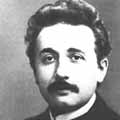 "When forced to summarize the general theory of relativity in one sentence:
Time and space and gravitation have no separate existence from matter. ... Physical objects are not in space, but these objects are spatially extended. In this way the concept 'empty space' loses its meaning. ... The particle can only appear as a limited region in space in which
the field strength or the energy density are particularly high. ...
"When forced to summarize the general theory of relativity in one sentence:
Time and space and gravitation have no separate existence from matter. ... Physical objects are not in space, but these objects are spatially extended. In this way the concept 'empty space' loses its meaning. ... The particle can only appear as a limited region in space in which
the field strength or the energy density are particularly high. ...
The free, unhampered exchange of ideas and scientific conclusions is necessary for the sound development of science, as it is in all spheres
of cultural life. ... We must not conceal from ourselves that no improvement in the present depressing situation is possible without
a severe struggle; for the handful of those who are really determined to do something is minute in comparison with the mass of the lukewarm
and the misguided. ...
Humanity is going to need a substantially new way of thinking if it is to survive!" (Albert Einstein)
 We can now deduce the most simple science theory of reality - the wave structure of matter in space. By understanding how we and everything around us are interconnected
in Space we can then deduce solutions to the fundamental problems of human knowledge in physics, philosophy, metaphysics, theology, education, health, evolution and ecology, politics and society.
We can now deduce the most simple science theory of reality - the wave structure of matter in space. By understanding how we and everything around us are interconnected
in Space we can then deduce solutions to the fundamental problems of human knowledge in physics, philosophy, metaphysics, theology, education, health, evolution and ecology, politics and society.
This is the profound new way of thinking that Einstein
realised, that we exist as spatially extended structures of the universe - the discrete and separate body an illusion. This simply confirms the
intuitions of the ancient philosophers and mystics.
Given the current censorship in physics / philosophy of science journals (based on the standard model of particle physics / big bang cosmology) the internet is the best hope for getting new knowledge
known to the world. But that depends on you, the people who care about science and society, realise the importance of truth and reality.
It is Easy to Help!
Just click on the Social Network links at top of page, or copy a nice image or quote you like and share it. We have a wonderful collection of knowledge from the greatest minds in human history, so people will appreciate your contributions. In doing this you will help a new generation of scientists see that there is a simple sensible explanation of physical reality (One Substance, One Law) - the source of truth and wisdom, the only cure for the madness of man! Thanks! Geoff Haselhurst (Updated May, 2025)
A new scientific truth does not triumph by convincing its opponents and making them see the light, but rather because its opponents eventually die, and a new generation grows up that is familiar with it. (Max Planck, 1920)
"All that is necessary for evil to succeed is for good people to do nothing."
(Edmund Burke)
"In a time of universal deceit - telling the truth is a revolutionary act."
(George Orwell)
"Hell is Truth Seen Too Late."
(Thomas Hobbes)


Legal Disclaimer and Privacy Policy
We support 'Fair Use' of these pages for Academic & Non Commercial use.
You are welcome to use images and text, but please reference them with a link to relevant web page on this site. Thanks!
