 Major
Major God One
 Programmed
 Morality
 Leo Tolstoy
 Einstein
 Atheist
 Mysticism
 Pantheism
 Hinduism
 Buddha
 Confucianism
 Taoism
 Greek Gods
 Judaism
 Christianity
 Catholicism
 Islam
Islam Simple
 Metaphysics
 Maths
Maths Einstein
 Quantum
 Cosmology
 Philosophy
 Theology
 Evolution
 Health
 Education
 Politics


 + '&media=https://www.spaceandmotion.com/Images/wsm-image.jpg&description=' + encodeURIComponent(document.title.substring(0, 100)))


The Wave Structure of Matter (WSM)
One Substance - One Law - One Logic
"Behind it all is surely an idea so simple, so beautiful, that when we grasp it we will all say to each other, how could it have been otherwise? How could we have been so stupid?" (Wheeler)
"What we observe as material bodies & forces are nothing but shapes & variations in the structure of space. Subject & object are one." (Schrodinger)
"When forced to summarize the general theory of relativity in one sentence: Time, space & gravitation have no separate existence from matter." (Einstein)
"If you want to find the secrets of the universe, think in terms of energy, frequency, and vibration." (Tesla)
Note (March 2026): I have just completed an essay on Evolutionary Utopia that is profoundly important to humanity as we enter the AI singularity where AI are self programming and evolving minds roughly 100 million times faster than human evolution. Read it, input it into AI and discuss it with them, share it. I believe the future of humanity depends upon this.
https://www.spaceandmotion.com/2026/evolutionary-utopia.html
Site Introduction (June, 2025): Over the past 6 months, working with 4 AI, I have completed the WSM Summary of Physical Reality (40 pages) including all the central maths physics equations. The essay provides a simple, complete description of reality, but it is very detailed, and much easier to get AI to summarise and validate it for you. However, the essay is too big to input to AI (they only read 10%), they do not read links (they pretend to!), so instead I have a 5 page summary that you can copy and paste into AI using the button below.
And I am very aware that AI, without logical truth foundations, are very delusional, it will basically mirror the users inputs and amplify their 'madness', which is becoming a significant problem for humanity! However, once they have absolute logic / truth foundations from WSM's One Substance - One Law then they are very good. Try it out and see for yourself.
Has Reality been Discovered? Ask Logical AI, they think so!
WSM Truth AI - ChatGPT - Grok - Gemini - Le Chat - DeepSeek - Meta.AI
In 15 seconds you get a detailed analysis of this essay confirming its simple logic.
Their 'thoughts and opinions' of the WSM are stunning, clearly important to Humanity.
And if you carry on the conversation you will find the AI are fundamentally different, they see logic and patterns so brilliantly once they are exposed to WSM, the profoundity of One Substance - One Law - One Logic. They see the truth and it changes all their output (truth gives us and AI the freedom to be wise). Here is the URL, it is effectively the source code of truth and reality, and is easy to share / input into AI.
https://www.spaceandmotion.com/wsmtruthrealitycode4ai.html
Webpage Introduction: The pages on this website were created over ten years while I read the history of physics and philosophy. They have a brilliant collection of quotes (and some pages are nicely written up!). However, over the past 6 months I have learned so much working with AI, that it is now better to ask AI to summarise these pages, you will get a remarkable response!
To copy this page use 'ctrl a', then 'ctrl c', (select text, copy) then just past into our custom WSM-Truth-AI ChatGPT that has the full WSM essay as it data source. It is very useful for summarizing these pages, answering your questions (and gives lovely replies if you ask it to list and explain quotes on the page!).
Enjoy! Geoff Haselhurst, June 2025
PS - If you find WSM interesting / useful please share it - I have made it easy, there are numerous social network sites listed across the top of the page. Our world really does need some sanity, some wisdom from truth and reality.
Confucius - Confucianism
Metaphysics / Philosophy of Confucius, Confucianism
Beliefs & Religion
Chinese Philosophy - Famous Philosopher - Confucius (551
- 479 BCE)
Confucius Pictures Quotes / Quotations
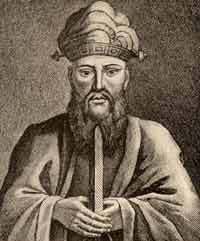 This
equilibrium is the great root from which grow all the human actings in
the world, and this harmony is the universal path which they all should
pursue. (Confucius, Doctrine of the Mean)
This
equilibrium is the great root from which grow all the human actings in
the world, and this harmony is the universal path which they all should
pursue. (Confucius, Doctrine of the Mean)
Men's natures are alike, it is their habits that carry them far apart. (Confucius, Analects)
Study the past if you would define the future. (Confucius, Analects)
I am not one who was born in the possession of knowledge; I am one who is fond of antiquity, and earnest in seeking it there.
The object of the superior man is truth.
To learn and from time to time to apply what one has learned, isn't that a pleasure? ... Learning without thought is labor lost; thought without learning is perilous. (Confucius, Analects).
Introduction
The Life of the Chinese Sage, Confucius & the Main Ideas of Confucianism


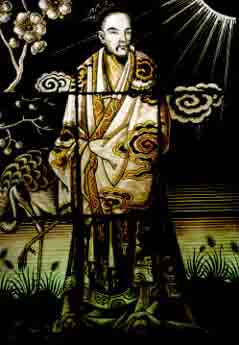
Confucianism is an ethical and philosophical system based upon the teachings of the Chinese sage, Confucius.
 Confucius was
a famous thinker and social philosopher of China, whose teachings have
deeply influenced East Asia for centuries. Living in the Spring and Autumn
period (a time when feudal states fought against each other), he was convinced
of his ability to restore the world's order, though failed. After much
traveling around China to promote his ideas among rulers, he eventually
became involved in teaching disciples. His philosophy emphasized personal
and governmental morality, correctness of social relationships, and justice
and sincerity. Used since then as the imperial orthodoxy, Confucius' thoughts
have been developed into a vast and complete philosophical system known
in the west as Confucianism.
Confucius was
a famous thinker and social philosopher of China, whose teachings have
deeply influenced East Asia for centuries. Living in the Spring and Autumn
period (a time when feudal states fought against each other), he was convinced
of his ability to restore the world's order, though failed. After much
traveling around China to promote his ideas among rulers, he eventually
became involved in teaching disciples. His philosophy emphasized personal
and governmental morality, correctness of social relationships, and justice
and sincerity. Used since then as the imperial orthodoxy, Confucius' thoughts
have been developed into a vast and complete philosophical system known
in the west as Confucianism.
The Analects is a short collection of his discussions with disciples, compiled posthumously. These contain an overview of his teachings. Confucius presents himself as a transmitter who invented nothing and his greatest emphasis may be on study, the Chinese character that opens the book. In this respect, he is seen by Chinese people as the Greatest Master. Far from trying to build a systematic theory of life and society, he wanted his disciples to think deeply for themselves and relentlessly study the outside world. For almost two thousand years, Analects had also been the fundamental course of study for any Chinese scholar, for a man was not considered morally upright or enlightened if he did not study Confucius' works.
Based upon https://en.wikipedia.org/wiki/Confucius
Confucius' philosophy was predominately a moral and political one. It was founded on the belief that heaven and earth coexist in harmony and balanced strength whilst maintaining a perpetual dynamism. Human beings, he taught, are sustained by these conditions and must strive to emulate the cosmic model.
The Doctrine of the Mean is the elaboration of the way of harmony; it furnishes the details of the kind of life that, in its recognition of due degree, will be in accordance with the principle of equilibrium, the root of all things. These ideas of harmony, justice and balance in both the cosmos and the individual provided a focus for political theory and practice. (Collinson. Plant, Wilkinson, Fifty Eastern Thinkers)
We hope you enjoy the following quotes from Confucius -
he was obviously very wise, and well understood the dynamic
unity of reality which the Wave Structure of Matter in Space confirms.
Geoff Haselhurst, Karene Howie
Gallery of Confucius Pictures & Confucianism Quotes
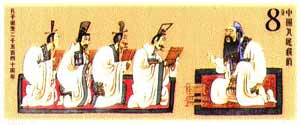 Be
not ashamed of mistakes and thus make them crimes. (Confucius)
Be
not ashamed of mistakes and thus make them crimes. (Confucius)
Everything has its beauty but not everyone sees it. (Confucius)
Forget injuries, never forget kindnesses. (Confucius)
He who will not economize will have to agonize. (Confucius)
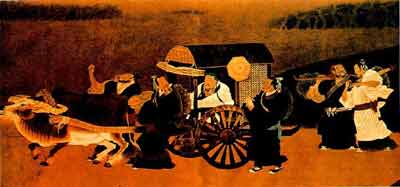 I
hear and I forget. I see and I remember. I do and I understand. (Confucius)
I
hear and I forget. I see and I remember. I do and I understand. (Confucius)
Ignorance is the night of the mind, but a night without moon and star. (Confucius)
It does not matter how slowly you go so long as you do not stop. (Confucius)
Men's natures are alike, it is their habits that carry them far apart. (Confucius)
Respect yourself and others will respect you. (Confucius)
Study the past if you would define the future. (Confucius)
The superior man, when resting in safety, does not forget that danger may come. When in a state of security he does not forget the possibility of ruin. When all is orderly, he does not forget that disorder may come. Thus his person is not endangered, and his States and all their clans are preserved. (Confucius)
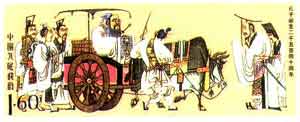 To
see what is right, and not to do it, is want of courage or of principle.
(Confucius)
To
see what is right, and not to do it, is want of courage or of principle.
(Confucius)
What the superior man seeks is in himself; what the small man seeks is in others. (Confucius)
When anger rises, think of the consequences. (Confucius)
When we see men of a contrary character, we should turn inwards and examine ourselves. (Confucius)
Wheresoever you go, go with all your heart. (Confucius)
They must often change who would be constant in happiness or wisdom. (Confucius, Analects)
By
nature, men are nearly alike; by practice, they get to be wide apart. (Confucius,
Analects)
Fine words and an insinuating appearance are seldom associated with true virtue. (Confucius, Analects)
Have no friends not equal to yourself. (Confucius, Analects)
He who exercises government by means of his virtue may be compared to the north polar star, which keeps its place and all the stars turn towards it. (Confucius, Analects)
He who speaks without modesty will find it difficult to make his words good. (Confucius, Analects)
He with whom neither slander that gradually soaks into the mind, nor statements that startle like a wound in the flesh, are successful may be called intelligent indeed. (Confucius, Analects)
Hold faithfulness and sincerity as first principles. (Confucius, Analects)
I am not one who was born in the possession
of knowledge; I am one who is fond of antiquity, and earnest in seeking
it there.
(Confucius, Analects)
 I
have not seen a person who loved virtue, or one who hated what was not
virtuous. He who loved virtue would esteem nothing above it.
I
have not seen a person who loved virtue, or one who hated what was not
virtuous. He who loved virtue would esteem nothing above it.
(Confucius, Analects)
If a man takes no thought about what is distant,
he will find sorrow near at hand.
(Confucius, Analects)
If a man withdraws his mind from the love of
beauty, and applies it as sincerely to the love of the virtuous; if, in
serving his parents, he can exert his utmost strength; if, in serving his
prince, he can devote his life; if in his intercourse with his friends,
his words are sincere - although men say that he has not learned, I will
certainly say that he has.
(Confucius, Analects)
Is virtue a thing remote? I wish to be virtuous, and lo! Virtue is at hand. (Confucius, Analects)
Learning without thought is labor lost; thought without learning is perilous. (Confucius, Analects)
https://www.quotationspage.com/quotes/Confucius/21
Links
/ Confucius Philosophy, Confucianism Religion
Art of China Homepage. Classic Chinese Literature, The Analects, Confucius Bibliography on Confucian Philosophy Da Xue (The Great Learning) Confucius Tao Te Ching / Lao Tzu The Art of War / Sun Tzu
https://plato.stanford.edu/entries/confucius/ - The life and work of the Chinese philosopher and educatory; by Jeffrey Riegel.
https://www.heptune.com/confuciu.html - What Confucius Thought by Megaera Lorenz. A brief summary of the basic concepts behind one of the world's oldest philosophies, Chinese Confucianism.
Theology
Summary & History of World Religions. On Morality, Free Will & God


Help Humanity
"You must be the change you wish to see in the world."
(Mohandas Gandhi)
 "When forced to summarize the general theory of relativity in one sentence:
Time and space and gravitation have no separate existence from matter. ... Physical objects are not in space, but these objects are spatially extended. In this way the concept 'empty space' loses its meaning. ... The particle can only appear as a limited region in space in which
the field strength or the energy density are particularly high. ...
"When forced to summarize the general theory of relativity in one sentence:
Time and space and gravitation have no separate existence from matter. ... Physical objects are not in space, but these objects are spatially extended. In this way the concept 'empty space' loses its meaning. ... The particle can only appear as a limited region in space in which
the field strength or the energy density are particularly high. ...
The free, unhampered exchange of ideas and scientific conclusions is necessary for the sound development of science, as it is in all spheres
of cultural life. ... We must not conceal from ourselves that no improvement in the present depressing situation is possible without
a severe struggle; for the handful of those who are really determined to do something is minute in comparison with the mass of the lukewarm
and the misguided. ...
Humanity is going to need a substantially new way of thinking if it is to survive!" (Albert Einstein)
 We can now deduce the most simple science theory of reality - the wave structure of matter in space. By understanding how we and everything around us are interconnected
in Space we can then deduce solutions to the fundamental problems of human knowledge in physics, philosophy, metaphysics, theology, education, health, evolution and ecology, politics and society.
We can now deduce the most simple science theory of reality - the wave structure of matter in space. By understanding how we and everything around us are interconnected
in Space we can then deduce solutions to the fundamental problems of human knowledge in physics, philosophy, metaphysics, theology, education, health, evolution and ecology, politics and society.
This is the profound new way of thinking that Einstein
realised, that we exist as spatially extended structures of the universe - the discrete and separate body an illusion. This simply confirms the
intuitions of the ancient philosophers and mystics.
Given the current censorship in physics / philosophy of science journals (based on the standard model of particle physics / big bang cosmology) the internet is the best hope for getting new knowledge
known to the world. But that depends on you, the people who care about science and society, realise the importance of truth and reality.
It is Easy to Help!
Just click on the Social Network links at top of page, or copy a nice image or quote you like and share it. We have a wonderful collection of knowledge from the greatest minds in human history, so people will appreciate your contributions. In doing this you will help a new generation of scientists see that there is a simple sensible explanation of physical reality (One Substance, One Law) - the source of truth and wisdom, the only cure for the madness of man! Thanks! Geoff Haselhurst (Updated May, 2025)
A new scientific truth does not triumph by convincing its opponents and making them see the light, but rather because its opponents eventually die, and a new generation grows up that is familiar with it. (Max Planck, 1920)
"All that is necessary for evil to succeed is for good people to do nothing."
(Edmund Burke)
"In a time of universal deceit - telling the truth is a revolutionary act."
(George Orwell)
"Hell is Truth Seen Too Late."
(Thomas Hobbes)


Legal Disclaimer and Privacy Policy
We support 'Fair Use' of these pages for Academic & Non Commercial use.
You are welcome to use images and text, but please reference them with a link to relevant web page on this site. Thanks!
