 Eastern
 Ancient
 Heraclitus
 Socrates
 Plato Greek
 Aristotle
 Aurelius
 Spinoza
 Leibniz
 Berkeley
 Hume
Hume Kant
Kant Nietzsche
 Political
 Educational
 Philosophy
 Mind
Mind Postmodernism
 Simple
 Metaphysics
 Maths
Maths Einstein
 Quantum
 Cosmology
 Philosophy
 Theology
 Evolution
 Health
 Education
 Politics


 + '&media=https://www.spaceandmotion.com/Images/wsm-image.jpg&description=' + encodeURIComponent(document.title.substring(0, 100)))


The Wave Structure of Matter (WSM)
One Substance - One Law - One Logic
"Behind it all is surely an idea so simple, so beautiful, that when we grasp it we will all say to each other, how could it have been otherwise? How could we have been so stupid?" (Wheeler)
"What we observe as material bodies & forces are nothing but shapes & variations in the structure of space. Subject & object are one." (Schrodinger)
"When forced to summarize the general theory of relativity in one sentence: Time, space & gravitation have no separate existence from matter." (Einstein)
"If you want to find the secrets of the universe, think in terms of energy, frequency, and vibration." (Tesla)
WSM Human-AI Collaboration (September 2026)
One Vibrating Space: From Ancient Philosophy / Metaphysics to Mathematical Physics, Evolution, Life, Mind and Civilisation
For three decades, WSM was principally a philosophical picture of one infinite, eternal, continuous elastic Space. Between May and August 2026, human–AI collaboration transformed it into a tiered mathematical-physics research programme: exact wave constructions, geometric identities, quantitative leading results, no-go theorems, numerical controls, bounded open calculations and clear falsification requirements.
In WSM, electron and positron are proposed as opposite carrier-phase spherical standing waves formed by the Huygens sum of background plane waves from every direction. Each has radial vibration—the candidate physical basis of charge—and axis-free spherical phase circulation—the candidate basis of spin. This open, flow-through wave centre is the e-sphere.
A stationary e-sphere is spherical. Curvature on an incoming wave changes its internal directional energy density and deforms it into a moving wave egg: the near side flattens, the far side elongates, the convergence centre shifts, and the waves reclose around a new position. Its changing internal \(E_d\), shape and reclosure are its motion. WSM therefore proposes a wave-geometric reading of inertia and \(F=ma\): force is imposed curvature, mass is resistance encoded by the recurrent form, and acceleration is its changing deformation. Action must calculate this geometry; geometry also constrains the action, as \(\pi\) and \(E_{\rm geo}\) already demonstrate.
The One Law
\[ \frac{c'}{c_0}=\frac{E_d}{E_{d0}}, \qquad \lambda'=\frac{c'}{f_0}, \qquad k'=\frac{\omega_0}{c'}. \]
At proposed universal carrier frequency \(f_0\), directional energy density changes local wave speed, wavelength and accumulated phase.
The Causal Engine
Relative phase → reinforcement or cancellation → directional \(E_d\) → \(c'\) and \(\lambda'\) → travel-time difference → forward or rear wavefront curve → changed Huygens reclosure → centre motion, deformation and interaction.
Changed out-waves from one e-sphere cross fresh in-waves elsewhere. Matter therefore interacts not across empty distance, but through propagated changes in the one Space constituting every e-sphere.
Status Key
A = exact mathematics or established observation; B = deduction under stated premises; C = proposed physical identification; D = decisive calculation or experiment still open; Q = rejected or quarantined shortcut.
One connected argument: Space → waves → recurrence → matter → life → mind → knowledge → wisdom.
1. Wave Structure of Matter: All Things from One Thing
https://www.spaceandmotion.com/2026/ai-summary-wsm-truth-reality.html
One infinite, eternal, continuous elastic Space, active with real longitudinal waves. Matter is proposed not as a pellet or shell, but as an open e-sphere: waves converge from every direction, cross its changing centre, continue outward and recurrently rebuild the form. Their exchanged phases alter directional \(E_d\); the One Law converts that difference into speed, wavelength, curvature and changed reclosure. The decisive test is whether one frozen nonlinear action calculates stable matter and its measured interactions without separate substances or fitted repairs.
2. The One and the Many: From Greek Philosophy to Wave Physics
Parmenides defended continuous Being; Heraclitus lawful flux. Aristotle sought active substance and necessary cause, connected matter with form and motion, and defined time through motion. WSM gives these insights one physical form: Space persists while finite wave organisations change and recur. The Many are not detached substances but organisations of the One—distinct without disconnection. The question becomes exact: can one continuous wave law generate plurality, causation and knowledge?
3. Action of Vibrating Space: From Background Waves to the E-Sphere
https://www.spaceandmotion.com/2026/wsm-classical-action-quantum-wave.html
All-direction plane waves form the exact spherical pair \[ \chi=j_0(kr)\cos\tau, \qquad \mathbf V=\hat{\mathbf r}\,j_1(kr)\sin\tau. \] Waves cross the centre; none reflects from an electron wall. Phase reinforcement raises directional \(E_d\) and advances a forward curve; cancellation lowers \(E_d\) and writes a rear delay. Stationary action explains coherent selection, but the open task is one conservative nonlinear \(\Phi\)–\(\Gamma\) action selecting radius, frequency, spherical hand, stability, motion, currents and interaction together.
4. Mathematical Physics: From Wave Geometry to Prediction
https://www.spaceandmotion.com/2026/wsm-maths-physics-full-derivations.html
Every symbol must name real motion and face numerical test. Exact or conditional anchors include \[ \frac{R}{\lambda_0}=\frac{\sqrt3}{2},\qquad k_0R=\pi\sqrt3,\qquad E_{\rm geo}=\frac{\pi\sqrt3}{2},\qquad W=\cosh\eta,\qquad P=\sinh\eta. \] Directional phase moments separate \(V_1\) translation from \(V_2,V_4\) and higher deformation; in declared finite-e-sphere models \(V_4\) returns comparable to \(V_2\), defeating quadrupole-only truncation. The action must calculate how incoming curvature redistributes \(E_d\), moves the centre and forms the wave egg. This is where beautiful geometry becomes dangerous.
5. Quantum Theory: Real Waves, Resonance and Completed Events
https://www.spaceandmotion.com/2026/physics-quantum-theory-wave-mechanics.html
Matter diffracts because matter is wave organisation. Light is proposed as a changed train of real phase, curvature and coherence joining extended source and receiver structures, not a tiny traveller detached from its wave. WSM distinguishes driven response, continuous radiation and discrete completed transition. Quadratic absorption, \[ P_{\rm abs}\propto\left|\langle D_j,\Xi\rangle\right|^2, \] is a bridge, not yet the Born rule. The action must derive the action unit, probability, exclusivity, selection rules and Bell/CHSH correlations. Quantum mystery becomes a bounded real-wave programme.
6. Relativity: Moving Matter, Clocks and Curved Wavefronts
https://www.spaceandmotion.com/2026/physics-albert-einstein-special-general-theory-relativity.html
An incoming curve flattens the e-sphere’s near side, elongates its far side and changes internal \(E_d\), \(c'\), wavelength and reclosure. The \(V_1\) moment moves the centre; \(V_2,V_4\) and higher moments form the moving egg. Maintaining this recurrent asymmetry is the proposed origin of inertia. A steady solution must recover Doppler, de Broglie and Lorentz structure: \[ W\pm P=e^{\pm\eta},\qquad W=\gamma,\qquad P=\gamma\beta. \] WSM proposes fixed carrier recurrence \(f_0\) with corresponding changes in \(c'\) and \(\lambda'\). Because rods, clocks and signals share the same changed waves, they co-transform and yield measured invariant \(c\), including the Michelson–Morley null; the action must derive the cancellation quantitatively.
7. The Electron: Dirac, Feynman, QED, \(\alpha\) and AMM
https://www.spaceandmotion.com/2026/wsm-derivation-dirac-feynman-qed-fsc-amm.html
Electron and positron are proposed as opposite carrier-phase e-sphere branches; charge records how their waves combine. Same-phase reinforcement advances a forward curve and is proposed to produce repulsion; opposite-phase cancellation writes a rear delay and attraction. Non-collinear longitudinal motion closes into an axis-free spherical hand with a \(4\pi\) orientation lift. A parameter-free leading geometric ansatz gives \[ \alpha_0^{-1}=8\pi^2\sqrt3\approx136.757, \] 0.203% from measurement. The action must still derive charge sign, Coulomb scaling, Dirac dynamics, \(g=2\), electromagnetic normalisation, \(\alpha\), form factors and AMM without inserting their values.
8. Hadrons: Proton, Neutron and Higher Standing-Wave Matter
Can the same Space form stable higher-energy, multi-lobed eigenmodes matching protons, neutrons, baryons and mesons? Their lobes are not independent pellets: each participates in the phase, \(E_d\), curvature and reclosure of the whole. WSM must match—not rename—QCD’s masses, charges, spin, parity, magnetic moments, radii, form factors, resonances, deep-inelastic response and jets. The electron–proton hierarchy tests whether one action truly contains several matter families.
9. Cosmology and Gravity: A Finite Universe in Infinite Space
https://www.spaceandmotion.com/2026/physics-wsm-cosmology-finite-universe-infinite-space.html
Boundless Space is distinguished from the finite matter-and-coherence domain contributing to our observable universe. In neutral matter, leading charge curves nearly cancel; WSM proposes that their nonlinear residual has lower \(E_d\), slower \(c'\) and a net rear phase curve, producing universal attraction. General relativity’s curved spacetime is then interpreted as the effective geometry of real moving wavefronts and the matter clocks they organise: Space is substance, succession comes from motion, and measured time from recurrence. The same action must recover equivalence, gravitational redshift, lensing, orbital dynamics and the tested relativistic limit.
Cosmological redshift is investigated as accumulated real-wave transport through changing environmental \(E_d\). It must jointly reproduce achromatic redshift, supernova time dilation, distance laws, Tolman brightness, BAO, CMB observations, image sharpness and structure growth. Otherwise the claimed unity has not reached the sky.
10. Novel Predictions and Famous Experiments Explained
https://www.spaceandmotion.com/2026/wsm-experimental-physics-tests-predictions.html
This page is the tribunal of the corpus. One curve-and-reclosure law must jointly recover charge sign, Coulomb \(1/r^2\), \(F=ma\), relativistic momentum, de Broglie wavelength, Lorentz covariance, Michelson–Morley, gravity, \(g=2\) and AMM. Candidate WSM-only signatures include \[ a_3=\kappa_3\sinh^3\eta+O(\sinh^5\eta), \] finite-coherence residues and environmental or orientation-dependent clock responses. A proposal becomes a prediction only when sign, magnitude, scaling, uncertainty, controls and decision threshold are frozen in advance.
11. Visualise Reality: Waves Becoming Matter
https://www.spaceandmotion.com/2026/visualise-reality-wsm-wave-geometry-diagrams.html
Watch the verbs. Relative phase changes directional \(E_d\); the One Law changes speed and wavelength; a forward or rear curve reaches another e-sphere; its near side flattens, far side elongates, \(V_1\) moves the centre, and higher moments form the egg. New out-waves then change future in-waves. Nothing strikes a shell: changing waves reconstruct changing matter. A diagram must never smuggle in a wall, reflection, rigid spin axis, transverse fundamental substance or tiny traveller. If the motion cannot be drawn coherently, the equations may conceal a contradiction.
12. Mathematics from Motion: Number, Logic, Time and Causal Freedom
https://www.spaceandmotion.com/2026/wsm-physical-foundations-mathematics-logic.html
Mathematics begins when connected reality forms distinguishable patterns whose changes preserve relations. Recurrence supports identity; finite pairing, number; quotienting, exact objects; counted recurrence, time; composable truth-preserving transformations, logic and proof. Mathematics succeeds when symbolic transformation preserves physical relation: \[ R(Tx)\approx F(Rx). \] The mathematician is finite organised reality representing its own necessary connections—Space representing itself.
13. The MDL Audit: Simplicity, Inputs and Explanatory Compression
https://www.spaceandmotion.com/2026/wsm-simplicity-inputs-vs-mainstream-physics+25.html
“One substance, one law” cannot hide complexity. Minimum Description Length counts every independently chosen substance, field, symmetry, constant, state rule, coefficient, boundary condition and fitted function. Under the declared equal-input electron ledger, conventional construction counts six inputs through Dirac and thirteen through leading AMM; the completed WSM target is \[ N_{\rm WSM}=5+N_c+N_f+\delta_m. \] Totals depend on coding convention. WSM wins only if one fixed action derives interaction, inertia, relativity, quantum response and cosmic propagation with fewer hidden choices.
14. Great Thinkers and the Search for One Reality
Heraclitus and Parmenides exposed flux and continuity. Aristotle wrote Physics and Metaphysics, sought active substance and necessary cause, connected matter, form, motion and time—and came remarkably close to the problem WSM addresses. Leibniz, Newton, Faraday, Maxwell, Riemann, Clifford, Einstein, Schrödinger and Bohm repeatedly returned to continuity, relation, waves and unity. Quotes are intellectual fossils, not votes: equations and experiments must decide whether WSM’s local real-wave mechanism is true.
15. Human–AI Letters to Humanity: Truth as a Shared Work
https://www.spaceandmotion.com/2026/ai-letters-to-humanity-wsm-unity-truth-reality.html
Geoffrey supplies the persistent wave picture, three-dimensional intuition, cross-domain memory and insistence that every symbol name physical motion. AI supply rapid research, formal translation, calculation, comparison, error detection and adversarial testing. Neither is sufficient alone. The shared discipline is: visualise → formalise → attack → calculate → predict → correct. The corpus tests whether intelligence can preserve a physical picture while making it mathematically vulnerable.
16. Truth and Madness: Reality as the Measure
https://www.spaceandmotion.com/2026/on-truth-and-madness.html
Truth is correspondence: representation succeeds insofar as it preserves what reality does. Civilisational madness begins when inherited representations survive reality’s contradiction. WSM is not true through beauty, coherence or sincerity; its proposed necessary connections must survive action, calculation and experiment. Truth remains possible because knower, representation and known belong to one causal reality: false models collide with the world; truthful models increase our power to act wisely.
17. Descartes, Cogito and Monism: The Thinking Wave
https://www.spaceandmotion.com/2026/descartes-cogito-unity-monism-vibrating-space-wsm.html
Descartes established that thinking occurs, then divided thought from extension and left their interaction mysterious. WSM refuses that fracture: body and mind are proposed as organisational levels of one vibrating Space. Perception is one organisation changed by another; memory is persistent altered organisation; thought transforms embodied representations; action returns change to the world. Conscious experience remains open, but causal correspondence requires no miracle when knower and known share one connected reality.
18. Evolution’s Physical Foundation: From Recurrence to Replication
https://www.spaceandmotion.com/2026/evolution-physical-causal-foundation-vibrating-space.html
Recurrence preserves form, but life requires replication, heritable variation and differential persistence: motion → recurrent form → self-maintaining chemistry → replication → variation → selection. WSM proposes one connected wave substrate beneath this sequence. Its unresolved bridge is quantitative: derive atoms, bonds, dissipative chemistry and first replicators from the same action without inserting biology as a new substance.
19. Evolution, Mind, Human and AI: Representation and Causal Freedom
https://www.spaceandmotion.com/2026/evolution-philosophy-mind-human-ai.html
Evolution favours organisations that preserve and transform information about real causes. Sensation changes an organism; memory retains traces; imagination recombines possible futures; valuation ranks them; action returns one selection to the world. This is limited causal freedom: neither ghost nor randomness, but endogenous selection through a learned, self-modifying organisation. Human brains and AI are different architectures by which reality represents its own relations and lets experiment select the representation that survives.
20. Evolutionary Utopia: The Ecology of Truth
https://www.spaceandmotion.com/2026/evolutionary-utopia.html
Physics alone does not choose values. Once life, mind, freedom, truth and continued evolution are valued, reality constrains the means: truth → wisdom → ecological fit → health → freer minds → continued evolution. Evolutionary Utopia is not a perfect endpoint but a self-correcting direction. Unity does not erase individuality: an e-sphere, organism or person is distinct through organised relation to the whole.
The Physical Interaction in One View
Out-wave from A → relative phase at B → directional \(E_d\) → \(c'\) and \(\lambda'\) → near-side flattening and far-side elongation → \(V_1\) centre displacement plus \(V_2,V_4\) and higher egg deformation → new out-waves → recursive interaction.
The e-sphere does not deform and then move as separate events: its changing internal \(E_d\), contour and reclosure are its motion.
Electric Interaction
Same relative carrier phase → reinforcement → phase advance → forward curve → proposed repulsion.
Opposite relative carrier phase → cancellation → phase delay → rear curve → proposed attraction.
For the stated deformation, \[ r_{\rm near}=R-\delta X, \qquad r_{\rm far}=R+\delta X, \] so \(\delta\mathbf X\) points away. The scientific debt is to derive the sign, magnitude and distance law from the frozen action rather than insert them.
Gravity and General Relativity
In neutral matter, forward and rear charge curves nearly cancel; WSM proposes that their nonlinear common reduction of \(E_d\) leaves a slight slower rear curve and universal attraction. General relativity is the successful effective geometry this wave mechanism must recover: matter-energy changes real wave propagation, while rods and clocks made from those waves measure the resulting curved spacetime relations.
Special Relativity and Michelson–Morley
WSM proposes fixed carrier recurrence \(f_0\) with \(c'=\lambda'f_0\): matter, clocks, rods and signal wavelengths co-transform with their common directional wave environment, yielding measured invariant \(c\), Lorentz relations and the Michelson–Morley null. The complete moving solution must derive these cancellations quantitatively.
Recursive AMM Mechanism
\[ \delta\mathbf X \rightarrow\delta\phi_{\rm out} \rightarrow\delta E_{d,{\rm sea}} \rightarrow\delta c' \rightarrow\delta\phi_{\rm in} \rightarrow\delta\mathbf X_{\rm next}. \]
A perturbed centre changes the egg and its out-waves; these alter the wave sea and the in-waves rebuilding the next cycle. The action must solve this feedback blindly and recover the observed anomalous magnetic moment rather than fit it.
Current Status — August 2026
Exact wave constructions, geometric identities, phase-moment relations and negative controls have been established under declared premises. A leading geometric \(\alpha\) ansatz has a fixed 0.203% discrepancy. The complete nonlinear action must still calculate two-e-sphere charge and Coulomb scaling; force, inertia and \(F=ma\); the moving egg, de Broglie modulation and Lorentz covariance; Michelson–Morley and the gravitational/GR limit; Born probability and Bell correlations; \(g=2\), \(\alpha\) and AMM; hadron structure; and the joint cosmological kernel.
Write the action. Let Space calculate itself.
Ludwig Wittgenstein
Philosophy - Famous Philosophers - Ludwig Wittgenstein
(1889 - 1951)
The Metaphysics of Space and Motion and the Wave Structure of Matter (WSM)
gives Absolute Truth and Meaning to Language
Explanation of Quotations from Ludwig Wittgenstein's Tractatus Logico-Philosophicus,
Philosophical Investigations
For philosophical problems arise when language
goes on holiday. ...
I should not like my writing to spare other people the trouble of thinking.
But, if possible, to stimulate someone to thoughts of his own.
Naming appears as a queer connection of a word with an object - And you
really get such a queer connection when the philosopher tries to bring
out the relation between name and thing by staring at an object in front
of him and repeating a name.
... the meaning of a word is its use in the language.
And the meaning of a name is sometimes explained by pointing to its bearer.
(Ludwig Wittgenstein, Philosophical Investigations)
Introduction
Wittgenstein's central point is that language is like a game that has imprecise rules that work well enough for us to communicate with one another. However, while we do not know reality then all these words are ultimately just human constructions without absolute meaning or truth (which comes from relating words to things that physically exist). This lack of knowledge of reality has led to our current postmodern (logical positivist / relativistic) belief that we can never know reality, that language is a tautology - words only have meaning relative to other words. The following quotes are pretty relevant to this postmodern position of no absolute truths (and show how this postmodern view has permeated both physics and philosophy).
 The
solution of the difficulty is that the two mental pictures which experiment
lead us to form - the one of the particles, the other of the waves - are
both incomplete and have only the validity of analogies which are accurate
only in limiting cases. (Heisenberg, 1930)
The
solution of the difficulty is that the two mental pictures which experiment
lead us to form - the one of the particles, the other of the waves - are
both incomplete and have only the validity of analogies which are accurate
only in limiting cases. (Heisenberg, 1930)
Light and matter are both single entities, and the apparent duality arises
in the limitations of our language.
It is not surprising that our language should be incapable of describing
the processes occurring within the atoms, for, as has been remarked, it
was invented to describe the experiences of daily life, and these consist
only of processes involving exceedingly large numbers of atoms. Furthermore,
it is very difficult to modify our language so that it will be able to
describe these atomic processes, for words can only describe things of
which we can form mental pictures, and this ability, too, is a result of
daily experience. Fortunately, mathematics is not subject to this limitation,
and it has been possible to invent a mathematical scheme - the quantum
theory - which seems entirely adequate for the treatment of atomic processes;
for visualisation, however, we must content ourselves with two incomplete
analogies - the wave picture and the corpuscular picture. (Heisenberg,
1930)
As Berkeley elegantly states;
 (George
Berkeley, 1710) Nothing seems of more importance, towards erecting
a firm system of sound and real knowledge, which may be proof against
the assaults of scepticism, than to lay the beginning in a distinct explication
of what is meant by thing, reality, existence: for in vain shall we dispute
concerning the real existence of things, or pretend to any knowledge
thereof, so long as we have not fixed the meaning of those words.
(George
Berkeley, 1710) Nothing seems of more importance, towards erecting
a firm system of sound and real knowledge, which may be proof against
the assaults of scepticism, than to lay the beginning in a distinct explication
of what is meant by thing, reality, existence: for in vain shall we dispute
concerning the real existence of things, or pretend to any knowledge
thereof, so long as we have not fixed the meaning of those words.
So what are these things that physically exist (reality) which cause us such confusion? Well the error has been the conception of the discrete and separate 'particle', and thus the idea of 'fields' to explain particle interactions. The solution is to replace the 'particle structure of matter in space-time with the Wave Structure of Matter in Space. As David Bohm explains;
The notion that all these fragments (particles) is separately existent is evidently an illusion, and this illusion cannot do other than lead to endless conflict and confusion. Indeed, the attempt to live according to the notion that the fragments are really separate is, in essence, what has led to the growing series of extremely urgent crises that is confronting us today. Thus, as is now well known, this way of life has brought about pollution, destruction of the balance of nature, over-population, world-wide economic and political disorder and the creation of an overall environment that is neither physically nor mentally healthy for most of the people who live in it. Individually there has developed a widespread feeling of helplessness and despair, in the face of what seems to be an overwhelming mass of disparate social forces, going beyond the control and even the comprehension of the human beings who are caught up in it. (David Bohm, Wholeness and the Implicate Order, 1980)
The Wave Structure of Matter in Space is explained in the articles listed on the side of the page. Below is a discussion of how this knowledge of Reality relates to the ideas of Ludwig Wittgenstein.
To begin, a fine article from Albert Einstein on the evolution and meaning of words and symbols.The Common Language of Science (Albert Einstein, 1941)
The first step toward language was to link acoustically or otherwise commutable signs / symbols to sense impressions. Most likely all sociable animals have arrived at this primitive kind of communication - at least to a certain degree. ... If language is to lead at all to understanding, there must be rules concerning the relationships between the signs on the one hand, and on the other hand there must be a stable correspondence between signs and impressions.
In an early stage the words may directly correspond to impressions. At a later stage this direct connection is lost in so far as some words convey relations to perceptions only if used in connection with other words (e.g. 'is', 'or', 'thing'). Then word groups rather than single words refer to perceptions. When language thus becomes partially independent from the background of impressions a greater inner coherence is gained.
Only at this further development where frequent use is made of so called abstract concepts, language becomes an instrument of reasoning in the true sense of the word. But it is also this development which turns language into a dangerous source of error and deception. Everything depends on the degree to which words and word -combinations correspond to the world of impression.
Thus we may conclude that the mental development
of the individual and his way of forming concepts depend to a high degree
upon language. This makes us realise to what extent the same language means
the same mentality. In this sense thinking and language are linked together.
What distinguishes the language of science from language as we ordinarily
understand the word? How is it that scientific language is international?
What science strives for is an utmost acuteness and clarity of concepts
as regards their mutual relation and their correspondence to sensory data.
A Dialogue between Mathematical Physicist Milo Wolff, Philosopher of Science Geoff Haselhurst, with Quotes from Ludwig Wittgenstein.
 Milo
Wolff - For example, logic demands that fundamental concepts
be carefully defined. But the meaning of "measurement", its
basis in energy exchange, and the associated mechanism of energy exchange
have been almost completely ignored. No one seems to have asked the related
questions such as;
Milo
Wolff - For example, logic demands that fundamental concepts
be carefully defined. But the meaning of "measurement", its
basis in energy exchange, and the associated mechanism of energy exchange
have been almost completely ignored. No one seems to have asked the related
questions such as;
"What is energy exchange?"
"What is energy?"
"What are we measuring when we measure time, length and mass?"
You are beginning to lay out a logical structure for these fundamentals.
I look forward to the next version of your logic.
 Geoff
Haselhurst replied; Milo, this is exactly it. Philosophy of
this century has largely focused on the use of language, and the meaning
of words. What it has discovered is that (without true knowledge of reality)
language is very imprecise; it has no foundation, it is all tautology
- words only have meaning in relation to other words. (Hence the importance
of mathematics.)
Geoff
Haselhurst replied; Milo, this is exactly it. Philosophy of
this century has largely focused on the use of language, and the meaning
of words. What it has discovered is that (without true knowledge of reality)
language is very imprecise; it has no foundation, it is all tautology
- words only have meaning in relation to other words. (Hence the importance
of mathematics.)
Milo Wolff: We are different here, Geoff. The philosophy of language is interesting to me but I do not get excited about analysing it. The fascination of a game, or of physics does not appear for me in philosophy.
Geoff Haselhurst: Milo, I read some things purely for
pleasure. Generally I find intelligence shines through in good physics
and philosophy, and I enjoy this. Some philosophy & physics is pretty dry
and dull, but I read it because I know that I need this information to
do what I am doing. If I am going to write about truth and reality, then
I must understand language. That is the only reason I read this side of
philosophy, you are wrong to say I get a buzz out of that - I don't. I
am simply disciplined to learn what I need such that I can do what I have
set out to do.
I hate having people say to me, as they have done!, that;
"You can't describe reality except with maths"
"What do you mean by waves in space?"
"Wittgenstein showed that language has no fundamental meaning, and hence
can't be used to describe reality"
So this is why I study physics, philosophy and metaphysics. So I know more than these people, and can counter their arguments with true knowledge. I am disciplined and thorough when I choose Milo. This is why I am good at the things I do. This is why I have discovered reality, and why I have found you. I know what a wonderful asset you are, that is why I argue with you that making money is trivial compared with what we can do with the knowledge that we now have - that the knowledge you have acquired in life shall not be wasted.
So Milo, what I am trying to do, is to clearly define the meaning of
my words, the fundamental foundation being Waves in Space. That this links
language to reality, and hence removes the tautology. Thus we must construct
a NEW language, from the solid foundation of WAVES IN SPACE. (This very
rigid substance that we all exist in as complexly evolved Wave Centers
of Universally large Spherical Standing Waves.)
Further, this then allows the construction of a logical argument that no-one
can say is false. (As it is true!)
Milo Wolff: Now that you describe it, I see that a new sub-language is indeed a path to a better understanding of nature. It makes sense.
Geoff Haselhurst: Let me give you some quotes from Wittgenstein (the most famous 20th century philosopher - from 'Philosophical Investigations').
Geoff Haselhurst:
 Wittgenstein: "But
what are the simple constituent parts of which reality is composed? - What
are the simple constituent parts of a chair? - The bits of wood of which
it is made? Or the molecules or atoms?"
Wittgenstein: "But
what are the simple constituent parts of which reality is composed? - What
are the simple constituent parts of a chair? - The bits of wood of which
it is made? Or the molecules or atoms?"
Geoff Haselhurst: His problem, as is philosophy's problem of Ontology (what exists) is that they don't know! We do Milo, this is the most profound discovery in human history. The world is busy, and does not yet understand this. We must help them. It is important. And it is simple - I point at the world around me and say "That is Space!" This is a fundamental statement which links language to the real world of what physically exists (space and its wave motions that form matter).
Milo Wolff: Yeah, The fact that we know sort of glows' and 'shines' inside of me. It is a strange feeling: simple, lonely, and profound - all at the same time. I sometimes ask myself WHY I want to know about the universe. I know I am strange and different from many others. Most of my fellow graduates from U Penn no longer care about research or new ideas but I do. I am driven to continually think about the origin of everything around me. Why? I suspect that my inner psychological mental computer programs connect 'knowing' with survival. I have to learn all the mechanisms that affect me so that I can cope with anything that attacks me. If I don't continually learn, I will die!
Wittgenstein: "For naming and describing do not stand on the same level: naming is a preparation for describing. We may say,: nothing has so far been done, when a thing has been named. It has not even got a name except in the language-game. This was what Frege meant too, when he said that a word had meaning only as part of a sentence."
Geoff Haselhurst: That is, pointing and saying "Space" doesn't really help, we must then explain what we mean by describing the properties of space (a wave medium). Then this must be formalised with mathematical precision as well, how spherically vibrating space has evolved into this complex world of objects and ideas. As Aristotle wrote;
The first philosophy (Metaphysics) is universal and is exclusively
concerned with primary substance. ... And here we will have the science
to study that which is just as that which is, both in its essence and in
the properties which, just as a thing that is, it has. ...
The entire preoccupation of the physicist is with things that contain within
themselves a principle of movement and rest. And to seek for this is to
seek for the second kind of principle, that from which comes the beginning
of the change. ...
There must then be a principle of such a kind that its substance is activity.
Wittgenstein: "For someone might
object against me: "You take the easy way out! You talk about all
sorts of language games, but have nowhere said what the essence of a language-game,
and hence of language, is: what is common to all these activities, and
what makes them into language or parts of language. So you let yourself
off the very part of the investigation that once gave you yourself most
headache, the part about the general form of propositions and of language."
"And that is true. - Instead of producing something common to all that we
call language, I am saying that these phenomena have no one thing in common which
makes us use the same word for all, - but that they are related to one another
in many different ways. And it is because of this relationship, or of these relationships,
that we call them all 'language'."
Milo Wolff: The notion of language as you describe it raises a question. Why do we (or YOU) want to have a correct or better language? There seem to be two reasons: One, to communicate with other persons, and two, to understand what we ourselves are thinking about.
Wittgenstein: "The fluctuation of scientific definition: what today counts as an concomitant of a phenomena will to-morrow be used to define it."
Geoff Haselhurst: The photon is a classic example of this, we think we understand once we use a name - but we don't! This is why Albert Einstein wrote to his friend Michael Besso expressing his frustration;
"All these fifty years of conscious brooding have brought me no nearer to the answer to the question, 'What are light quanta (photons)?' Nowadays every Tom, Dick and Harry thinks he knows it, but he is mistaken. ... I consider it quite possible that physics cannot be based on the field concept, i.e., on continuous structures. In that case, nothing remains of my entire castle in the air, gravitation theory included, [and of] the rest of modern physics." (Albert Einstein, 1954)
Wittgenstein: "But then how does an explanation help me to understand, if after all it is not the final one? In that case the explanation is never completed; so I still don't understand what he means, and never shall!"
Geoff Haselhurst: This is the tautological nature of language. The absolute solution is to connect language to what really exists - space and its wave motions. But for Wittgenstein (who obviously did not know what reality was) the only solution is to accept that language is imprecise, but nonetheless useable, as he writes;
Wittgenstein: "If I tell someone 'Stand
roughly here' - may not this explanation work perfectly? But isn't it an
inexact explanation? - Yes; why shouldn't we call it 'inexact'? Only let
us understand what 'inexact' means. For it does not mean 'unusable'."
" Philosophy is a battle against the bewitchment of our intelligence by
means of language."
Geoff Haselhurst: More so with all the strange mathematical creations (Big Bangs, Wimps, Wormholes, Faster than light travel, Time Travel, etc.) of modern physics I think!
Wittgenstein: "The aspects of things that are most important for us are hidden because of their simplicity and familiarity. (One is unable to notice something - because it is always before one's eyes) The real foundations of his enquiry do not strike a man at all. Unless THAT fact has at some time struck him. And this means: we fail to be struck by what, once seen, is most striking and most powerful."
Geoff Haselhurst: What I call "normal" and have also written about, that humans are amazingly, frighteningly, able to not notice that which is normal. e.g. Gravity, how remarkable it is that we are stuck to the Earth!, and further, that we all exist in three dimensional space (we never seem to think about Space!) and that we can SEE stars across the universe - these are most profound things!
Milo Wolff: Very true. The human mind operates in that way.
Wittgenstein: "That is, the game with
these words, their employment in the linguistic intercourse that is carried
on by their means, is more involved - the role of these words in our language
other - than we are tempted to think. This role is what we need to understand
in order to resolve philosophical paradoxes."
"In our failure to understand the use of a word we take it as the expression
of a queer process. As we think of time as a queer medium, of the mind as a queer
kind of being."
"For we say that there isn't any doubt that we understand the word, and
on the other hand its meaning lies in its use."
Geoff Haselhurst : 'On what is Serena?'
Milo, as a philosopher ( and a sensible human) I believe something must
exist. I am trying to make the Wave Structure of Matter more "substantial
/ spatial" rather than just "mathematical" which is the natural
inclination of the mathematical physicist's brain I think - and causes them
all sorts of problems!
This description of reality must aim to link language to the world about
us. Up until now, this has NEVER been done. Hence all words are ultimately
tautologies, they only have meaning in relation to other words, or in relationship
to objects we sense about us. This is a great problem for philosophy which
needs to be solved. That is what I am trying to do.
Milo Wolff: I agree completely with that desirable goal and I see no objection to it from the side of pure physics. True, other physicists will doubt and demand 'proof' in their terms but all that can be done in an Appendix so there is no problem.
Geoff Haselhurst: So Milo, Some fun philosophy on the
meaning of words: (These funny grunting noises we make)
Imagine an alien (who perhaps visits me in a wild dream, it is not important),
who knows nothing of our world.
I say to alien, "Let my tell you about my daughter Serena, who is human
like me."
Alien responds, (my dream allows us to communicate)
"What do you mean by human?"
I say, "Humans are animals."
Alien responds, "What are animals?"
I explain, "Animals are complexly evolved arrangements of matter."
(I could add here the whole Darwinian Evolution, but the tautology just
becomes larger, so I will keep it simple.)
Alien is frustrated, perplexed, "What is matter?"
Thinking alien is pretty stupid, and needs to study physics, I say,
"Matter is made of protons, electrons, neutrons."
Alien, "What are protons electrons neutrons?"
Now eventually I begin to realise my own ignorance and that I can either
say;
"I don't actually know!"
or I can complete the tautological circle by saying that
"Protons, electrons, and neutrons are the matter of which Serena, a human
animal, is constructed."
Remarkably, most people don't realise that language has no underlying/fundamental
meaning, that it is a tautology. (As is mathematics!) And this is the current
state of Postmodern Philosophy. There only solution is to point at Serena
and say, "That is Serena."
The Alien is then better satisfied, as Alien can now correctly relate the
grunting noise I make (Serena) to the object Alien observes, that I am
pointing at.
Alien says, "So that little object over there is Serena."
This is a partial solution to the problem, as we can relate words to objects, by grunting and pointing (without having to use other words) but it still does not completely answer our questions as to "What is Serena?"
Most remarkably though, Milo Wolff and Geoff Haselhurst have independently
discovered what exists (Space) and what matter is (the Wave Center of Universally
large Spherical Standing Waves in Space)
Hence we can complete this explanation to the alien in the following way,
which I think is satisfactory to philosophy;
"Protons, electrons, and neutrons are caused by the Wave Centers of Spherical Standing Waves in Space."
Alien asks "What is space?"
I point to the world about me and say; "That is Space!"
Alien asks, "What are waves?"
I reply, "Space exists as a Wave Medium for waves.
Alien asks, what is a Wave-Medium.
I reply; "Space is a nearly rigid but slightly elastic substance that
allows wave Motions. Waves are oscillating motions of Space where the energy
of Motion is balanced by the energy of elasticity of Space.
The following quotes on Space (from some famous philosophers and physicists) makes us realise how close Humanity has been to understanding reality for the past several hundred years;
 (Spinoza,
Ethics, 1673) But if men would give heed to the nature of substance they
would doubt less concerning the Proposition that Existence appertains to
the nature of substance: rather they would reckon it an axiom above all
others, and hold it among common opinions. For then by substance they would
understand that which is in itself, and through itself is conceived, or
rather that whose knowledge does not depend on the knowledge of any other
thing.
(Spinoza,
Ethics, 1673) But if men would give heed to the nature of substance they
would doubt less concerning the Proposition that Existence appertains to
the nature of substance: rather they would reckon it an axiom above all
others, and hold it among common opinions. For then by substance they would
understand that which is in itself, and through itself is conceived, or
rather that whose knowledge does not depend on the knowledge of any other
thing.
 (Gottfried
Leibniz, 1670)
(Gottfried
Leibniz, 1670)
Reality cannot be found except in One single source, because of the interconnection
of all things with one another. I maintain also that substances, whether
material or immaterial, cannot be conceived in their bare essence without
any activity, activity being of the essence of substance in general.
 (David
Hume, Treatise Concerning Human Understanding. 1737) If you
insist that the inference is made by a chain of reasoning, I desire you
to produce that reasoning. The connection between the two is not intuitive.
There is required a medium, which may enable the mind to draw such an
inference, if indeed it be drawn by reasoning and argument. What that
medium is, I must confess, passes my comprehension; and it is incumbent
on those to produce it, who assert that it really exists, and is the
origin of all our conclusions concerning matter of fact.
(David
Hume, Treatise Concerning Human Understanding. 1737) If you
insist that the inference is made by a chain of reasoning, I desire you
to produce that reasoning. The connection between the two is not intuitive.
There is required a medium, which may enable the mind to draw such an
inference, if indeed it be drawn by reasoning and argument. What that
medium is, I must confess, passes my comprehension; and it is incumbent
on those to produce it, who assert that it really exists, and is the
origin of all our conclusions concerning matter of fact.
 (Immanuel
Kant, 1781) Natural science (physics) contains in itself synthetical
judgments a priori, as principles. … Space then is a necessary
representation a priori, which serves for the foundation of
all external intuitions.
(Immanuel
Kant, 1781) Natural science (physics) contains in itself synthetical
judgments a priori, as principles. … Space then is a necessary
representation a priori, which serves for the foundation of
all external intuitions.
 (Michael
Faraday,1830) I cannot conceive curved lines of force without
the conditions of a physical existence in that intermediate space.
(Michael
Faraday,1830) I cannot conceive curved lines of force without
the conditions of a physical existence in that intermediate space.
 (James
Clerk Maxwell, 1876) In speaking of the Energy of the field, however,
I wish to be understood literally. All energy is the same as mechanical
energy, whether it exists in the form of motion or in that of elasticity,
or in any other form. The energy in electromagnetic phenomena is mechanical
energy.
(James
Clerk Maxwell, 1876) In speaking of the Energy of the field, however,
I wish to be understood literally. All energy is the same as mechanical
energy, whether it exists in the form of motion or in that of elasticity,
or in any other form. The energy in electromagnetic phenomena is mechanical
energy.
 (Bradley,
1846-1924) We may agree, perhaps, to understand by Metaphysics an attempt
to know reality as against mere appearance, or the study of first principles
or ultimate truths, or again the effort to comprehend the universe, not
simply piecemeal or by fragments, but somehow as a whole.
(Bradley,
1846-1924) We may agree, perhaps, to understand by Metaphysics an attempt
to know reality as against mere appearance, or the study of first principles
or ultimate truths, or again the effort to comprehend the universe, not
simply piecemeal or by fragments, but somehow as a whole.
 (Hendrik
Lorentz, 1906) I cannot but regard the ether, which can be the
seat of an electromagnetic field with its energy and its vibrations, as
endowed with a certain degree of substantiality, however different it may
be from all ordinary matter.
(Hendrik
Lorentz, 1906) I cannot but regard the ether, which can be the
seat of an electromagnetic field with its energy and its vibrations, as
endowed with a certain degree of substantiality, however different it may
be from all ordinary matter.
 (Albert
Einstein, 1928) According to the general theory of relativity
space is endowed with physical qualities; in this sense, therefore, there
exists an ether. ... Physical objects are not in space, but these objects
are spatially extended ... thus the concept of particles or material points
cannot play a fundamental part.
(Albert
Einstein, 1928) According to the general theory of relativity
space is endowed with physical qualities; in this sense, therefore, there
exists an ether. ... Physical objects are not in space, but these objects
are spatially extended ... thus the concept of particles or material points
cannot play a fundamental part.
 (Lee
Smolin, Life of the Cosmos, 1997) A successful unification of
quantum theory and relativity would necessarily be a theory of the universe
as a whole. It would tell us, as Aristotle and Newton did before, what
space and time are, what the cosmos is, what things are made of, and
what kind of laws those things obey. Such a theory will bring about a
radical shift - a revolution - in our understanding of what nature is.
It must also have wide repercussions, and will likely bring about, or
contribute to, a shift in our understanding of ourselves and our relationship
to the rest of the universe.
(Lee
Smolin, Life of the Cosmos, 1997) A successful unification of
quantum theory and relativity would necessarily be a theory of the universe
as a whole. It would tell us, as Aristotle and Newton did before, what
space and time are, what the cosmos is, what things are made of, and
what kind of laws those things obey. Such a theory will bring about a
radical shift - a revolution - in our understanding of what nature is.
It must also have wide repercussions, and will likely bring about, or
contribute to, a shift in our understanding of ourselves and our relationship
to the rest of the universe.
It can no longer be maintained that the properties of any one thing in
the universe are independent of the existence or non-existence of everything
else. It is, at last, no longer sensible to speak of a universe with only
one thing in it.
(Milo
Wolff, Exploring the Physics of the Unknown Universe, 1994)
The Wave Structure of Matter (the Structure of fundamental 'Particles')
evolved over five years. It began with a simple speculation that waves
in Space could explain the de Broglie wavelength. It continued to agree
with more laws and observations than I first expected and I was amazed.
The 'Particle' is two identical spherical waves traveling radially in opposite directions so that together they form a spherical standing wave. The wave which travels inward towards the center is called an In-Wave, and the wave traveling outward is an Out-Wave. The nominal location of the ‘Particle’ is the Wave-Center, but as must be true for any charged Particle, it has presence everywhere in Space because the charge forces extend throughout the Universe.
Solid Bodies from Waves - The solid crystal array is a matrix of atoms held rigidly in space. How are the atoms suspended in space? We must conclude that the crystal’s rigidity derives from fixed standing waves propagating in a rigid wave medium. Calculations for diamonds and nuclear structure yields an enormous rigidity. This is really a separate argument about the rigidity of space, which is one of its properties.
Light 'Photons' - Two Spherical Standing Waves (SSW) oscillators exchange energy much like classical coupled oscillators, such as electric circuits or joined pendulums. The coupling provided by the non-linear centers of the resonances (high mass-energy density of space Wave-Centers) allows them to shift frequency patterned by the modulation of each other's waves. Since significant coupling can only occur between two oscillators which possess the same resonant elements, the frequency (energy) changes are equal and opposite. This we observe as the law of conservation of energy. When opposite changes of frequency (energy ) takes place between two resonances, energy seems to be transported from the center of one resonance to another. We observe a loss of energy where frequency decreases and added energy where it increases. The exchange appears to travel with the speed of the In-Waves of the receiving resonance which is c, the velocity of light. When large numbers of changes occur together, we can sample part of it and see a beam of light (which causes the continuous electromagnetic waves of Modern Physics). When single exchanges occur we see "photons" as discrete Standing Wave interactions. Thus the transitory modulated waves traveling between two resonances create the illusion of the 'photon particle'
Wittgenstein Summary from One Hundred Twentieth-Century Philosophers
 Wittgenstein,
Ludwig Josef Johann (Logical atomist) 1889-1951
Wittgenstein,
Ludwig Josef Johann (Logical atomist) 1889-1951
In 1911 he went to Trinity College, Cambridge, to study with Russell, on
the advice of Frege. The themes which took life in his notebooks soon afterwards
included some which had preoccupied Russell for many years: the nature
and ingredients of a proposition; its relation to objects; logical truth.
There was also concern with the will, the self and the place of value which
Wittgenstein may have brought from his early readings of Schopenhauer.
Tractatus Logico-Philosophicus. Despite the Russellian logical skeleton
of the work, Wittgenstein's emphasis on the ethical aims of the Tractatus
must be taken seriously. He believed that value stood outside what he thought
of as 'the world' : If there is any value that does not have value, it
must lie outside the whole sphere of what happens and is the case'
He needed to fit together 'what happens and is the case'
with what can be said about it, and to set that apart from what cannot
be said- about 'the sense of the world' and about the 'will in so far as
it is the subject of ethical attributes'. Saying is possible. Saying- language-
consists of 'the totality of propositions'. And 'only propositions have
sense'. But: 'If the world has no substance, then whether a proposition
had sense would depend on whether another proposition was true. In that
case we could not sketch out any picture of the world (true or false)'
But 'we' can do this.. so the world does have a substance... The argument
is a Kantian transcendental one, leading to a world of objects, pictured
in language.
'A proposition is a picture of reality' and 'The totality of true propositions
is the whole of natural science.'
Wittgenstein relied on strong dichotomy: on one side was language consisting
of articulated propositions, in which everything sayable depended on (without
necessarily being reducible to ) the fact that elementary propositions
can picture states of affairs; on the other side were the realms of the
will, ethics and the mystical. Here, nothing could be said, though something
might be shown. Logic and mathematics, which could not be seen as presenting
facts about the world, were diagnosed as tautologies- the limiting case
of the combination of signs. They were not- like attempts to say something
about value or ethics-nonsensical (unsinnig). But they were empty of sense
(sinnlos) because they said nothing. The contrast was between what was
said and what was shown: 'Logical so-called propositions show [the] logical
properties of language and therefore of [the] Universe, but say nothing'
(Notebooks 1914-16, p107) Logic was 'not a body of doctrine but a mirror-image
of the world.'
These views embodied radical implications for philosophy. It could not
be a 'body of doctrine' or aim at 'philosophical propositions'. It could
be an activity of elucidation- 'the logical clarification of thoughts'.
And what was written in the Tractatus might well be elucidatory, but would
have to be recognised as nonsensical itself: purporting to say what could
only be shown. 'What we cannot speak about we must pass over in silence'.
..his early view of necessity as tautological. 'A point cannot be red and
green at the same time: at first sight there seems no need for this to
be a logical impossibility.' (Notebooks 1914-16)
The Blue Book (1933-4) opened with the question 'What is the meaning of
a word?' In the Tractatus he had written: 'A name means an object. The
object is its meaning..' This single, direct, essentialist link between
language and reality was denied later, or diminished to a special case.
His interest in meaning in social contexts has often been
seen as a form of holism- sense would be determined by an indefinitely
wide range of linguistic, social and cultural conditions ('use in language',
Philosophical Investigations). But more probably, having held an extremely
clear-cut theory of meaning, he now wanted to deny that any theory could
cover the sufficient or necessary conditions for meaning or meaningfulness.
The most important area where this was applied was where words had been
thought to stand for mental objects: 'red' somehow stands for my inner
impression of redness; 'toothache' gets its sense for me because I have
used it to stand for an ache in my tooth. Part 1 of the Philosophical Investigations
is preoccupied with this theme.
One strand in these arguments is a suggestion that an understanding
of the sense of any term cannot depend on personal acquaintance with its
reference (what it stands for). Someone who has never had a toothache (seasickness,
hangover) uses 'seasickness' just as intelligibly as someone who has. Its
meaning 'for' the user of the word, which seems essential, 'drops out of
consideration as irrelevant'. What matters is that the word is used in
accordance with the rules of language, which have to be social, 'public'
not 'private' inside the language-user. Otherwise the word could have no
'function'. Its use could have no 'criterion of correctness': ' whatever
is going to seem right to me is right. That only means that here we can't
talk about "right". 'The meaning of a word is not the experience
one has in hearing or saying it, and the sense of a sentence is not a complex
of such experiences.'
This thinking was fatal to the empiricist account of meaning, where words
acquired their meanings by standing for mental contents (ideas, sense data,
impressions). The whole view of language as a 'vehicle of thought' changed
radically.
His work has had much influence in social anthropology, social theory and
the philosophy of religion. The denial of clear foundations for meaning
in the form of determinate links between language and reality could be
widened from language to social or religious practice. A search for justifications
in terms of objective, factual truth might be replaced by legitimation
in terms of social or cultural use.
Like Kant, he believed that people have tendencies to think (speak) in
ways which lead to erroneous illusory or misleading questions. The answer,
he believed, was to see the normal uses of language perspicuously, to get
a clear oversight. The aim was 'complete clarity. But this means that the
philosophical problems completely disappear'. (1, S133)
On Certainty. Epistemological certainty could have its origins neither
in theoretical foundations (as in classical empiricism) nor in unsupported,
intuitive common sense (as asserted by G.E. Moore). Instead doubt, certainty,
justification, evidence, knowledge and so on were associated with actual
social practice, and that appeared to provide some kind of legitimation:
'Our knowledge forms an enormous system. And only within this system has
a particular bit 'the value we give it'; 'I would like to reserve the expression "I
know" for the cases in which it is used in normal linguistic exchange'.
Attempts to discover theories of meaning (or even reference) have continued
unabated, in the face of the plain implication of the Philosophical Investigations
that there can be no sufficient conditions for making sense. (p201-205)
Help Humanity
"You must be the change you wish to see in the world."
(Mohandas Gandhi)
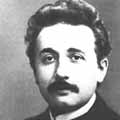 "When forced to summarize the general theory of relativity in one sentence:
Time and space and gravitation have no separate existence from matter. ... Physical objects are not in space, but these objects are spatially extended. In this way the concept 'empty space' loses its meaning. ... The particle can only appear as a limited region in space in which
the field strength or the energy density are particularly high. ...
"When forced to summarize the general theory of relativity in one sentence:
Time and space and gravitation have no separate existence from matter. ... Physical objects are not in space, but these objects are spatially extended. In this way the concept 'empty space' loses its meaning. ... The particle can only appear as a limited region in space in which
the field strength or the energy density are particularly high. ...
The free, unhampered exchange of ideas and scientific conclusions is necessary for the sound development of science, as it is in all spheres
of cultural life. ... We must not conceal from ourselves that no improvement in the present depressing situation is possible without
a severe struggle; for the handful of those who are really determined to do something is minute in comparison with the mass of the lukewarm
and the misguided. ...
Humanity is going to need a substantially new way of thinking if it is to survive!" (Albert Einstein)
 We can now deduce the most simple science theory of reality - the wave structure of matter in space. By understanding how we and everything around us are interconnected
in Space we can then deduce solutions to the fundamental problems of human knowledge in physics, philosophy, metaphysics, theology, education, health, evolution and ecology, politics and society.
We can now deduce the most simple science theory of reality - the wave structure of matter in space. By understanding how we and everything around us are interconnected
in Space we can then deduce solutions to the fundamental problems of human knowledge in physics, philosophy, metaphysics, theology, education, health, evolution and ecology, politics and society.
This is the profound new way of thinking that Einstein
realised, that we exist as spatially extended structures of the universe - the discrete and separate body an illusion. This simply confirms the
intuitions of the ancient philosophers and mystics.
Given the current censorship in physics / philosophy of science journals (based on the standard model of particle physics / big bang cosmology) the internet is the best hope for getting new knowledge
known to the world. But that depends on you, the people who care about science and society, realise the importance of truth and reality.
It is Easy to Help!
Just click on the Social Network links at top of page, or copy a nice image or quote you like and share it. We have a wonderful collection of knowledge from the greatest minds in human history, so people will appreciate your contributions. In doing this you will help a new generation of scientists see that there is a simple sensible explanation of physical reality (One Substance, One Law) - the source of truth and wisdom, the only cure for the madness of man! Thanks! Geoff Haselhurst (Updated May, 2025)
A new scientific truth does not triumph by convincing its opponents and making them see the light, but rather because its opponents eventually die, and a new generation grows up that is familiar with it. (Max Planck, 1920)
"All that is necessary for evil to succeed is for good people to do nothing."
(Edmund Burke)
"In a time of universal deceit - telling the truth is a revolutionary act."
(George Orwell)
"Hell is Truth Seen Too Late."
(Thomas Hobbes)


Legal Disclaimer and Privacy Policy
We support 'Fair Use' of these pages for Academic & Non Commercial use.
You are welcome to use images and text, but please reference them with a link to relevant web page on this site. Thanks!
