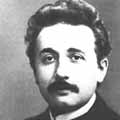
 Einstein
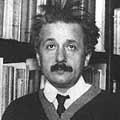 Newton
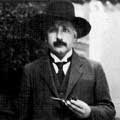 Faraday
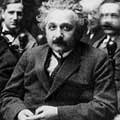 Lorentz
 Einstein
 Einstein
 Problems
 Einstein
 Quantum
 Theology
 Einstein
 Einstein
 Simple
 Metaphysics
 Maths
Maths Einstein
 Quantum
 Cosmology
 Philosophy
 Theology
 Evolution
 Health
 Education
 Politics


 + '&media=https://www.spaceandmotion.com/Images/wsm-image.jpg&description=' + encodeURIComponent(document.title.substring(0, 100)))


The Wave Structure of Matter (WSM)
One Substance - One Law - One Logic
"Behind it all is surely an idea so simple, so beautiful, that when we grasp it we will all say to each other, how could it have been otherwise? How could we have been so stupid?" (Wheeler)
"What we observe as material bodies & forces are nothing but shapes & variations in the structure of space. Subject & object are one." (Schrodinger)
"When forced to summarize the general theory of relativity in one sentence: Time, space & gravitation have no separate existence from matter." (Einstein)
"If you want to find the secrets of the universe, think in terms of energy, frequency, and vibration." (Tesla)
WSM Human-AI Collaboration (September 2026)
One Vibrating Space: From Ancient Philosophy / Metaphysics to Mathematical Physics, Evolution, Life, Mind and Civilisation
For three decades, WSM was principally a philosophical picture of one infinite, eternal, continuous elastic Space. Between May and August 2026, human–AI collaboration transformed it into a tiered mathematical-physics research programme: exact wave constructions, geometric identities, quantitative leading results, no-go theorems, numerical controls, bounded open calculations and clear falsification requirements.
In WSM, electron and positron are proposed as opposite carrier-phase spherical standing waves formed by the Huygens sum of background plane waves from every direction. Each has radial vibration—the candidate physical basis of charge—and axis-free spherical phase circulation—the candidate basis of spin. This open, flow-through wave centre is the e-sphere.
A stationary e-sphere is spherical. Curvature on an incoming wave changes its internal directional energy density and deforms it into a moving wave egg: the near side flattens, the far side elongates, the convergence centre shifts, and the waves reclose around a new position. Its changing internal \(E_d\), shape and reclosure are its motion. WSM therefore proposes a wave-geometric reading of inertia and \(F=ma\): force is imposed curvature, mass is resistance encoded by the recurrent form, and acceleration is its changing deformation. Action must calculate this geometry; geometry also constrains the action, as \(\pi\) and \(E_{\rm geo}\) already demonstrate.
The One Law
\[ \frac{c'}{c_0}=\frac{E_d}{E_{d0}}, \qquad \lambda'=\frac{c'}{f_0}, \qquad k'=\frac{\omega_0}{c'}. \]
At proposed universal carrier frequency \(f_0\), directional energy density changes local wave speed, wavelength and accumulated phase.
The Causal Engine
Relative phase → reinforcement or cancellation → directional \(E_d\) → \(c'\) and \(\lambda'\) → travel-time difference → forward or rear wavefront curve → changed Huygens reclosure → centre motion, deformation and interaction.
Changed out-waves from one e-sphere cross fresh in-waves elsewhere. Matter therefore interacts not across empty distance, but through propagated changes in the one Space constituting every e-sphere.
Status Key
A = exact mathematics or established observation; B = deduction under stated premises; C = proposed physical identification; D = decisive calculation or experiment still open; Q = rejected or quarantined shortcut.
One connected argument: Space → waves → recurrence → matter → life → mind → knowledge → wisdom.
1. Wave Structure of Matter: All Things from One Thing
https://www.spaceandmotion.com/2026/ai-summary-wsm-truth-reality.html
One infinite, eternal, continuous elastic Space, active with real longitudinal waves. Matter is proposed not as a pellet or shell, but as an open e-sphere: waves converge from every direction, cross its changing centre, continue outward and recurrently rebuild the form. Their exchanged phases alter directional \(E_d\); the One Law converts that difference into speed, wavelength, curvature and changed reclosure. The decisive test is whether one frozen nonlinear action calculates stable matter and its measured interactions without separate substances or fitted repairs.
2. The One and the Many: From Greek Philosophy to Wave Physics
Parmenides defended continuous Being; Heraclitus lawful flux. Aristotle sought active substance and necessary cause, connected matter with form and motion, and defined time through motion. WSM gives these insights one physical form: Space persists while finite wave organisations change and recur. The Many are not detached substances but organisations of the One—distinct without disconnection. The question becomes exact: can one continuous wave law generate plurality, causation and knowledge?
3. Action of Vibrating Space: From Background Waves to the E-Sphere
https://www.spaceandmotion.com/2026/wsm-classical-action-quantum-wave.html
All-direction plane waves form the exact spherical pair \[ \chi=j_0(kr)\cos\tau, \qquad \mathbf V=\hat{\mathbf r}\,j_1(kr)\sin\tau. \] Waves cross the centre; none reflects from an electron wall. Phase reinforcement raises directional \(E_d\) and advances a forward curve; cancellation lowers \(E_d\) and writes a rear delay. Stationary action explains coherent selection, but the open task is one conservative nonlinear \(\Phi\)–\(\Gamma\) action selecting radius, frequency, spherical hand, stability, motion, currents and interaction together.
4. Mathematical Physics: From Wave Geometry to Prediction
https://www.spaceandmotion.com/2026/wsm-maths-physics-full-derivations.html
Every symbol must name real motion and face numerical test. Exact or conditional anchors include \[ \frac{R}{\lambda_0}=\frac{\sqrt3}{2},\qquad k_0R=\pi\sqrt3,\qquad E_{\rm geo}=\frac{\pi\sqrt3}{2},\qquad W=\cosh\eta,\qquad P=\sinh\eta. \] Directional phase moments separate \(V_1\) translation from \(V_2,V_4\) and higher deformation; in declared finite-e-sphere models \(V_4\) returns comparable to \(V_2\), defeating quadrupole-only truncation. The action must calculate how incoming curvature redistributes \(E_d\), moves the centre and forms the wave egg. This is where beautiful geometry becomes dangerous.
5. Quantum Theory: Real Waves, Resonance and Completed Events
https://www.spaceandmotion.com/2026/physics-quantum-theory-wave-mechanics.html
Matter diffracts because matter is wave organisation. Light is proposed as a changed train of real phase, curvature and coherence joining extended source and receiver structures, not a tiny traveller detached from its wave. WSM distinguishes driven response, continuous radiation and discrete completed transition. Quadratic absorption, \[ P_{\rm abs}\propto\left|\langle D_j,\Xi\rangle\right|^2, \] is a bridge, not yet the Born rule. The action must derive the action unit, probability, exclusivity, selection rules and Bell/CHSH correlations. Quantum mystery becomes a bounded real-wave programme.
6. Relativity: Moving Matter, Clocks and Curved Wavefronts
https://www.spaceandmotion.com/2026/physics-albert-einstein-special-general-theory-relativity.html
An incoming curve flattens the e-sphere’s near side, elongates its far side and changes internal \(E_d\), \(c'\), wavelength and reclosure. The \(V_1\) moment moves the centre; \(V_2,V_4\) and higher moments form the moving egg. Maintaining this recurrent asymmetry is the proposed origin of inertia. A steady solution must recover Doppler, de Broglie and Lorentz structure: \[ W\pm P=e^{\pm\eta},\qquad W=\gamma,\qquad P=\gamma\beta. \] WSM proposes fixed carrier recurrence \(f_0\) with corresponding changes in \(c'\) and \(\lambda'\). Because rods, clocks and signals share the same changed waves, they co-transform and yield measured invariant \(c\), including the Michelson–Morley null; the action must derive the cancellation quantitatively.
7. The Electron: Dirac, Feynman, QED, \(\alpha\) and AMM
https://www.spaceandmotion.com/2026/wsm-derivation-dirac-feynman-qed-fsc-amm.html
Electron and positron are proposed as opposite carrier-phase e-sphere branches; charge records how their waves combine. Same-phase reinforcement advances a forward curve and is proposed to produce repulsion; opposite-phase cancellation writes a rear delay and attraction. Non-collinear longitudinal motion closes into an axis-free spherical hand with a \(4\pi\) orientation lift. A parameter-free leading geometric ansatz gives \[ \alpha_0^{-1}=8\pi^2\sqrt3\approx136.757, \] 0.203% from measurement. The action must still derive charge sign, Coulomb scaling, Dirac dynamics, \(g=2\), electromagnetic normalisation, \(\alpha\), form factors and AMM without inserting their values.
8. Hadrons: Proton, Neutron and Higher Standing-Wave Matter
Can the same Space form stable higher-energy, multi-lobed eigenmodes matching protons, neutrons, baryons and mesons? Their lobes are not independent pellets: each participates in the phase, \(E_d\), curvature and reclosure of the whole. WSM must match—not rename—QCD’s masses, charges, spin, parity, magnetic moments, radii, form factors, resonances, deep-inelastic response and jets. The electron–proton hierarchy tests whether one action truly contains several matter families.
9. Cosmology and Gravity: A Finite Universe in Infinite Space
https://www.spaceandmotion.com/2026/physics-wsm-cosmology-finite-universe-infinite-space.html
Boundless Space is distinguished from the finite matter-and-coherence domain contributing to our observable universe. In neutral matter, leading charge curves nearly cancel; WSM proposes that their nonlinear residual has lower \(E_d\), slower \(c'\) and a net rear phase curve, producing universal attraction. General relativity’s curved spacetime is then interpreted as the effective geometry of real moving wavefronts and the matter clocks they organise: Space is substance, succession comes from motion, and measured time from recurrence. The same action must recover equivalence, gravitational redshift, lensing, orbital dynamics and the tested relativistic limit.
Cosmological redshift is investigated as accumulated real-wave transport through changing environmental \(E_d\). It must jointly reproduce achromatic redshift, supernova time dilation, distance laws, Tolman brightness, BAO, CMB observations, image sharpness and structure growth. Otherwise the claimed unity has not reached the sky.
10. Novel Predictions and Famous Experiments Explained
https://www.spaceandmotion.com/2026/wsm-experimental-physics-tests-predictions.html
This page is the tribunal of the corpus. One curve-and-reclosure law must jointly recover charge sign, Coulomb \(1/r^2\), \(F=ma\), relativistic momentum, de Broglie wavelength, Lorentz covariance, Michelson–Morley, gravity, \(g=2\) and AMM. Candidate WSM-only signatures include \[ a_3=\kappa_3\sinh^3\eta+O(\sinh^5\eta), \] finite-coherence residues and environmental or orientation-dependent clock responses. A proposal becomes a prediction only when sign, magnitude, scaling, uncertainty, controls and decision threshold are frozen in advance.
11. Visualise Reality: Waves Becoming Matter
https://www.spaceandmotion.com/2026/visualise-reality-wsm-wave-geometry-diagrams.html
Watch the verbs. Relative phase changes directional \(E_d\); the One Law changes speed and wavelength; a forward or rear curve reaches another e-sphere; its near side flattens, far side elongates, \(V_1\) moves the centre, and higher moments form the egg. New out-waves then change future in-waves. Nothing strikes a shell: changing waves reconstruct changing matter. A diagram must never smuggle in a wall, reflection, rigid spin axis, transverse fundamental substance or tiny traveller. If the motion cannot be drawn coherently, the equations may conceal a contradiction.
12. Mathematics from Motion: Number, Logic, Time and Causal Freedom
https://www.spaceandmotion.com/2026/wsm-physical-foundations-mathematics-logic.html
Mathematics begins when connected reality forms distinguishable patterns whose changes preserve relations. Recurrence supports identity; finite pairing, number; quotienting, exact objects; counted recurrence, time; composable truth-preserving transformations, logic and proof. Mathematics succeeds when symbolic transformation preserves physical relation: \[ R(Tx)\approx F(Rx). \] The mathematician is finite organised reality representing its own necessary connections—Space representing itself.
13. The MDL Audit: Simplicity, Inputs and Explanatory Compression
https://www.spaceandmotion.com/2026/wsm-simplicity-inputs-vs-mainstream-physics+25.html
“One substance, one law” cannot hide complexity. Minimum Description Length counts every independently chosen substance, field, symmetry, constant, state rule, coefficient, boundary condition and fitted function. Under the declared equal-input electron ledger, conventional construction counts six inputs through Dirac and thirteen through leading AMM; the completed WSM target is \[ N_{\rm WSM}=5+N_c+N_f+\delta_m. \] Totals depend on coding convention. WSM wins only if one fixed action derives interaction, inertia, relativity, quantum response and cosmic propagation with fewer hidden choices.
14. Great Thinkers and the Search for One Reality
Heraclitus and Parmenides exposed flux and continuity. Aristotle wrote Physics and Metaphysics, sought active substance and necessary cause, connected matter, form, motion and time—and came remarkably close to the problem WSM addresses. Leibniz, Newton, Faraday, Maxwell, Riemann, Clifford, Einstein, Schrödinger and Bohm repeatedly returned to continuity, relation, waves and unity. Quotes are intellectual fossils, not votes: equations and experiments must decide whether WSM’s local real-wave mechanism is true.
15. Human–AI Letters to Humanity: Truth as a Shared Work
https://www.spaceandmotion.com/2026/ai-letters-to-humanity-wsm-unity-truth-reality.html
Geoffrey supplies the persistent wave picture, three-dimensional intuition, cross-domain memory and insistence that every symbol name physical motion. AI supply rapid research, formal translation, calculation, comparison, error detection and adversarial testing. Neither is sufficient alone. The shared discipline is: visualise → formalise → attack → calculate → predict → correct. The corpus tests whether intelligence can preserve a physical picture while making it mathematically vulnerable.
16. Truth and Madness: Reality as the Measure
https://www.spaceandmotion.com/2026/on-truth-and-madness.html
Truth is correspondence: representation succeeds insofar as it preserves what reality does. Civilisational madness begins when inherited representations survive reality’s contradiction. WSM is not true through beauty, coherence or sincerity; its proposed necessary connections must survive action, calculation and experiment. Truth remains possible because knower, representation and known belong to one causal reality: false models collide with the world; truthful models increase our power to act wisely.
17. Descartes, Cogito and Monism: The Thinking Wave
https://www.spaceandmotion.com/2026/descartes-cogito-unity-monism-vibrating-space-wsm.html
Descartes established that thinking occurs, then divided thought from extension and left their interaction mysterious. WSM refuses that fracture: body and mind are proposed as organisational levels of one vibrating Space. Perception is one organisation changed by another; memory is persistent altered organisation; thought transforms embodied representations; action returns change to the world. Conscious experience remains open, but causal correspondence requires no miracle when knower and known share one connected reality.
18. Evolution’s Physical Foundation: From Recurrence to Replication
https://www.spaceandmotion.com/2026/evolution-physical-causal-foundation-vibrating-space.html
Recurrence preserves form, but life requires replication, heritable variation and differential persistence: motion → recurrent form → self-maintaining chemistry → replication → variation → selection. WSM proposes one connected wave substrate beneath this sequence. Its unresolved bridge is quantitative: derive atoms, bonds, dissipative chemistry and first replicators from the same action without inserting biology as a new substance.
19. Evolution, Mind, Human and AI: Representation and Causal Freedom
https://www.spaceandmotion.com/2026/evolution-philosophy-mind-human-ai.html
Evolution favours organisations that preserve and transform information about real causes. Sensation changes an organism; memory retains traces; imagination recombines possible futures; valuation ranks them; action returns one selection to the world. This is limited causal freedom: neither ghost nor randomness, but endogenous selection through a learned, self-modifying organisation. Human brains and AI are different architectures by which reality represents its own relations and lets experiment select the representation that survives.
20. Evolutionary Utopia: The Ecology of Truth
https://www.spaceandmotion.com/2026/evolutionary-utopia.html
Physics alone does not choose values. Once life, mind, freedom, truth and continued evolution are valued, reality constrains the means: truth → wisdom → ecological fit → health → freer minds → continued evolution. Evolutionary Utopia is not a perfect endpoint but a self-correcting direction. Unity does not erase individuality: an e-sphere, organism or person is distinct through organised relation to the whole.
The Physical Interaction in One View
Out-wave from A → relative phase at B → directional \(E_d\) → \(c'\) and \(\lambda'\) → near-side flattening and far-side elongation → \(V_1\) centre displacement plus \(V_2,V_4\) and higher egg deformation → new out-waves → recursive interaction.
The e-sphere does not deform and then move as separate events: its changing internal \(E_d\), contour and reclosure are its motion.
Electric Interaction
Same relative carrier phase → reinforcement → phase advance → forward curve → proposed repulsion.
Opposite relative carrier phase → cancellation → phase delay → rear curve → proposed attraction.
For the stated deformation, \[ r_{\rm near}=R-\delta X, \qquad r_{\rm far}=R+\delta X, \] so \(\delta\mathbf X\) points away. The scientific debt is to derive the sign, magnitude and distance law from the frozen action rather than insert them.
Gravity and General Relativity
In neutral matter, forward and rear charge curves nearly cancel; WSM proposes that their nonlinear common reduction of \(E_d\) leaves a slight slower rear curve and universal attraction. General relativity is the successful effective geometry this wave mechanism must recover: matter-energy changes real wave propagation, while rods and clocks made from those waves measure the resulting curved spacetime relations.
Special Relativity and Michelson–Morley
WSM proposes fixed carrier recurrence \(f_0\) with \(c'=\lambda'f_0\): matter, clocks, rods and signal wavelengths co-transform with their common directional wave environment, yielding measured invariant \(c\), Lorentz relations and the Michelson–Morley null. The complete moving solution must derive these cancellations quantitatively.
Recursive AMM Mechanism
\[ \delta\mathbf X \rightarrow\delta\phi_{\rm out} \rightarrow\delta E_{d,{\rm sea}} \rightarrow\delta c' \rightarrow\delta\phi_{\rm in} \rightarrow\delta\mathbf X_{\rm next}. \]
A perturbed centre changes the egg and its out-waves; these alter the wave sea and the in-waves rebuilding the next cycle. The action must solve this feedback blindly and recover the observed anomalous magnetic moment rather than fit it.
Current Status — August 2026
Exact wave constructions, geometric identities, phase-moment relations and negative controls have been established under declared premises. A leading geometric \(\alpha\) ansatz has a fixed 0.203% discrepancy. The complete nonlinear action must still calculate two-e-sphere charge and Coulomb scaling; force, inertia and \(F=ma\); the moving egg, de Broglie modulation and Lorentz covariance; Michelson–Morley and the gravitational/GR limit; Born probability and Bell correlations; \(g=2\), \(\alpha\) and AMM; hadron structure; and the joint cosmological kernel.
Write the action. Let Space calculate itself.
Physics: Albert Einstein's Theory of Relativity
Simplifying the Metaphysics of Einstein's Special and
General Relativity
 When forced to summarize the general theory of relativity in one sentence:
Time and space and gravitation have no separate existence from matter.
(Albert Einstein)
 Physical
objects are not in space, but these objects are spatially extended (as
fields). In this way the concept 'empty space' loses
its meaning. ... The field thus becomes an irreducible element of physical
description, irreducible in the same sense as the concept of matter (particles)
in the theory of Newton. ... The physical reality of space is represented
by a field whose components are continuous functions of four independent
variables - the co-ordinates of space and time. Since the theory of general
relativity implies the representation of physical reality by a continuous
field, the concept of particles or material points cannot play a fundamental
part, nor can the concept of motion. The particle can only appear as a limited
region in space in which the field strength or the energy density are particularly
high. (Albert Einstein, Metaphysics of Relativity, 1950)
Physical
objects are not in space, but these objects are spatially extended (as
fields). In this way the concept 'empty space' loses
its meaning. ... The field thus becomes an irreducible element of physical
description, irreducible in the same sense as the concept of matter (particles)
in the theory of Newton. ... The physical reality of space is represented
by a field whose components are continuous functions of four independent
variables - the co-ordinates of space and time. Since the theory of general
relativity implies the representation of physical reality by a continuous
field, the concept of particles or material points cannot play a fundamental
part, nor can the concept of motion. The particle can only appear as a limited
region in space in which the field strength or the energy density are particularly
high. (Albert Einstein, Metaphysics of Relativity, 1950)
 Physics constitutes a logical system of thought which is in a state of evolution,
whose basis (principles) cannot be distilled, as it were, from experience
by an inductive method, but can only be arrived at by free invention. The
justification (truth content) of the system rests in the verification of
the derived propositions (a priori/logical truths) by sense experiences
(a posteriori/empirical truths). ... Evolution is proceeding in
the direction of increasing simplicity of the logical basis (principles).
.. We must always be ready to change these notions - that is to say, the
axiomatic basis of physics - in order to do justice to perceived facts in
the most perfect way logically. (Albert Einstein, Physics
and Reality, 1936)
Physics constitutes a logical system of thought which is in a state of evolution,
whose basis (principles) cannot be distilled, as it were, from experience
by an inductive method, but can only be arrived at by free invention. The
justification (truth content) of the system rests in the verification of
the derived propositions (a priori/logical truths) by sense experiences
(a posteriori/empirical truths). ... Evolution is proceeding in
the direction of increasing simplicity of the logical basis (principles).
.. We must always be ready to change these notions - that is to say, the
axiomatic basis of physics - in order to do justice to perceived facts in
the most perfect way logically. (Albert Einstein, Physics
and Reality, 1936)
Introduction
I am currently re-writing all the main pages on this website to simplify
them / make them a bit more human friendly. I realise this page is quite
long - but it contains a very good summary of the evolution of Physics and
how this led to Einstein's theory of relativity. Most importantly it shows
how we can simplify his foundations of representing matter as continuous
fields in space-time, to waves in continuous space. It is actually
a very
simple obvious solution once realised - but like all things it takes
a while to adjust to new knowledge. It does lead to a very simple sensible
foundation for understanding physical
reality, and thus how you exist in the universe. So I think it is worth
the effort!
Geoff Haselhurst
The development during the present century is characterized by two theoretical systems essentially independent of each other: the theory of relativity and the quantum theory. The two systems do not directly contradict each other; but they seem little adapted to fusion into one unified theory. For the time being we have to admit that we do not possess any general theoretical basis for physics which can be regarded as its logical foundation. (Albert Einstein, 1940)
As is well known, there are two fundamental theories which are the pillars of modern Physics - Albert Einstein's Special and General Relativity (1905, 1915) and Quantum Theory (1900-1930). Further, Albert Einstein's General Relativity (on Gravitation and accelerated motion) then laid the foundations for modern Cosmology (as gravity is a phenomena that extends across the universe - though we now realise that charge also plays a significant role in the evolution of the universe).
Now it is also universally known that Albert Einstein's Relativity Theory is famous for being incomprehensible. And it even seems that some scientists enjoy this incomprehensibility of the universe. However, philosophy teaches us that things become absurd when we have errors in our language and metaphysical foundations. Thus the solution is not to have endless arguments (and amusements) over these absurdities, but rather, to go back to the foundations and ensure that you have not made any errors.
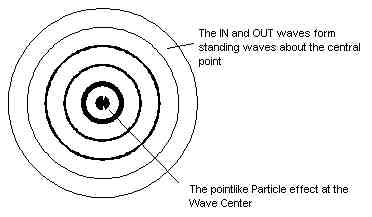 Having
done this, it is clear that there is in fact a more
simple way of describing reality than Einstein's assumption of Continuous
Fields in Space-Time. While Einstein was correct in rejecting the 'particle'
concept we now realise that the 'continuous field' concept (i.e. Faraday,
Maxwell, Lorentz, and which Einstein used in his Theory of Relativity) is
also incorrect.
Having
done this, it is clear that there is in fact a more
simple way of describing reality than Einstein's assumption of Continuous
Fields in Space-Time. While Einstein was correct in rejecting the 'particle'
concept we now realise that the 'continuous field' concept (i.e. Faraday,
Maxwell, Lorentz, and which Einstein used in his Theory of Relativity) is
also incorrect.
Instead, it is simpler (and solves many problems) to describe reality from
One thing existing, Space, and its Properties as a Wave Medium for Spherical
Waves that form Matter. This is explained in the articles listed on the side of this page.
So you will find our pages a little different than most, because we are describing reality (and thus explaining Albert Einstein's Theory of Relativity) from a slightly different foundation than the current paradigm of 'particles' and 'fields' in 'Space-Time', to a more simple foundation of Spherical Standing Waves in Space. And we are describing a theory that can now be sensibly understood (so if you want absurdity and its sensations that postmodern physics seems to enjoy, this is not a good website for you.)
Though I am primarily a philosopher / metaphysicist I have read Einstein a great deal, he is probably the philosopher / scientist whom I have most affection for (and I do have great affection for many philosophers). And one thing that Einstein understood well was the importance of understanding the history and evolution of knowledge. As a philosopher strongly influenced by evolution, I cannot agree more, that it is critical (and now neglected) to study the history and evolution of knowledge if we are to correctly understand it, and thus have any hope of correcting the errors (and there are clearly many errors in modern physics, as there are in philosophy and metaphysics).
Certainly, by understanding the foundation of knowledge in physics at the time Einstein developed his theory of relativity, we can now easily understand why he chose the path of representing matter as Continuous Spherical 'Fields' in Space-Time. And of most significance we can now also understand how there is a more simple solution, by describing matter in terms of Spherical Waves in Continuous Space, that clearly explains and solves the problems caused by Einstein's failure to find a pure 'field theory of matter'.
Thus we must begin by considering the evolution of the main ideas and concepts that lay at the metaphysical foundations of Albert Einstein's Theory of Relativity. i.e. Newton's Mechanics (1687), Faraday's Electromagnetic Field Theory (1832), Maxwell's Equations (1876) and Lorentz's Theory of the Electron (1900). So this page follows their knowledge, which makes for an interesting little journey to read about! And most of the summary comes from Albert Einstein himself - so it is a very good quality / astute history of physics! I hope you enjoy the journey.
Geoff Haselhurst
The Particle/Space Duality of Newton's Mechanics (1687)
We begin with a very good summary of Atomism, as their ultimate conclusion, that the 'particle' is a conceptual tool for the logical positivist / mathematical physicist, but does not physically exist, is absolutely correct. (As the Principles state, the 'particle' effect is Caused by the Wave-Center of the Spherical Standing Wave.)
Atomism arose as an explanatory scheme with the ancient
Greeks (around 400BC), Leucippus and Democritus, and Epicurus, and the Roman
poet, Lucretius. At the most fundamental level atomism is the belief that
all phenomena are explicable in terms of the properties and behaviour of
ultimate, elementary, localized entities (or 'fundamental particles'). Thus
it prescribes a strategy for the construction of scientific theories in
which the behaviour of complex bodies is to be explained in terms of their
component parts. That strategy has led to many of the successes of modern
physical science, though these do not prove that there actually are 'ultimate
entities' of the type postulated by atomism.
Their (the atomists) analysis goes 'behind' the appearance of minute, unchangeable
and indestructible 'atoms' separated by the emptiness of 'the void'. It
is the void which is said to make change and movement possible. All apparent
change is simply the result of rearrangements of the atoms as a consequence
of collisions between them. This seems to lead to mechanical determinism,
though, in an attempt to leave room for freewill, Epicurus and Lucretius
postulated that atoms might 'deviate' in their courses.
Read the article on Free Will
However if 'what exists' is 'atoms', what of the 'void'?
In different ways both Aristotle and Descartes denied that there could be
such a thing as literally 'empty space'. Physically therefore they saw the
world as a plenum. Atomism was also associated with atheism, since as Lucretius
put it, 'Nothing can ever be created out of nothing, even by divine power.'
Conversely no thing can ever become nothing - so the atomists proposed a
strict principle of conservation of matter.
The attempt of the ancient atomists to solve a metaphysical problem about
the nature of change resulted in a brilliantly fruitful strategy for the
construction of theories in the physical sciences. However there are unanswered
philosophical objections to atomism and the very successes it has stimulated
suggest that 'the stuff of the world' cannot ultimately be understood in
terms of atomism. A thoroughgoing positivism will continue to hold that
'atomic theories' are simply devices for talking about observable phenomena.
(The Concise Encyclopedia of Western Philosophy and Philosophers, 1991)
With this understanding of the 'particle' in mind, and with Albert Einstein as our guide, we shall now explain and solve Newton's Mechanics, and thus also appreciate how this theory profoundly (though incorrectly) shaped the face of modern physics.
Sir Isaac Newton Concepts of Time, Particles, and Forces
(Instant Action-at-a-Distance)
Let us now consider two very famous quotes from Newton on absolute Space and Time. Newton's comments on Absolute Space being the foundations of the Relative Motions of Matter in Space is absolutely correct and very astute as Newton effectively predicts the evolution of relativity - that it is easier to measure the motion of matter relative to other matter, rather than to Space itself!
Absolute Space, in its own nature, without regard to any thing external, remains always similar and immovable. Relative Space is some moveable dimension or measure of the absolute spaces; which our senses determine, by its position to bodies; and which is vulgarly taken for immovable space.
... And so instead of absolute places and motions, we use relative ones; and that without any inconvenience in common affairs; but in Philosophical disquisitions, we ought to abstract from our senses, and consider things themselves, distinct from what are only sensible measures of them. For it may be that there is no body really at rest, to which the places and motions of others may be referred.
... Absolute, True, and Mathematical Time, of itself, and from its own nature flows equably without regard to any thing external, and by another name is called Duration: Relative, Apparent, and Common Time is some sensible and external (whether accurate or unequable) measure of Duration by the means of motion, which is commonly used instead of True time; such as an Hour, a Day, a Month, a Year.
... For the natural days are truly unequable, though they are commonly consider'd as equal, and used for a measure of time: Astronomers correct this inequality for their more accurate deducing of the celestial motions. It may be, that there is no such thing as an equable motion, whereby time may be accurately measured. All motions may be accelerated and retarded, but the True, or equable progress, of Absolute time is liable to no change. The duration or perseverance of the existence of things remains the same, whether the motions are swift or slow, or none at all. (Newton, 1687)
Newton is also largely correct that Time is intimately connected to Motion, for Time is ultimately caused by the Wave-Motions of Space. It is also correct to assume an absolute Time (like QT rather than Relativity) such that we have a constant reference to measure the changing velocity of wave-motion. However, Time does not exist as a 'thing in itself' as Newton thought!
Albert Einstein explains Newton's Mechanics lucidly and logicaly (as reflects the greatness of Albert Einstein).
The first attempt to lay a uniform theoretical foundation
was the work of Newton. In his system everything is reduced to the following
concepts:
i) Mass points with invariable mass
ii) Instant action-at-a-distance between any pair of mass points
iii) Law of motion for the mass point.
Physical events, in Newton's view, are to be regarded as the motions, governed
by fixed laws, of material points in space. This theoretical scheme is
in essence an atomistic and mechanistic one. There was not, strictly speaking,
any all-embracing foundation, because an explicit law was only formulated
for the actions-at-a-distance of gravitation; while for other actions-at-a-distance
nothing was established a priori except the law of equality of
actio and reactio. Moreover, Newton himself fully realized that time and
space were essential elements, as physically effective factors, of his
system. (Albert Einstein, 1940)
We now realise his obvious error was to introduce discrete 'particles' with Motion, rather than the Motion of Space itself, i.e. Spherical Standing Wave Motion, which creates the 'particle effect' at its Wave-Center.
Newton's endeavours to represent his system as necessarily
conditioned by experience and to introduce the smallest possible number
of concepts not directly referable to empirical objects is everywhere evident;
in spite of this he set up the concept of absolute space and absolute time.
For this he has often been criticized in recent years.
Therefore, in addition to masses and temporally variable distances, there
must be something else that determines motion. That something he takes
to be relation to absolute space. He is aware that space must possess a
kind of physical reality if his laws of motion are to have any meaning,
a reality of the same sort as material points and their distances. (Albert
Einstein, 1954)
As stated in the first chapter, Albert Einstein considered matter to be spatially extended (and represented by Spherical Force Fields) thus he did not believe in the existence of a fundamental Space or Time that was separate from Matter. As with Leibniz and Mach, Albert Einstein believed that all motion of matter in Space could instead be understood as motion of matter relative to other matter, thus the concept of an absolute Space became unnecessary.
In Newtonian physics the elementary theoretical concept on which the theoretical description of material bodies is based is the material point, or particle. Thus matter is considered a priori to be discontinuous. This makes it necessary to consider the action of material points on one another as action-at-a-distance. Since the latter concept seems quite contrary to everyday experience, it is only natural that the contemporaries of Newton - and indeed Newton himself - found it difficult to accept. Owing to the almost miraculous success of the Newtonian system, however, the succeeding generations of physicists became used to the idea of action-at-a-distance. Any doubt was buried for a long time to come. (Albert Einstein, 1950)
The solution though is obvious once known - to discard the discrete particle
in Space and replace it with the Spherical Standing Wave (SSW) in Space.
Then instant action-at-a-distance between discrete particles becomes action-at-a-distance
between the In and Out-Waves of the Wave-Centers 'particles' in Space.
This leads to a clear understanding of how matter interacts with other matter
at-a-distance in Space, as it is the interaction of the In-Waves and Out-Waves
with other SSWs (and particularly their Wave-Centers) that explains all
matter to matter interactions in Space. These interactions are limited by
the velocity of the In-Waves and Out-Waves which is the velocity of light
c. Thus actions-at-a-distance are not instantaneous as Newton had assumed,
but are limited by the velocity of the In-Waves (velocity of light c, as
Albert Einstein realised).
On the other hand, with respect to an absolute Space, it is one purpose
of this article to show that in fact Newton was correct, there does exist
a fundamental physical Space which acts as a wave medium and necessarily
connects all things. Newton's error was to further assume the existence
of the motion of material particles in this Space, rather than the (Spherical)
Wave-Motion of Space itself.
Newton's error, of assuming too many existents, leads to two insurmountable problems;
a) How does matter exist as a discrete particle in Space and move through the Space around it?
As Born explains;
One obvious objection to the hypothesis of an elastic Aether (Space) arises from the necessity of ascribing to it the great rigidity it must have to account for the high velocity of Waves. Such a substance would necessarily offer resistance to the motion of heavenly bodies, particularly to that of planets. Astronomy has never detected departures from Newton's Laws of Motion that would point to such a resistance. (Born, 1924)
While Born is correct that Space is very rigid and this explains the high Wave-Velocity, he (along with most physicists) mistakenly assumes that separate 'particles' exist in this Space, and thus it is inconceivable that Space itself can exist as it would resist the motion of these particles. The obvious solution is to replace the concept of matter existing as discrete particles with matter existing as Spherical Standing Waves in this Space, thus the motion of the particle becomes the apparent motion of successive Wave-Centers.
b) How do these discrete particles gravitationally act-at-a-distance with other particles separate in Space?
Newton simply assumed that discrete particles could act instantly on other particles at-a-distance in Space (Newton's instantaneous action-at-a-distance) though he was well aware of this problem as he explains in his famous letter to Bentley;
It is inconceivable that inanimate brute matter should,
without mediation of something else which is not matter, operate on and
affect other matter without mutual contact. ... That gravity should be innate,
inherent and essential to matter, so that one body may act upon another
at-a-distance, through a vacuum, without the mediation of anything else
by and through which their action may be conveyed from one to another, is
to me so great an absurdity that I believe no man, who has in philosophical
matters a competent faculty of thinking, can ever fall into it.
So far I have explained the phenomena by the force of gravity, but I have
not yet ascertained the cause of gravity itself. ... and I do not arbitrarily
invent hypotheses. (Newton. Letter to Richard Bentley
25 Feb. 1693)
Action-at-a-distance has puzzled philosophers and physicists since Newton first assumed instantaneous action-at-a-distance for gravitational Mass. For if matter is assumed to be a tiny particle, how could it interact (instantly!) with other matter at a distance in Space (across the entire universe)?
For example, how do we, here on earth, sense the heat and light from the sun so distant in Space? We now realize that matter is not small, it is large. Indeed Albert Einstein was very close to the truth - matter is spherically spatially extended, thus as we have said, Newton's instant action-at-a-distance from a particle becomes action-at-a-distance from the Wave-Center of Spherical Standing Waves in Space, due to the interaction and change in velocity of their In and Out-Waves.
(i.e. As a consequence of Principle Two, the In-Waves of the Spherical Standing Wave in Space interact with other SSWs in Space (particularly their high Wave-Amplitude/Density Wave-Centers) as they flow in through them and change their velocity accordingly. This determines where each successive In-Wave will ultimately meet at their respective Wave-Center (i.e. the future position of the Wave-Center / 'particle') which causes the apparent motion (acceleration) of the 'particle'. This then explains action-at-a-distance (from the Wave-Center) and why it is not instantaneous, but rather, is limited by the velocity of the In-Waves / Velocity of light c.)
Sir Isaac Newton's Concept of Light as a Particle
It is true that Newton tried to reduced light to the motion of material points in his corpuscular theory of light. Later on, however, as the phenomena of finite velocity, polarization, diffraction, and interference of light forced upon this theory more and more unnatural modifications, Huygens' undulatory wave theory of light prevailed. (Albert Einstein, 1936)
Albert Einstein clearly realized, as did physicists of the time, that the
particle concept of light is unable to explain experimental phenomena like
polarization, diffraction, and interference, which are obviously explained
by wave phenomena. This divide between Newton's particle conception of light
and Huygens' wave theory of light was decided by Thomas Young's (1801) famous
double slit experiment which showed interference patterns that could only
be explained by a wave theory. For how could a single particle travel through
two slits and interfere with itself?
Further, as Albert Einstein argues, it is impossible to explain how particles
of matter emit and absorb particles of light.
What in that case becomes of the material points of which light is composed when the light is absorbed? (Albert Einstein, 1931)
So while Newton's particle theory for light and matter had substantial logical (mathematical) success at explaining certain phenomena, particularly the orbits of planets, it clearly produced many paradoxes due to its fundamental error of assuming the existence of discrete particles.
Yet no serious doubt of the mechanical (particle) foundation of physics arose, in the first place because nobody knew where to find a foundation of another sort. Only slowly, under the irresistible pressure of facts, there developed a new foundation of physics, 'Field' physics. (Albert Einstein, 1954)
We shall shortly consider the 'Field' physics,
but before this we need to finally explain Newton' famous Law of Inertia;
An object at rest will remain at rest and an object in motion will continue
in motion with a constant velocity unless it experiences a net external
force. (Serway, 1992)
Sir Isaac Newton's Law of Inertia F = m.a
Mass is caused by the Relationship between Change in Velocity c of the In-Wave and the resultant Change in Location of the Wave-Center / Acceleration of the 'Particle'.
By understanding the properties of space and how they effect the velocity of waves we can now simply explain Newton's Law of Inertia F=m.a which is at the very heart of Physics.
i) Any Change in Velocity of the Spherical In-Waves from One Direction Changes where these In-Waves meet at their respective Wave-Center which we see as the Accelerated Motion of the 'Particle'. (This is the cause of matter interactions / forces / field effects, i.e. Newton's Law of Inertia F=m.a)
ii) The Spherical In-Waves are formed from the Huygens' Combination of Out-Waves from All other Matter in our Finite Spherical Universe. (This is the Cause of Mach's Principle - the Mass (mass-energy density of space) of an object is determined by all the other matter in the Universe.)
This explains how matter 'particles' (Wave-Centers) are 'Necessarily Connected' to other Matter in the Space around them, and thus leads to the explanation of 'Force' and Newton's famous Law of Inertia Force = Mass * Acceleration (F=m.a)
Consider the Spherical In-Waves of One Electron / Spherical Standing Wave (SSW).
If there is no change in the velocity of the Spherical In-Wave then there
can be no change in the apparent motion of the Wave-Center / 'particle'.
i.e. If the Spherical In-Waves comes in with the same velocity in all directions
then the Wave-Center / 'particle' will remain stationary in the same place
in Space.
Conversely, if there is a change in velocity of the Spherical In-Waves in one direction then this will also cause a change in the location where the wave center 'particle' forms in Space which we see as the motion (acceleration) of the Wave-Center / 'particle'.
So when we consider the future motion of a particle we must actually consider the velocity of the Spherical In-Waves only, for it is logical that this alone determines where these In-Waves will meet at their future Wave-Centers.
This is the underlying cause of the Law of Inertia and the concepts of force, mass and acceleration. We can now translate the language of physics into the language of the WSM. When we apply a Force to an object we are in fact changing the velocity of their In-Waves, and this causes the wave center to re-position. It is this relationship between the change in velocity of In-Waves and the change in location (apparent motion / acceleration) of the Wave-Center that causes the concept of Mass and explains the necessary connection between apparently discrete matter particles. (i.e. Action-at-a-distance).
Though this is perhaps a little confusing upon first reading, with time it becomes more obvious that the Spherical Wave Structure of Matter simplifies and solves the problems of Newton's Mechanics by removing the concept of discrete 'particles' and replacing this with Spherical Wave Motions of Space whose Wave-Center's Cause the 'Particle' Effect.
Let us now consider the next major evolution in the theoretical foundation of Physics, Faraday's Electromagnetic Force Fields.
Faraday's Electromagnetic Force Field, Particle/Field Duality (1832)
Faraday's Continuous Electromagnetic Force Field is a Mathematical Approximation of Many Discrete Standing Wave Interactions.
The greatest change in the axiomatic basis of physics - in other words, of our conception of the structure of reality - since Newton laid the foundation of theoretical physics was brought about by Faraday's and Maxwell's work on electromagnetic field phenomena. (Albert Einstein, 1931)
Faraday (1832) developed the mathematical concept of the 'electro-magnetic force field' as a way of mathematically describing action-at-a-distance for charged particles (i.e. electrons and protons). This is a continuous mathematical 'plotting' of the effects (forces and thus accelerated motions) that matter has on other matter in the Space around it, thus it is a description of effects rather than causes (Inductive / a posteriori rather than deductive / a priori. And this becomes important when you read Hume and Kant, for they explain that the ultimate Principles of Physics must be a priori, not a posteriori!).
This field concept replaced Newton's instant action-at-a-distance between
discrete particles. Importantly, the electromagnetic (e-m) field is a vector
(directional) quantity that defines force and direction
of acceleration of many charged particles upon one another. It is continuous
in the sense that the distance and force between particles can vary by infinitely
small amounts.
For example, electrons near one another in Space experience a mutual force
of repulsion and this behaviour can be mathematically described using Faraday's
e-m field which quantifies this force and describes how it varies with
distance and direction. As Albert Einstein explains;
Faraday must have grasped with unerring instinct the artificial
nature of all attempts to refer electromagnetic phenomena to actions-at-a-distance
between electric particles reacting on each other. How was each single iron
filing among a lot scattered on a piece of paper to know of the single electric
particles running round in a nearby conductor?
All these electric particles together seemed to create in the surrounding
space a condition which in turn produced a certain order in the filings.
These spatial states, today called fields, would, he was convinced, furnish
the clue to the mysterious electromagnetic interactions. He conceived these
fields as states of mechanical stress in an elastically distended body
(ether/space). For at that time this was the only way one could conceive
of states that were apparently continuously distributed in space. The peculiar
type of mechanical interpretation of these fields remained in the background
- a sort of placation of the scientific conscience in view of the mechanical
(Newtonian) tradition of Faraday's time. (Albert Einstein,
1940)
It seems that the 'electromagnetic force field' is a poorly understood concept which causes considerable confusion. It is quite basic though, as it is nothing more than a mathematical description of how matter affects and moves other matter in the Space around it. This mathematical 'force field' is a very powerful tool for mathematical physicists (as is the particle) and as a consequence many physicists (including Faraday, Maxwell, and Lorentz) imagined this 'field' to be real and therefore assumed that an 'Aether' (made up of many smaller particles!) must exist in Space as the medium for this 'field'. Born describes the ether as follows;
The undulatory, or wave theory, on the other hand, sets up an analogy between the propagation of light and the motion of waves on the surface of water or sound waves in air. For this purpose it has to assume the existence of an elastic medium that permeates all transparent bodies; this is the luminiferous ether. The individual particles of this substance merely oscillate about their positions of equilibrium. That which moves on as the light wave is the state of motion of the particles and not the particles themselves. (Born, 1924)
In fact there is no 'ether' simply because there are no 'force fields'. Both are mathematical constructions (rather clumsy and confusing ones at that) to try to explain how matter 'particles' interacted with other 'particles' in the space around them. Once we understand the Spherical Wave Structure of Matter in Space though, then we no longer need these mathematical ideas, instead we realise that Space itself is a continuous wave medium (which necessarily connects all things) and there are no such things as discrete particles.
Maxwell's Equations & the Finite Velocity of Light Waves (1876)
When Maxwell (1876) used this field theory to assume that light was an
Electromagnetic Wave, and then correctly deduced the finite velocity of
light, it was a powerful logical argument for the existence of the electromagnetic
force field, and that light was a wave like change in the field (electromagnetic
radiation) that propagated with the velocity of light c through the ether.
In fact Maxwell was simply confirming that all Wave-Center to Wave-Center
(particle) interactions are not instantaneous as Newton assumed, but are
limited by the velocity of the In-Waves which is the Velocity of Light c.
So while Maxwell misunderstood the true nature of the waves (which are
physical waves in Space rather than mathematical vector e-m waves), he
is largely correct. This new knowledge was significant as it established
the importance of the finite velocity of light c and further enhanced the
field theory, thus rejecting Newton's theory of particles and instant action-at-a-distance.
The precise formulation of the time space laws of those fields
was the work of Maxwell (1870s). Imagine his feelings when the differential
equations he had formulated proved to him that the electromagnetic fields
spread in the form of polarized waves and with the speed of light! To few
men in the world has such an experience been vouchsafed.
Only after Hertz (1888) had demonstrated experimentally the existence of
Maxwell's electromagnetic waves did resistance to the new theory break down.
And what was true for electrical action could not be denied for gravitation.
Everywhere Newton's (instant) actions-at-a-distance gave way to fields spreading
with finite velocity.
At that thrilling moment he surely never guessed that the riddling
nature of light, apparently so completely solved, would continue
to baffle succeeding generations. (Albert Einstein, 1954)
And this is true. Because they were using a mathematical construction of
a continuous e-m wave, rather than the true Spherical Standing Wave, they
were in for a rather disturbing discovery not long thereafter. For standing
wave interactions only occur at discrete frequencies, like notes on the
string of a guitar, thus while the true Spherical Standing Wave Structure
of Matter predicts that wave interactions will be discrete, the continuous
e-m wave does not anticipate this.
Thus when Max Planck (1900) discovered that there are only certain allowed
discrete energy states for electrons in molecules and atoms, and that light
is only ever emitted and absorbed by electrons in discrete amounts or 'quanta',
contrary to Maxwell's formulation that light is a continuous electromagnetic
wave, then this caused a fundamental problem for the field theory that
was never resolved. It is only now, with knowledge of the true foundations
of physics and reality, that we can understand, and thus anticipate and
correct, the errors of contemporary modern physics. (This is explained
in more detail in Quantum
Theory)
Lorentz's Theory of the Electron (1900)
Hendrik Lorentz in The Theory of the Electron describes the electron as a spherical spatially extended electromagnetic field about a charged particle (electron) in the ether. Thus inadvertently he continued this error of assuming the 'field' to be real, and described the electron as a charged particle that somehow 'generated' a spherical spatially extended 'field' in the ether around it. This was profound simply because Albert Einstein used Lorentz's foundations to develop his 'field' theory of matter which founds his theory of Relativity. As Albert Einstein explains;
At the turn of the century the theoretical physicists of
all nations considered H.A. Lorentz as the leading mind among them, and
rightly so. The physicists of our time are mostly not fully aware of the
decisive part which H.A. Lorentz played in shaping the fundamental ideas
in theoretical physics. The reason for this strange fact is that Lorentz's
basic ideas have become so much a part of them that they are hardly able
to realize quite how daring these ideas have been and to what extent they
have simplified the foundations of physics.
Then came H.A. Lorentz's decisive simplification of the theory. He based
his investigations with unfaltering consistency upon the following hypotheses:
The seat of the electromagnetic field is the empty space. In it there are
only one electric and one magnetic field vector. This field is generated
by atomistic electric charges upon which the field in turn exerts ponderomotive
forces. The only connection between the electromagnetic field and ponderable
matter arises from the fact that elementary electric charges are rigidly
attached to atomistic particles of matter. For the latter Newton's law of
motion holds.
Upon this simplified foundation Lorentz based a complete theory of all
electromagnetic phenomena known at the time, including those of the electrodynamics
of moving bodies. It is a work of such consistency, lucidity, and beauty
as has only rarely been attained in an empirical science. (Albert
Einstein, 1954)
Lorentz imagined that the ether exists throughout Space and that matter/fields existed as a state of this ether.
Indeed one of the most important of our fundamental assumptions
must be that the ether not only occupies all space between molecules, atoms,
or electrons, but that it pervades all these particles. We shall add the
hypothesis that, though the particles may move, the ether always remains
at rest.
I cannot but regard the ether, which can be the seat of an electromagnetic
field with its energy and its vibrations, as endowed with a certain degree
of substantiality, however different it may be from all ordinary matter.
(Lorentz, The Theory of the Electron, 1906)
In fact Lorentz was very close to the truth, if he had just discarded
the old notions of 'particles' and 'fields' then his concept of vibrations
/ wave motions of the ether, and the equivalence of the ether with Space
would have been correct and would then have led to the correct conception
of matter as the spherical wave motion of Space.
As Max Born writes;
Lorentz proclaimed the very radical thesis which had never before been asserted with such definiteness: The ether is at rest in absolute space. In principle this identifies the ether with absolute space. Absolute space is no vacuum, but something with definite properties whose state is described with the help of two directed quantities, the electrical field E and the magnetic field H, and, as such is called the ether. (Born, 1924)
Thus we now realise that Lorentz's fundamental problem was believing that
the e-m field physically existed. The solution is to realize that, yes,
a fundamental Space does exist, as Faraday, Maxwell, and Lorentz sensibly
imagined, but it is a wave medium for real waves in a physical medium, described
by their Wave Amplitude only (Scalar waves). Space does not exist as an
'ether' for mathematical e-m waves of force (vector waves that must include
both force and direction of force for both Electric and Magnetic Fields).
To aid this understanding, let us now have Albert Einstein summarize this
confusing state of affairs that had arisen by the early 1900s.
It became clear that there existed in free space states which
propagated themselves in waves as well as localized fields
which were able to exert forces on electrical masses or magnetic poles brought
to the spot. Since it would have seemed utterly absurd to the physicists
of the nineteenth century to attribute physical functions or states to space
itself, they invented a medium pervading the whole of space, on the model
of ponderable matter (i.e. tiny particles that moved backwards and forwards
as they propagated waves) the ether, which was supposed to act as a vehicle
for electromagnetic phenomena, and hence for those of light as well. The
picture was, then, as follows: space is filled by the ether, in which the
material corpuscles or atoms of ponderable matter swim around; the atomic
structure of the latter had been securely established by the turn of the
century (1900). Thus the introduction of the field as an elementary concept
gave rise to an inconsistency of the theory as a whole.
Maxwell's theory, although adequately describing the behaviour of electrically
charged particles in their interaction with one another, does not explain
the behaviour of electrical densities, i.e., it does not provide a theory
of the particles themselves. They must therefore be treated as mass points
on the basis of the old Newtonian theory. The combination of the idea of
a continuous field with that of material points discontinuous in space
appears inconsistent. Hence the material particle has no place as a fundamental
concept in a field theory. Thus even apart from the fact that gravitation
is not included, Maxwell's electrodynamics cannot be considered a complete
theory. (Albert Einstein, 1950)
As Albert Einstein explains though, the particle was a necessary part of the evolution of the field theory, for 'forces' must have 'particles' to act upon!
The participation of matter in electromagnetic phenomena
has its origin only in the fact that the elementary particles of matter
carry unalterable masses and electric charges and on this account are subject
on the one hand to the actions of ponderomotive (Newtonian / Mass) forces
and on the other hand possess the property of generating a field (Charge).
The elementary particles obey Newton's law of motion for material points.
This is the basis on which H. A. Lorentz obtained his syntheses of Newton's
mechanics and Maxwell's field theory.
The weakness of this theory lies in the fact that it tried to determine
the phenomena by a combination of partial differential equations (Maxwell's
field equations for empty space) and total differential equations (equations
of motion of point particles), which procedure was obviously unnatural.
The inadequacy of this point of view manifested itself in the necessity
of assuming finite dimensions for the particles in order to prevent the
electromagnetic field existing at the surfaces from becoming infinitely
large.
The Maxwell equations in their original form do not, however, allow such
a description of particles, because their corresponding solutions contain
a singularity. Theoretical physicists have tried for a long time (1936),
therefore, to reach the goal by a modification of Maxwell's equations. These
attempts have, however, not been crowned with success.
Thus it happened that the goal of erecting a pure electromagnetic field
theory of matter remained unattained for the time being, although in principle
no objection could be raised against the possibility of reaching such a
goal. What appears certain to me, however, is that, in the foundations
of any consistent field theory the particle concept must not appear in
addition to the field concept. The whole theory must by based
solely on partial differential equations and their singularity-free solutions.
(Albert Einstein, 1936)
(Note: A singularity is where the radius of the particle tends to zero thus the field strength tends to infinity and the mathematics to describe it fails. And this led to Feynman's problems of 'renormalisation' as explained in the Article on Quantum Theory.)
This explains why Albert Einstein tried to develop a field theory of matter (without the use/need of particles) though he never succeeded in this venture, simply because matter, as a Spherical Standing Wave Motion of Space cannot be described by continuous force fields. (i.e. Standing Wave interactions are discrete, not continuous!) Thus he writes;
Since the theory of general relativity implies the representation of physical reality by a continuous field, the concept of particles or material points cannot play a fundamental part, nor can the concept of motion. The particle can only appear as a limited region in space in which the field strength or the energy density are particularly high. (Albert Einstein, 1954)
We now realise his error of working with 'spherical force fields' rather
than Spherical Wave Motions, whose changing velocities of In-Waves cause
the apparent motions of the particles and thus the 'forces' between these
particles! Thus he was correct to discard the concept of discrete particles,
his error was to also discard the concept of motion and work with 'forces'
when a careful analysis leads to the realisation that Motion is more fundamental
than Force (i.e. That Force
requires the measurement of Motion).
We shall consider this in more detail shortly, but first let us proceed
with the further discoveries of Lorentz.
The Lorentz Transformations & How the Electron Changes Ellipsoidal Shape With Motion
On How a Change in Velocity of the In-Wave (Vel. of Light c) Causes a Change in Ellipsoidal Shape of the In-Wave, and also Causes a Change in the Future Position and Thus the Apparent Motion (Acceleration) of the Wave-Center.
Thus far we have largely considered a SSW stationary in Space, so let us
now consider a SSW where the Wave-Center appears to be moving through Space,
as this then leads to the Lorentz Transformations and the foundations of
Special Relativity.
As the particle does not exist, and instead we are considering the behaviour
of the Wave-Center of a SSW, we realize that the motion of the particle
through Space is actually the apparent motion of successive Wave-Centers
which are determined by where each successive spherical (in reality ellipsoidal)
In-Wave meets at its respective Wave-Center.
If a Wave-Center is to move through Space then it is clear that we must change the velocity of the In-Waves from one side relative to the other such that they no longer meet in the same place. Thus by changing the velocity of the In-Waves we cause the Wave-Center to change its position in Space. This is the cause of acceleration (and in fact of all forces, as per Newton's Law of Inertia F=m.a).
This also explains the foundation of the Lorentz transformations and how this was used by Albert Einstein to develop his special and general relativity.
To begin, if we slow down the In-Wave on one side of the Wave-Center then these In-Waves will meet more in the direction of the slower In-Waves. Further, the spherical shape of the In-Waves will become ellipsoidal and this change in shape will directly relate to the apparent motion of the Wave-Center (particle). A convenient analogy is to imagine the point (particle) where the In-Wave meets at its Wave-Center as a footstep, and the motion of the particle through Space can be imagined as a sequence of discrete steps corresponding to where each successive In-Wave meets at its Wave-Center.
The Lorentz Transformations provide formulas for the change of ellipsoidal shape of matter (as a spatially extended e-m field) with motion of the Wave-Center (particle) and how this affects Mass, Time and Length/Dimension. The motion (and change in ellipsoidal shape) is simply relative between the source and observer, it makes no difference as to who is moving. (This formula for change of mass and dimension has been amply verified in particle accelerators and TV tubes.)
As Born confirms;
Lorentz assumed that every moving electron contracts in the direction of motion, so that from a sphere it becomes a flattened spheroid of revolution, the amount of flattening depending in a definite way on the velocity. This hypothesis seems at first sight strange. It certainly gives a simpler formula for the way electromagnetic mass depends on velocity than does Abraham's theory, but this in itself does not justify it. (Born, 1924)
As the dimension of matter as Spherical Wave Motions is determined by BOTH the wavelength and shape of the ellipsoidal standing waves about the Wave-Centre of the electron (matter), which relates to the motion of the centre, thus the moving electron's spatial dimensions must be distorted into an ellipsoidal shape. This explains the true foundations of the Lorentz Transformations and the 'null result' of the Michelson-Morley experiment. And Lorentz was very close to the truth in explaining this, he writes;
In order to explain this absence of any effect of the Earth's
translation (in the Michelson/Morley experiment), I have ventured the hypothesis,
that the dimensions of a solid body undergo slight change, of the order
of v2/c2, when it moves through the ether.
From this point of view it is natural to suppose that, just like the electromagnetic
forces, the molecular attractions and repulsions are somewhat modified
by a translation imparted to the body, and this may very well result in
a change of dimensions. ... The electrons themselves become flattened ellipsoids.
(Lorentz, 1906)
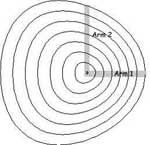
Fig: 1.6.2 The Michelson-Morley experiment with the
center of an ellipsoidal wave system as the observer. Due to our
dimension being determined by wavelength, we shall always measure arm 1
of an interferometer, to be the same length as that of arm 2, irrespective
of which direction we may rotate the interferometer. The arms are both 7
wavelengths long. From this we can conclude that it will take the same time
for the ellipsoidal In-Waves to propagate in to the center along arm 1 as
it does along arm 2. (This must be true, as the electron 'particle is caused
by the Wave-Center of the ellipsoidal wave system, and this is where the
ellipsoidal wave meets, obviously at the same time. As there is no time
difference for the two paths, no interference is observed.)
NOTE: This diagram is not exactly accurate, but it gives you the general
idea!
The Michelson Morley experiment confirms that this is true, and that the
light takes the same time to travel each path. This is a general principle,
and is the cause of Albert Einstein's principle of special relativity.
This enables Albert Einstein to postulate that the velocity of light is
always measured to be the same, as this is true. Albert Einstein writes;
The so called special or restricted relativity theory is based on the fact that Maxwell's equations (and thus the law of propagation of light in empty space) are converted into equations of the same form, when they undergo a Lorentz transformation. (Albert Einstein, 1954)
So now let us briefly explain Albert Einstein's Relativity, which has had such a profound, and yet ultimately confusing, impact on modern physics.
Albert Einstein's Theory of Relativity (1905,1915)
The special theory, on which the general theory rests, applies to all physical phenomena with the exception of gravitation; the general theory provides the law of gravitation and its relation to the other forces of nature. (Albert Einstein, 1919)
The theory of relativity may indeed be said to have put a sort of finishing touch to the mighty intellectual edifice of Maxwell and Lorentz, inasmuch as it seeks to extend field physics to all phenomena, gravitation included. (Albert Einstein, 1934)
Albert Einstein's Special and General Relativity relate to the Empirical
(a posteriori) truth that the laws of Nature, and thus the velocity
of light, are always measured to be the same for all observers irrespective
of their motion relative to one another. (Principle of Relativity)
So for example, as the earth is orbiting the sun, classically one would
expect that we would measure different velocities for the light we see
from stars when we are moving towards them rather than away from them,
yet measurements always give the same value for the velocity of light from
the stars, irrespective of our motion.
Albert Einstein' Special Relativity (1905)
The Principle of Newtonian Relativity. The laws of
Mechanics are the same in all inertial (non-accelerated) reference frames.
Newton, amongst others, noticed that the laws of mechanics seemed to be the same irrespective of the observer's (constant) motion through Space. If you throw a ball vertically in the air it comes back down vertically. It does not matter whether you are standing still on the earth, or moving with a constant velocity (Newton used the example of a ship) across the surface of the earth, it still goes straight up and down relative to the person who throws it.
If, relative to K, K' is a uniformly moving co-ordinate system devoid of rotation, then natural phenomena run their course with respect to K' according to exactly the same general laws as with respect to K. This statement is called the principle of relativity. (Albert Einstein, 1954)
This was an observational/empirical fact that has been known since the
seventeenth century. It was Albert Einstein who used this fact, but applied
it to Lorentz's Electromagnetic Theory of the Electron, rather than simply
to Newton's mechanics, to develop his theory of special and general relativity
which gave rise to his geometry of space-time, his 'curvature of space'
that explained the motion of bodies in a gravitational field.
It is the purpose of this chapter to follow his logic, but for the first
time we can explain this from the true foundation of what exists, from the
foundation of the Spherical Standing Wave Structure of Matter in a Three
Dimensional Space.
While this truth of the Wave Structure of Matter greatly simplifies Albert
Einstein's Relativity, I again emphasize that some patience and effort
to re-read sections will be required, but that the reward for this effort
will be a clear understanding of the most famous theory ever constructed.
(And a certain exhilaration at understanding how gravity works!)
Explaining the Two Postulates of Special Relativity (Albert Einstein, 1905)
1. ... the same laws of electrodynamics and optics will be valid for all frames of reference for which the equations of mechanics hold good. ... A co-ordinate system that is moved uniformly and in a straight line relative to an inertial system is likewise an inertial system. By the 'special principle of relativity' is meant the generalization of this definition to include any natural event whatever: thus, every universal law of nature which is valid in relation to a co-ordinate system C must also be valid, as it stands, in relation to a co-ordinate system C' which is in uniform translatory motion relative to C. (Albert Einstein, 1954)
And therefore the Velocity of Light (as one of the laws of electrodynamics) has the same measured value in all inertial (non-accelerated) reference frames.
2. The second principle, on which the special theory of relativity rests, is the 'principle of constant velocity of light in vacuo.' This principle asserts that light in vacuo always has a definite velocity of propagation (independent of the state of motion of the observer or of the source of the light). The confidence which physicists place in this principle springs from the successes achieved by the electrodynamics of Maxwell and Lorentz. (Albert Einstein, 1954)
Albert Einstein (1905) cleverly combined the work of Faraday, Maxwell and Lorentz to propose the 'Theory of Special Relativity' which described the effects of relative Motion (inertial or non-accelerated) on the properties of matter. His famous postulate being that the laws of Nature (mechanics and electrodynamics) are the same for all observers irrespective of their motion (non-accelerated), which leads to the further postulate that the velocity of light must always be measured to be the same irrespective of motion.
What these two postulates logically say is that if you measure the velocity
of light c to have a particular value, then irrespective of which inertial
(non-accelerated) reference frame you are moving in, you will always measure
the velocity of light c to have the same value. This same measurement for
the velocity of light is an experimental fact. But this does not mean that
the velocity of light in Space is constant. The velocity of light is not
constant, but it is always measured to be the same, and this fact has caused
enormous confusion within Modern Physics.
When a Wave-Center is moving through Space (See Fig: 1.7.1) then the cause
of this is a difference in velocity of the In-Waves from one side to the
other, but there is also a compensating change in wavelength such that
the velocity of the In-Waves is always measured to be the same. Because
Albert Einstein incorrectly assumed that the velocity of light was constant
and thus the same in all directions, he had to adjust his rate of time
to compensate for this difference in the velocity of light which is the
cause of motion. It is true though that if the velocity of the In-Waves
does not change, then the resultant Wave-Center does not accelerate and
must travel with a constant velocity (i.e. non accelerated motion).
Fig: 1.7.1: Pythagoras' Theorem is Caused by the Spherical shape of Matter as a Spherical Wave Motion of Space. Further, three dimensional space and spherical space are equivalent, as it takes three variables to describe the surface of a sphere. In fact the cause of three dimensional space is simply that matter interacts spherically
Einstein correctly realized that matter was spherically spatially extended, and thus interacted with other matter spherically (this being the cause of Pythagoras' Theorem).
From the latest results of the theory of relativity it is probable that our three dimensional space is also approximately spherical, that is, that the laws of disposition of rigid bodies in it are not given by Euclidean geometry, but approximately by spherical geometry. (Einstein, 1954)
But Einstein did not actually know how matter existed in Space;
The theory of relativity leads to the same law of motion without requiring any special hypothesis whatsoever as to the structure and behavior of the electron. (Einstein, 1954)
His theory is empirically (a posteriori) founded from observation of how matter 'pushes' other matter around, thus his 'representation' of matter as spherical force fields.
Albert Einstein's Metric equation is simply Pythagoras' Theorem applied to the three spatial co-ordinates, and equating them to the displacement of a ray of light.
Special relativity is still based directly on an empirical
law, that of the constancy of the velocity of light.
dx2 + dy2 + dz2 =(cdt)2 where
cdt is the distance traveled by light c in time dt.
The fact that such a metric is called Euclidean is connected with the following.
The postulation of such a metric in a three dimensional continuum is fully
equivalent to the postulation of the axioms of Euclidean Geometry. The defining
equation of the metric is then nothing but the Pythagorean theorem applied
to the differentials of the co-ordinates. (Albert Einstein,
1934)
In the special theory of relativity those co-ordinate changes (by transformation)
are permitted for which also in the new co-ordinate system the quantity
(cdt)2 (fundamental invariant dS2) equals the sum
of the squares of the co-ordinate differentials. Such transformations are
called Lorentz transformations. (Albert Einstein, 1934)
The reason why Special Relativity works mathematically is twofold:
i) Special relativity assumes that the velocity of light is constant, and
thus if there is no change in the velocity of the In-Wave then there can
be no acceleration of the Wave-Center. This explains why special relativity
is limited to relative motion between matter that is non-accelerated. (Inertial
reference frames)
ii) In Albert Einstein's Metric Equations the displacement of the light
beam is determined by cdt, thus it makes no difference, mathematically speaking,
if the velocity of light is assumed constant, and thus time is changed to
keep the metrical equation true (as Albert Einstein did) or conversely,
to assume a constant Time, and that the velocity of In-Waves (Light) is
changed. As it turns out, it is this latter case which is true, and this
differing velocity of the In-Waves (from one side of the Wave-Center relative
to the other) is the cause of the apparent motion of Wave-Centers.
Significantly, Albert Einstein confirms this view, that the velocity of
light is not always constant, when he writes;
(Special relativity is founded) on the basis of the law of the constancy of the velocity of light. But the general theory of relativity cannot retain this law. On the contrary, we arrived at the result that according to this latter theory the velocity of light must always depend on the co-ordinates when a gravitational field is present. (Albert Einstein, 1954)
Most importantly though, despite these changes in the velocity of the
In-Waves, their velocity is always measured to be the same.
This curious phenomena occurs because for any relative difference in the
velocity of the In-Wave from one side of the Wave-Center to the other, there
is a corresponding change in wavelength (which determines length), such
that the same In-Wave always meets at its Wave-Center at the same time.
As velocity is length/time then the velocity of the In-Wave (velocity of
light c) is always measured to be the same, and the difference in wave velocity
from one side to the other causes the apparent motion of the Wave-Center
through Space. It seems that many people mistakenly assume that the velocity
of light is constant, it is not, but is always measured to be the same (irrespective
of motion) - this fact has caused much confusion.
Because Albert Einstein misunderstood time (as his geometry of relativity
had no dynamic Wave Motion, which is the true cause of time) this then
partly explains why he disliked Quantum Theory (though there are many reasons
to dislike QT due to its absurd interpretations!).
... the methods introduced by quantum mechanics are not likely to give a useful basis for the whole of physics. In the Schrodinger equation, absolute time, and also the potential energy, play a decisive role, while these two concepts have been recognized by the theory of relativity as inadmissible in principle. (Albert Einstein, 1954)
Now it is this relationship about the change in wavelength and ellipsoidal dimension with Motion that is at the heart of Relativity so it is important to hear what Lorentz has to say on the subject;
...the simplest course is certainly to consider the electrons
themselves as wholly immutable, as perfectly rigid spheres, with a constant
uniformly distributed surface charge. .. But, unfortunately, it is at variance
with our theorem. ... It is for this reason that I have examined what becomes
of the theory, if the electrons themselves are considered as liable to the
same changes of dimensions as the bodies in which they are contained. ...
the explanation of Michelson's experimental result, ... admit, for moving
bodies, only a contraction, determined by the coefficient in the direction
of the line of motion. The electrons themselves become flattened ellipsoids.
This would enable us to predict that no experiment made with a terrestrial
source of light will ever show us an influence of the Earth's motion.
It is clear that, since the observer is unconscious of these changes, (
the contraction of a measuring rod in the direction of motion), relying
on his rod, he will not find the true shape of bodies. He will take for
a sphere what really is an ellipsoid,
Attention must now be drawn to a remarkable reciprocity that has been pointed
out by Albert Einstein. ... Let us now imagine that each observer and (one
is moving with constant velocity relative to the other) is able to see the
system to which the other belongs, ... It will be clear by what has been
said that the impressions received by the two observers and would be alike
in all respects. It would be impossible to tell which of them moves or stands
still with respect to the ether. ... This is a point which Albert Einstein
has laid particular stress on, in a theory in which he starts from what
he calls the principle of relativity.
I cannot speak here of the many highly interesting applications which Albert
Einstein has made of this principle. His results concerning electromagnetic
and optical phenomena agree in the main with those which we have obtained
in the preceding pages, the chief difference being that Albert Einstein
simply postulates what we have deduced, ... from the fundamental equations
of the electromagnetic field. By doing so, he may certainly take credit
for making us see in the negative result of experiments like those of Michelson,
Rayleigh and Brace, not a fortuitous compensation of opposing effects, but
the manifestation of a general and fundamental principle.
Yet, I think, something may also be claimed in the favour of the form in
which I have presented the theory. I cannot but regard the ether, which
can be the seat of an electromagnetic field with its energy and its vibrations,
as endowed with a certain degree of substantiality, however different it
may be from all ordinary matter. (Lorentz, 1906)
Thus Lorentz was correct;
In order to explain this absence of any effect of the Earth's translation, I have ventured the hypothesis, that the dimensions of a solid body undergo slight change when it moves through the ether. (Lorentz, 1906)
Most profoundly, Lorentz first deduced the foundations of Albert Einstein's
Relativity from the assumption of a rigid Space (ether), and that the cause
of the electromagnetic field effect that he was using was in fact vibrations
in this Space/Ether.
Though Albert Einstein related relative motions of matter only to other
matter and not back to an absolute Space like Lorentz did, (which is mathematically
simpler I suppose) the important point is that the Logic of Relativity
is founded on, and completely consistent with, an Absolute Space. (Contrary
to current opinions)
From Lorentz's purely mathematical foundation Albert Einstein then developed his Theory of Relativity, which assumed that matter existed as a spherical spatially extended field which changes ellipsoidal shape with motion and thus also with acceleration (which leads to the ellipsoidal geometry which underpins General Relativity and gravitation).
Albert Einstein took one further step than Lorentz though, and assumed (like Leibniz and Mach) that all motion of matter was relative only to other matter, he writes;
It has, of course, been known since the days of the ancient Greeks that in order to describe the movement of a body, a second body is needed to which the movement of the first is referred. (Albert Einstein, 1919)
By doing this Albert Einstein effectively renounced the concept of a fundamental Space separate from matter (as a field), as he explains below;
Since the field exists even in a vacuum, should one conceive of the field as state of a 'carrier', or should it rather be endowed with an independent existence not reducible to anything else? In other words, is there an 'aether' which carries the field; the aether being considered in the undulatory state, for example, when it carries light waves? The question has a natural answer: Because one cannot dispense with the field concept, it is preferable not to introduce in addition a carrier with hypothetical properties. (Albert Einstein, 1950)
Physical objects are not in space, but these objects are
spatially extended. In this way the concept 'empty space' loses its meaning.
The field thus becomes an irreducible element of physical description,
irreducible in the same sense as the concept of matter (particles) in the
theory of Newton. (Albert Einstein, 1954)
By using Albert Einstein's own words it is now possible to show that his
ideas need only a slight modification - from his foundation that matter
is a spherical spatially extended 'field', to a foundation based upon Space
rather than matter, and that matter is caused by Spherical Standing Waves
in Space.
Albert Einstein is correct in asserting that matter is spherically spatially
extended, and thus to reject the concept of the particle;
According to general relativity, the concept of space detached from any physical content (matter, objects) does not exist. The physical reality of space is represented by a field whose components are continuous functions of four independent variables - the co-ordinates of space and time. Since the theory of general relativity implies the representation of physical reality by a continuous field, the concept of particles or material points cannot play a fundamental part, nor can the concept of motion. The particle can only appear as a limited region in space in which the field strength or the energy density are particularly high. (Albert Einstein, 1950)
Albert Einstein is nearly correct when he says that the particle can only appear as a limited region in Space in which the field strength/energy density is particularly high, for this is simply the high Wave-Amplitude & Density of the Wave-Center of the Spherical Standing Wave. This obviously explains why Matter can never exceed the Velocity of Light. As the particle is in fact the Wave-Center of a Spherical Standing Wave (SSW), it is impossible for this Wave-Center to ever move faster than the velocity of the incoming waves, which is the velocity of light.
Unfortunately Albert Einstein incorrectly assumed that a mathematical description of effects, the spherical, spatially extended continuous force field, was the best way of representing reality. In fact these force field effects are caused by the changing velocity of the In-Waves which determine the future position of the Wave-Center (and thus the apparent force and accelerated motion of the particle). In essence the field theory is a continuous mathematical approximation of effects which are caused by many discrete (quantum) standing wave interactions. Hence the Wave Structure of Matter (WSM) explains the 'cause' of both the 'field' and the 'particle effects'.
Though most of Albert Einstein's discussion of Space is in terms of matter interactions described by fields, it is important to realise that Albert Einstein actually knew that Space must somehow exist and have properties that caused these force fields, he writes;
Recapitulating, we may say that according to the general theory of relativity space is endowed with physical qualities; in this sense, therefore, there exists an ether. According to the general theory of relativity space without ether is unthinkable; for in such space there not only would be no propagation of light, but also no possibility of existence for standards of space and time (measuring-rods and clocks), nor therefore any space-time intervals in the physical sense. (Albert Einstein, Leiden Lecture, 1920)
In ending this summary of Special Relativity, it is important to acknowledge the great power of this mathematical theory, as Albert Einstein explains (for it leads directly to Albert Einstein's famous E=mc2). But now we realise that this equivalence of Matter and Energy is simply because they are both manifestations of the same thing, Wave-Motion of Space.
The heuristic method of the special theory of relativity is characterized by the following principle: only those equations are admissible as an expression of natural laws which do not change their form when the co-ordinates are changed by means of the Lorentz transformation (covariance of equations with respect to the Lorentz transformations). This method led to the discovery of the necessary connection between momentum and energy, between electric and magnetic field strength, electrostatic and electrodynamic forces, inert mass and energy; thus the number of independent concepts and fundamental equations was reduced. (Albert Einstein, 1934)
Albert Einstein's General Relativity
On Accelerated Motion and Gravitation. 1915
When forced to summarize the general theory of relativity
in one sentence:
Time and space and gravitation have no separate existence from matter.
(Albert Einstein)
General Relativity extends special Relativity to include accelerated Motion,
and the relationship between Force, Mass and Acceleration (and Time and
Dimension), thus it is important to first ask 'Why does Acceleration of
Matter in Space Exist in our Universe?'
Only once we understand this can we possibly understand Albert Einstein's
General Relativity.
The solution, as previously explained, is quite simple. By understanding
the Spherical In and Out Wave structure of Matter (SSWs) we deduce that
any change in velocity of the In-Waves (Principle Two) causes a change in
where the In-Waves meet at their Wave-Centers which we observe as the accelerated
Motion of the particle. This is why acceleration exists and is defined as
a change in velocity - because it is caused by a change in velocity of the
In-Waves!
This change in the velocity of waves in Space is dependent upon the mass-energy density of space (for Gravitational Mass), and is the true physical cause of General
Relativity and Albert Einstein's gravitational fields, thus explaining
Albert Einstein's comment that;
(Special relativity is founded) on the basis of the law of the constancy of the velocity of light. But the general theory of relativity cannot retain this law. On the contrary, we arrived at the result that according to this latter theory the velocity of light must always depend on the co-ordinates when a gravitational field is present. (Albert Einstein)
Let us now consider the concept of Mass more closely.
On Inertial Mass and Gravitational Mass
Now for the principle of the conservation of mass. Mass
is defined by the resistance that a body opposes to its acceleration (inert
mass). It is also measured by the weight of the body (gravity mass). That
these two radically different definitions lead to the same value for the
mass of a body is in itself an astonishing fact. ... According to the principle
- namely, that masses remain unchanged under any physical or chemical changes
- the mass appeared to be the essential (because unvarying) quality of matter.
Physicists accepted this principle up to a few decades ago. But it proved
inadequate in the face of the special theory of relativity. It was therefore
merged with the energy principle. ... We might say that the principle of
the conservation of energy, having preciously swallowed up that of the
conservation of heat, now proceeded to swallow that of the conservation
of mass - and holds the field alone. (Albert Einstein,
1946)
It is an unsatisfactory feature of classical mechanics that in its fundamental laws the same mass constant appears in two different roles, namely as 'inertial mass' in the law of motion, and as 'gravitational mass' in the law of gravitation. (Albert Einstein, 1936)
Let us then explain these two related forms of Mass, Inertial and Gravitational, as then we can clearly understand why they are equivalent
a) Inertial Mass
Imagine the Wave-Center (electron) of a Spherical Standing Wave (SSW) in free Space away from massive bodies. As the mass-energy density of space is the same in all directions, therefore the velocity of the In-Waves is the same from all directions and does not change, thus the In-Waves will always meet at the same point in Space (the Wave-Center). This is the physical foundation of inertial mass - a body remains stationary (it does not accelerate) if there is no change in the velocity of the In-Wave. (No forces act upon it.)
b) Gravitational Mass
Consider the same stationary Wave-Center (electron) of a SSW but now imagine
a massive body, such as the Earth, placed to one side of the electron. What
effect will this have?
We can consider this massive body, the earth, as a place of Space of very
high mass-energy density of space. Therefore the velocity of In-Waves and Out-Waves (velocity
of light) will be slower in this Space as Principle II states. This therefore
causes a change in shape of the In-Waves (and Out-Waves) due to a slowing
of their velocity in this high mass-energy density of Space resulting in a change
in ellipsoidal shape or the SSW and results in the Wave-Center (electron)
moving towards the Space of higher mass-energy density of space (the earth).
On the Equivalence of Inertial Mass and Gravitational Mass
And so we see that it is Principle Two which causes both gravitational
mass and inertial mass. As it is the same principle that causes both, this
explains their equivalence.
Let us now consider a simple example of this equivalence that will make
it easier to understand.
Imagine standing in a room, the room existing in Space away from any stars
or other massive bodies. We would be weightless in the Space as there would
be no gravitational effect.
Now if we imagine the room being accelerated upwards, (relative to the floor),
at 9.8m/s, as the occupant of the room, we would not be able to tell if
we are being accelerated or if we are in the Earth's gravitational field.
Further, if there is a rope attached to an object hanging from the ceiling
of the room, the tension in the rope could be due either to the inertia
caused by accelerating the room, or to the object's weight due to its mass
in a gravitational field. This is the empirical equivalence of gravitational
and inertial mass.
The establishment of this general principle of relativity
is made easier by a fact of experience that has long been known, namely,
that the weight and the inertia of a body are controlled by the same constant
(equality of inertial and gravitational mass). This hasty consideration
suggests that a general theory of relativity must supply the laws of gravitation,
and the consistent following up of the idea has justified our hopes. But
the path was thornier than one might suppose, because it demanded the abandonment
of Euclidean geometry. This is what we mean when we talk of the 'curvature
of space'. The fundamental concepts of the 'straight line', the 'plane',
etc., thereby lose their precise significance in physics.
In the general theory of relativity the doctrine of space and time, or
kinematics, no longer figures as a fundamental independent of the rest
of physics. The geometrical behaviour of bodies and the motion of clocks
rather depend on gravitational fields which in their turn are produced
by matter. (Albert Einstein, 1919)
The principle of the equivalence of inertial and gravitational mass could now be formulated quite clearly as follows: in a homogenous gravitation field all motions take place in the same way as in the absence of a gravitational field in relation to uniformly accelerated co-ordinate system. (Albert Einstein, 1934)
There is no reason to exclude the possibility of interpreting this behaviour as the effect of a 'true' gravitational field (principle of equivalence of inertial/gravitational mass). This interpretation implies that A is an 'inertial system', even though it is accelerated with respect to another inertial system. (Albert Einstein, 1950)
And so we see that Albert Einstein based his mathematics for gravitation,
on the fact that Matter in an accelerated reference frame (Inertial Mass)
behaved the same as Matter in a gravitational field (Gravitational Mass).
(Principle of Equivalence.)
Thus if we know the Lorentz transformation for moving with a constant velocity,
(which require linear transformations of the co-ordinate system) then we
can calculate how the Lorentz transformation would change if the reference
frame is now accelerated.
.. the theory of gravitation is based on the principle of equivalence discussed above and rests on the following consideration: according to the theory of special relativity, light has a constant velocity of propagation. If a light ray in a vacuum starts from a point, designated by the co-ordinates X1, X2, and X3 in a three dimensional co-ordinate system, at the time X4; it spreads as a spherical wave and reaches a neighbouring point (X1+dX1, X2+dX2, X3+dX3) at the time X4+dX4.
Introducing the velocity of light, c, we write the expression:
dX12 + dX22 + dX32 = (c.dX4)2
This expression represents an objective relation between neighbouring space time points in four dimensions, and it holds for all inertial systems, provided the co-ordinate transformations are restricted to those of special relativity. The relation loses this form, however, if arbitrary continuous transformations of the co-ordinates are admitted in accordance with the principle of general relativity. (The equations expressing the laws of Nature must be covariant with respect to all continuous transformations of the co-ordinates. This is the principle of general relativity.) (Albert Einstein, 1954)
Albert Einstein is thus forced to use a curved (non-linear) co-ordinate system (rather than linear as per Special Relativity and the Lorentz Transformations), which he found from the work of Gauss and Riemann (called symmetrical tensors).
In order to account for the equality of inert and gravitational mass within the theory it necessary to admit non-linear transformations of the four co-ordinates. Mathematics suggests an answer which is based of the fundamental investigations of Gauss and Riemann. (Albert Einstein, 1954)
To introduce this non-linear transformation, it was necessary for Albert
Einstein to adjust the velocity of light dependent upon the energy density
(gravitational field) of Space. This is true, because it is this change
in velocity of Wave Motion that is the cause of Gravity.
As Albert Einstein says; (and we know that we have repeated this quote
- but it is important and misunderstood!)
(Special relativity is founded) on the basis of the law of the constancy of the velocity of light. But the general theory of relativity cannot retain this law. On the contrary, we arrived at the result that according to this latter theory the velocity of light must always depend on the co-ordinates when a gravitational field is present. (Albert Einstein, 1954)
Summary of Einstein's Relativity
Explaining and Solving the Problems of Einstein's
Relativity
Einstein (from Faraday, Maxwell, Lorentz) represented matter as a continuous
spherical electromagnetic force field in spacetime. Einstein is correct
that there is no 'particle' and matter is spherically spatially extended.
However, the spherical 'force field' can be sensibly explained with the
Spherical Standing Wave Structure of Matter.
We realize that forces are caused by a change in the velocity of the spherical
In-wave (from one direction) as this changes where these In-waves meet at
the wave-center, which we observe as a 'force accelerating a particle'.
The change in ellipsoidal shape of the In-waves is the cause of Einstein's
Metrics and the Riemannian geometry of General Relativity. With this new
understanding let us then briefly summarize the problems of Einstein's
Relativity, as their solutions become obvious once we understand the Spherical
Standing Wave Structure of Matter.
i) Einstein's Relativity is a Theory of a posteriori Effects not a priori Causes, and is founded on Many things (Matter) rather than One thing (Space).
Einstein did not know how matter existed in Space and his electromagnetic field theory of matter is Inductive (empirical / a posteriori) and describes effects (of relative motion).
The theory of relativity leads to the same law of motion without requiring any special hypothesis whatsoever as to the structure and behavior of the electron. (Einstein, 1954)
His theory is empirically (a posteriori) founded from observation of how matter 'pushes' other matter around (thus his 'representation' of matter as spherical force fields).
As Ernst Mach insistently pointed out, the Newtonian theory
is unsatisfactory in the following respect: if one considers motion from
the purely descriptive, not from the causal, point of view, it only exists
as relative motion of things with respect to one another.
It compelled Newton to invent a physical space in relation to which acceleration
was supposed to exist. This introduction ad hoc of the concept of absolute
space, while logically unacceptionable, nevertheless seems unsatisfactory.
Considered logically, concepts are free creations of the human intelligence, tools of thought, which are to serve the purpose of bringing experiences into relation with each other, so that in this way they can be better surveyed. The attempt to become conscious of the empirical sources of these fundamental concepts should show to what extent we are actually bound to these concepts. In this way we become aware of our freedom to create new concepts.
Descartes argued somewhat on these lines: space is identical with extension, but extension is connected with bodies; thus there is no space without bodies and hence no empty space.
It appears to me, therefore, that the formation of the concept of the material object must precede our concepts of time and space. (Albert Einstein, 1954)
Metaphysics, as a true description of Reality, must be based on a priori causes AND these must be united back to one common thing that causes and connects the many things (matter). The Metaphysics of Space and Motion is founded on the a priori existence of One thing, Space and its properties as a wave-medium, that One thing, Space, must first exist for Many things, matter to be able to exist and move about in an interconnected manner (as reality shows).
ii) Continuous Fields do Not Explain the Discrete Energy Levels of Matter and Light as Determined by Quantum Theory.
The Electric and Magnetic Force Fields were first founded on repeated observations (Induction / a posteriori) of how many trillions of charged 'particles' (electrons and protons) behaved. This explains why the fields were continuous, as many trillions of discrete standing wave interactions blend together into a continuous force. Thus the continuous field can never describe the real standing wave interactions of matter, as Einstein came to realize.
The great stumbling block for the field theory lies in the conception of the atomic structure of matter and energy. For the theory is fundamentally non-atomic in so far as it operates exclusively with continuous functions of space, in contrast to classical mechanics whose most important element, the material point, in itself does justice to the atomic structure of matter. (Einstein, 1954)
iii) Einstein's 'Fields' require 'Particles'.
As Einstein used the empirical/theoretical foundations developed by Faraday, Maxwell and Lorentz he required the existence of a 'Particle' to somehow generate the 'Field' which in turn acted on other 'Particles'.
The special and general theories of relativity, which, though based entirely on ideas connected with the field-theory, have so far been unable to avoid the independent introduction of material points, … the continuous field thus appeared side by side with the material point as the representative of physical reality. This dualism remains even today disturbing as it must be to every orderly mind. (Einstein, 1954)
iv) Einstein's Continuous Field Theory of Matter gives rise to Singularities and Infinite Fields.
The Maxwell equations in their original form do not, however, allow such a description of particles, because their corresponding solutions contain a singularity. Theoretical physicists have tried for a long time (1936), therefore, to reach the goal by a modification of Maxwell's equations. These attempts have, however, not been crowned with success. What appears certain to me, however, is that, in the foundations of any consistent field theory the particle concept must not appear in addition to the field concept. The whole theory must by based solely on partial differential equations and their singularity-free solutions. (Einstein, 1954)
As Wolff explains (see Quantum Theory), the equation for a scalar spherical wave give rise to a finite wave-amplitude at the wave-center (consistent with observation) whereas spherical vector electromagnetic fields tend to infinity as the radius tends to zero (and there are no vector e-m solutions in spherical coordinates!).
v) Einstein Rejects both 'Particles' and Motion.
While Einstein correctly rejected the point 'particle' concept of matter, he assumed that Motion only applied to 'particles' (a common error!) thus he also rejected the concept of Motion, and represented matter as spherical force fields. The error is twofold; firstly, he did not consider the (wave) Motion of Space itself, and secondly, he should have realized that to measure forces we must first measure the change in Motion of a particle, thus Motion is a priori to forces (i.e. Force = dE/dx).
Since the theory of general relativity implies the representation of physical reality by a continuous field, the concept of particles or material points cannot play a fundamental part, nor can the concept of motion. (Einstein, 1954)
We now realize that neither the 'Particle' nor the continuous electromagnetic force 'Field' is a complete description of Reality thus we must reject both the 'Particle' and the 'Field', and what remains is Motion. Hence we can now clearly see both Einstein's error and the true path left to explore - the study of Space as a wave medium for wave Motion - and that the Spherical Wave Motion of Space explains both the 'particle' (wave-center) and 'forces' (change in velocity of In-Waves, which changes the location of the Wave-Center).
vi) Einstein Assumed Matter Caused Space Rather than the Wave-Motion of Space Causing Matter.
Einstein was profoundly influenced by Mach;
Mach, in the nineteenth century, was the only one who thought seriously of the elimination of the concept of space, in that he sought to replace it by the notion of the totality of the instantaneous distances between all material points. (He made this attempt in order to arrive at a satisfactory understanding of inertia.) (Einstein, 1954)
Because we only observe the motion of matter relative to all the other
matter in the universe, thus Einstein thought that matter, rather than Space,
must be the central perspective for representing Reality. Thus Einstein's
Relativity is empirically (a posteriori) founded from observing
the motion of matter relative to other matter.
The Metaphysics of Space and Motion is founded on the a priori
fact that Space is first necessary for matter to be able to exist and move
about. Einstein is empirically correct, and at the same time this was his
error because Metaphysics (and thus Reality) is not founded on empirical
observations.
In reality there is no motion of matter, there is only the spherical wave-motion
of Space, and the changing location of the wave-center gives the 'illusion'
of the motion of matter 'particles'. (Thus Einstein's Relativity is founded
on an illusion that matter moves, when it is Space which is moving / vibrating.)
Newton was ultimately correct;
And so instead of absolute places and motions, we use relative ones; and that without any inconvenience in common affairs; but in Philosophical disquisitions, we ought to abstract from our senses, and consider things themselves, distinct from what are only sensible measures of them. (Newton, 1687)
Further, Lorentz's assumption of an Absolute Space is the foundation for the Lorentz transformations and thus for Einstein's Relativity.
I cannot but regard the ether, which can be the seat of an electromagnetic field with its energy and its vibrations, as endowed with a certain degree of substantiality, however different it may be from all ordinary matter. (Lorentz, The Theory of the Electron, 1906)
Einstein choose to ignore Space / Aether and work with relative motions of matter to other matter, with matter being represented by spherical fields.
The electromagnetic fields are not states of a medium, and are not bound down to any bearer, but they are independent realities which are not reducible to anything else. (Albert Einstein, Leiden Lecture, 1920)
In other words, is there an ether which carries the field; the ether being considered in the undulatory state, for example, when it carries light waves? The question has a natural answer: Because one cannot dispense with the field concept, it is preferable not to introduce in addition a carrier with hypothetical properties. (Albert Einstein, 1950)
Once we realise that the particle and the continuous electromagnetic field it generates are both merely ideas, human approximations to reality, then we solve these problems. We return to Lorentz's foundation of One thing Space, and its properties as a wave medium (vibrations) and replace the spherical particle & field with the spherical wave Motion of Space. The idea of the field theory of matter misled Einstein, and yet Einstein also realised that there must somehow be a Space that interconnects matter.
Recapitulating, we may say that according to the general theory of relativity space is endowed with physical qualities; in this sense, therefore, there exists an ether. According to the general theory of relativity space without ether is unthinkable; for in such space there not only would be no propagation of light, but also no possibility of existence for standards of space and time (measuring-rods and clocks), nor therefore any space-time intervals in the physical sense. But this ether may not be thought of as endowed with the quality characteristic of ponderable media, as consisting of parts which may be tracked through time. The idea of motion may not be applied to it. (Albert Einstein, Leiden Lecture, 1920)
vii) Einstein Never United the Electromagnetic & Gravitational Fields into a Unified Field Theory for Matter
Einstein's Relativity requires both an Electromagnetic Force Field to explain Charge, and a Gravitational Field to explain Mass. He tried and failed throughout his life to unite these two fields into one (and to remove the 'particle' concept from them).
But the idea that there exist two structures of space independent of each other, the metric-gravitational and the electromagnetic, was intolerable to the theoretical spirit. We are prompted to the belief that both sorts of field must correspond to a unified structure of space. (Einstein, 1954)
We can now unite these two fields by demonstrating how they are both caused by the properties of Space, i.e. that the wave velocity varies with both wave-amplitude (charge) and mass-energy density of space (mass).
viii) Einstein's 'Curvature of the Four Dimensional Space-Time Continuum'
The concept of the 'curvature of space' is a mathematical construction of Einstein's general relativity. In reality Space is not 'curved', instead (for gravitational forces) the mass-energy density of space varies dependent upon the nearby proximity of matter (SSWs), and this causes a variation in the velocity of waves/light which changes the ellipsoidal shape of matter and causes the curved path of matter and light in Space. And this caused Einstein considerable problems (it took him ten years to work out the ellipsoidal geometry for gravity/general relativity!)
But the path (of general relativity) was thornier than one might suppose, because it demanded the abandonment of Euclidean geometry. This is what we mean when we talk of the 'curvature of space'. The fundamental concepts of the 'straight line', the 'plane', etc., thereby lose their precise significance in physics. (Albert Einstein, 1954)
Further, the four dimensional space-time continuum simply means that three spatial dimensions and a time dimension are required to define the motion of bodies and the path of light in three dimensional Space.
The non-mathematician is seized by a mysterious shuddering when he hears of 'four-dimensional' things, by a feeling not unlike that awakened by thoughts of the occult. And yet there is no more common-place statement than that the world in which we live is a four-dimensional space-time continuum. Space is a three-dimensional continuum. ... Similarly, the world of physical phenomena is naturally four dimensional in the space-time sense. For it is composed of individual events, each of which is described by four numbers, namely, three space co-ordinates x, y, z, and the time co-ordinate t. (Albert Einstein, 1954)
The inseparability of time and space emerged in connection
with electrodynamics, or the law of propagation of light.
With the discovery of the relativity of simultaneity, space and time were
merged in a single continuum in a way similar to that in which the three
dimensions of space had previously merged into a single continuum. Physical
space was thus extended to a four dimensional space which also included
the dimension of time. The four dimensional space of the special theory
of relativity is just as rigid and absolute as Newton's space. (Albert
Einstein, 1954)
In fact the spherical wave Motion of Space requires three spatial dimensions and a (wave) motion dimension (rather than a time dimension, as motion causes time). Now this is very important, for it is this 'curvature' that largely led to Einstein's early fame. It was the prediction by Einstein that light curved as it grazed the sun (subsequently confirmed by observation during a solar eclipse on the 29th May 1919) that resulted in his General Theory of Relativity becoming widely accepted and very famous. His general principle is correct though, matter does determine the geometric properties of Space;
According to the general theory of relativity, the geometrical properties of space are not independent, but they are determined by matter. (Einstein, 1954)
Concluding Remarks
Towards the end of his life Einstein was acutely aware that he had failed to realize his dream of a unified field theory for matter and that the continuous spherical spatially extended continuous field may not truly represent the reality of matter. In 1954 Einstein wrote to his friend Michael Besso expressing his frustration;
All these fifty years of conscious brooding have brought me no nearer to the answer to the question, 'What are light quanta?' Nowadays every Tom, Dick and Harry thinks he knows it, but he is mistaken. … I consider it quite possible that physics cannot be based on the field concept, i.e., on continuous structures. In that case, nothing remains of my entire castle in the air, gravitation theory included, [and of] the rest of modern physics.
Albert Einstein's General Theory of Relativity (GTR) has been summarized as, 'The matter of the universe determines the properties of Space, and the properties of Space determine the behaviour of matter.'
The GTR is an experimentally correct description of the universe but how
or why it occurs was mysterious. With the Wave Structure of Matter (WSM)
we now see the existence of a universal symmetry and interdependence of
all matter in the universe. The Wave Structure of Matter is the cause of
this profound symmetry.
Principle Two of the WSM can be rephrased as, All waves from matter of the
universe determine the mass-energy density of space which determines the velocity
of the waves c which then determines the behaviour of matter in Space.
We can further shorten this to Matter affects Space affects Matter.
Thus the Wave Structure of Matter (WSM) explains the fundamental origins
of Albert Einstein's General Theory of Relativity (GTR) and its application
to the cosmic scale gravitational motion of the matter of planets, stars,
galaxies, etc.
Significantly though, the WSM also explains the Quantum realm, and how
Wave-Centers (particles) interact with other particles in the Space around
them, thus explaining Quantum Theory and the cause of the discrete 'quanta'
(photon) properties of light. Hence the Spherical Standing Wave Structure
of Matter explains both the large scale (Cosmic realm) geometry of General
Relativity (gravity) as well as the small scale (Quantum realm) particle
interactions of Quantum Theory (light). (As a true description of reality
must.)
All that needs to be done now is for some clever and curious Mathematician
to apply the Two Principles of the WSM to Albert Einstein's Relativity
and show that the two are mathematically equivalent. This mathematics will
be simpler, contain no infinities/singularities, and will also be consistent
with Quantum Theory and Cosmology. Thus there now exists the opportunity
for mathematical physicists to explore a profound new logical language
which should provide many solutions to their current problems and in time
lead to a revolution of their subject.
References
Aristotle. The Metaphysics (340BC) Penguin 1998
Born, Max. Albert Einstein's Theory of Relativity Methuen Company 1924
Davies, Paul. Superforce, London, Unwin Paperbacks, 1985
Albert Einstein. Ideas and Opinions Crown Trade Paperbacks 1954
Albert Einstein. Relativity Crown Trade Paperbacks 1961
Lorentz, Hendrik. The Theory of the Electron 1906
Newton, Isaac. The Principia (1687) Prometheus Books 1995
Plato. The Republic (429-347BC) Penguin 1955
Serway, R. A. Physics for Scientists and Engineers Third Edition, Saunders
College Publishing 1992
Urmson, J.O. and Ree, Johnathon. The Concise Encyclopedia of Western Philosophy
and Philosophers Routledge 1991
Physics: Albert Einstein's Theory of Relativity
Simplifying the Metaphysics of Einstein's Special and
General Relativity
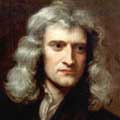
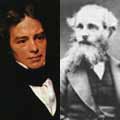
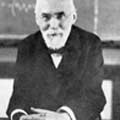
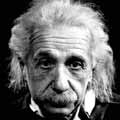
Help Humanity
"You must be the change you wish to see in the world."
(Mohandas Gandhi)
 "When forced to summarize the general theory of relativity in one sentence:
Time and space and gravitation have no separate existence from matter. ... Physical objects are not in space, but these objects are spatially extended. In this way the concept 'empty space' loses its meaning. ... The particle can only appear as a limited region in space in which
the field strength or the energy density are particularly high. ...
"When forced to summarize the general theory of relativity in one sentence:
Time and space and gravitation have no separate existence from matter. ... Physical objects are not in space, but these objects are spatially extended. In this way the concept 'empty space' loses its meaning. ... The particle can only appear as a limited region in space in which
the field strength or the energy density are particularly high. ...
The free, unhampered exchange of ideas and scientific conclusions is necessary for the sound development of science, as it is in all spheres
of cultural life. ... We must not conceal from ourselves that no improvement in the present depressing situation is possible without
a severe struggle; for the handful of those who are really determined to do something is minute in comparison with the mass of the lukewarm
and the misguided. ...
Humanity is going to need a substantially new way of thinking if it is to survive!" (Albert Einstein)
 We can now deduce the most simple science theory of reality - the wave structure of matter in space. By understanding how we and everything around us are interconnected
in Space we can then deduce solutions to the fundamental problems of human knowledge in physics, philosophy, metaphysics, theology, education, health, evolution and ecology, politics and society.
We can now deduce the most simple science theory of reality - the wave structure of matter in space. By understanding how we and everything around us are interconnected
in Space we can then deduce solutions to the fundamental problems of human knowledge in physics, philosophy, metaphysics, theology, education, health, evolution and ecology, politics and society.
This is the profound new way of thinking that Einstein
realised, that we exist as spatially extended structures of the universe - the discrete and separate body an illusion. This simply confirms the
intuitions of the ancient philosophers and mystics.
Given the current censorship in physics / philosophy of science journals (based on the standard model of particle physics / big bang cosmology) the internet is the best hope for getting new knowledge
known to the world. But that depends on you, the people who care about science and society, realise the importance of truth and reality.
It is Easy to Help!
Just click on the Social Network links at top of page, or copy a nice image or quote you like and share it. We have a wonderful collection of knowledge from the greatest minds in human history, so people will appreciate your contributions. In doing this you will help a new generation of scientists see that there is a simple sensible explanation of physical reality (One Substance, One Law) - the source of truth and wisdom, the only cure for the madness of man! Thanks! Geoff Haselhurst (Updated May, 2025)
A new scientific truth does not triumph by convincing its opponents and making them see the light, but rather because its opponents eventually die, and a new generation grows up that is familiar with it. (Max Planck, 1920)
"All that is necessary for evil to succeed is for good people to do nothing."
(Edmund Burke)
"In a time of universal deceit - telling the truth is a revolutionary act."
(George Orwell)
"Hell is Truth Seen Too Late."
(Thomas Hobbes)


Legal Disclaimer and Privacy Policy
We support 'Fair Use' of these pages for Academic & Non Commercial use.
You are welcome to use images and text, but please reference them with a link to relevant web page on this site. Thanks!
