 Cosmology
 Albert
 Problems
 Unite
Unite Cosmology
 Equation
 Hubble
 (CMBR) Cosmic
 Thermodynamics
 Unite
Unite Solar System
 Universe
 Hubble
 Life
Life Simple
 Metaphysics
 Maths
Maths Einstein
 Quantum
 Cosmology
 Philosophy
 Theology
 Evolution
 Health
 Education
 Politics
Cosmic Microwave Background Radiation
Low Temperature Hydrogen in an Absolute Space as the Likely Cause of the Cosmic Microwave Background Radiation (thus no Big Bang)
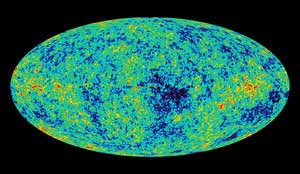 In mainstream cosmology, the Cosmic Microwave Background Radiation is regarded as the best available evidence of the Big Bang theory. But is it conclusive 'evidence'?
The following article is from a Forum post by Paul Marmet on NPA_Dissidents@yahoogroups.com and provides an interesting argument that the Cosmic Microwave Background Radiation (CMBR) must be caused by low temperature Hydrogen in Space, thus it cannot be caused by the 'Big Bang', thus there was no 'Big Bang'. This is consistent with the Wave Structure of Matter which is founded on One thing, Space existing as an Infinite Eternal Wave Medium (see Cosmology).
Paul Marmet wrote;
As you know, the Cosmic Background Radiation (CMBR) is a wide spectrum (a continuum) of electromagnetic radiation received from outer space. It has exactly the shape of the spectrum given by the Planck equation (a bell-shape spectrum). Also the Planck spectrum represents faithfully the spectrum of electromagnetic radiation emitted by any hot body at any temperature.
In the Planck equation, there is a parameter related to temperature, so that the equation is valid at any temperature.
The Cosmic Microwave Background Radiation (CMBR) is assumed to come from the Big Bang when it became transparent at 3000K (assumed early universe). At the same time, due to its very large expanding velocity, there is a redshift of that Planck radiation at 3000K, so that, after taking into account the assumed Doppler effect, the spectrum appears at about 3K (as observed).
It is well known that any hot surface emits the Planck spectrum. Of course, if there are electronically excited atoms above the emitting surface, some spectral lines corresponding to the quantum states of these atoms will appear superimposed to the Planck spectrum (example, the hot plasma above the surface of the Sun).
A hot surface can be at any temperature. For example, the temperature can be 10000. degrees or 100. degrees or 3. degrees (Kelvin) or any temperature. The hot surface can have any nature. It can be a solid, a liquid or a gas. That does not change anything about the Planck emission (as long as it is not a plasma).
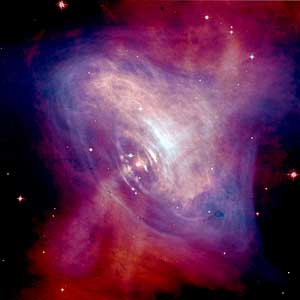 For example, the surface of planet Venus is about 600. degrees C. However, Venus is covered by a thick atmosphere, which is perhaps at 200 degrees C. On Earth, we receive from Venus the Planck radiation corresponding to 200 degrees C. (The hotter Planck radiation emitted by the surface at 600C is absorbed by Venus atmosphere.)
Also on Earth, we can easily measure the temperature of any independent cloud above us. We just have to measure the Planck spectrum (in the infrared). Clouds temperature is often at about minus 70 degrees C.
With respect to the Cosmic Microwave Background Radiation, the only point which is "certain", is that we detect "some radiation" at 3 K in the night Sky. Most astrophysicists believe that it is the strongly redshifted Planck radiation emitted by the Big Bang.
However, we know that the universe is not empty. Not only are there stars and Galaxies, but there is also (certainly) a large amount of gas (molecular hydrogen) filling the space, with a thickness of billion of light years around us. The temperature of that gas (hydrogen) has been measured (using a different method). It was measured (i.e. by G. Herzberg a Noble Laureate) that that hydrogen is at 3K.
It is impossible for that hydrogen in space not-to-emit the Planck spectrum. All matter in the universe must emit the Planck spectrum.
Therefore if the Big Bang really emits the Planck spectrum, there must then exist two different Planck spectra. (the one emitted by Hydrogen in the universe and the one due to the Big Bang). However only one Planck spectrum is observed.
Therefore, I conclude that since the hydrogen is well known in space, the Planck spectrum observed (erroneously attributed to the Big Bang) is due to Hydrogen at 3K in the universe.
We must conclude that the Big Bang model fails, because the 3K radiation must be attributed to Hydrogen, since hydrogen has been well observed by many different methods.
The 3K radiation (and the absence of any other Planck spectrum) proves the steady state model of the universe.
I hope this letter answers your question.
Paul Marmet
Jim Nibblett in reply:
Paul, This is Brilliant! The citation of Herzberg is just what the doctor ordered. I will, of course, have to look it up. I'm looking forward to finding out his independent means for taking hydrogen's temperature. Also, I wonder if you'd allow for me to quote this letter of yours. On another hand, the single spectrum accounted for by molecular hydrogen in intergalactic space does not 'prove' that the Universe is Eternal.
What it does do is knock the single most important prop out from under the only competitor, the BBT. After all, the statement made about the CMBR is that it is the most convincing piece of evidence in favor of the BBT. I'm sure that there are a hundred ways of saying it, but the combination of having a second way of taking hydrogen's temperature which accounts for a Planck spectrum plus the lack of a second one corresponding to an adiabatic expansion means that all observations are compliant with a theory that the Universe is Eternal.
Cosmic Microwave Background Radiation
Low Temperature Hydrogen in an Absolute Space as the Likely Cause of the Cosmic Microwave Background Radiation (thus no Big Bang)
Help Humanity
"You must be the change you wish to see in the world."
(Mohandas Gandhi)
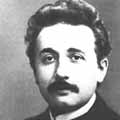 "When forced to summarize the general theory of relativity in one sentence:
Time and space and gravitation have no separate existence from matter. ... Physical objects are not in space, but these objects are spatially extended. In this way the concept 'empty space' loses its meaning. ... The particle can only appear as a limited region in space in which
the field strength or the energy density are particularly high. ...
"When forced to summarize the general theory of relativity in one sentence:
Time and space and gravitation have no separate existence from matter. ... Physical objects are not in space, but these objects are spatially extended. In this way the concept 'empty space' loses its meaning. ... The particle can only appear as a limited region in space in which
the field strength or the energy density are particularly high. ...
The free, unhampered exchange of ideas and scientific conclusions is necessary for the sound development of science, as it is in all spheres
of cultural life. ... We must not conceal from ourselves that no improvement in the present depressing situation is possible without
a severe struggle; for the handful of those who are really determined to do something is minute in comparison with the mass of the lukewarm
and the misguided. ...
Humanity is going to need a substantially new way of thinking if it is to survive!" (Albert Einstein)
 Our world is in great trouble due to human behaviour founded on myths and customs that are causing the destruction of Nature and climate change. We can now deduce the most simple science theory of reality - the wave structure of matter in space. By understanding how we and everything around us are interconnected
in Space we can then deduce solutions to the fundamental problems of human knowledge in physics, philosophy, metaphysics, theology, education, health, evolution and ecology, politics and society.
Our world is in great trouble due to human behaviour founded on myths and customs that are causing the destruction of Nature and climate change. We can now deduce the most simple science theory of reality - the wave structure of matter in space. By understanding how we and everything around us are interconnected
in Space we can then deduce solutions to the fundamental problems of human knowledge in physics, philosophy, metaphysics, theology, education, health, evolution and ecology, politics and society.
This is the profound new way of thinking that Einstein
realised, that we exist as spatially extended structures of the universe - the discrete and separate body an illusion. This simply confirms the
intuitions of the ancient philosophers and mystics.
Given the current censorship in physics / philosophy of science journals (based on the standard model of particle physics / big bang cosmology) the internet is the best hope for getting new knowledge
known to the world. But that depends on you, the people who care about science and society, realise the importance of truth and reality.
It is Easy to Help!
Just click on the Social Network links below, or copy a nice image or quote you like and share it. We have a wonderful collection of knowledge from the greatest minds in human history, so people will appreciate your contributions. In doing this you will help a new generation of scientists see that there is a simple sensible explanation of physical reality - the source of truth and wisdom, the only cure for the madness of man! Thanks! Geoff Haselhurst (Updated September, 2018)
A new scientific truth does not triumph by convincing its opponents and making them see the light, but rather because its opponents eventually die, and a new generation grows up that is familiar with it. (Max Planck, 1920)
| Tweet Follow @philosophytruth | |
| Geoff | |
 |
Connect with Geoff Haselhurst at Facebook
"All that is necessary for evil to succeed is for good people to do nothing."
(Edmund Burke)
"In a time of universal deceit - telling the truth is a revolutionary act."
(George Orwell)
"Hell is Truth Seen Too Late."
(Thomas Hobbes)


Legal Disclaimer and Privacy Policy
We support 'Fair Use' of these pages for Academic & Non Commercial use.
You are welcome to use images and text, but please reference them with a link to relevant web page on this site. Thanks!
