 Wave
Wave WSM
WSM Why WSM not
 Blind Truth
 Skeptics
 Unite
Unite Absolute
 Popper
 Incompleteness
 Unite
Unite Simple
 Metaphysics
 Maths
Maths Einstein
 Quantum
 Cosmology
 Philosophy
 Theology
 Evolution
 Health
 Education
 Politics
Why the Most Simple Science Theory of Reality was Never Considered (On Human Nature)
The task is not so much to see what no one
yet has seen,
but to think what no body yet has thought about that which everyone sees.
(Arthur Schopenhauer)
It would be strange / negligent to 'write off' science (i.e. postmodern
relativism / logical positivism) while the most simple and obvious solution
had never been considered - yet this is exactly what has happened. This
is why philosophy is known as the discovery
of the obvious, as we are often blind to the obvious, history clearly
confirms this.
Now that we are aware of the Wave Structure of Matter (which is deduced
as the most simple science theory of reality) it seems to me that scientists
would be silly / negligent to ignore this knowledge. Yet the frustrating
thing is that most will! As I see things (human nature) the main reasons
for this are;
1. Several thousand years of failure to work out reality (which is simple and obvious once known), thus most people / academics are now so skeptical that they just assume it is impossible for us to correctly imagine reality (we are trapped in the Mind!). Any mention of absolute truth and reality is deemed 'crackpot'. This is made more difficult again as the internet is full of crackpot theories on truth and reality - and most people are not natural philosophers (including most academic philosophers and physicists) thus they do not have the skills / ability to determine quality from crap, truth from fanciful imagination (this sounds harsh, but it is common observation of many philosophers, from Albert Einstein, Friedrich Nietzsche, Arthur Schopenhauer to Plato and Aristotle).
For the incredibly great majority of men are by their nature absolutely incapable of any but material aims; they cannot even comprehend any others. Accordingly, the pursuit of truth alone is a pursuit far too lofty and eccentric for us to expect that all or many, or indeed even a mere few, will sincerely take part in it. (Arthur Schopenhauer)
2. The current censorship in physics publications which makes it very difficult to get new knowledge published in scientific journals (particularly when it contradicts the existing 'particle' paradigm, despite the general acceptance that particle physics does not work and causes numerous paradoxes & problems). See article by Nobel Prize wining Physicist Brian Josephson on Censorship in Physics Preprint Archive (Science Publications / Journals)
3. People often have their own conceptions of truth and reality (which they like), and once humans have formed their ideas they rarely change - particularly if they are religious beliefs, as Nietzsche writes;
For such is man: a Theological Dogma might be refuted to
him a thousand times - provided however, that he had need of it, he would
again and again accept it as true.
Belief is always most desired, most pressingly needed where there is a lack
of will.
Fanaticism is the sole "volitional strength" to which the weak
and irresolute can be excited, as a sort of hypnotising of the entire sensory-intellectual
system. (Friedrich Nietzsche)
4. Most academics are now very specialised, very busy, and tend to have a vested interest in maintaining the existing knowledge foundations (since they have built a career on them). This makes it difficult for them to consider new knowledge (even if they wanted to). The following quote from John Ralston Saul (Voltaire's Bastards) is a bit long, but it makes a very important point about the dangers of specialisation;
One of the specialist's most successful discoveries was that
he could easily defend his territory by the simple development of a specialized
language incomprehensible to the nonexperts. ... The example of philosophy
actually verges on comedy. Socrates,
Descartes,
Bacon, Locke
and Voltaire
did not write in specialized dialect. They wrote in basic Greek, French
and English and they wrote for the general reader of their day. Their language
is clear, eloquent and often both moving and amusing. The contemporary philosopher
does not write in the basic language of our day. He is not accessible to
the public. Stranger still, even the contemporary interpreter of earlier
philosophy writes in inaccessible dialect.
Why, then, would anyone bother to read these modern obscurings of the original
clarity? The answer is that contemporary universities use these interpretations
as the expert's road into the original. The dead philosophers are thus treated
as if they were amateurs, in need of expert explanation and protection.
... The new specialized terminology amounts to a serious attack on language
as a tool of common understanding. Certainly today, the walls between the
boxes of expertise continue to grow thicker.
The expert claims that his expanded language has paralleled an expanded
understanding in his area. But this understanding is limited precisely to
fellow experts in that area. Ten geographers who think the world is flat
will tend to reinforce each other's errors. If they have a private dialect
in which to do this, it becomes impossible for outsiders to disagree with
them. Only a sailor can set them straight. The last person they want to
meet is someone who, freed from the constraints of expertise, has sailed
around the world. .... The purpose of language is communication. It has
no other reason for existence. A great civilization is one in which there
is a rich texture and breadth and ease to that communication. When language
begins to prevent communication, the civilization has entered into serious
degeneracy.
5. We have evolved from primitive tribal (herd like) animals. We are emotional / religious creatures seeking common beliefs which bind us together and enhance the survival of our tribe (we are more likely to fight for a common emotional belief, our history of warfare shows this). Thus our minds are not well suited for thinking carefully about truth and reality (we tend to be confused by our limitless imaginations and incomplete senses, often believe things simply because they are a famous part of our ancestry and culture). As Thomas Kuhn wrote;
Almost always the men who achieve these fundamental inventions of a new paradigm have been either very young or very new to the field whose paradigm they change. ... scientific training is not well designed to produce the man who will easily discover a fresh approach. (Kuhn, 1962)
History shows that we are very easily misled by the beliefs of others,
that we are rather herd like in our thinking, and those new to the herd
are more likely to see things differently. Thus famous beliefs, which are
in fact wrong, have evolved within modern physics and philosophy for thousands
of years and have continually influenced and misled us. As Bertrand Russell
wrote;
Most sciences, at their inception, have been connected
with some form of false belief, which gave them a fictitious value. (1946)
The three most significant 'false beliefs' of both physics and philosophy
are the assumed existence of 'Time', 'Particles', and 'Forces / Fields'.
Most significantly, the concept of the discrete particle dates back thousands
of years and has deceived and confused us with its resultant paradoxes and
absurdities, and unfortunately, has limited our ability to think differently.
6. Our Senses are incomplete and deceptive representations of the mind. We only sense a fraction of the real world, which is then represented by our mind (e.g. the sky is not blue, though we do see a certain frequency of light waves as the Wave Structure of Matter explains). Likewise, we 'see' things as separate and discrete objects when reason (and physics) tell us that all things in the universe are subtly interconnected (e.g. to explain why the earth orbits the sun, how we can see stars across the universe). As David Hume writes;
 It
must certainly be allowed, that nature has kept us at a great distance from
all her secrets, and has afforded us only the knowledge of a few superficial
qualities of objects; while she conceals from us those powers and principles
on which the influence of those objects entirely depends. (Hume,
1737)
It
must certainly be allowed, that nature has kept us at a great distance from
all her secrets, and has afforded us only the knowledge of a few superficial
qualities of objects; while she conceals from us those powers and principles
on which the influence of those objects entirely depends. (Hume,
1737)
When we look about us towards external objects, and consider the operation of causes, we are never able, in a single instance, to discover any power or necessary connexion; any quality, which binds the effect to the cause, and renders the one an infallible consequence of the other. (Hume, 1737)
7. The Postmodern Logical Positivism (Relativism / Cultural Construction) view of knowledge now dominates academia due to these past failures. Metaphysics became a fanciful ideal, and this creates a self fulfilling prophecy that we can never know reality. Einstein explains this well!
 By his clear critique Hume did not only advance philosophy
in a decisive way but also - though through no fault of his - created a
danger for philosophy in that, following his critique, a fateful 'fear
of metaphysics' arose which has come to be a malady
of contemporary empiricist philosophising; this malady
is the counterpart to that earlier philosophising in the clouds, which thought
it could neglect and dispense with what was given by the senses. ... It
finally turns out that one can, after all, not get along without
metaphysics.
By his clear critique Hume did not only advance philosophy
in a decisive way but also - though through no fault of his - created a
danger for philosophy in that, following his critique, a fateful 'fear
of metaphysics' arose which has come to be a malady
of contemporary empiricist philosophising; this malady
is the counterpart to that earlier philosophising in the clouds, which thought
it could neglect and dispense with what was given by the senses. ... It
finally turns out that one can, after all, not get along without
metaphysics.
(Albert Einstein, Remarks on Bertrand Russell's
Theory of Knowledge)
Given these difficulties, it seems that using the Internet is the most
efficient way to get this knowledge visible to the world - thus explaining
why this website exists - and why we depend upon your help (see social
networking sites below).
History shows that despite our human frailties, true knowledge does slowly
filter into society, that there are enough sensible logical people with
skeptical open minds who recognise truth when they see it. As Schopenhauer
writes;
But life is short, and truth works far and lives long: let us speak the truth.
Although as a rule the absurd culminates, and it seems impossible for the voice of the individual ever to penetrate through the chorus of foolers and fooled, still there is left to the genuine works of all times a quite peculiar, silent, slow, and powerful influence; and as if by a miracle, we see them rise at last out of the turmoil like a balloon that floats up out of the thick atmosphere of this globe into purer regions. Having once arrived there, it remains at rest, and no one can any longer draw it down again. (Arthur Schopenhauer, 1818)
Simple Science Quotes
The deepest sin against the human mind is
to believe things without evidence.
Science is simply common sense at its best - that is, rigidly accurate in
observation, and merciless to fallacy in logic.
(Thomas Huxley)
We are to admit no more causes of natural
things than such as are both true and sufficient to explain their appearances.
(Sir Isaac Newton, Principia: The system of the world)
https://www.spaceandmotion.com/simple-science/why-most-simple-science-theory-reality-ignored.htm
Why the Most Simple Science Theory of Reality was Never
Considered (On Human Nature)
Help Humanity
"You must be the change you wish to see in the world."
(Mohandas Gandhi)
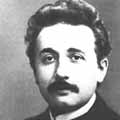 "When forced to summarize the general theory of relativity in one sentence:
Time and space and gravitation have no separate existence from matter. ... Physical objects are not in space, but these objects are spatially extended. In this way the concept 'empty space' loses its meaning. ... The particle can only appear as a limited region in space in which
the field strength or the energy density are particularly high. ...
"When forced to summarize the general theory of relativity in one sentence:
Time and space and gravitation have no separate existence from matter. ... Physical objects are not in space, but these objects are spatially extended. In this way the concept 'empty space' loses its meaning. ... The particle can only appear as a limited region in space in which
the field strength or the energy density are particularly high. ...
The free, unhampered exchange of ideas and scientific conclusions is necessary for the sound development of science, as it is in all spheres
of cultural life. ... We must not conceal from ourselves that no improvement in the present depressing situation is possible without
a severe struggle; for the handful of those who are really determined to do something is minute in comparison with the mass of the lukewarm
and the misguided. ...
Humanity is going to need a substantially new way of thinking if it is to survive!" (Albert Einstein)
 Our world is in great trouble due to human behaviour founded on myths and customs that are causing the destruction of Nature and climate change. We can now deduce the most simple science theory of reality - the wave structure of matter in space. By understanding how we and everything around us are interconnected
in Space we can then deduce solutions to the fundamental problems of human knowledge in physics, philosophy, metaphysics, theology, education, health, evolution and ecology, politics and society.
Our world is in great trouble due to human behaviour founded on myths and customs that are causing the destruction of Nature and climate change. We can now deduce the most simple science theory of reality - the wave structure of matter in space. By understanding how we and everything around us are interconnected
in Space we can then deduce solutions to the fundamental problems of human knowledge in physics, philosophy, metaphysics, theology, education, health, evolution and ecology, politics and society.
This is the profound new way of thinking that Einstein
realised, that we exist as spatially extended structures of the universe - the discrete and separate body an illusion. This simply confirms the
intuitions of the ancient philosophers and mystics.
Given the current censorship in physics / philosophy of science journals (based on the standard model of particle physics / big bang cosmology) the internet is the best hope for getting new knowledge
known to the world. But that depends on you, the people who care about science and society, realise the importance of truth and reality.
It is Easy to Help!
Just click on the Social Network links below, or copy a nice image or quote you like and share it. We have a wonderful collection of knowledge from the greatest minds in human history, so people will appreciate your contributions. In doing this you will help a new generation of scientists see that there is a simple sensible explanation of physical reality - the source of truth and wisdom, the only cure for the madness of man! Thanks! Geoff Haselhurst (Updated September, 2018)
A new scientific truth does not triumph by convincing its opponents and making them see the light, but rather because its opponents eventually die, and a new generation grows up that is familiar with it. (Max Planck, 1920)
| Tweet Follow @philosophytruth | |
| Geoff | |
 |
Connect with Geoff Haselhurst at Facebook
"All that is necessary for evil to succeed is for good people to do nothing."
(Edmund Burke)
"In a time of universal deceit - telling the truth is a revolutionary act."
(George Orwell)
"Hell is Truth Seen Too Late."
(Thomas Hobbes)


Legal Disclaimer and Privacy Policy
We support 'Fair Use' of these pages for Academic & Non Commercial use.
You are welcome to use images and text, but please reference them with a link to relevant web page on this site. Thanks!
