 Euler
Euler Quaternion
 Maths
Maths Pythagoras
 Music
Music Mathematics
 Wolff
Wolff Wolff
Wolff Hawkings
 Censorship
 Physics
 Simple
 Metaphysics
 Maths
Maths Einstein
 Quantum
 Cosmology
 Philosophy
 Theology
 Evolution
 Health
 Education
 Politics
Physics: Atoms / Particles
 +
+  =
= 
The Wave Structure of Matter Explains the Atomic Structure of Matter. The 'Particle' as the Wave-Center of a Spherical Standing Wave in Space
 It
seems probable to me that God in the beginning formed matter in solid, massy,
hard, impenetrable, movable particles, of such sizes and figures, and with such
other properties, and in such proportion to space, as most conduced to the end
for which he formed them; and that these primitive particles being solids, are
incomparably harder than any porous bodies compounded of them; even so very
hard, as never to wear or break in pieces; no ordinary power being able to divide
what God himself made one in the first creation. (Newton, From
'The Tao of Physics', p64)
It
seems probable to me that God in the beginning formed matter in solid, massy,
hard, impenetrable, movable particles, of such sizes and figures, and with such
other properties, and in such proportion to space, as most conduced to the end
for which he formed them; and that these primitive particles being solids, are
incomparably harder than any porous bodies compounded of them; even so very
hard, as never to wear or break in pieces; no ordinary power being able to divide
what God himself made one in the first creation. (Newton, From
'The Tao of Physics', p64)
 According
to general relativity, the concept of space detached from any physical content
(matter, objects) does not exist. The physical reality of space is represented
by a field whose components are continuous functions of four independent variables
- the co-ordinates of space and time. Since the theory of general relativity
implies the representation of physical reality by a continuous field, the concept
of particles or material points cannot play a fundamental part,
nor can the concept of motion. The particle can only appear as a limited region
in space in which the field strength or the energy density are particularly
high. (Einstein, 1954)
According
to general relativity, the concept of space detached from any physical content
(matter, objects) does not exist. The physical reality of space is represented
by a field whose components are continuous functions of four independent variables
- the co-ordinates of space and time. Since the theory of general relativity
implies the representation of physical reality by a continuous field, the concept
of particles or material points cannot play a fundamental part,
nor can the concept of motion. The particle can only appear as a limited region
in space in which the field strength or the energy density are particularly
high. (Einstein, 1954)
Introduction & Summary of the Atomic Structure of Matter (Particles)
It has been the holy
grail of Physics for the past 70 years to unite Einstein's Relativity, Quantum
Theory, and more recently, Cosmology from one Metaphysical foundation. And it
is obvious that to achieve this we must understand what matter really is, and
thus what causes the particle / field effects of matter.
The solution to this
problem (with mathematical precision and certainty) belongs largely to the pioneering
and revolutionary work of Mathematical Physicist
Milo Wolff, who first discovered the Spherical Wave Structure of Matter in 1986.
See Video
Clip (Windows Media, 170 seconds at 6 KB/s
= 1.1MB).
The problem for the particle conception of matter has always been to explain how matter acts on other matter in the space around the particle. This caused Newton to assume instant action-at-a-distance (gravitational force), though Newton well realised this limitation of his Mechanics (which assumes the motion of particles in Space and Time).
The solution is both simple and sensible. By replacing the discrete and separate particle conception of matter with the Spherical Standing Wave Structure of Matter, we can then clearly understand how the Spherical In-Waves can interact with other matter, and carry that knowledge in to the Wave-Center, thus explaining 'action-at-a-distance' and how we can see objects in the space around us (see stars across the universe). Thus we realise that matter is large (as spherical standing waves) not small particles, which are merely an effect of the Wave-Center.
See other articles:
Physics: Quantum Theory: WSM explains Light and Matter
Below is a brief article on the history of Atoms / Atomism. It is interesting to understand the history of atomism and how this conception of matter has led to many problems and contradictions of modern physics.
Sincerely,
Geoff Haselhurst
Physics: Atoms / Atomism
Atomism arose as an explanatory scheme
with the ancient Greeks (around 400BC), Leucippus and Democritus, and Epicurus,
and the Roman poet, Lucretius. At the most fundamental level atomism is the
belief that all phenomena are explicable in terms of the properties and behaviour
of ultimate, elementary, localized entities (or 'fundamental particles').
Thus
it prescribes a strategy for the construction of scientific theories in which
the behaviour of complex bodies is to be explained in terms of their component
parts. That strategy has led to many of the successes of modern physical science,
though these do not prove that there actually are 'ultimate entities' of the
type postulated by atomism.
Their (the atomists) analysis goes 'behind' the appearance of minute, unchangeable
and indestructible 'atoms' separated by the emptiness of 'the void'. It is the
void which is said to make change and movement possible. All apparent change
is simply the result of rearrangements of the atoms as a consequence of collisions
between them. This seems to lead to mechanical determinism, though, in an attempt
to leave room for freewill, Epicurus and Lucretius postulated that atoms might
'deviate' in their courses. (See an explanation of Free Will)
However if 'what exists' is 'atoms', what of the 'void'? In different ways both
Aristotle and Descartes denied that there could be such a thing as literally
'empty space'. Physically therefore they saw the world as a plenum. Atomism
was also associated with atheism, since as Lucretius put it, 'Nothing can ever
be created out of nothing, even by divine power.' Conversely no thing can ever
become nothing - so the atomists proposed a strict principle of conservation
of matter.
The attempt of the ancient atomists to solve a metaphysical problem about the
nature of change resulted in a brilliantly fruitful strategy for the construction
of theories in the physical sciences. However there are unanswered philosophical
objections to atomism and the very successes it has stimulated suggest that
'the stuff of the world' cannot ultimately be understood in terms of atomism.
A thoroughgoing positivism will continue to hold that 'atomic theories' are
simply devices for talking about observable phenomena.
(The Concise Encyclopedia of Western Philosophy and Philosophers, 1991)
Help Humanity
"You must be the change you wish to see in the world."
(Mohandas Gandhi)
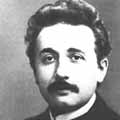 "When forced to summarize the general theory of relativity in one sentence:
Time and space and gravitation have no separate existence from matter. ... Physical objects are not in space, but these objects are spatially extended. In this way the concept 'empty space' loses its meaning. ... The particle can only appear as a limited region in space in which
the field strength or the energy density are particularly high. ...
"When forced to summarize the general theory of relativity in one sentence:
Time and space and gravitation have no separate existence from matter. ... Physical objects are not in space, but these objects are spatially extended. In this way the concept 'empty space' loses its meaning. ... The particle can only appear as a limited region in space in which
the field strength or the energy density are particularly high. ...
The free, unhampered exchange of ideas and scientific conclusions is necessary for the sound development of science, as it is in all spheres
of cultural life. ... We must not conceal from ourselves that no improvement in the present depressing situation is possible without
a severe struggle; for the handful of those who are really determined to do something is minute in comparison with the mass of the lukewarm
and the misguided. ...
Humanity is going to need a substantially new way of thinking if it is to survive!" (Albert Einstein)
 Our world is in great trouble due to human behaviour founded on myths and customs that are causing the destruction of Nature and climate change. We can now deduce the most simple science theory of reality - the wave structure of matter in space. By understanding how we and everything around us are interconnected
in Space we can then deduce solutions to the fundamental problems of human knowledge in physics, philosophy, metaphysics, theology, education, health, evolution and ecology, politics and society.
Our world is in great trouble due to human behaviour founded on myths and customs that are causing the destruction of Nature and climate change. We can now deduce the most simple science theory of reality - the wave structure of matter in space. By understanding how we and everything around us are interconnected
in Space we can then deduce solutions to the fundamental problems of human knowledge in physics, philosophy, metaphysics, theology, education, health, evolution and ecology, politics and society.
This is the profound new way of thinking that Einstein
realised, that we exist as spatially extended structures of the universe - the discrete and separate body an illusion. This simply confirms the
intuitions of the ancient philosophers and mystics.
Given the current censorship in physics / philosophy of science journals (based on the standard model of particle physics / big bang cosmology) the internet is the best hope for getting new knowledge
known to the world. But that depends on you, the people who care about science and society, realise the importance of truth and reality.
It is Easy to Help!
Just click on the Social Network links below, or copy a nice image or quote you like and share it. We have a wonderful collection of knowledge from the greatest minds in human history, so people will appreciate your contributions. In doing this you will help a new generation of scientists see that there is a simple sensible explanation of physical reality - the source of truth and wisdom, the only cure for the madness of man! Thanks! Geoff Haselhurst (Updated September, 2018)
A new scientific truth does not triumph by convincing its opponents and making them see the light, but rather because its opponents eventually die, and a new generation grows up that is familiar with it. (Max Planck, 1920)
| Tweet Follow @philosophytruth | |
| Geoff | |
 |
Connect with Geoff Haselhurst at Facebook
"All that is necessary for evil to succeed is for good people to do nothing."
(Edmund Burke)
"In a time of universal deceit - telling the truth is a revolutionary act."
(George Orwell)
"Hell is Truth Seen Too Late."
(Thomas Hobbes)


Legal Disclaimer and Privacy Policy
We support 'Fair Use' of these pages for Academic & Non Commercial use.
You are welcome to use images and text, but please reference them with a link to relevant web page on this site. Thanks!
