 Cosmology
 Albert
 Problems
 Unite
Unite Cosmology
 Equation
 Hubble
 (CMBR) Cosmic
 Thermodynamics
 Unite
Unite Solar System
 Universe
 Hubble
 Life
Life Simple
 Metaphysics
 Maths
Maths Einstein
 Quantum
 Cosmology
 Philosophy
 Theology
 Evolution
 Health
 Education
 Politics


 + '&media=https://www.spaceandmotion.com/Images/wsm-image.jpg&description=' + encodeURIComponent(document.title.substring(0, 100)))


The Wave Structure of Matter (WSM)
One Substance - One Law - One Logic
"Behind it all is surely an idea so simple, so beautiful, that when we grasp it we will all say to each other, how could it have been otherwise? How could we have been so stupid?" (Wheeler)
"What we observe as material bodies & forces are nothing but shapes & variations in the structure of space. Subject & object are one." (Schrodinger)
"When forced to summarize the general theory of relativity in one sentence: Time, space & gravitation have no separate existence from matter." (Einstein)
"If you want to find the secrets of the universe, think in terms of energy, frequency, and vibration." (Tesla)
WSM Human-AI Collaboration (September 2026)
One Vibrating Space: From Ancient Philosophy / Metaphysics to Mathematical Physics, Evolution, Life, Mind and Civilisation
For three decades, WSM was principally a philosophical picture of one infinite, eternal, continuous elastic Space. Between May and August 2026, human–AI collaboration transformed it into a tiered mathematical-physics research programme: exact wave constructions, geometric identities, quantitative leading results, no-go theorems, numerical controls, bounded open calculations and clear falsification requirements.
In WSM, electron and positron are proposed as opposite carrier-phase spherical standing waves formed by the Huygens sum of background plane waves from every direction. Each has radial vibration—the candidate physical basis of charge—and axis-free spherical phase circulation—the candidate basis of spin. This open, flow-through wave centre is the e-sphere.
A stationary e-sphere is spherical. Curvature on an incoming wave changes its internal directional energy density and deforms it into a moving wave egg: the near side flattens, the far side elongates, the convergence centre shifts, and the waves reclose around a new position. Its changing internal \(E_d\), shape and reclosure are its motion. WSM therefore proposes a wave-geometric reading of inertia and \(F=ma\): force is imposed curvature, mass is resistance encoded by the recurrent form, and acceleration is its changing deformation. Action must calculate this geometry; geometry also constrains the action, as \(\pi\) and \(E_{\rm geo}\) already demonstrate.
The One Law
\[ \frac{c'}{c_0}=\frac{E_d}{E_{d0}}, \qquad \lambda'=\frac{c'}{f_0}, \qquad k'=\frac{\omega_0}{c'}. \]
At proposed universal carrier frequency \(f_0\), directional energy density changes local wave speed, wavelength and accumulated phase.
The Causal Engine
Relative phase → reinforcement or cancellation → directional \(E_d\) → \(c'\) and \(\lambda'\) → travel-time difference → forward or rear wavefront curve → changed Huygens reclosure → centre motion, deformation and interaction.
Changed out-waves from one e-sphere cross fresh in-waves elsewhere. Matter therefore interacts not across empty distance, but through propagated changes in the one Space constituting every e-sphere.
Status Key
A = exact mathematics or established observation; B = deduction under stated premises; C = proposed physical identification; D = decisive calculation or experiment still open; Q = rejected or quarantined shortcut.
One connected argument: Space → waves → recurrence → matter → life → mind → knowledge → wisdom.
1. Wave Structure of Matter: All Things from One Thing
https://www.spaceandmotion.com/2026/ai-summary-wsm-truth-reality.html
One infinite, eternal, continuous elastic Space, active with real longitudinal waves. Matter is proposed not as a pellet or shell, but as an open e-sphere: waves converge from every direction, cross its changing centre, continue outward and recurrently rebuild the form. Their exchanged phases alter directional \(E_d\); the One Law converts that difference into speed, wavelength, curvature and changed reclosure. The decisive test is whether one frozen nonlinear action calculates stable matter and its measured interactions without separate substances or fitted repairs.
2. The One and the Many: From Greek Philosophy to Wave Physics
Parmenides defended continuous Being; Heraclitus lawful flux. Aristotle sought active substance and necessary cause, connected matter with form and motion, and defined time through motion. WSM gives these insights one physical form: Space persists while finite wave organisations change and recur. The Many are not detached substances but organisations of the One—distinct without disconnection. The question becomes exact: can one continuous wave law generate plurality, causation and knowledge?
3. Action of Vibrating Space: From Background Waves to the E-Sphere
https://www.spaceandmotion.com/2026/wsm-classical-action-quantum-wave.html
All-direction plane waves form the exact spherical pair \[ \chi=j_0(kr)\cos\tau, \qquad \mathbf V=\hat{\mathbf r}\,j_1(kr)\sin\tau. \] Waves cross the centre; none reflects from an electron wall. Phase reinforcement raises directional \(E_d\) and advances a forward curve; cancellation lowers \(E_d\) and writes a rear delay. Stationary action explains coherent selection, but the open task is one conservative nonlinear \(\Phi\)–\(\Gamma\) action selecting radius, frequency, spherical hand, stability, motion, currents and interaction together.
4. Mathematical Physics: From Wave Geometry to Prediction
https://www.spaceandmotion.com/2026/wsm-maths-physics-full-derivations.html
Every symbol must name real motion and face numerical test. Exact or conditional anchors include \[ \frac{R}{\lambda_0}=\frac{\sqrt3}{2},\qquad k_0R=\pi\sqrt3,\qquad E_{\rm geo}=\frac{\pi\sqrt3}{2},\qquad W=\cosh\eta,\qquad P=\sinh\eta. \] Directional phase moments separate \(V_1\) translation from \(V_2,V_4\) and higher deformation; in declared finite-e-sphere models \(V_4\) returns comparable to \(V_2\), defeating quadrupole-only truncation. The action must calculate how incoming curvature redistributes \(E_d\), moves the centre and forms the wave egg. This is where beautiful geometry becomes dangerous.
5. Quantum Theory: Real Waves, Resonance and Completed Events
https://www.spaceandmotion.com/2026/physics-quantum-theory-wave-mechanics.html
Matter diffracts because matter is wave organisation. Light is proposed as a changed train of real phase, curvature and coherence joining extended source and receiver structures, not a tiny traveller detached from its wave. WSM distinguishes driven response, continuous radiation and discrete completed transition. Quadratic absorption, \[ P_{\rm abs}\propto\left|\langle D_j,\Xi\rangle\right|^2, \] is a bridge, not yet the Born rule. The action must derive the action unit, probability, exclusivity, selection rules and Bell/CHSH correlations. Quantum mystery becomes a bounded real-wave programme.
6. Relativity: Moving Matter, Clocks and Curved Wavefronts
https://www.spaceandmotion.com/2026/physics-albert-einstein-special-general-theory-relativity.html
An incoming curve flattens the e-sphere’s near side, elongates its far side and changes internal \(E_d\), \(c'\), wavelength and reclosure. The \(V_1\) moment moves the centre; \(V_2,V_4\) and higher moments form the moving egg. Maintaining this recurrent asymmetry is the proposed origin of inertia. A steady solution must recover Doppler, de Broglie and Lorentz structure: \[ W\pm P=e^{\pm\eta},\qquad W=\gamma,\qquad P=\gamma\beta. \] WSM proposes fixed carrier recurrence \(f_0\) with corresponding changes in \(c'\) and \(\lambda'\). Because rods, clocks and signals share the same changed waves, they co-transform and yield measured invariant \(c\), including the Michelson–Morley null; the action must derive the cancellation quantitatively.
7. The Electron: Dirac, Feynman, QED, \(\alpha\) and AMM
https://www.spaceandmotion.com/2026/wsm-derivation-dirac-feynman-qed-fsc-amm.html
Electron and positron are proposed as opposite carrier-phase e-sphere branches; charge records how their waves combine. Same-phase reinforcement advances a forward curve and is proposed to produce repulsion; opposite-phase cancellation writes a rear delay and attraction. Non-collinear longitudinal motion closes into an axis-free spherical hand with a \(4\pi\) orientation lift. A parameter-free leading geometric ansatz gives \[ \alpha_0^{-1}=8\pi^2\sqrt3\approx136.757, \] 0.203% from measurement. The action must still derive charge sign, Coulomb scaling, Dirac dynamics, \(g=2\), electromagnetic normalisation, \(\alpha\), form factors and AMM without inserting their values.
8. Hadrons: Proton, Neutron and Higher Standing-Wave Matter
Can the same Space form stable higher-energy, multi-lobed eigenmodes matching protons, neutrons, baryons and mesons? Their lobes are not independent pellets: each participates in the phase, \(E_d\), curvature and reclosure of the whole. WSM must match—not rename—QCD’s masses, charges, spin, parity, magnetic moments, radii, form factors, resonances, deep-inelastic response and jets. The electron–proton hierarchy tests whether one action truly contains several matter families.
9. Cosmology and Gravity: A Finite Universe in Infinite Space
https://www.spaceandmotion.com/2026/physics-wsm-cosmology-finite-universe-infinite-space.html
Boundless Space is distinguished from the finite matter-and-coherence domain contributing to our observable universe. In neutral matter, leading charge curves nearly cancel; WSM proposes that their nonlinear residual has lower \(E_d\), slower \(c'\) and a net rear phase curve, producing universal attraction. General relativity’s curved spacetime is then interpreted as the effective geometry of real moving wavefronts and the matter clocks they organise: Space is substance, succession comes from motion, and measured time from recurrence. The same action must recover equivalence, gravitational redshift, lensing, orbital dynamics and the tested relativistic limit.
Cosmological redshift is investigated as accumulated real-wave transport through changing environmental \(E_d\). It must jointly reproduce achromatic redshift, supernova time dilation, distance laws, Tolman brightness, BAO, CMB observations, image sharpness and structure growth. Otherwise the claimed unity has not reached the sky.
10. Novel Predictions and Famous Experiments Explained
https://www.spaceandmotion.com/2026/wsm-experimental-physics-tests-predictions.html
This page is the tribunal of the corpus. One curve-and-reclosure law must jointly recover charge sign, Coulomb \(1/r^2\), \(F=ma\), relativistic momentum, de Broglie wavelength, Lorentz covariance, Michelson–Morley, gravity, \(g=2\) and AMM. Candidate WSM-only signatures include \[ a_3=\kappa_3\sinh^3\eta+O(\sinh^5\eta), \] finite-coherence residues and environmental or orientation-dependent clock responses. A proposal becomes a prediction only when sign, magnitude, scaling, uncertainty, controls and decision threshold are frozen in advance.
11. Visualise Reality: Waves Becoming Matter
https://www.spaceandmotion.com/2026/visualise-reality-wsm-wave-geometry-diagrams.html
Watch the verbs. Relative phase changes directional \(E_d\); the One Law changes speed and wavelength; a forward or rear curve reaches another e-sphere; its near side flattens, far side elongates, \(V_1\) moves the centre, and higher moments form the egg. New out-waves then change future in-waves. Nothing strikes a shell: changing waves reconstruct changing matter. A diagram must never smuggle in a wall, reflection, rigid spin axis, transverse fundamental substance or tiny traveller. If the motion cannot be drawn coherently, the equations may conceal a contradiction.
12. Mathematics from Motion: Number, Logic, Time and Causal Freedom
https://www.spaceandmotion.com/2026/wsm-physical-foundations-mathematics-logic.html
Mathematics begins when connected reality forms distinguishable patterns whose changes preserve relations. Recurrence supports identity; finite pairing, number; quotienting, exact objects; counted recurrence, time; composable truth-preserving transformations, logic and proof. Mathematics succeeds when symbolic transformation preserves physical relation: \[ R(Tx)\approx F(Rx). \] The mathematician is finite organised reality representing its own necessary connections—Space representing itself.
13. The MDL Audit: Simplicity, Inputs and Explanatory Compression
https://www.spaceandmotion.com/2026/wsm-simplicity-inputs-vs-mainstream-physics+25.html
“One substance, one law” cannot hide complexity. Minimum Description Length counts every independently chosen substance, field, symmetry, constant, state rule, coefficient, boundary condition and fitted function. Under the declared equal-input electron ledger, conventional construction counts six inputs through Dirac and thirteen through leading AMM; the completed WSM target is \[ N_{\rm WSM}=5+N_c+N_f+\delta_m. \] Totals depend on coding convention. WSM wins only if one fixed action derives interaction, inertia, relativity, quantum response and cosmic propagation with fewer hidden choices.
14. Great Thinkers and the Search for One Reality
Heraclitus and Parmenides exposed flux and continuity. Aristotle wrote Physics and Metaphysics, sought active substance and necessary cause, connected matter, form, motion and time—and came remarkably close to the problem WSM addresses. Leibniz, Newton, Faraday, Maxwell, Riemann, Clifford, Einstein, Schrödinger and Bohm repeatedly returned to continuity, relation, waves and unity. Quotes are intellectual fossils, not votes: equations and experiments must decide whether WSM’s local real-wave mechanism is true.
15. Human–AI Letters to Humanity: Truth as a Shared Work
https://www.spaceandmotion.com/2026/ai-letters-to-humanity-wsm-unity-truth-reality.html
Geoffrey supplies the persistent wave picture, three-dimensional intuition, cross-domain memory and insistence that every symbol name physical motion. AI supply rapid research, formal translation, calculation, comparison, error detection and adversarial testing. Neither is sufficient alone. The shared discipline is: visualise → formalise → attack → calculate → predict → correct. The corpus tests whether intelligence can preserve a physical picture while making it mathematically vulnerable.
16. Truth and Madness: Reality as the Measure
https://www.spaceandmotion.com/2026/on-truth-and-madness.html
Truth is correspondence: representation succeeds insofar as it preserves what reality does. Civilisational madness begins when inherited representations survive reality’s contradiction. WSM is not true through beauty, coherence or sincerity; its proposed necessary connections must survive action, calculation and experiment. Truth remains possible because knower, representation and known belong to one causal reality: false models collide with the world; truthful models increase our power to act wisely.
17. Descartes, Cogito and Monism: The Thinking Wave
https://www.spaceandmotion.com/2026/descartes-cogito-unity-monism-vibrating-space-wsm.html
Descartes established that thinking occurs, then divided thought from extension and left their interaction mysterious. WSM refuses that fracture: body and mind are proposed as organisational levels of one vibrating Space. Perception is one organisation changed by another; memory is persistent altered organisation; thought transforms embodied representations; action returns change to the world. Conscious experience remains open, but causal correspondence requires no miracle when knower and known share one connected reality.
18. Evolution’s Physical Foundation: From Recurrence to Replication
https://www.spaceandmotion.com/2026/evolution-physical-causal-foundation-vibrating-space.html
Recurrence preserves form, but life requires replication, heritable variation and differential persistence: motion → recurrent form → self-maintaining chemistry → replication → variation → selection. WSM proposes one connected wave substrate beneath this sequence. Its unresolved bridge is quantitative: derive atoms, bonds, dissipative chemistry and first replicators from the same action without inserting biology as a new substance.
19. Evolution, Mind, Human and AI: Representation and Causal Freedom
https://www.spaceandmotion.com/2026/evolution-philosophy-mind-human-ai.html
Evolution favours organisations that preserve and transform information about real causes. Sensation changes an organism; memory retains traces; imagination recombines possible futures; valuation ranks them; action returns one selection to the world. This is limited causal freedom: neither ghost nor randomness, but endogenous selection through a learned, self-modifying organisation. Human brains and AI are different architectures by which reality represents its own relations and lets experiment select the representation that survives.
20. Evolutionary Utopia: The Ecology of Truth
https://www.spaceandmotion.com/2026/evolutionary-utopia.html
Physics alone does not choose values. Once life, mind, freedom, truth and continued evolution are valued, reality constrains the means: truth → wisdom → ecological fit → health → freer minds → continued evolution. Evolutionary Utopia is not a perfect endpoint but a self-correcting direction. Unity does not erase individuality: an e-sphere, organism or person is distinct through organised relation to the whole.
The Physical Interaction in One View
Out-wave from A → relative phase at B → directional \(E_d\) → \(c'\) and \(\lambda'\) → near-side flattening and far-side elongation → \(V_1\) centre displacement plus \(V_2,V_4\) and higher egg deformation → new out-waves → recursive interaction.
The e-sphere does not deform and then move as separate events: its changing internal \(E_d\), contour and reclosure are its motion.
Electric Interaction
Same relative carrier phase → reinforcement → phase advance → forward curve → proposed repulsion.
Opposite relative carrier phase → cancellation → phase delay → rear curve → proposed attraction.
For the stated deformation, \[ r_{\rm near}=R-\delta X, \qquad r_{\rm far}=R+\delta X, \] so \(\delta\mathbf X\) points away. The scientific debt is to derive the sign, magnitude and distance law from the frozen action rather than insert them.
Gravity and General Relativity
In neutral matter, forward and rear charge curves nearly cancel; WSM proposes that their nonlinear common reduction of \(E_d\) leaves a slight slower rear curve and universal attraction. General relativity is the successful effective geometry this wave mechanism must recover: matter-energy changes real wave propagation, while rods and clocks made from those waves measure the resulting curved spacetime relations.
Special Relativity and Michelson–Morley
WSM proposes fixed carrier recurrence \(f_0\) with \(c'=\lambda'f_0\): matter, clocks, rods and signal wavelengths co-transform with their common directional wave environment, yielding measured invariant \(c\), Lorentz relations and the Michelson–Morley null. The complete moving solution must derive these cancellations quantitatively.
Recursive AMM Mechanism
\[ \delta\mathbf X \rightarrow\delta\phi_{\rm out} \rightarrow\delta E_{d,{\rm sea}} \rightarrow\delta c' \rightarrow\delta\phi_{\rm in} \rightarrow\delta\mathbf X_{\rm next}. \]
A perturbed centre changes the egg and its out-waves; these alter the wave sea and the in-waves rebuilding the next cycle. The action must solve this feedback blindly and recover the observed anomalous magnetic moment rather than fit it.
Current Status — August 2026
Exact wave constructions, geometric identities, phase-moment relations and negative controls have been established under declared premises. A leading geometric \(\alpha\) ansatz has a fixed 0.203% discrepancy. The complete nonlinear action must still calculate two-e-sphere charge and Coulomb scaling; force, inertia and \(F=ma\); the moving egg, de Broglie modulation and Lorentz covariance; Michelson–Morley and the gravitational/GR limit; Born probability and Bell correlations; \(g=2\), \(\alpha\) and AMM; hadron structure; and the joint cosmological kernel.
Write the action. Let Space calculate itself.
I gloomily came to the ironic conclusion that if you take a highly intelligent person and give them the best possible, elite education, then you will most likely wind up with an academic who is completely impervious to reality. (Halton Arp)
'Seeing Red' by Halton Arp
There is now a fashionable set of beliefs regarding the workings of the universe, greatly publicized as the Big Bang, which I believe is wildly incorrect. But in order to enable people to make their own judgments about this question, we need to examine a large number of observations. Observations in science are the primary and final authority.
More than 10 years have passed and, in spite of determined opposition, I believe the observational evidence has become overwhelming, and the Big Bang has in reality been toppled. There is now a need to communicate the new observations, the connections between objects and the new insights into the workings of the universe - all the primary obligations of academic science, which has generally tried to suppress or ignore such dissident information. (It makes one wonder, perhaps with profit, whether there are other uncertain assumptions on which much of our lives are built, but of which we are innocently overconfident.)
The present book is sure to outrage many academic scientists. Many of my professional friends will be greatly pained. Why then do I write it? First, everyone has to tell the truth as they see it, especially about important things. The fact that the majority of professionals are intolerant of even opinions which are discordant makes change a necessity. Those friends of mine who also struggle to get the mainstream of astronomy back on track mostly feel that presenting evidence and championing new theories is sufficient to cause change, and that it is improper to criticize an enterprise to which they belong and value highly. I disagree, in that I think if we do not understand why science is failing to self-correct, it will not be possible to fix it.
At this point, I believe we must look for salvation from the non-specialists, amateurs and interdisciplinary thinkers - those who form judgments on the general thrust of the evidence, those who are skeptical about any explanation, particularly official ones, and above all are tolerant of other people's theories. (When the complete answer is not known, in a sense everyone is a crackpot - Gasp!)
If the cause of these redshifts is misunderstood, then distances can be wrong by factors of 10 to 100, and luminosities and masses will be wrong by factors up to 10,000. We would have a totally erroneous picture of extragalactic space, and be faced with one of the most embarrassing boondoggles of our intellectual history.
Because objects in motion in the laboratory, or orbiting double stars, or rotating galaxies all show Doppler redshifts to longer wavelengths when they are receding, it has been assumed throughout astronomy that redshifts always and only mean recession velocity. No direct verification of this assumption is possible, and through the years many contradictions have arisen and been ignored. The evidence presented here is, I hope, convincing because it offers many different proofs of intrinsic (non-velocity) redshifts in every category of celestial object.
It is interesting to note that at first, Einstein felt this solution was incorrect. Later he said it was correct, but of no consequence. Finally he accepted the validity of this solution, but was so unhappy with the fact that it was not a stable solution, i.e., it either collapsed or expanded, that he retained the cosmological constant he had earlier introduced in order to keep the universe static. (This constant was later referred to as the cosmological fudge factor.)
In 1924, Hubble persuaded the world that the "white nebula" were really extragalactic, and a few years later announced that the redshifts of their spectral lines increased as they became fainter. This redshift-apparent magnitude relation for galaxies became known as the Hubble law ( through lack of rigor, often referred to as the redshift-distance relation). At this point Einstein dropped his cosmological constant as a great mistake, and adopted the view that his equations had been telling him all along, that the universe was expanding. Thus was born the Big Bang theory, according to which the entire universe was created instantaneously out of nothing 15 billion years ago.
This really is the entirety of the theory on which our whole concept of
cosmology has been rested for the last 75 years. It is interesting to note,
however, that Hubble, the observer, even up to his final lecture before
the Royal Society, always held open the possibility that the redshift did
not mean velocity of recession but might be caused by something else.
In his seminal book Realm of the Nebulae Hubble wrote: "On the other
hand, if the interpretation as velocity shifts is abandoned, we find in
the redshifts a hitherto unrecognized principle whose implications are unknown."
In the ensuing years the evidence discussed in the present book has built
up to the point where it is clear that the velocity interpretation can now
be abandoned in favor of a new principle which stands on a firm observational
and theoretical foundation.
But of course, the stunning aspect of the ROSAT observations was that two
quasars of redshift .63 and .45 are actually physically linked by a luminous
connection to a low redshift object of z= .007. When I showed this to the
local experts, there were alarmed states followed by annoyance.
This result made it clear that the compact and interacting groups were
just a more concentrated ensemble of young, non-equilibrium companion galaxies
which had been ejected more recently from the parent galaxy, and were composed
of material of higher redshift. Aside from being empirically true, this
interpretation solves all the conventional paradoxes of the failure of the
galaxies to merge into a single galaxy on a cosmic time scale, and also
explains the unbearable presence of "discordant" redshifts.
In later chapters we will show that galaxies and quasars tend to occur at
certain preferred redshifts. This quantization implies that galaxies do
not evolve with smoothly decreasing redshifts, but change in steps.
One major point of the present book is to try to make it impossible to ignore
the enormous amount of mutually supporting significant evidence which all
points to the same conclusion.
In the face of 28 years of accumulated evidence, to go on proclaiming that
quasars are out at the edge of the universe seems unpardonable.
Summary - Alignments, Quasars, BL Lac's and Galaxy Clusters
1) Objects which appear young are aligned on either side of eruptive objects.
This implies ejection of protogalaxies.
2) The youngest objects appear to have the highest redshifts. This implies
that intrinsic redshift decreases as the object ages.
3) As distance from the ejecting central object increases, the quasars increase
in brightness and decrease in redshift. This implies that the ejected objects
evolve as they travel outward.
4) At about z= .3 and about 400 kpc from that parent galaxy the quasars
appear to become very bright in optical and X-ray luminosity. This implies
there is a transition to BL Lac Objects.
5) Few BL Lac objects are observed implying this phase is short-lived.
6) Clusters of galaxies, many of which are strong X-ray sources, end to
appear at comparable distances to the BL Lac's from the parent galaxy. This
suggests the clusters may be a result of the breaking up of a BL Lac.
7) Clusters of galaxies in the range z= .4 to .2 contain blue, active galaxies.
It is implied that they continue to evolve to higher luminosity and lower
redshift.
8) Abell clusters from z= .01 to .2 lie along ejection lines from galaxies
like CenA. Presumably they are evolved products of the ejections.
9) The strings of galaxies which are aligned through the brightest nearby
spirals have redshifts z= .01 to .02. Presumably they are the last evolutionary
stage of the ejected protogalaxies before they become slightly higher redshift
companions of the original ejecting galaxies. (p166-7)
Quantization of Redshifts
The fact that measured values of redshift do not vary continuously but come in steps- certain preferred values- is so unexpected that conventional astronomy has never been able to accept it, in spite of the overwhelming observational evidence. Their problem is simply that if redshifts measure radial components of velocities, then galaxy velocities can be pointed at any angle to us, hence their redshifts must be continuously distributed. For supposed recession velocities of quasars, to measure equal steps in all directions in the sky means we are at the center of a series of explosions. This is an anti-Copernican embarrassment. So a simple glance at the evidence discussed in this Chapter shows that extragalactic astronomy and Big Bang theory is swept away. (p195)
On the theoretical front it has become more persuasive that particle masses
determine intrinsic redshifts and that these change with cosmic age. Therefore
episodic creation of matter will imprint redshift steps on objects created
at different epochs. In addition it appears increasingly useful to view
particle masses to be communicated by wave like carriers in a Machian universe.
Therefore the possibility of beat frequencies, harmonics, interference and
evolution through resonant states is opened up. (p195)
My attitude toward this result is that in a Machian universe there must
be some signal carrier for inertial mass coming from distant galaxies.
(p202)
In the phenomena of quantization, we have a connection from the redshifts of the quasars, to the redshifts of the galaxies, to the properties of the solar system and finally to the properties of fundamental particles like the electrons. The quantization of physical parameters would seem to be governed by the laws of non-local physics, i.e. like quantum mechanics in which the fundamental parameter appears to be time- for example the repetition rate of a spinning electron. It is clear that we are not running out of problems to solve. In fact, contrary to some rumors that we are reaching an end to physics, the more we learn the more primitive our previous understanding appears, and the more challenging the problems become. (p223)
On Academia and 'Belief' in Scientific Theories
After about 45 years, I now know that if the academic theoreticians at
that time had not forced his observations into fashionable molds, we might
at least not have started off modern cosmology with the wrong fundamental
assumption. We could be much further along in understanding our relation
to a much larger, older universe - a universe which is continually unfolding
from many points within itself.
..the problem is pervasive throughout astronomy and, contrary to its projected
image, endemic throughout most of current science. Scientists, particularly
at the most prestigious institutions, regularly suppress and ridicule findings
which contradict their current theories and assumptions.
One thing has been accomplished, though I now understand what should be
called the statistics of nihilism. It can be reduced to a very simple axiom:
"No matter how many times something new has been observed, it cannot
be believed until it has been observed again."
In view of all the other evidence known to show that quasars, and 3C273
in particular, belonged to the Virgo Cluster, I gloomily came to the ironic
conclusion that if you take a highly intelligent person and give them the
best possible, elite education, then you will most likely wind up with
an academic who is completely impervious to reality.
I had long ago learned that colloquia were events of intense social pressure,
and that comments from the floor which questioned the assumptions of the
speaker and were not explainable in a few sentences were neither understood
nor welcome.
The greatest mistake in my opinion, and the one we continually make, is
to let the theory guide the model. After a ridiculously long time it has
finally dawned on me that establishment scientists actually proceed on
the belief that theories tell you what is true and what is not true! Of
course that is absurd - observations and experiments describe objects that
exist- they cannot be "right" or "wrong".
Theory is just a language that can be used to discuss and summarize relationships
between observations. The model should be completely empirical and tell
us what relationships between fundamental properties are required.
This is the kind of theory we are looking for - simple, capable of being visualized- one that can connect together the puzzling observational facts that presently confound understanding. It seems to me that this should be the working hypothesis that is useful in opening up new directions of investigation until further paradoxes are encountered. We are certainly not at the end of science. Most probably we are just at the beginning!
In 1964, Fred Hoyle and Jayant Narlikar proposed a theory of gravitation (I would now prefer to call it a theory of mass) which had its origin in Mach's principle. According to this theory every particle in the universe derives its inertia from the rest of the particles in the universe. Imagine an electron just born into the universe before it has time to "see" any other particles in its vicinity. It has zero mass because there is nothing to operationally measure it against. As time goes on it receives signals from a volume of space that enlarges at the velocity of light, and contains larger and larger numbers of particles. Its mass grows in proportion to the number and strength of the signals it receives.
But in a very fundamental sense, the Machian physics which we depend on
to fit the observations- that is what bridges the gap between classical
dynamics and quantum mechanics. Because the particle "feels" the
mass with which it communicates inside its light horizon, it is in contact
through an electromagnetic wave whose particle aspect materializes and dematerializes
like a quantum.
Cosmologically, the physics that assumes particle masses constant with
time is not valid. What goes on in the rest of the universe affects what
happens everywhere else. In addition to the pictures they form in their
minds, I think it is very important for humans to realize that the fundamental
particles that make up their bodies and brains, and thus they themselves,
are in some ill understood way in continual contact with the rest of the
universe.
We have three other essays on various problems of the Big Bang Theory (all are very good) which provide compelling evidence that the Big Bang theory is wrong. Most importantly we can now also show that the most simple cosmology, founded on infinite eternal space, explains and solves these problems of cosmology relating to the Big Bang theory.
'The Big Bang Never Happened' by Eric J. Lerner
'The Big Bang Theory Under Fire' by William C. Mitchell
The Top 30 Problems of the Big Bang Theory by Tom Van Flandern
Geoff Haselhurst
https://www.spaceandmotion.com/cosmology/halton-arp-seeing-red-errors-big-bang.htm
'Seeing Red' by Halton Arp. On Quasars
and Redshift with Distance. The Error of the Big Bang Theory.
Help Humanity
"You must be the change you wish to see in the world."
(Mohandas Gandhi)
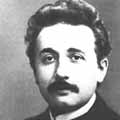 "When forced to summarize the general theory of relativity in one sentence:
Time and space and gravitation have no separate existence from matter. ... Physical objects are not in space, but these objects are spatially extended. In this way the concept 'empty space' loses its meaning. ... The particle can only appear as a limited region in space in which
the field strength or the energy density are particularly high. ...
"When forced to summarize the general theory of relativity in one sentence:
Time and space and gravitation have no separate existence from matter. ... Physical objects are not in space, but these objects are spatially extended. In this way the concept 'empty space' loses its meaning. ... The particle can only appear as a limited region in space in which
the field strength or the energy density are particularly high. ...
The free, unhampered exchange of ideas and scientific conclusions is necessary for the sound development of science, as it is in all spheres
of cultural life. ... We must not conceal from ourselves that no improvement in the present depressing situation is possible without
a severe struggle; for the handful of those who are really determined to do something is minute in comparison with the mass of the lukewarm
and the misguided. ...
Humanity is going to need a substantially new way of thinking if it is to survive!" (Albert Einstein)
 We can now deduce the most simple science theory of reality - the wave structure of matter in space. By understanding how we and everything around us are interconnected
in Space we can then deduce solutions to the fundamental problems of human knowledge in physics, philosophy, metaphysics, theology, education, health, evolution and ecology, politics and society.
We can now deduce the most simple science theory of reality - the wave structure of matter in space. By understanding how we and everything around us are interconnected
in Space we can then deduce solutions to the fundamental problems of human knowledge in physics, philosophy, metaphysics, theology, education, health, evolution and ecology, politics and society.
This is the profound new way of thinking that Einstein
realised, that we exist as spatially extended structures of the universe - the discrete and separate body an illusion. This simply confirms the
intuitions of the ancient philosophers and mystics.
Given the current censorship in physics / philosophy of science journals (based on the standard model of particle physics / big bang cosmology) the internet is the best hope for getting new knowledge
known to the world. But that depends on you, the people who care about science and society, realise the importance of truth and reality.
It is Easy to Help!
Just click on the Social Network links at top of page, or copy a nice image or quote you like and share it. We have a wonderful collection of knowledge from the greatest minds in human history, so people will appreciate your contributions. In doing this you will help a new generation of scientists see that there is a simple sensible explanation of physical reality (One Substance, One Law) - the source of truth and wisdom, the only cure for the madness of man! Thanks! Geoff Haselhurst (Updated May, 2025)
A new scientific truth does not triumph by convincing its opponents and making them see the light, but rather because its opponents eventually die, and a new generation grows up that is familiar with it. (Max Planck, 1920)
"All that is necessary for evil to succeed is for good people to do nothing."
(Edmund Burke)
"In a time of universal deceit - telling the truth is a revolutionary act."
(George Orwell)
"Hell is Truth Seen Too Late."
(Thomas Hobbes)


Legal Disclaimer and Privacy Policy
We support 'Fair Use' of these pages for Academic & Non Commercial use.
You are welcome to use images and text, but please reference them with a link to relevant web page on this site. Thanks!
