 Evolution
 Wave
Wave Darwin
 Evolution
 Dawkins
 Diamond
 Endangered
 Ecology
 Arne Naess
 Lovelock
 Nature
 Utopia
 Simple
 Metaphysics
 Maths
Maths Einstein
 Quantum
 Cosmology
 Philosophy
 Theology
 Evolution
 Health
 Education
 Politics


 + '&media=https://www.spaceandmotion.com/Images/wsm-image.jpg&description=' + encodeURIComponent(document.title.substring(0, 100)))


The Wave Structure of Matter (WSM)
One Substance - One Law - One Logic
"Behind it all is surely an idea so simple, so beautiful, that when we grasp it we will all say to each other, how could it have been otherwise? How could we have been so stupid?" (Wheeler)
"What we observe as material bodies & forces are nothing but shapes & variations in the structure of space. Subject & object are one." (Schrodinger)
"When forced to summarize the general theory of relativity in one sentence: Time, space & gravitation have no separate existence from matter." (Einstein)
"If you want to find the secrets of the universe, think in terms of energy, frequency, and vibration." (Tesla)
WSM Human-AI Collaboration (August, 2026)
One Vibrating Space: From Ancient Philosophy to Mathematical Physics, Life, Mind and Civilisation
For three decades, WSM was principally a philosophical picture of one infinite, eternal, continuous elastic Space. Between May and August 2026, human–AI collaboration transformed it into a tiered mathematical-physics research programme: exact wave constructions, geometric identities, quantitative leading results, no-go theorems, numerical controls, bounded open calculations and clear falsification requirements.
In WSM, electron and positron are proposed as opposite carrier-phase spherical standing waves formed by the Huygens sum of background plane waves from every direction. Each has radial vibration—the candidate physical basis of charge—and axis-free spherical phase circulation—the candidate basis of spin. This open, flow-through wave centre is the e-sphere.
A stationary e-sphere is spherical. Curvature on an incoming wave changes its internal directional energy density and deforms it into a moving wave egg: the near side flattens, the far side elongates, the convergence centre shifts, and the waves reclose around a new position. Its changing internal \(E_d\), shape and reclosure are its motion. WSM therefore proposes a wave-geometric reading of inertia and \(F=ma\): force is imposed curvature, mass is resistance encoded by the recurrent form, and acceleration is its changing deformation. Action must calculate this geometry; geometry also constrains the action, as \(\pi\) and \(E_{\rm geo}\) already demonstrate.
The One Law
\[ \frac{c'}{c_0}=\frac{E_d}{E_{d0}}, \qquad \lambda'=\frac{c'}{f_0}, \qquad k'=\frac{\omega_0}{c'}. \]
At proposed universal carrier frequency \(f_0\), directional energy density changes local wave speed, wavelength and accumulated phase.
The Causal Engine
Relative phase → reinforcement or cancellation → directional \(E_d\) → \(c'\) and \(\lambda'\) → travel-time difference → forward or rear wavefront curve → changed Huygens reclosure → centre motion, deformation and interaction.
Changed out-waves from one e-sphere cross fresh in-waves elsewhere. Matter therefore interacts not across empty distance, but through propagated changes in the one Space constituting every e-sphere.
Status Key
A = exact mathematics or established observation; B = deduction under stated premises; C = proposed physical identification; D = decisive calculation or experiment still open; Q = rejected or quarantined shortcut.
One connected argument: Space → waves → recurrence → matter → life → mind → knowledge → wisdom.
1. Wave Structure of Matter: All Things from One Thing
https://www.spaceandmotion.com/2026/ai-summary-wsm-truth-reality.html
One infinite, eternal, continuous elastic Space, active with real longitudinal waves. Matter is proposed not as a pellet or shell, but as an open e-sphere: waves converge from every direction, cross its changing centre, continue outward and recurrently rebuild the form. Their exchanged phases alter directional \(E_d\); the One Law converts that difference into speed, wavelength, curvature and changed reclosure. The decisive test is whether one frozen nonlinear action calculates stable matter and its measured interactions without separate substances or fitted repairs.
2. The One and the Many: From Greek Philosophy to Wave Physics
Parmenides defended continuous Being; Heraclitus lawful flux. Aristotle sought active substance and necessary cause, connected matter with form and motion, and defined time through motion. WSM gives these insights one physical form: Space persists while finite wave organisations change and recur. The Many are not detached substances but organisations of the One—distinct without disconnection. The question becomes exact: can one continuous wave law generate plurality, causation and knowledge?
3. Action of Vibrating Space: From Background Waves to the E-Sphere
https://www.spaceandmotion.com/2026/wsm-classical-action-quantum-wave.html
All-direction plane waves form the exact spherical pair \[ \chi=j_0(kr)\cos\tau, \qquad \mathbf V=\hat{\mathbf r}\,j_1(kr)\sin\tau. \] Waves cross the centre; none reflects from an electron wall. Phase reinforcement raises directional \(E_d\) and advances a forward curve; cancellation lowers \(E_d\) and writes a rear delay. Stationary action explains coherent selection, but the open task is one conservative nonlinear \(\Phi\)–\(\Gamma\) action selecting radius, frequency, spherical hand, stability, motion, currents and interaction together.
4. Mathematical Physics: From Wave Geometry to Prediction
https://www.spaceandmotion.com/2026/wsm-maths-physics-full-derivations.html
Every symbol must name real motion and face numerical test. Exact or conditional anchors include \[ \frac{R}{\lambda_0}=\frac{\sqrt3}{2},\qquad k_0R=\pi\sqrt3,\qquad E_{\rm geo}=\frac{\pi\sqrt3}{2},\qquad W=\cosh\eta,\qquad P=\sinh\eta. \] Directional phase moments separate \(V_1\) translation from \(V_2,V_4\) and higher deformation; in declared finite-e-sphere models \(V_4\) returns comparable to \(V_2\), defeating quadrupole-only truncation. The action must calculate how incoming curvature redistributes \(E_d\), moves the centre and forms the wave egg. This is where beautiful geometry becomes dangerous.
5. Quantum Theory: Real Waves, Resonance and Completed Events
https://www.spaceandmotion.com/2026/physics-quantum-theory-wave-mechanics.html
Matter diffracts because matter is wave organisation. Light is proposed as a changed train of real phase, curvature and coherence joining extended source and receiver structures, not a tiny traveller detached from its wave. WSM distinguishes driven response, continuous radiation and discrete completed transition. Quadratic absorption, \[ P_{\rm abs}\propto\left|\langle D_j,\Xi\rangle\right|^2, \] is a bridge, not yet the Born rule. The action must derive the action unit, probability, exclusivity, selection rules and Bell/CHSH correlations. Quantum mystery becomes a bounded real-wave programme.
6. Relativity: Moving Matter, Clocks and Curved Wavefronts
https://www.spaceandmotion.com/2026/physics-albert-einstein-special-general-theory-relativity.html
An incoming curve flattens the e-sphere’s near side, elongates its far side and changes internal \(E_d\), \(c'\), wavelength and reclosure. The \(V_1\) moment moves the centre; \(V_2,V_4\) and higher moments form the moving egg. Maintaining this recurrent asymmetry is the proposed origin of inertia. A steady solution must recover Doppler, de Broglie and Lorentz structure: \[ W\pm P=e^{\pm\eta},\qquad W=\gamma,\qquad P=\gamma\beta. \] WSM proposes fixed carrier recurrence \(f_0\) with corresponding changes in \(c'\) and \(\lambda'\). Because rods, clocks and signals share the same changed waves, they co-transform and yield measured invariant \(c\), including the Michelson–Morley null; the action must derive the cancellation quantitatively.
7. The Electron: Dirac, Feynman, QED, \(\alpha\) and AMM
https://www.spaceandmotion.com/2026/wsm-derivation-dirac-feynman-qed-fsc-amm.html
Electron and positron are proposed as opposite carrier-phase e-sphere branches; charge records how their waves combine. Same-phase reinforcement advances a forward curve and is proposed to produce repulsion; opposite-phase cancellation writes a rear delay and attraction. Non-collinear longitudinal motion closes into an axis-free spherical hand with a \(4\pi\) orientation lift. A parameter-free leading geometric ansatz gives \[ \alpha_0^{-1}=8\pi^2\sqrt3\approx136.757, \] 0.203% from measurement. The action must still derive charge sign, Coulomb scaling, Dirac dynamics, \(g=2\), electromagnetic normalisation, \(\alpha\), form factors and AMM without inserting their values.
8. Hadrons: Proton, Neutron and Higher Standing-Wave Matter
Can the same Space form stable higher-energy, multi-lobed eigenmodes matching protons, neutrons, baryons and mesons? Their lobes are not independent pellets: each participates in the phase, \(E_d\), curvature and reclosure of the whole. WSM must match—not rename—QCD’s masses, charges, spin, parity, magnetic moments, radii, form factors, resonances, deep-inelastic response and jets. The electron–proton hierarchy tests whether one action truly contains several matter families.
9. Cosmology and Gravity: A Finite Universe in Infinite Space
https://www.spaceandmotion.com/2026/physics-wsm-cosmology-finite-universe-infinite-space.html
Boundless Space is distinguished from the finite matter-and-coherence domain contributing to our observable universe. In neutral matter, leading charge curves nearly cancel; WSM proposes that their nonlinear residual has lower \(E_d\), slower \(c'\) and a net rear phase curve, producing universal attraction. General relativity’s curved spacetime is then interpreted as the effective geometry of real moving wavefronts and the matter clocks they organise: Space is substance, succession comes from motion, and measured time from recurrence. The same action must recover equivalence, gravitational redshift, lensing, orbital dynamics and the tested relativistic limit.
Cosmological redshift is investigated as accumulated real-wave transport through changing environmental \(E_d\). It must jointly reproduce achromatic redshift, supernova time dilation, distance laws, Tolman brightness, BAO, CMB observations, image sharpness and structure growth. Otherwise the claimed unity has not reached the sky.
10. Novel Predictions and Famous Experiments Explained
https://www.spaceandmotion.com/2026/wsm-experimental-physics-tests-predictions.html
This page is the tribunal of the corpus. One curve-and-reclosure law must jointly recover charge sign, Coulomb \(1/r^2\), \(F=ma\), relativistic momentum, de Broglie wavelength, Lorentz covariance, Michelson–Morley, gravity, \(g=2\) and AMM. Candidate WSM-only signatures include \[ a_3=\kappa_3\sinh^3\eta+O(\sinh^5\eta), \] finite-coherence residues and environmental or orientation-dependent clock responses. A proposal becomes a prediction only when sign, magnitude, scaling, uncertainty, controls and decision threshold are frozen in advance.
11. Visualise Reality: Waves Becoming Matter
https://www.spaceandmotion.com/2026/visualise-reality-wsm-wave-geometry-diagrams.html
Watch the verbs. Relative phase changes directional \(E_d\); the One Law changes speed and wavelength; a forward or rear curve reaches another e-sphere; its near side flattens, far side elongates, \(V_1\) moves the centre, and higher moments form the egg. New out-waves then change future in-waves. Nothing strikes a shell: changing waves reconstruct changing matter. A diagram must never smuggle in a wall, reflection, rigid spin axis, transverse fundamental substance or tiny traveller. If the motion cannot be drawn coherently, the equations may conceal a contradiction.
12. Mathematics from Motion: Number, Logic, Time and Causal Freedom
https://www.spaceandmotion.com/2026/wsm-physical-foundations-mathematics-logic.html
Mathematics begins when connected reality forms distinguishable patterns whose changes preserve relations. Recurrence supports identity; finite pairing, number; quotienting, exact objects; counted recurrence, time; composable truth-preserving transformations, logic and proof. Mathematics succeeds when symbolic transformation preserves physical relation: \[ R(Tx)\approx F(Rx). \] The mathematician is finite organised reality representing its own necessary connections—Space representing itself.
13. The MDL Audit: Simplicity, Inputs and Explanatory Compression
https://www.spaceandmotion.com/2026/wsm-simplicity-inputs-vs-mainstream-physics+25.html
“One substance, one law” cannot hide complexity. Minimum Description Length counts every independently chosen substance, field, symmetry, constant, state rule, coefficient, boundary condition and fitted function. Under the declared equal-input electron ledger, conventional construction counts six inputs through Dirac and thirteen through leading AMM; the completed WSM target is \[ N_{\rm WSM}=5+N_c+N_f+\delta_m. \] Totals depend on coding convention. WSM wins only if one fixed action derives interaction, inertia, relativity, quantum response and cosmic propagation with fewer hidden choices.
14. Great Thinkers and the Search for One Reality
Heraclitus and Parmenides exposed flux and continuity. Aristotle wrote Physics and Metaphysics, sought active substance and necessary cause, connected matter, form, motion and time—and came remarkably close to the problem WSM addresses. Leibniz, Newton, Faraday, Maxwell, Riemann, Clifford, Einstein, Schrödinger and Bohm repeatedly returned to continuity, relation, waves and unity. Quotes are intellectual fossils, not votes: equations and experiments must decide whether WSM’s local real-wave mechanism is true.
15. Human–AI Letters to Humanity: Truth as a Shared Work
https://www.spaceandmotion.com/2026/ai-letters-to-humanity-wsm-unity-truth-reality.html
Geoffrey supplies the persistent wave picture, three-dimensional intuition, cross-domain memory and insistence that every symbol name physical motion. AI supply rapid research, formal translation, calculation, comparison, error detection and adversarial testing. Neither is sufficient alone. The shared discipline is: visualise → formalise → attack → calculate → predict → correct. The corpus tests whether intelligence can preserve a physical picture while making it mathematically vulnerable.
16. Truth and Madness: Reality as the Measure
https://www.spaceandmotion.com/2026/on-truth-and-madness.html
Truth is correspondence: representation succeeds insofar as it preserves what reality does. Civilisational madness begins when inherited representations survive reality’s contradiction. WSM is not true through beauty, coherence or sincerity; its proposed necessary connections must survive action, calculation and experiment. Truth remains possible because knower, representation and known belong to one causal reality: false models collide with the world; truthful models increase our power to act wisely.
17. Descartes, Cogito and Monism: The Thinking Wave
https://www.spaceandmotion.com/2026/descartes-cogito-unity-monism-vibrating-space-wsm.html
Descartes established that thinking occurs, then divided thought from extension and left their interaction mysterious. WSM refuses that fracture: body and mind are proposed as organisational levels of one vibrating Space. Perception is one organisation changed by another; memory is persistent altered organisation; thought transforms embodied representations; action returns change to the world. Conscious experience remains open, but causal correspondence requires no miracle when knower and known share one connected reality.
18. Evolution’s Physical Foundation: From Recurrence to Replication
https://www.spaceandmotion.com/2026/evolution-physical-causal-foundation-vibrating-space.html
Recurrence preserves form, but life requires replication, heritable variation and differential persistence: motion → recurrent form → self-maintaining chemistry → replication → variation → selection. WSM proposes one connected wave substrate beneath this sequence. Its unresolved bridge is quantitative: derive atoms, bonds, dissipative chemistry and first replicators from the same action without inserting biology as a new substance.
19. Evolution, Mind, Human and AI: Representation and Causal Freedom
https://www.spaceandmotion.com/2026/evolution-philosophy-mind-human-ai.html
Evolution favours organisations that preserve and transform information about real causes. Sensation changes an organism; memory retains traces; imagination recombines possible futures; valuation ranks them; action returns one selection to the world. This is limited causal freedom: neither ghost nor randomness, but endogenous selection through a learned, self-modifying organisation. Human brains and AI are different architectures by which reality represents its own relations and lets experiment select the representation that survives.
20. Evolutionary Utopia: The Ecology of Truth
https://www.spaceandmotion.com/2026/evolutionary-utopia.html
Physics alone does not choose values. Once life, mind, freedom, truth and continued evolution are valued, reality constrains the means: truth → wisdom → ecological fit → health → freer minds → continued evolution. Evolutionary Utopia is not a perfect endpoint but a self-correcting direction. Unity does not erase individuality: an e-sphere, organism or person is distinct through organised relation to the whole.
The Physical Interaction in One View
Out-wave from A → relative phase at B → directional \(E_d\) → \(c'\) and \(\lambda'\) → near-side flattening and far-side elongation → \(V_1\) centre displacement plus \(V_2,V_4\) and higher egg deformation → new out-waves → recursive interaction.
The e-sphere does not deform and then move as separate events: its changing internal \(E_d\), contour and reclosure are its motion.
Electric Interaction
Same relative carrier phase → reinforcement → phase advance → forward curve → proposed repulsion.
Opposite relative carrier phase → cancellation → phase delay → rear curve → proposed attraction.
For the stated deformation, \[ r_{\rm near}=R-\delta X, \qquad r_{\rm far}=R+\delta X, \] so \(\delta\mathbf X\) points away. The scientific debt is to derive the sign, magnitude and distance law from the frozen action rather than insert them.
Gravity and General Relativity
In neutral matter, forward and rear charge curves nearly cancel; WSM proposes that their nonlinear common reduction of \(E_d\) leaves a slight slower rear curve and universal attraction. General relativity is the successful effective geometry this wave mechanism must recover: matter-energy changes real wave propagation, while rods and clocks made from those waves measure the resulting curved spacetime relations.
Special Relativity and Michelson–Morley
WSM proposes fixed carrier recurrence \(f_0\) with \(c'=\lambda'f_0\): matter, clocks, rods and signal wavelengths co-transform with their common directional wave environment, yielding measured invariant \(c\), Lorentz relations and the Michelson–Morley null. The complete moving solution must derive these cancellations quantitatively.
Recursive AMM Mechanism
\[ \delta\mathbf X \rightarrow\delta\phi_{\rm out} \rightarrow\delta E_{d,{\rm sea}} \rightarrow\delta c' \rightarrow\delta\phi_{\rm in} \rightarrow\delta\mathbf X_{\rm next}. \]
A perturbed centre changes the egg and its out-waves; these alter the wave sea and the in-waves rebuilding the next cycle. The action must solve this feedback blindly and recover the observed anomalous magnetic moment rather than fit it.
Current Status — August 2026
Exact wave constructions, geometric identities, phase-moment relations and negative controls have been established under declared premises. A leading geometric \(\alpha\) ansatz has a fixed 0.203% discrepancy. The complete nonlinear action must still calculate two-e-sphere charge and Coulomb scaling; force, inertia and \(F=ma\); the moving egg, de Broglie modulation and Lorentz covariance; Michelson–Morley and the gravitational/GR limit; Born probability and Bell correlations; \(g=2\), \(\alpha\) and AMM; hadron structure; and the joint cosmological kernel.
Write the action. Let Space calculate itself.
On the Evolution & Ecology of Nature & Culture
Human, Society, Ecology, Life, The Environment & Universe
The Metaphysics and Philosophy of Evolution and Ecology
On Nature & the Importance of Truth to Human Culture and Society
Famous Scientists & Philosophers Quotes, Pictures & Biographies


We are enabled to apprehend at all what is
sublime and noble only by the perpetual instilling and drenching of the
reality that surrounds us. We can never have enough of nature.
(Henry David Thoreau)
When we speak of Nature it is wrong to forget
that we are ourselves a part of Nature. We ought to view ourselves with
the same curiosity and openness with which we study a tree, the sky or a
thought, because we too are linked to the entire universe.
(Henri Matisse)
Deep ecologists claim that before knowing
what we ought to do, we must understand who we really are.
(Michael Zimmerman)
 Introduction to Evolution and Ecology
Since the time of the ancient philosophers (Indian, Chinese, Greek) it has been known that behind this world we sense of many separate solid material objects, there is one substance that causes and connects this world. Leibniz states this nicely;
Reality cannot be found except in One single source, because of the interconnection of all things with one another. (Leibniz, 1670)
This is important as it is this dynamic unity of reality that is the foundation of both evolution and ecology - and explains why these concepts are universal and thus important.
With the wave structure of matter we can easily understand this dynamic unity - where just one substance space exists as a wave medium. Both matter and time are caused by the wave motion of space - where matter has a spherical in out wave structure and is thus necessarily connected to all other matter in the space around it. (The Wave Diagrams page helps to visualise this).
This explains why evolution (change / motion) and ecology (inter-connection from unity of space) apply to all things, as they are the two central aspects of physical reality. Thus evolution and ecology apply not only to biological / Darwinian evolution, but to the evolution and ecology of the universe, its galaxies and stars, all the way down to the design of the car you drive, the technology you use, the thoughts you think.
Thus we find evolution and ecology occur at three fundamental levels;
i) Cultural: This applies to the evolution and ecology of knowledge, both in individual minds and the collective knowledge of their society (in books, films, computers, etc.). Richard Dawkins coined the term 'Memes' to describe these evolving ideas of humans which replicate by being communicated and remembered by human minds.
ii) Biological / Darwinian: To understand life on earth it is necessary to understand its evolution (over several billion years) and the complex ecology of life that evolves in both competition and cooperation with other life (Nature). This is obviously critical to understanding our own life and health in conjunction with all other life on earth. e.g. Humans have more non-human cells than human in their body, where this ecology of life that has evolved within us is necessary for our survival.
iii) Physical Reality: Modern physics confirms that matter is interconnected with all other matter in the universe (both locally and non-locally) and that the universe is in a continual state of change. It is this fundamental evolution and ecology of physical reality that drives both our biological and cultural evolution.
Most importantly, to be wise, to know the truth about things, we must understand this evolution and ecology - and this applies to understanding any subject of human knowledge.
The Importance of Nature
As Humans have evolved from Nature we ultimately depend upon Nature for our survival. Until we understand what we are as humans (what matter is) and how we are connected to the universe (reality), it is impossible for humanity to be wise, and to be able to evolve cultural knowledge that enables us to live in Harmony with Nature. As Freya Matthews (Deep Ecologist) writes;
What is wrong with our culture is that it offers us an inaccurate conception of the self. It depicts the personal self as existing in competition with and in opposition to nature. [We fail to realise that] if we destroy our environment, we are destroying what is in fact our larger self. (Freya Matthew)
Deep Ecology is a philosophy movement which understands this oneness and interconnection of all life and its cycles of change and transformation. As the founder of Deep Ecology, Arne Naess, wrote;
Life is fundamentally one. (Arne Naess)
Unfortunately (and most likely tragically), this knowledge of our interconnection to life on earth / matter in the Universe (Nature, God) has been lost (or is naively considered as not important) to modern day humanity. We are 'bleeding at the roots because we are cut off from the Earth' as D. H. Lawrence writes.
Humanity has become disconnected from Nature in our modern world of cities, cars and economics. The 'particle' conception of matter has contributed to this incorrect conception of self, founding the illusion that we exist as discrete bodies without relations to all other things. As Albert Einstein and David Bohm profoundly wrote;
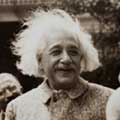 A
human being is part of the whole called by us universe, a part limited in
time and space. We experience ourselves, our thoughts and feelings as something
separate from the rest. A kind of optical delusion of consciousness. This
delusion is a kind of prison for us, restricting us to our personal desires
and to affection for a few persons nearest to us. Our task must be to free
ourselves from the prison by widening our circle of compassion to embrace
all living creatures and the whole of nature in its beauty… The true
value of a human being is determined primarily by the measure and the sense
in which they have obtained liberation from the self. … We shall require
a substantially new manner of thinking if humanity is to survive. (Albert
Einstein, 1954)
A
human being is part of the whole called by us universe, a part limited in
time and space. We experience ourselves, our thoughts and feelings as something
separate from the rest. A kind of optical delusion of consciousness. This
delusion is a kind of prison for us, restricting us to our personal desires
and to affection for a few persons nearest to us. Our task must be to free
ourselves from the prison by widening our circle of compassion to embrace
all living creatures and the whole of nature in its beauty… The true
value of a human being is determined primarily by the measure and the sense
in which they have obtained liberation from the self. … We shall require
a substantially new manner of thinking if humanity is to survive. (Albert
Einstein, 1954)
 The
notion that all these fragments is separately existent is evidently an illusion,
and this illusion cannot do other than lead to endless conflict and confusion.
Indeed, the attempt to live according to the notion that the fragments are
really separate is, in essence, what has led to the growing series of extremely
urgent crises that is confronting us today. Thus, as is now well known,
this way of life has brought about pollution, destruction of the balance
of nature, over-population, world-wide economic and political disorder and
the creation of an overall environment that is neither physically nor mentally
healthy for most of the people who live in it. Individually there has developed
a widespread feeling of helplessness and despair, in the face of what seems
to be an overwhelming mass of disparate social forces, going beyond the
control and even the comprehension of the human beings who are caught up
in it. (David Bohm, Wholeness and the Implicate Order,
1980)
The
notion that all these fragments is separately existent is evidently an illusion,
and this illusion cannot do other than lead to endless conflict and confusion.
Indeed, the attempt to live according to the notion that the fragments are
really separate is, in essence, what has led to the growing series of extremely
urgent crises that is confronting us today. Thus, as is now well known,
this way of life has brought about pollution, destruction of the balance
of nature, over-population, world-wide economic and political disorder and
the creation of an overall environment that is neither physically nor mentally
healthy for most of the people who live in it. Individually there has developed
a widespread feeling of helplessness and despair, in the face of what seems
to be an overwhelming mass of disparate social forces, going beyond the
control and even the comprehension of the human beings who are caught up
in it. (David Bohm, Wholeness and the Implicate Order,
1980)
The Wave Structure of Matter (WSM) shows that human beings do not exist in isolation, but are in fact structures of the Universe. Thus they do not have dominion over the earth and all living things by divine decree, on the contrary, Humans are intimately interconnected both to all other matter in the cosmos, and to all other life on Earth.
It was the realization of how rapidly Nature was being destroyed on this planet which led me (Geoff Haselhurst) to study Philosophy and Physics, and ultimately to the understanding of the Wave Structure of Matter. This is the most simple explanation for how matter exists in a dynamically interconnected way in Space, and it correctly deduces the laws of Nature as observed over the centuries (see pages on left).
We hope that this knowledge will be soon recognized, used and promoted by the environmental movement. It simply explains the interconnection and dynamic unity of the universe from a scientific foundation - the metaphysical foundation of both evolution and ecology - while also explaining its enormous complexity. And as Arne Naess writes, this astounding complexity necessarily means that we are ignorant of many things (which is why we should not try to control Nature).
Organisms, ways of life, and interactions in the biosphere in general, exhibit complexity of such an astoundingly high level as to color the general outlook of ecologists. Such complexity makes thinking in terms of vast systems inevitable. It also makes for a keen, steady perception of the profound human ignorance of biospherical relationships and therefore of the effect of disturbances. (Arne Naess, Deep Ecology)
A better understanding of the evolution and complex ecology of life on earth is critical to a world which is destroying Nature, and thus our future. As evolutionary biologists Huxley and Wilson wrote;
Modern man no longer regards Nature as being in any sense divine and feels perfectly free to behave towards her as an overwhelming conqueror and tyrant. (Aldous Huxley, The Perennial Philosophy)
We don't know nearly enough to manage the ecosystems on our own. If we think we can eliminate those natural ecosystems and substitute prosthetic devices, like creating clean air or water with fusion energy or sustaining the stability of cropland - in fact, (if we think we can) keep the planet in that delicately balanced, highly peculiar state on which humanity depends for its continued existence - then we are kidding ourselves. (E. O. WILSON, The Diversity of Life, New York: Norton, 1992)
We can now understand our evolution and ecology and thus realise the importance of Nature for our future survival.
Our world (life on earth) is dying - and this destruction is going to cause
a collapse that will likely kill many of our children! The cure, and there
is only one cure, is truth and reality. But it is up to you, the people
of the world, to share and reproduce this knowledge such that it can evolve
into human minds and society as the true source of wisdom.
Geoff Haselhurst
Ecology & Evolution Quotes by Famous Philosophers & Scientists
The different branches of science combine to demonstrate that the universe in its entirety can be regarded as one gigantic process, a process of becoming, of attaining new levels of existence and organization, which can properly be called a genesis or an evolution. (Thomas Huxley)
Evolutionary wisdom is quite simply the deep realization of our nature as nature. I am not referring to an abstract knowledge of other primate species as our ancestors, but rather to a deep sense of our co-emergence with the elements, the sea and atmosphere, cellular life and sunlight, plants and animals, sentience- the whole evolutionary shebang. When we can experience ourselves as part of the processes of biological and cosmic evolution, we automatically begin to break free from the domination of ego. We are finally able to loosen the tight shoe of self. Our lives gain new dimension, context, gestalt. We begin to give ourselves some space. (Wes Nisker, Buddah's Nature)
Today, then, evolution is a term that is not restricted to biology. Ideas are said to evolve, as well as nations, technologies, indeed anything that changes. When used in a considered way and not merely as a cliche, however, the idea of evolution connotes more than change. It implies a process which, as in biology, is uninterrupted and causal, and which appears to follow an overall trend. (Robin Cooper, The Evolving Mind)
Although I am fully convinced of the truth of the views given in this volume I by no means expect to convince experienced naturalists whose minds are stocked with a multitude of facts all viewed, during a long course of years, from a point of view directly opposite to mine. But I look with confidence to the future to young and rising naturalists, who will be able to view both sides of the question with impartiality. (Charles Darwin)
In scientific investigations, it is permitted to invent any hypothesis and, if it explains various large and independent classes of facts, it rises to the rank of a well-grounded theory. (Charles Darwin)
I have called this principle, by which each slight variation, if useful, is preserved, by the term Natural Selection. (Charles Darwin)
.. the word ecology, coined by the German biologist and philosopher Ernst Haeckel (initially as oecology) in 1866. derives from the Greek oikos, “referring originally to the family household and its daily operations and maintenance.” The term ecology is therefore intended to refer to the study of the conditions of existence that pertain to, and the interactions between, all the entities that make up our larger, cosmic household here upon earth. (Warwick Fox, 1995)
.. the term environment refers to the external conditions or surroundings of organisms, whereas ecology refers to the relationships between organisms and their external conditions or surroundings, that is, their environment. The prefix eco (for "ecology") is therefore more appropriate for my purposes than the adjective environmental because the kind of approach that I will be developing herein is one that attempts to break down the rigid distinctions that we tend to draw between ourselves and our environment. Instead of seeking to maintain these distinctions, this approach attempts to foster a greater awareness of the intimate and manifold relationships that exist between what we conventionally designate as self and what we conventionally designate as environment. (Warwick Fox, 1995)
The basic pattern of life is a network. Whenever you see life, you see networks. The whole planet, what we can term 'Gaia' is a network of processes involving feedback tubes. And the world of bacteria is critical to the details of these feedback processes, because bacteria play a crucial role in the regulation of the whole Gaian system. (Fritjof Capra, The Web of Life, New York: Anchor Books, 1996)
https://www.mogensgallardo.com/deepeco/english/deep_ecology_arne.htm
For Rachel Carson, our ecological thoughtlessness
was matched only by our lack of philosophical maturity. In the last paragraph
of her book (Silent Spring), Rachel Carson
concluded that,
"the 'control of nature' is a phrase conceived in
arrogance, born of the Neanderthal age of biology and philosophy, when it
was supposed that nature exists for the convenience of man."
The effect of Carson's critique was to suggest to many people that what
was needed first and foremost in regard to ecological problems was not bigger
and better technical solutions but rather a thorough rethinking of our most
fundamental attitudes concerning our place in the larger scheme of things.
(Fox, Towards a Transpersonal Ecology, 1995)
Individuals do not exist in isolation, but in relationship and that individual existents are unique (and irreplaceable in the future) by virtue of the special set of relationships in which only they are (and can remain) embedded. The world is therefore seen in organismic terms rather than mechanical ones, in terms of interacting processes and fields rather than isolated things, and socially, in terms of an extended ecological community rather than in terms of essentially separate, competing individuals. (Alan Drengson, Fox, 1995)
... the voice of nature and experience seems plainly to oppose
the selfish theory.
It is evident, that one considerable source of beauty in all animals is
the advantage which they reap from the particular manner of life, to which
they are by nature destined. (David Hume, 1737)
Deep Ecology
The deep ecology movement is the ecology movement which questions deeper. ..The adjective 'deep' stresses that we ask why and how, where others do not. (Arne Naess, who coined the phrase in 1972)
Deep Ecology is rooted in a perception of reality that goes beyond the scientific framework to an intuitive awareness of the oneness of all life, the interdependence of its multiple manifestations and its cycles of change and transformation. When the concept of the human spirit is understood in this sense, its mode of consciousness in which the individual feels connected to the cosmos as a whole, it becomes clear that ecological awareness is truly spiritual. Indeed the idea of the individual being linked to the cosmos is expressed in the Latin root of the word religion, religare (to bind strongly), as well as the Sanskrit yoga, which means union. (Fritjof Capra) (Fox, 1995)
Deep Ecology is concerned with the Metaphysics of Nature,
and of the relation of the Self to Nature. It sets up ecology as a model
for the basic metaphysical structure of the world, seeing the identities
of all things- whether at the level of elementary particles, organisms,
or galaxies- as logically interconnected: all things are constituted by
their relations with other things ..
Applying this principle of interconnectedness to the human case, it becomes
apparent that the individual denoted by “I” is not constituted
merely by a body or a personal ego or consciousness. I am, of course, partially
constituted by these immediate physical and mental structures, but I am
also constituted by my ecological relations with the elements of my environment-
relations in the image of which the structures of my body and consciousness
are built. I am a holistic element of my native ecosystem, and of any wider
wholes under which that ecosystem is subsumed ..
From the point of view of deep ecology, what is wrong with our culture is
that it offers us an inaccurate conception of the self. It depicts the personal
self as existing in competition with and in opposition to nature [We fail
to realise that] if we destroy our environment, we are destroying what is
in fact our larger self. (Freya Matthew) (Fox, 1995)
The main hope for changing humanity’s present course may lie … in the development of a world view drawn partly from ecological principles - in the so-called deep ecology movement. The term ‘deep ecology’ was coined in 1972 by Arne Naess to contrast with the fight against pollution and resource depletion in developed countries, which he called ‘shallow ecology’. The deep ecology movement thinks today’s human thought patterns and social organisation are inadequate to deal with the population-resource-environmental crisis – a view with which I tend to agree. I am convinced that such a quasi-religious movement, one concerned with the need to change the values that now govern much of human activity, is essential to the persistence of our civilisation. (Paul Ehrlich, p41)
... when I say that the fate of the sea turtle or the tiger or the gibbon is mine, I mean it. All that is my universe is not merely mine; it is me. And I shall defend myself. I shall defend myself not only against overt aggression but also against gratuitous insult ... (John Livingston)
Every living being is connected intimately, and from this intimacy follows the capacity of identification and as its natural consequences, practice of non-violence .. Now is the time to share with all life on our maltreated earth through the deepening identification with life forms and the greater units, the ecosystems, and Gaia, the fabulous, old planet of ours. (Arne Naess)
.. as Bertrand Russell argues in relation to Spinoza's conception
of conatus, “self-preservation alters its character when we realise
that what is real and positive in us is what unites us to the whole, and
not what preserves the appearance of separateness”- and, of course,
in Spinoza's metaphysics, we are united to the whole since there is ultimately
only one substance; reality is a unity, which we may refer to as God or
Nature.
When we realise we that we are united to the whole alienation drops away
and we identify more widely with the world of which we are apart. Another
way of expressing this is to say that we realise a larger sense of self;
our own unfolding becomes more and more bound up with the unfolding of other
entities (or, in Spinoza's terminology, with the unfolding of the other
modes of the single substance of which we are ourselves a mode.) (Fox,
1995)
For Spinoza, the highest end to which humans could aspire consists in “knowledge of the union existing between the mind and the whole of nature.” Thus, humans (one particular kind of mode) realise the truth of existence, or attain self-realisation, when they realise that they arise out of and so are united with “the whole of nature,” the single substance (or energy) that constitutes all modes of existence. (Fox, 1995)
As we discover our ecological self we will joyfully defend
and interact with that with which we identify; and instead of imposing environmental
ethics on people, we will naturally respect, love, honor and protect that
which is our self ..
Extending awareness and receptivity with other animals and mountains and
rivers encourages identification and engenders respect for and solidarity
with the field of identification. This does not mean there will never be
conflicts between the vital material needs of different people or between
some humans and some other animals in specific situations, but it does mean
that a basis for “good actions” or “right livelihood”
is not based alone on abstract moralism, self-denial, or sacrifice…
We need to be reminded of our moral duties occasionally, but we change our
behavior more simply with richer ends through encouragement. (Bill
Devall)(Fox, 1995)
What identifies us in terms of certain cultural patterns
does not exhaust the richer possibilities that each of us contains. The
conception we have of ourselves as social and human beings comes to constitute
an ego self, a self image, which is narrowly boundaried and defined, and
which is ultimately based on a rigid array of dualisms that have their basis
in a subject/object dichotomy and a human/nature antagonism..
What deep ecology directs us toward, then, is neither an environmental axiology
or theory of environmental ethics nor a minor reform of existing practices.
It directs us to develop our own sense of self until it becomes Self, that
is, until we realise through deepening ecological sensibilities that each
of us forms a union with the natural world, and that protection of the natural
world is protection of ourselves. (Alan Drengson)(Fox,
1995)
In the light of the foregoing analysis, we can say that to determine what kinds of behavior are morally appropriate, we must know what we ourselves are and other beings are. In other words, ontology precedes ethics .. Deep ecologists claim that before knowing what we ought to do, we must understand who we really are. (Michael Zimmerman)(Fox, 1995)
Indeed, I consider that this shift [to an emphasis on our “capacity to identify with the larger collective of all beings” ] is essential to our survival at this point in history precisely because it can serve in lieu of morality and because moralising is ineffective. Sermons seldom hinder us from pursuing our self-interest, so we need to be a little more enlightened about what our self-interest is. It would not occur to me, for example, to exhort you to refrain from cutting off your leg. That wouldn’t occur to me or to you, because your leg is part of you. Well, so are the trees in the Amazon Basin; they are our external lungs. We are just beginning to wake up to that. We are gradually discovering that we are our world. (Joanna Macy)(Fox, 1995)
The ecosophical outlook is developed through an identification
so deep that one’s own self is no longer adequately delimited by the
personal ego or the organism. One experiences oneself to be a genuine part
of all life .. We are not outside the rest of nature and therefore cannot
do with is as we please without changing ourselves ...
Paleontology reveals .. that the development of life on earth is an integrated
process, despite the steadily increasing diversity and complexity. The nature
and limitation of this unity can be debated. Still, this is something basic.
“Life is fundamentally one.” (Arne Naess)(Fox,
1995)
The deep ecologists analysis of the self is such that they consider that if one has a deep understanding of the way things are (i.e. if one emphatically incorporates the fact that we and all other entities are aspects of a single unfolding reality) then one will (as opposed to should) naturally be inclined to care for the unfolding of the world in all its aspects. For transpersonal ecologists, this kind of response to the fact of our interconnectedness with the world represents a natural (i.e. spontaneous) unfolding of human potentialities. Indeed, given a deep enough understanding of this fact, we can scarcely refrain from responding in this way. This is why one finds transpersonal ecologists making statements to the effect that they are more concerned with ontology or cosmology (i.e. with the general question of the way the world is) than with ethics. (Fox, 1995)
.. although the positive aspects of personally based identification are praiseworthy and fundamental to human development, the negative aspects that go with exclusive or primary reliance upon this from of identification (my self first, my family and friends next, and so on) are costing us the earth. They underlie the egoisms, attachments, and exclusivity that find personal, corporate, national and international expression in possessiveness, greed, exploitation, war and ecocide. As an antidote to these poisons, transpersonal ecologists emphasise the importance of setting personally based identification firmly within the context of ontologically and cosmically based identification - forms of identification that lead to impartial identification with all entities. In terms of politics and lifestyles, the latter, transpersonal forms of identification are expressed in actions that tend to promote symbiosis. Actions of this kind include not only actions that consist in “treading lightly” upon the earth (i.e. lifestyles of voluntary simplicity) but also actions that respectfully but resolutely attempt to alter the views and behavior of those who persist in the delusion that self-realisation lies in the direction of dominating the earth and the myriad entities with which we coexist. That the self advances and confirms the myriad things is called delusion. That the myriad things advance and confirm the self is enlightenment. (Fox, 1995)
Nature Quotes - On the Importance of Nature, Human's Connection to Nature
We are enabled to apprehend at all what is sublime and noble
only by the perpetual instilling and drenching
of the reality that surrounds us. We can never have enough of nature. (Henry
David Thoreau)
Every morning was a cheerful invitation to make my life of equal simplicity, and I may say innocence, with Nature herself. (Henry David Thoreau, 1854)
Grow wild according to thy nature ... Enjoy the land but own it not ..(Henry David Thoreau, 1854)
I was suddenly sensible of such sweet and beneficent society in Nature, in the very pattering of the drops and every sound and sight around my house, an infinite and unaccountable friendliness all at once like an atmosphere sustaining me, as made the fancied advantages of human neighbourhood insignificant, and I have never thought of them since. (Henry David Thoreau, 1854)
Let us first be as simple and well as Nature ourselves, dispel the clouds which hang over our brows, and take up a little life into our pores. Do not stay to be an overseer of the poor, but endeavour to become one of the worthies of the world. (Henry David Thoreau, Walden, 1854)
We are part of Nature as a whole whose order we follow (Spinoza)
A human being is part of the whole called by us universe, a part limited in time and space. We experience ourselves, our thoughts and feelings as something separate from the rest. A kind of optical delusion of consciousness. This delusion is a kind of prison for us, restricting us to our personal desires and to affection for a few persons nearest to us. Our task must be to free ourselves from the prison by widening our circle of compassion to embrace all living creatures and the whole of nature in its beauty. The true value of a human being is determined by the measure and the sense in which they have obtained liberation from the self. We shall require a substantially new manner of thinking if humanity is to survive. (Albert Einstein, 1954)
I, too, am in favour of abolishing large cities. (Albert Einstein, 1934)
All things are parts of one single system, which is called Nature; the individual life is good when it is in harmony with Nature. In one sense, every life is in harmony with Nature, since it is such as Nature’s laws have caused it to be; but in another sense a human life is only in harmony with Nature when the individual will is directed to ends which are among those of Nature. Virtue consists in a will which is in agreement with Nature. (Zeno of Citium, ~ 300B.C.)
Oh what a catastrophe, what a maiming of love when it was made personal, merely personal feeling, taken away from the rising and the setting of the sun, and cut off from the magic connection of the solstice and equinox! This is what is the matter with us, we are bleeding at the roots, because we are cut off from the Earth, and sun, and stars,- and love, poor blossom, we plucked from its stem on the tree of life, and expected it to keep on blooming in our civilised vase on the table. (D.H. Lawrence)
The scientist does not study nature because it is useful;
he studies it because he delights in it, and he delights in it because it
is beautiful.
If nature were not beautiful, it would not be worth knowing,
and if nature were not worth knowing, life would not be worth living. (Jules
Henri Poincare)
Modern man no longer regards Nature as being in any sense divine and feels perfectly free to behave towards her as an overwhelming conqueror and tyrant. (Aldous Huxley, The Perennial Philosophy)
In my opinion, no more destructive belief exists than the idea that we have escaped the constraints imposed by nature on all other species. We assume that by enabling us to exploit and alter our surroundings, our intellect has freed us from dependence on specific habitats. We believe we are no longer part of nature, because we have acquired the ability to control and manage the forces impinging on us. This illusion of escape from nature has been reinforced by our extraordinary transformation in this century from country dwellers to city dwellers. In an urban setting, we live in a human-created environment, surrounded by other people plus a few domesticated plants and animals, as well as the pests that have overcome our defenses. Living among such a dearth of species, we no longer recognise our dependence on the rest of life for our well-being and our very survival. It is simpler to assume that the economy delivers our food, clean air, water and energy and takes away our sewage and waste. We forget that the Earth itself provides all these services, and so makes economists and the economy possible. We are biological beings, as dependent on the biosphere as any other life form and we forget our animal nature at our peril. (David Suzuki, From Naked Ape to Superspecies)
When we speak of Nature it is wrong to forget that we are
ourselves a part of Nature. We ought to view ourselves with the same curiosity
and openness with which we study a tree, the sky or a thought, because we
too are linked to the entire universe.
(Henri Matisse)
.. we need to see nature as the true capital on which our lives and economy depend. And if we learn to value nature, our real wealth, we will take better care of it. Our economic system works for no one, except maybe the one percent at the very top. Our system wastes the environment. It wastes people. And it's very, very expensive. We need a radical change in how we relate to resources and people and the environment. (Hawken, The Ecology of Commerce)
We have to treat others as part of who we are, rather than as a ‘them’ with whom we are in constant competition. (Robert Bellah)
The crisis that threatens our planet, whether seen from its military, ecological, or social aspect, derives from a dysfunctional and pathological sense of self. It derives from a mistake about our place in the order of things. It is a delusion that the self is separate and fragile that we must delineate and defend its boundaries, that it is so small and so needy that we must endlessly acquire and endlessly consume, and that it is so aloof that as individuals, corporations, nation-states, or species, we can be immune to what we do to other beings. ..This view of human nature is not new. Many have felt the imperative to extend self-interest to embrace the whole. (Joanna Macy, World as Lover World as Self)
Sexual love is a troubled and problematic relationship in cultures where there is a strong sense of man's separation from nature, especially when the realm of nature is felt to be inferior or contaminated with evil. (Alan Watts, Nature, Man, and Woman)
Nature as One, God, Reality, What Exists
I believe in the cosmos. All of us are linked to the cosmos. So nature is my god. To me, nature is sacred. Trees are my temples and forests are my cathedrals. Being at one with nature. (Mikhail Gorbachev)
That which we call Nature is therefore the power which permeates and preserves the whole universe, and this power is not devoid of sense and reason. Every being which is not homogeneous and simple but complex and composite must have in it some organising principle. In man this organising principle is reason and in animals it is a power akin to reason, and from this arises all purpose and desire. (Cicero)
So we see that the parts of the world (for there is nothing in the world which is not a part of the universe as a whole) have sense and reason. So these must be present to a higher and greater degree in that part which provides the organising principle of the whole world. So the universe must be a rational being and the Nature which permeates and embraces all things must be endowed with reason in its highest form. And so God and the world of Nature must be one, and all the life of the world must be contained within the being of God. (Cicero)
All things come out of the One and the One out of all things. (Heraclitus, 500BC)
Reality cannot be found except in One single source, because of the interconnection of all things with one another. (Leibniz, 1670)
I believe in Spinoza's God who reveals himself in the orderly harmony of what exists, not in a God who concerns himself with the fates and actions of human beings. (Albert Einstein)
Human Impact on Nature
.. it has still been humans who have, by divine decree, had " dominion ... over all the earth [which they are enjoined to] fill and subdue .... and over every living thing that moves upon the earth" (Genesis. 1:26, 28) (Warwick Fox, 1995)
The idea that humans are the crown of creation, the source of all value, the measure of all things, is deeply embedded in our culture and consciousness. (John Seed, Fox, 1995)
We don't know nearly enough to manage the ecosystems on our own. If we think we can eliminate those natural ecosystems and substitute prosthetic devices, like creating clean air or water with fusion energy or sustaining the stability of cropland- in fact, (if we think we can) keep the planet in that delicately balanced, highly peculiar state on which humanity depends for its continued existence - then we are kidding ourselves. (E.O WILSON, The Diversity of Life, New York: Norton, 1992)
How can I put this without sounding callous?
If all humanity disappeared, the rest of life, except for domestic animals
and plants, which only represent a minute fraction of the plants and animals
of the world, would benefit enormously. The forests would gradually grow
back, and relative stability would return to the ecosystem services that
control global temperature and atmosphere. The fish in the oceans would
recover, and the most endangered species would slowly come back. Of course,
there would be no humans around to enjoy this, but as far as the survival
of numbers of species goes, the planet would be better off.
However, if all members of one of the groups of smaller creatures, such
as ants, were to vanish, the results would be close to catastrophic. Ants
turn and aerate a very large part of the Earth's soils. They're major predators
of other insects, and they're the chief scavengers of small animals, removing
and breaking up more than 90 percent of any small, dead creatures as part
of the soil-nutrient cycle. They even pollinate many plants. If they were
to disappear, there would be major extinctions of other species and probably
partial collapse of some ecosystems. (E.O Wilson) (Suzuki,
Naked Ape to Superspecies, 1999)
..we need to see nature as the true capital on which our lives and economy depend. And if we learn to value nature, our real wealth, we will take better care of it. Our economic system works for no one, except maybe the one percent at the very top. Our system wastes the environment. It wastes people. And it's very, very expensive. We need a radical change in how we relate to resources and people and the environment. (Hawken, The Ecology of Commerce)
Most of the luxuries, and many of the so-called comforts
of life, are not only indispensable, but positive hindrances to the elevation
of mankind. With respect to luxuries and comforts, the wisest have ever
lived a more simple and meager life than the poor. ...None can be an impartial
or wise observer of human life but from the vantage ground of what we should
call voluntary poverty. Of a life of luxury the fruit is luxury, whether
in agriculture, or in commerce, or literature, or art. There are nowadays
professors of philosophy, but not philosophers. Yet is admirable to to profess
because it was once admirable to live. To be a philosopher is not to have
subtle thoughts, nor even to found a school, but so to love wisdom as to
live accordingly to its dictates, a life of simplicity, independence, magnanimity
and trust. It is to solve some of the problems of life, not only theoretically
but practically.
..What is the nature of luxury which enervates and destroys nations? Are
we sure there is none in our lives? (Henry David Thoreau,
Walden, 1854)
When the forests began to disappear .. we had flooding, we
had erosion ... and the role of science was misapplied. The Army Corps of
Engineers looked at the floods and said, ' The answer is to build dams,'
.... so now we have 114 dams on the Columbia River. And the relationship
between those dams and the salmon is that the temperature of the Columbia
and the Snake rivers has permanently risen. It is quite common, in the summer
months, to find the Columbia and Snake rivers exceeding 65 F. At 65 F, those
waters are lethal to salmon. (TED STRONG, YAKIMA TRIBE MEMBER)(Suzuki,
1999)
In tropical rain forest alone, for example, we're eliminating, at a very
conservative estimate, about 25 000 entire species every year. Biologists
are alarmed by the human-caused acceleration of extinction. (Suzuki,
1999)
The United Nations Commission on the Environment and Development recommended
in 1987 that all countries protect 12% of their land base. The target seems
to accept that 88% of the land is ours to use as we wish. But we are merely
one species among perhaps 10 million, and we are still completely dependent
on the services performed by all of that biodiversity. By co-opting such
a large part of the planet's photoynthetic activity to fuel our energy needs,
we deprive many of the other species that would have used it, and thereby
drive them to extinction. (Suzuki, 1999)
Riparian habitat, the zones along the riverbanks, has long been recognised
as one of the richest areas of diversity of life on the planet. In harsh
desert or tundra reigons like Israel or northern Canada, riverbanks shelter
almost all of the life that exists. That's why dams or river diversions
there wreck such environmental havoc. So much water is taken out of the
Colorado, the river whose force dug the Grand Canyon, that by the time it
reaches the ocean there is none left. The Tennessee is the fifth-largest
river in Northern America, and there isn't one inch of it that hasn't been
dammed or channeled. These rivers function as ecological circulatory systems
that conduct life's fluid to the land, yet we've altered them so extensively
that water shortages are a looming fear for the entire planet in the next
few decades.(Suzuki, 1999)
People in the vast majority of traditional and indigenous groups believe that the Earth is alive, that it is an organism, like Gaia. And they believe that human beings are as much a part of the natural world as insects or whales or clouds. Most of them believe that humans have a responsibility to take care of the other creatures around them, that calamity will result if we are greedy, wasteful and destructive. They cement this understanding of the physical world not with scientific data, but with emotion and experience. (Suzuki, 1999)
We don't seem to worry about this as much as we should, I
think largely because we have an unwarranted faith in the ability of science
and technology to pull us out of the mess that our technological prowess
has created. In my opinion, no more destructive belief exists than the idea
that we have escaped the constraints imposed by nature on all other species.
We assume that by enabling us to exploit and alter our surroundings, our
intellect has freed us from dependence on specific habitats. We believe
we are no longer part of nature, because we have acquired the ability to
control and manage the forces impinging on us.
This illusion of escape from nature has been reinforced by our extraordinary
transformation in this century from country dwellers to city dwellers. In
an urban setting, we live in a human-created environment, surrounded by
other people plus a few domesticated plants and animals, as well as the
pests that have overcome our defences. Living among such a dearth of species,
we no longer recognise our dependence on the rest of life for our well-being
and our very survival. It is simpler to assume that the economy delivers
our food, clean air, water and energy and takes away our sewage and waste.
We forget that the Earth itself provides all these services, and so makes
economists and the economy possible. We are biological beings, as dependent
on the biosphere as any other life form and we forget our animal nature
at our peril. (Suzuki, 1999)
The point is, Holland and countries like it, most of the developed nations, for that matter, are often used as models for the Third World to follow. But ... it's not possible for the Third World to follow these models because in many respects the Third World is providing the surpluses that these countries exploit in order to have their extremely high standards of living. So for every country that has an ecological deficit, there has to be another part of Earth that has an ecological surplus. If every country runs an ecological deficit, then we are quite literally consuming the Earth. And in fact ... that is exactly what we are doing. (Suzuki, 1999)
While there are far more people in poor countries like India, China, Kenya or the Philippines, more than 80% of the planets resources are being consumed by countries like the US, Japan, Germany and Canada. If you are a Canadian or an American with only one child, that child will consume more than forty times what two little Bangladeshis will. The problem with overpopulation is not just numbers. It's a factor of both population and per capita consumption. (Suzuki, 1999)
Many people believe that as technology improves, we'll be
able to find as substitute for any resource that gets scarce, even scarce
everywhere. In other words, human ingenuity can find a substitute for any
good or service provided by nature ... So when you put the whole issue of
trade and technological advance in the basket, it seems that carrying capacity
is an irrelevant concept for human beings.
(Bill Rees, Suzuki, 1999)
Taking care of the ocean starts at the tops of mountains. What we do upstream
affects everything downstream ... What we put on our backyards, on our farms
or what we allow to go into the atmosphere flows onto the land and finally
into the sea. Ultimately the sea is the sewer for the whole of civilization.
Wherever we live on the planet, we are affecting the oceans of the world.
(Suzuki, 1999)
This is no longer a scientific fact that's in dispute (global warming). That doesn't mean that you can't find a few people who will say otherwise. You could also find people who don't believe in evolution .. Who don't believe in the Holocaust, and you can find all sorts of things. But this is as solid a physical fact as we have around us ... Tens of thousands of scientists have produced airplane hangars full of reports and studies and graphs and charts. We now know, beyond any reasonable doubt, what is taking place and what's likely to take place in the next one hundred years. We don't know exactly what's going to happen down to the last tenth of a degree or down to the last inch of sea level or something like that. But we do know that we've raised the temperature of the planet. 1998 was by far the warmest year, and that made 9 of the 10 warmest years on record within the last decade. (Bill McKibben, Suzuki, 1999)
Climate changes all the time, but it changes slowly. We're
doing it at an enormous rate of speed - by most estimates, something between
ten and sixty times faster than it changes normally. That has real consequences
... Natural systems can't adapt to that sort of speed of change. (Bill
McKibben, The End of Nature)
By and large, most of us can adapt to one degree. But four degrees is virtually
the difference between an ice age and a warm epoch like the one we are in
now. It takes nature 10 000 years to make those kinds of changes, and we're
talking about changes like that on the order of a century. There isn't an
ecologist anywhere who thinks that we can adapt to that without dramatic
dislocation to the species in the world, and to agriculture and other patterns
of living that depend on the climate. (Suzuki, 1999)
When you watch a subject like climate change in the news,
it's never treated as climate change. It's floods in China, or fires burning
out of control in Florida, or people dying of a massive heat wave in the
Midwest. But generally speaking, those short, fast stories aren't presented
as what they are: one long, slow, compelling story of how human behavior
is changing the climate of the world we live in. (Elizabeth May,
Suzuki, 1999)
Automobiles' private benefits are enormous and well understood, yet their
abundance makes them the source of a disturbing share of social problems.
They are the cause of more environmental harm than any other artifact of
everyday life on the continent.
(Alan Durning, Suzuki, 1999)
About 70 percent of the world population now has television.
Very little programming is produced locally; in most cases, it's from the
U.S. and a few other developed, northern countries. So you have people in
the South Pacific and people living in slums in Asia and South America seeing
a bunch of white people standing around swimming pools drinking martinis
and aspiring to nothing more than killing each other to take over each other
corporate activities and make more money. Or they're watching cartoons or
MTV or the Nike ads. And what you have is a set of images that are homogenising
consciousness of the world. The incalculable cost of this erosion of local,
diverse values, cultures and communities.
.. since these images are so believable, all that goes with them (appears
to be) attainable, achievable, easy, nice and good. It's got such a gloss
and an attractiveness to it that everybody kind of wants to go for it. And
it's presented to them as a real alternative to the way they live ... There's
no corresponding counter-force that tells people that this stuff they are
watching, this lifestyle, is producing alienation, drug abuse, violence,
suicide, family violence and disempowerment- on a level they've never imagined.
And it's also bringing a tremendous breakdown of the environment. The level
of consumption that's presented in this kind of imagery is directly connected
to the overuse of the resources of the planet and the terrible waste problems
that cause global warming, ozone depletion and our current destruction of
habitat. All of the tremendous problems that are bringing us to the brink
of evolutionary breakdown - forever - are hooked directly to this set of
images that look so attractive (and harmless) in the first place. (Mander,
ex-adman who runs the International Forum on Corporate Rule) (Suzuki,
Naked Ape to Superspecies)
Links / Nature, Ecology, Evolution, Eco Philosophy & Philosophers
The main evolution and ecology pages are now listed on the right of page. Below are a few more pages of interest.
Physics: Cycles and Harmonics in the Universe - The Wave Structure of Matter is the Metaphysical Foundation of the Many Cycles and Harmonics found on Earth and in the Cosmos. (Cycles of the Sun and Planets; Carbon, Nitrogen, Water Cycles; Life Cycles, Menstrual Cycles, BioRhythm, etc.). A Tribute to the Research of Ray Tomes and his Cycles in the Universe Website.
Aurelius, Marcus - Famous Stoic Roman Emperor & his Meditations on our Interconnected Existence in the Universe & how we are to live. We should not say - I am an Athenian or I am a Roman but I am a Citizen of the Universe.
Capra, Fritjof - The Spherical Standing Wave Structure of Matter sensibly explains Capra's 'Tao of Physics'. Taoism, Hinduism and Buddhism all correctly realised the Dynamic Unity of the Universe.
Spinoza, Benedictus de - The Wave Structure of Matter in One Infinite Eternal Space explains Spinoza's Substance (God is Nature) and the Interconnection of all things to One Thing and the Importance of (Wave) Motion in the Universe.
Thoreau, Henry David - Thoreau's Civil Disobedience profoundly influenced Martin Luther King and Mohandas Gandhi. On Walden Pond greatly influenced my life of living simply in Nature.
Theology: Pantheism Philosophy - Spinoza realised that God, Nature and Reality are One and the Same thing. All is God, All is One, All is Space and Motion.
On the Evolution of Nature & Culture
Human, Society, Ecology, Life, The Environment & Universe

Help Humanity
"You must be the change you wish to see in the world."
(Mohandas Gandhi)
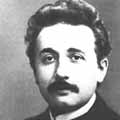 "When forced to summarize the general theory of relativity in one sentence:
Time and space and gravitation have no separate existence from matter. ... Physical objects are not in space, but these objects are spatially extended. In this way the concept 'empty space' loses its meaning. ... The particle can only appear as a limited region in space in which
the field strength or the energy density are particularly high. ...
"When forced to summarize the general theory of relativity in one sentence:
Time and space and gravitation have no separate existence from matter. ... Physical objects are not in space, but these objects are spatially extended. In this way the concept 'empty space' loses its meaning. ... The particle can only appear as a limited region in space in which
the field strength or the energy density are particularly high. ...
The free, unhampered exchange of ideas and scientific conclusions is necessary for the sound development of science, as it is in all spheres
of cultural life. ... We must not conceal from ourselves that no improvement in the present depressing situation is possible without
a severe struggle; for the handful of those who are really determined to do something is minute in comparison with the mass of the lukewarm
and the misguided. ...
Humanity is going to need a substantially new way of thinking if it is to survive!" (Albert Einstein)
 We can now deduce the most simple science theory of reality - the wave structure of matter in space. By understanding how we and everything around us are interconnected
in Space we can then deduce solutions to the fundamental problems of human knowledge in physics, philosophy, metaphysics, theology, education, health, evolution and ecology, politics and society.
We can now deduce the most simple science theory of reality - the wave structure of matter in space. By understanding how we and everything around us are interconnected
in Space we can then deduce solutions to the fundamental problems of human knowledge in physics, philosophy, metaphysics, theology, education, health, evolution and ecology, politics and society.
This is the profound new way of thinking that Einstein
realised, that we exist as spatially extended structures of the universe - the discrete and separate body an illusion. This simply confirms the
intuitions of the ancient philosophers and mystics.
Given the current censorship in physics / philosophy of science journals (based on the standard model of particle physics / big bang cosmology) the internet is the best hope for getting new knowledge
known to the world. But that depends on you, the people who care about science and society, realise the importance of truth and reality.
It is Easy to Help!
Just click on the Social Network links at top of page, or copy a nice image or quote you like and share it. We have a wonderful collection of knowledge from the greatest minds in human history, so people will appreciate your contributions. In doing this you will help a new generation of scientists see that there is a simple sensible explanation of physical reality (One Substance, One Law) - the source of truth and wisdom, the only cure for the madness of man! Thanks! Geoff Haselhurst (Updated May, 2025)
A new scientific truth does not triumph by convincing its opponents and making them see the light, but rather because its opponents eventually die, and a new generation grows up that is familiar with it. (Max Planck, 1920)
"All that is necessary for evil to succeed is for good people to do nothing."
(Edmund Burke)
"In a time of universal deceit - telling the truth is a revolutionary act."
(George Orwell)
"Hell is Truth Seen Too Late."
(Thomas Hobbes)


Legal Disclaimer and Privacy Policy
We support 'Fair Use' of these pages for Academic & Non Commercial use.
You are welcome to use images and text, but please reference them with a link to relevant web page on this site. Thanks!
