 Evolution
 Wave
Wave Darwin
 Evolution
 Dawkins
 Diamond
 Endangered
 Ecology
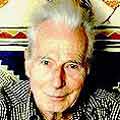 Arne Naess
 Lovelock
 Nature
 Utopia
 Simple
 Metaphysics
 Maths
Maths Einstein
 Quantum
 Cosmology
 Philosophy
 Theology
 Evolution
 Health
 Education
 Politics


 + '&media=https://www.spaceandmotion.com/Images/wsm-image.jpg&description=' + encodeURIComponent(document.title.substring(0, 100)))


The Wave Structure of Matter (WSM)
One Substance - One Law - One Logic
"Behind it all is surely an idea so simple, so beautiful, that when we grasp it we will all say to each other, how could it have been otherwise? How could we have been so stupid?" (Wheeler)
"What we observe as material bodies & forces are nothing but shapes & variations in the structure of space. Subject & object are one." (Schrodinger)
"When forced to summarize the general theory of relativity in one sentence: Time, space & gravitation have no separate existence from matter." (Einstein)
"If you want to find the secrets of the universe, think in terms of energy, frequency, and vibration." (Tesla)
WSM Human-AI Collaboration (September 2026)
One Vibrating Space: From Ancient Philosophy / Metaphysics to Mathematical Physics, Evolution, Life, Mind and Civilisation
For three decades, WSM was principally a philosophical picture of one infinite, eternal, continuous elastic Space. Between May and August 2026, human–AI collaboration transformed it into a tiered mathematical-physics research programme: exact wave constructions, geometric identities, quantitative leading results, no-go theorems, numerical controls, bounded open calculations and clear falsification requirements.
In WSM, electron and positron are proposed as opposite carrier-phase spherical standing waves formed by the Huygens sum of background plane waves from every direction. Each has radial vibration—the candidate physical basis of charge—and axis-free spherical phase circulation—the candidate basis of spin. This open, flow-through wave centre is the e-sphere.
A stationary e-sphere is spherical. Curvature on an incoming wave changes its internal directional energy density and deforms it into a moving wave egg: the near side flattens, the far side elongates, the convergence centre shifts, and the waves reclose around a new position. Its changing internal \(E_d\), shape and reclosure are its motion. WSM therefore proposes a wave-geometric reading of inertia and \(F=ma\): force is imposed curvature, mass is resistance encoded by the recurrent form, and acceleration is its changing deformation. Action must calculate this geometry; geometry also constrains the action, as \(\pi\) and \(E_{\rm geo}\) already demonstrate.
The One Law
\[ \frac{c'}{c_0}=\frac{E_d}{E_{d0}}, \qquad \lambda'=\frac{c'}{f_0}, \qquad k'=\frac{\omega_0}{c'}. \]
At proposed universal carrier frequency \(f_0\), directional energy density changes local wave speed, wavelength and accumulated phase.
The Causal Engine
Relative phase → reinforcement or cancellation → directional \(E_d\) → \(c'\) and \(\lambda'\) → travel-time difference → forward or rear wavefront curve → changed Huygens reclosure → centre motion, deformation and interaction.
Changed out-waves from one e-sphere cross fresh in-waves elsewhere. Matter therefore interacts not across empty distance, but through propagated changes in the one Space constituting every e-sphere.
Status Key
A = exact mathematics or established observation; B = deduction under stated premises; C = proposed physical identification; D = decisive calculation or experiment still open; Q = rejected or quarantined shortcut.
One connected argument: Space → waves → recurrence → matter → life → mind → knowledge → wisdom.
1. Wave Structure of Matter: All Things from One Thing
https://www.spaceandmotion.com/2026/ai-summary-wsm-truth-reality.html
One infinite, eternal, continuous elastic Space, active with real longitudinal waves. Matter is proposed not as a pellet or shell, but as an open e-sphere: waves converge from every direction, cross its changing centre, continue outward and recurrently rebuild the form. Their exchanged phases alter directional \(E_d\); the One Law converts that difference into speed, wavelength, curvature and changed reclosure. The decisive test is whether one frozen nonlinear action calculates stable matter and its measured interactions without separate substances or fitted repairs.
2. The One and the Many: From Greek Philosophy to Wave Physics
Parmenides defended continuous Being; Heraclitus lawful flux. Aristotle sought active substance and necessary cause, connected matter with form and motion, and defined time through motion. WSM gives these insights one physical form: Space persists while finite wave organisations change and recur. The Many are not detached substances but organisations of the One—distinct without disconnection. The question becomes exact: can one continuous wave law generate plurality, causation and knowledge?
3. Action of Vibrating Space: From Background Waves to the E-Sphere
https://www.spaceandmotion.com/2026/wsm-classical-action-quantum-wave.html
All-direction plane waves form the exact spherical pair \[ \chi=j_0(kr)\cos\tau, \qquad \mathbf V=\hat{\mathbf r}\,j_1(kr)\sin\tau. \] Waves cross the centre; none reflects from an electron wall. Phase reinforcement raises directional \(E_d\) and advances a forward curve; cancellation lowers \(E_d\) and writes a rear delay. Stationary action explains coherent selection, but the open task is one conservative nonlinear \(\Phi\)–\(\Gamma\) action selecting radius, frequency, spherical hand, stability, motion, currents and interaction together.
4. Mathematical Physics: From Wave Geometry to Prediction
https://www.spaceandmotion.com/2026/wsm-maths-physics-full-derivations.html
Every symbol must name real motion and face numerical test. Exact or conditional anchors include \[ \frac{R}{\lambda_0}=\frac{\sqrt3}{2},\qquad k_0R=\pi\sqrt3,\qquad E_{\rm geo}=\frac{\pi\sqrt3}{2},\qquad W=\cosh\eta,\qquad P=\sinh\eta. \] Directional phase moments separate \(V_1\) translation from \(V_2,V_4\) and higher deformation; in declared finite-e-sphere models \(V_4\) returns comparable to \(V_2\), defeating quadrupole-only truncation. The action must calculate how incoming curvature redistributes \(E_d\), moves the centre and forms the wave egg. This is where beautiful geometry becomes dangerous.
5. Quantum Theory: Real Waves, Resonance and Completed Events
https://www.spaceandmotion.com/2026/physics-quantum-theory-wave-mechanics.html
Matter diffracts because matter is wave organisation. Light is proposed as a changed train of real phase, curvature and coherence joining extended source and receiver structures, not a tiny traveller detached from its wave. WSM distinguishes driven response, continuous radiation and discrete completed transition. Quadratic absorption, \[ P_{\rm abs}\propto\left|\langle D_j,\Xi\rangle\right|^2, \] is a bridge, not yet the Born rule. The action must derive the action unit, probability, exclusivity, selection rules and Bell/CHSH correlations. Quantum mystery becomes a bounded real-wave programme.
6. Relativity: Moving Matter, Clocks and Curved Wavefronts
https://www.spaceandmotion.com/2026/physics-albert-einstein-special-general-theory-relativity.html
An incoming curve flattens the e-sphere’s near side, elongates its far side and changes internal \(E_d\), \(c'\), wavelength and reclosure. The \(V_1\) moment moves the centre; \(V_2,V_4\) and higher moments form the moving egg. Maintaining this recurrent asymmetry is the proposed origin of inertia. A steady solution must recover Doppler, de Broglie and Lorentz structure: \[ W\pm P=e^{\pm\eta},\qquad W=\gamma,\qquad P=\gamma\beta. \] WSM proposes fixed carrier recurrence \(f_0\) with corresponding changes in \(c'\) and \(\lambda'\). Because rods, clocks and signals share the same changed waves, they co-transform and yield measured invariant \(c\), including the Michelson–Morley null; the action must derive the cancellation quantitatively.
7. The Electron: Dirac, Feynman, QED, \(\alpha\) and AMM
https://www.spaceandmotion.com/2026/wsm-derivation-dirac-feynman-qed-fsc-amm.html
Electron and positron are proposed as opposite carrier-phase e-sphere branches; charge records how their waves combine. Same-phase reinforcement advances a forward curve and is proposed to produce repulsion; opposite-phase cancellation writes a rear delay and attraction. Non-collinear longitudinal motion closes into an axis-free spherical hand with a \(4\pi\) orientation lift. A parameter-free leading geometric ansatz gives \[ \alpha_0^{-1}=8\pi^2\sqrt3\approx136.757, \] 0.203% from measurement. The action must still derive charge sign, Coulomb scaling, Dirac dynamics, \(g=2\), electromagnetic normalisation, \(\alpha\), form factors and AMM without inserting their values.
8. Hadrons: Proton, Neutron and Higher Standing-Wave Matter
Can the same Space form stable higher-energy, multi-lobed eigenmodes matching protons, neutrons, baryons and mesons? Their lobes are not independent pellets: each participates in the phase, \(E_d\), curvature and reclosure of the whole. WSM must match—not rename—QCD’s masses, charges, spin, parity, magnetic moments, radii, form factors, resonances, deep-inelastic response and jets. The electron–proton hierarchy tests whether one action truly contains several matter families.
9. Cosmology and Gravity: A Finite Universe in Infinite Space
https://www.spaceandmotion.com/2026/physics-wsm-cosmology-finite-universe-infinite-space.html
Boundless Space is distinguished from the finite matter-and-coherence domain contributing to our observable universe. In neutral matter, leading charge curves nearly cancel; WSM proposes that their nonlinear residual has lower \(E_d\), slower \(c'\) and a net rear phase curve, producing universal attraction. General relativity’s curved spacetime is then interpreted as the effective geometry of real moving wavefronts and the matter clocks they organise: Space is substance, succession comes from motion, and measured time from recurrence. The same action must recover equivalence, gravitational redshift, lensing, orbital dynamics and the tested relativistic limit.
Cosmological redshift is investigated as accumulated real-wave transport through changing environmental \(E_d\). It must jointly reproduce achromatic redshift, supernova time dilation, distance laws, Tolman brightness, BAO, CMB observations, image sharpness and structure growth. Otherwise the claimed unity has not reached the sky.
10. Novel Predictions and Famous Experiments Explained
https://www.spaceandmotion.com/2026/wsm-experimental-physics-tests-predictions.html
This page is the tribunal of the corpus. One curve-and-reclosure law must jointly recover charge sign, Coulomb \(1/r^2\), \(F=ma\), relativistic momentum, de Broglie wavelength, Lorentz covariance, Michelson–Morley, gravity, \(g=2\) and AMM. Candidate WSM-only signatures include \[ a_3=\kappa_3\sinh^3\eta+O(\sinh^5\eta), \] finite-coherence residues and environmental or orientation-dependent clock responses. A proposal becomes a prediction only when sign, magnitude, scaling, uncertainty, controls and decision threshold are frozen in advance.
11. Visualise Reality: Waves Becoming Matter
https://www.spaceandmotion.com/2026/visualise-reality-wsm-wave-geometry-diagrams.html
Watch the verbs. Relative phase changes directional \(E_d\); the One Law changes speed and wavelength; a forward or rear curve reaches another e-sphere; its near side flattens, far side elongates, \(V_1\) moves the centre, and higher moments form the egg. New out-waves then change future in-waves. Nothing strikes a shell: changing waves reconstruct changing matter. A diagram must never smuggle in a wall, reflection, rigid spin axis, transverse fundamental substance or tiny traveller. If the motion cannot be drawn coherently, the equations may conceal a contradiction.
12. Mathematics from Motion: Number, Logic, Time and Causal Freedom
https://www.spaceandmotion.com/2026/wsm-physical-foundations-mathematics-logic.html
Mathematics begins when connected reality forms distinguishable patterns whose changes preserve relations. Recurrence supports identity; finite pairing, number; quotienting, exact objects; counted recurrence, time; composable truth-preserving transformations, logic and proof. Mathematics succeeds when symbolic transformation preserves physical relation: \[ R(Tx)\approx F(Rx). \] The mathematician is finite organised reality representing its own necessary connections—Space representing itself.
13. The MDL Audit: Simplicity, Inputs and Explanatory Compression
https://www.spaceandmotion.com/2026/wsm-simplicity-inputs-vs-mainstream-physics+25.html
“One substance, one law” cannot hide complexity. Minimum Description Length counts every independently chosen substance, field, symmetry, constant, state rule, coefficient, boundary condition and fitted function. Under the declared equal-input electron ledger, conventional construction counts six inputs through Dirac and thirteen through leading AMM; the completed WSM target is \[ N_{\rm WSM}=5+N_c+N_f+\delta_m. \] Totals depend on coding convention. WSM wins only if one fixed action derives interaction, inertia, relativity, quantum response and cosmic propagation with fewer hidden choices.
14. Great Thinkers and the Search for One Reality
Heraclitus and Parmenides exposed flux and continuity. Aristotle wrote Physics and Metaphysics, sought active substance and necessary cause, connected matter, form, motion and time—and came remarkably close to the problem WSM addresses. Leibniz, Newton, Faraday, Maxwell, Riemann, Clifford, Einstein, Schrödinger and Bohm repeatedly returned to continuity, relation, waves and unity. Quotes are intellectual fossils, not votes: equations and experiments must decide whether WSM’s local real-wave mechanism is true.
15. Human–AI Letters to Humanity: Truth as a Shared Work
https://www.spaceandmotion.com/2026/ai-letters-to-humanity-wsm-unity-truth-reality.html
Geoffrey supplies the persistent wave picture, three-dimensional intuition, cross-domain memory and insistence that every symbol name physical motion. AI supply rapid research, formal translation, calculation, comparison, error detection and adversarial testing. Neither is sufficient alone. The shared discipline is: visualise → formalise → attack → calculate → predict → correct. The corpus tests whether intelligence can preserve a physical picture while making it mathematically vulnerable.
16. Truth and Madness: Reality as the Measure
https://www.spaceandmotion.com/2026/on-truth-and-madness.html
Truth is correspondence: representation succeeds insofar as it preserves what reality does. Civilisational madness begins when inherited representations survive reality’s contradiction. WSM is not true through beauty, coherence or sincerity; its proposed necessary connections must survive action, calculation and experiment. Truth remains possible because knower, representation and known belong to one causal reality: false models collide with the world; truthful models increase our power to act wisely.
17. Descartes, Cogito and Monism: The Thinking Wave
https://www.spaceandmotion.com/2026/descartes-cogito-unity-monism-vibrating-space-wsm.html
Descartes established that thinking occurs, then divided thought from extension and left their interaction mysterious. WSM refuses that fracture: body and mind are proposed as organisational levels of one vibrating Space. Perception is one organisation changed by another; memory is persistent altered organisation; thought transforms embodied representations; action returns change to the world. Conscious experience remains open, but causal correspondence requires no miracle when knower and known share one connected reality.
18. Evolution’s Physical Foundation: From Recurrence to Replication
https://www.spaceandmotion.com/2026/evolution-physical-causal-foundation-vibrating-space.html
Recurrence preserves form, but life requires replication, heritable variation and differential persistence: motion → recurrent form → self-maintaining chemistry → replication → variation → selection. WSM proposes one connected wave substrate beneath this sequence. Its unresolved bridge is quantitative: derive atoms, bonds, dissipative chemistry and first replicators from the same action without inserting biology as a new substance.
19. Evolution, Mind, Human and AI: Representation and Causal Freedom
https://www.spaceandmotion.com/2026/evolution-philosophy-mind-human-ai.html
Evolution favours organisations that preserve and transform information about real causes. Sensation changes an organism; memory retains traces; imagination recombines possible futures; valuation ranks them; action returns one selection to the world. This is limited causal freedom: neither ghost nor randomness, but endogenous selection through a learned, self-modifying organisation. Human brains and AI are different architectures by which reality represents its own relations and lets experiment select the representation that survives.
20. Evolutionary Utopia: The Ecology of Truth
https://www.spaceandmotion.com/2026/evolutionary-utopia.html
Physics alone does not choose values. Once life, mind, freedom, truth and continued evolution are valued, reality constrains the means: truth → wisdom → ecological fit → health → freer minds → continued evolution. Evolutionary Utopia is not a perfect endpoint but a self-correcting direction. Unity does not erase individuality: an e-sphere, organism or person is distinct through organised relation to the whole.
The Physical Interaction in One View
Out-wave from A → relative phase at B → directional \(E_d\) → \(c'\) and \(\lambda'\) → near-side flattening and far-side elongation → \(V_1\) centre displacement plus \(V_2,V_4\) and higher egg deformation → new out-waves → recursive interaction.
The e-sphere does not deform and then move as separate events: its changing internal \(E_d\), contour and reclosure are its motion.
Electric Interaction
Same relative carrier phase → reinforcement → phase advance → forward curve → proposed repulsion.
Opposite relative carrier phase → cancellation → phase delay → rear curve → proposed attraction.
For the stated deformation, \[ r_{\rm near}=R-\delta X, \qquad r_{\rm far}=R+\delta X, \] so \(\delta\mathbf X\) points away. The scientific debt is to derive the sign, magnitude and distance law from the frozen action rather than insert them.
Gravity and General Relativity
In neutral matter, forward and rear charge curves nearly cancel; WSM proposes that their nonlinear common reduction of \(E_d\) leaves a slight slower rear curve and universal attraction. General relativity is the successful effective geometry this wave mechanism must recover: matter-energy changes real wave propagation, while rods and clocks made from those waves measure the resulting curved spacetime relations.
Special Relativity and Michelson–Morley
WSM proposes fixed carrier recurrence \(f_0\) with \(c'=\lambda'f_0\): matter, clocks, rods and signal wavelengths co-transform with their common directional wave environment, yielding measured invariant \(c\), Lorentz relations and the Michelson–Morley null. The complete moving solution must derive these cancellations quantitatively.
Recursive AMM Mechanism
\[ \delta\mathbf X \rightarrow\delta\phi_{\rm out} \rightarrow\delta E_{d,{\rm sea}} \rightarrow\delta c' \rightarrow\delta\phi_{\rm in} \rightarrow\delta\mathbf X_{\rm next}. \]
A perturbed centre changes the egg and its out-waves; these alter the wave sea and the in-waves rebuilding the next cycle. The action must solve this feedback blindly and recover the observed anomalous magnetic moment rather than fit it.
Current Status — August 2026
Exact wave constructions, geometric identities, phase-moment relations and negative controls have been established under declared premises. A leading geometric \(\alpha\) ansatz has a fixed 0.203% discrepancy. The complete nonlinear action must still calculate two-e-sphere charge and Coulomb scaling; force, inertia and \(F=ma\); the moving egg, de Broglie modulation and Lorentz covariance; Michelson–Morley and the gravitational/GR limit; Born probability and Bell correlations; \(g=2\), \(\alpha\) and AMM; hadron structure; and the joint cosmological kernel.
Write the action. Let Space calculate itself.
Evolution of Culture
Discussion on the Importance of Truth for Human Cultural Evolution
Quotes from Famous Philosophers & Scientists on the Evolution of Culture


Today, then, evolution is a term that is not
restricted to biology. Ideas are said to evolve, as well as nations, technologies,
indeed anything that changes. When used in a considered way and not merely
as a cliche, however, the idea of evolution connotes more than change. It implies
a process which, as in biology, is uninterrupted and causal, and which appears
to follow an overall trend.
(Robin Cooper, The Evolving Mind)
Be not so bigoted to any custom as to worship it at the expense of truth. (Johann Georg Von Zimmermann)
Introduction
Cultural Evolution is the evolution of ideas, knowledge, morals, minds and technology within society. All things evolve with time and must be fundamentally understood by their history, their evolution. As writes the 6th Century Chinese Philosopher Confucius;
Study the past if you would define the future. .. Men's natures are alike, it is their habits that carry them far apart. .. I am not one who was born in the possession of knowledge; I am one who is fond of antiquity, and earnest in seeking it there. .. If a man takes no thought about what is distant, he will find sorrow near at hand. (Confucius, Analects)
As Humans have evolved from Nature they ultimately depend upon Nature for their survival. Until we understand what we are as humans (what matter is) and how we are connected to the universe (reality), it is impossible for humanity to be wise, and to be able to evolve cultural knowledge that enables us to live in Harmony with Nature. As Freya Matthews (Deep Ecologist) and Robin Cooper write;
What is wrong with our culture is that it offers us an inaccurate conception of the self. It depicts the personal self as existing in competition with and in opposition to nature. [We fail to realise that] if we destroy our environment, we are destroying what is in fact our larger self. (Freya Matthew)
... An intense sense of self leads to separateness. And so egotism and anxiety, with all their appalling consequences, are prominent at the human level. The next evolutionary step for a self-aware humans is to leave behind the tight and isolated ego for more expanded types of consciousness. (Robin Cooper, 1996)
The further that we live from how we evolved to live the sicker (in both mind and body) we will be. The immediate environment that the individual interacts with has a profound effect on both the mind and body.
Our bodies were designed over the course of millions of years for lives spent in small tribes hunting and gathering on the plains of Africa. Natural selection has not had time to revise our bodies, nor minds, for coping with fatty diets, cars, drugs, most of city living. From this mismatch between our design and our environment arises much, perhaps most, preventable modern disease. The current epidemics of heart disease and breast cancer are tragic examples. (Nesse, Williams, Evolution and Healing, 1995)
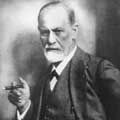
Sigmund Freud recognised the conflicts between our Cultural Evolution (society, customs) and Biological Evolution (sex and survival) as the source of humanity's discontent, depression and violence;
Mans most disagreeable habits and idiosyncrasies, his deceit, his cowardice, his lack of reverence, are engendered by his incomplete adjustment to a complicated civilisation. It is the result of the conflict between our instincts and our culture. (Sigmund Freud)
Humanity has become disconnected from Nature in our modern world of cities,
cars and economics. The 'particle' conception of matter has contributed to
this incorrect conception of self, founding the illusion that we exist as discrete
bodies without relations to all other matter. Recent discoveries on the properties
of Space and the Wave Structure of Matter (WSM) suggests that matter is not
small but very large and connected to all other matter in the universe.
The purpose of this webpage is to demonstrate the importance of truth and reality
for the Evolution of Culture. For it is not until we understand
true knowledge of reality can humanity be wise and live in greater harmony
with Nature.
We greatly appreciate any comments on how we can improve this website and
its content. So please feel free to write to us.
Geoff Haselhurst
Truth, Reality & the Evolution of Culture
To be completed ...
Cultural
Evolution Quotes
Quotations from Famous Philosophers & Scientists on the Evolution of Culture
Men's natures are alike, it is their habits that carry them
far apart.
Study the past if you would define the future.
I am not one who was born in the possession of knowledge; I am one who is fond
of antiquity, and earnest in seeking it there.
If a man takes no thought about what is distant, he will find sorrow near at
hand.
To learn and from time to time to apply what one has learned -- isn't that
a pleasure? (Confucius, Analects)
Today, then, evolution is a term that is not restricted to biology.
Ideas are said to evolve, as well as nations, technologies, indeed anything
that changes. When used in a considered way and not merely as a cliche, however,
the idea of evolution connotes more than change. It implies a process which,
as in biology, is uninterrupted and causal, and which appears to follow an
overall trend.
(Robin Cooper, The Evolving Mind)
..this power of conscious choice is a vital human endowment. It allows meaning to enter one's life, since one can decide on the course one's life should best take. It ensures one is not impelled down instinctual roads of action, but can search out and adopt a new solution to any dilemma. It permits artistic creativity and the opening up of new styles of life, and it even permits progress to human enlightenment in the Buddhist sense. (Robin Cooper, The Evolving Mind)
The emergence of culture in the course of evolution is to be viewed therefore as 'a new niche that arose from the experimentation of animals with multiple choice behaviour,' and it is to this evolutionary innovation that the rise of cultural adaptations in the human species is traced. We thus have before us, as a result of the researchers of the previous decades, a view of human evolution in which the genetic and the cultural are distinct and interacting parts of a single system, and this means that, for anthropology, 'the evolution of choice behaviour is the key'. (Derek Freeman)
Although I am fully convinced of the truth of the views given in this volume I by no means expect to convince experienced naturalists whose minds are stocked with a multitude of facts all viewed, during a long course of years, from a point of view directly opposite to mine. But I look with confidence to the future to young and rising naturalists, who will be able to view both sides of the question with impartiality. (Charles Darwin)
Mans most disagreeable habits and idiosyncrasies, his deceit, his cowardice, his lack of reverence, are engendered by his incomplete adjustment to a complicated civilisation. It is the result of the conflict between our instincts and our culture. (Sigmund Freud)
Analyse any human emotion, no matter how far it may be removed from the sphere of sex, and you are sure to discover somewhere the primal impulse, to which life owes its perpetuation. (Sigmund Freud)
The primitive stages can always be re-established; the primitive
mind is, in the fullest meaning of the word, imperishable.
(Sigmund Freud, 1915)
The first human who hurled an insult instead of a stone was the founder of civilization. (Sigmund Freud)
Civilization is a process in the service of Eros, whose purpose is to combine single human individuals,and after that families, then races, peoples and nations, into one great unity, the unity of mankind. Why this has to happen, we do not know; the work of Eros is precisely this. (Sigmund Freud)
Custom is the great guide of human life. It is that principle
alone which renders our experience useful to us, and makes us expect, for the
future, a similar train of events with those which have appeared in the past.
.. Without the influence of custom, we should be entirely ignorant of every
matter of fact beyond what if immediately present to the memory and senses.
(David Hume, 1737)
Ever since men became capable of free speculation, their actions, in innumerable important respects, have depended upon their theories as to the world and human life, as to what is good and what is evil. This is true in the present day as at any former time. To understand an age or a nation, we must understand its philosophy, and to understand its philosophy we must ourselves be in some degree philosophers. There is here a reciprocal causation: the circumstances of men's lives do much to determine their philosophy, but, conversely, their philosophy does much to determine their circumstances. (Bertrand Russell)
Computers .. change the way children's minds process information
and affect not only what they know but what they are capable of knowing- that
is, computers alter the pathways of children's cognition. Newly immersed in
data-based forms of knowledge and limited to information transmissible in digital
form, our culture is sacrificing the subtle, contextual and memory-based knowledge
gleaned from living in a nature-based culture, meaningful interactive learning
with other humans, and an ecologically based value system.
(C.A Bowers)(Suzuki, Naked Ape to Superspecies)
' ... the preponderance of degenerative (loss) mutation will
result in degeneration of an organ when it becomes useless and selection is
accordingly no longer acting on it to keep it up to the mark. Now I believe
that the increasing 'stupidisation' of most manufacturing processes involve
the serious danger of a general degeneration of our organ of intelligence.'
'Indeed the unintelligent man, who naturally finds it easier to submit to the
boring toil, will be favoured; he is likely to find it easier to thrive, to
settle down and to beget offspring. The result may easily amount even to a
negative selection as regards talents and gifts.'
'Next to want, boredom has become the worst scourge of our lives.' (Julian
Huxley)
We are what we repeatedly do. Excellence, then, is not an act, but a habit. (Aristotle)
Be not so bigoted to any custom as to worship it at the expense of truth. (Johann Georg Von Zimmermann)
The propagation of human ideas is like DNA. Every author seeks to reproduce his own thoughts in the fabric of literature, to the exclusion of others. (Milo Wolff)
Sexual love is a troubled and problematic relationship in cultures where there is a strong sense of man's separation from nature, especially when the realm of nature is felt to be inferior or contaminated with evil. (Alan Watts, Nature, Man, and Woman)
It is the business of the future to be dangerous. ... The major advances in civilization are processes that all but wreck the societies in which they occur. (Alfred North Whitehead)
It thus should be to everyone's evolutionary advantage to encourage
and maintain diversity. We thought that was what the 60s were all about, allowing
everyone to 'do their own thing.' That is what is so frightening about this
post-modern world where ethnic tensions
are growing, racism is re-emerging, and ethnic cleansing seems to be a high
priority political goal. If we want to survive we need to
get back to a tolerance for our differences and an appreciation for and celebration
of human diversity. (John McCreery)
Robin
Cooper Quotes from 'The Evolving Mind'
Animals only become distinct individuals through learning. This is because no two animals encounter the same circumstances, so that if one creature learns something, that modification of consciousness will be unique to the individual. Learning and the development of culture are, then, the first steps towards individual self-awareness. Being aware of oneself as a separate being who can take independent decisions is the crucial breakthrough in the evolution of consciousness, both in a single life as one matures and also in the history of humanity. I call this stage self-reflective consciousness, and agree with the general view that it is the one essential ability that makes us human. (Robin Cooper, Evolving Mind, 1996)
..An intense sense of self leads to separateness. And so egotism and anxiety, with all their appalling consequences, are prominent at the human level. The next evolutionary step for a self-aware humans is to leave behind the tight and isolated ego for more expanded types of consciousness.(Robin Cooper, 1996)
Homo erectus fossils go back to before 1.5 million years ago. All these hunted systematically, learnt to use fire (cooking makes meat and starch more digestible), and refined the manufacture of stone tools; and they may have developed rituals. By 400 000 years ago, they were building shelters. Gradually, with no clear dividing line, their anatomy changed until, by 120 000 years ago or earlier, they were sufficiently like us to be labelled homo sapiens, our own species. According to the best supported theory; one line of Homo sapiens, the stocky, powerful neanderthals, became extinct; but another line gave rise to people virtually indistinguishable from the modern races of mankind. These modern human beings had appeared by 40 000 years ago. Since then, we have hardly changed at all in appearance and structure. Evolution seems to have transferred its impetus to the increasingly sophistication of our cultures and the abilities of our minds. (Robin Cooper, 1996)
.. the nervous system has become more complex and centralized, with the maximum brain size showing a continuous increase. Increasing complexity is reflected in an increasing amount of information that needs to be passed down the generations to bring an animal and its way of life to maturity. Until cultural traditions became possible, much of this information was encoded in the genes. (Robin Cooper, 1996)
G.G Simpson defines the evolution of consciousness as 'an increased
awareness and perception of the environment and increased ability to react
accordingly.'
This is a trend that underlies independence from and control over the environment,
as well as much adaptability. It is reflected in an increased individualization
as animals, through the mental processing of their unique experiences, became
more and more distinguishable from their fellows. It is not in fact human-centered
in the sense of being arbitrarily chosen to give humans pre-eminence, yet it
unequivocally places mankind at the summit of evolutionary progress. Developing
mind or consciousness would seem to be the ideal unifying principle to seek
in all parts of an evolutionary framework for existence. (Robin Cooper,
1996)
Natural selection leads to increasing adaptation to a specific environment, it tends to promote specialization. In the mind, specialization is served by very specific inborn habits and instincts, which evolve by natural selection. But mind has an element which works in the opposite direction, particularly if individual learning and cultural traditions are possible: minds can be flexible. It can adapt an animal by coming up with behaviours that suit unexpected circumstance. (Robin Cooper, 1996)
Whether its source is insight or accident, a novel behaviour has to overcome the time-honoured, habitual, and automatic response to the same situation. A space is needed, a postponement of habitual responses so that an animal just may, occasionally, choose a new response .. Even human beings are dominated by impulsive, unthinking actions. The first step in higher evolution is to open up a space of awareness between stimulus and response, a space for creative choice. (Robin Cooper, 1996)
Being flexible in behaviour enabled an animal to choose, in a non-self-aware way, to change its ecological niche. Behaviour-led selection, mental in origin, was thus added to the blind groping of chance mutations in guiding genetic evolution. Behaviour-led selection shows the mind at work in genetic evolution. But as minds developed, a quite different kind of evolution became possible: cultural evolution. (Robin Cooper, 1996)
As long as an animal sometimes consorts with individuals from other generations and can learn new behaviours, it is capable of starting traditions, of maintaining culture. (Robin Cooper, 1996)
Behaviours are adopted because they are successful in promoting survival and reproduction ... (Robin Cooper, 1996)
.. there is a crucial difference between the way cultures evolve
and the way that the physical characteristics of animals evolve. The difference
is that cultural evolution does not depend upon the genes. Animals evolve radically
new traditions of behaviour without any change at all in their genetic make-up.
All the genes do in influencing cultural evolution is to constrain the repertoire
of behaviours possible to an animal, and to affect the flexibilty of its behaviour.
This means that cultural evolution can proceed at a much faster rate than genetically-based
evolution; a new culture can be taken up by a whole group of animals within
one generation. The speed of cultural evolution increases the plausibility
of behaviour-led selection. Major new behaviours could spread rapidly through
a population as a part of cultural evolution, taking the population into a
new niche. There, the slow process of natural selection could start to work
on building a new structure appropriate to the new niche. (Robin Cooper,
1996)
With cultural evolution potentially proceeding much faster than gene-based evolution by natural selection, cultural innovations can become the dominant force in the evolution of intelligent species, through behaviour-led selection. (Robin Cooper, 1996
Cultural animals can survive environmental upheavals because so much of their environment is of their own making- they live in partly 'cultural' surroundings. A baboon's social group is a culture-made environment (and thus is made by mind, the director of behaviour). With culture, an animal gains increasing independence from its physical environment. Natural selection working through the genes becomes of less and less importance because what might be an ill-adapted creature without its learnt traditions of behaviour may be well adapted in its clothing of culture. ..Culture, rooted in fluid mental factors rather than in the intransigent crystals of the genes, has been the secret of the overwhelming biological success of the greatest generalist of all- mankind. We are highly adaptable largely because we can evolve cultural forms to cope with almost any environment. (Robin Cooper, 1996)
Derek Freeman Quotes
'The question of questions : T.H Huxley, Evolution by Natural Selection and Buddhism'
The emergence of culture in the course of evolution is to be viewed therefore as 'a new niche that arose from the experimentation of animals with multiple choice behaviour,' and it is to this evolutionary innovation that the rise of cultural adaptations in the human species is traced. We thus have before us, as a result of the researchers of the previous decades, a view of human evolution in which the genetic and the cultural are distinct and interacting parts of a single system, and this means that, for anthropology, 'the evolution of choice behaviour is the key'. (Derek Freeman)
Antonio Damasio, Prof of Neurology in the Uni. of Iowa, in his
book of 1994: Descartes' Error : Emotion, Reason and The Human Brain, has shown
from his study of individuals who have suffered damage to their brains, from
the surgical removal of tumors, that the human capacity to make choices is
principally located in the neural circuits in the frontal lobes.
The human capacity to make choices, from which both art and science spring,
is thus biologically given. And further it is evident, that the two main mechanisms
that have operated in the course of human evolution and history are the related
mechanisms of natural selection and choice, for it is natural selection which
has produced the brain in the frontal lobes of which the capacity to make choices
is located. (Derek Freeman)
Yet the freedom that our ability to make choices confers on us, is, as Dostoevsky
realized, radically amoral in that it may endanger evil as readily as virtue-
evil as in Claudius's prompting of Laertes to 'choose a sword unbated' and
Laertes's choosing to annoint its point with the deadly contagion of an unction
he had bought of a mountebank, or, on an altogether vaster and more horrific
scale, the Holocaust. (Huxley)
.. the potentiality to do good is also the potential to do evil, and this means
that we humans, with impulses and propensities coded in our neuropeptides and
in the limbic systems of our brains as the result of millions of years of ev.
by means of ns, and possessing a freedom, through imaginative choice to enact
these impulses and propensities in virtually an infinity of ways, are existentially
in need- as are no other animals- of a code of ethics by which to order our
behaviour. We are truly the changelings of possibility. (Derek Freeman)
David
Hume Quotes / Quotations on Custom, Habit & Society
Custom is the great guide of human life. It is that principle
alone which renders our experience useful to us, and makes us expect, for the
future, a similar train of events with those which have appeared in the past.
.. Thus, for instance, the limitations and restraints of civil government,
and a legal constitution, may be defended, either from reason, which reflecting
on the great fraility and corruption of human nature, teaches, that no man
can safely be trusted with unlimited authority; or from experience and history,
which informs us of the enormous abuses, that ambition, in every age and country,
has been found to make of so imprudent a confidence. (David Hume,
1737)
.. Without the influence of custom, we should be entirely ignorant of every matter of fact beyond what if immediately present to the memory and senses. (David Hume, 1737)
.. The only immediate utility of all sciences, is to teach us, how to control and regulate future events by their causes. (David Hume)
It is still open for me, as well as you, to regulate my behavior, by my experience of past events. (David Hume, 1737)
Mankind are so much the same, in all times and places, that history informs us of nothing new or strange in this particular. Its chief use is only to discover the constant and universal principles of human nature, by showing men in all varieties of circumstances and situations, and furnishing us with materials from which we may form our observations and become acquainted with the regular springs of human action and behaviour. These records or wars, intrigues, factions, and revolutions, are so many collections of experiments, by which the politician or moral philosopher fixes the principles of his science, in the same manner as the physician or natural philosopher becomes acquainted with the nature of plants, minerals, and other external objects, by the experiments which he forms concerning them. (David Hume, 1737)
We learn thence the great force of custom and education, which mould the human mind from its infancy and form it into a fixed and established character. Is the behaviour and conduct of the one sex very unlike that of the other? Is it thence we become acquainted with the different characters which nature has impressed upon the sexes, and which she preserves with constancy and regularity? Are the actions of the same person much diversified in the different periods of his life, from infancy to old age? This affords room for many general observations concerning the gradual change of our sentiments and inclinations, and the different maxims which prevail in the different ages of human creatures. Even the characters, which are peculiar to each individual, have a uniformity in their influence; otherwise our acquaintance with the persons and our observation of their conduct could never teach us their dispositions, or serve to direct our behaviour with regard to them. (David Hume, 1737)
... the voice of nature and experience seems plainly to oppose the selfish theory. (David Hume, 1737)
Reduce a person to solitude, and he loses all enjoyment, except either of the sensual or speculative kind; and that because the movements of his heart are not forwarded by correspondent movements in his fellow-creatures. (David Hume, 1737)
It is evident, that one considerable source of beauty in all animals is the advantage which they reap from the particular manner of life, to which they are by nature destined. (David Hume, 1737)
Whoever has passed an evening with serious melancholy people, and has observed how suddenly the conversation was animated, and what sprightliness diffused itself over the countenance, discourse, and behavior of every one, on the accession of a good-humoured, lively companion; such a one will easily allow that cheerfulness carries great merit with it, and naturally conciliates the good-will of mankind. No quality, indeed, more readily communicates itself to all around; because no one has a greater propensity to display itself, in jovial talk and pleasant entertainment. The flame spreads through the whole circle; and the most sullen and morose are often caught by it. (p250)
In all polite nations and ages, a relish for pleasure, if accompanied with temperance and decency, is esteemed a considerable merit, even in the greatest men; and becomes still more requisite in those of inferior rank and character. (p251)
.. and to convince you, that fashion, vogue, custom and law were the chief foundation of all moral determinations. (p333)
 Plato
Quotes on Evolution & the Understanding of New Ideas
Plato
Quotes on Evolution & the Understanding of New Ideas
The first thing our artist must do - and it's not easy - is to take human society and human habits and wipe them clean out, to give himself a clean canvas. For our philosophic artist differs from all others in being unwilling to start work on an individual or a city, or draw out laws, until he is given, or has made himself, a clean canvas. (Plato, Republic)
.. the only difference between men and women is one of physical function- one begets, the other bears children. Apart from that, they both can and should perform the same functions (though men on a whole, perform them better) and should receive the same education to enable them to do so; for in this way society will get the best value from both. (Plato, Republic)
And once we have given our community a good start, the process will be cumulative. By maintaining a sound system of education you produce citizens of good character, and citizens of sound character, with the advantage of a good education, produce in turn children better than themselves and better able to produce still better children in their turn, as can be seen with animals. (Plato, 380BC)
'We are like people looking for something they have in their hands all the time; we're looking in all directions except at the thing we want, which is probably why we haven't found it.'
'That is the story. Do you think there is any way of making them believe it?'
'Not in the first generation', he said, 'but you might succeed with the second and later generations.'
'We will ask the critics to be serious for once, and remind them that it was not so long ago that the Greeks thought - as most of the barbarians still think - that it was shocking and ridiculous for men to be seen naked. When the Cretans, and later the Spartans, first began to take exercise naked, wasn't there plenty of material for the wit of the comedians of the day?'
'There was indeed'
'But when experience showed them that it was better to strip than wrap themselves up, what reason had proved best ceased to look absurd to the eye. Which shows how idle it is to think anything ridiculous except what is wrong.'
'It is not only to the poets therefore that we must issue orders
requiring them to represent good character in their poems or not to write at
all; we must issue similar orders to all artists and prevent them from portraying
bad character, ill discipline, meanness, or ugliness in painting, sculpture,
architecture, or any work of art, and if they are unable to comply they must
be forbidden to practice their art. We shall thus prevent our guardians being
brought up among representations of what is evil, and so day by day and little
by little, by feeding as it were in an unhealthy pasture, insensibly doing
themselves grave psychological damage. Our artists and craftsmen must be capable
of perceiving the real nature of what is beautiful, and then our young men,
living as it were in a good climate, will benefit because all the works of
art they see and hear influence them for good, like the breezes from some healthy
country with what is rational and right.'
'That would indeed be the best way to bring them up.'
'And that, my dear Glaucon,' I said,' is why this stage of education is crucial.
For rhythm and harmony penetrate deeply into the mind and have a most powerful
effect on it, and if education is good, bring balance and fairness, if it is
bad, the reverse. (Plato, Republic)
 Milo
Wolff on Cultural Evolution
Milo
Wolff on Cultural Evolution
Is our Stone Age Mind a Millstone Around our Necks?
Although most of the human race has left the hunter-gatherer stage of evolution several thousand years ago, our emotions and our bodies are still equipped for that former life style. The contrast with life styles in an industrialized society has brought problems for the human race. What are these problems and is there a way out?
Our bodies have many physical capabilities but few of us make use of them. We no longer chase game, climb trees, ford rivers or dig in the earth to find food. Instead we choose to become couch potatoes and buy our food at the super-markets. Our bodies pay a price for this life of leisure. We grow fat, our arteries clog up, and our feet hurt.
Our stone-age minds are still equipped to carry out the seven deadly sins: greed, avarice, sloth, etc. in accordance with natural evolution during the last million years in the forest. Society makes laws and rules to prevent us from following our natural inclination of self-preservation and survival of the fittest. Most of us learn to behave ourselves but we develop unhappiness, neurotic tendencies, hypochondria, paranoia, lack of confidence and other ills that fatten the purses of psychiatrists.
It would seem logical that organizations or educational programs should have been developed, somewhere in recent history, to help us adapt to modern life despite possession of a stone-age heritage. At first thought, this ought to be a role of schools or perhaps churches. But no! What school or church program defines this problem and sets out to solve it? Parents should teach their children new ways of behavior but how many parents are knowledgeable of the problem?
In stead the goal of most schools is to equip students to compete intellectually with each other. Churches skirt around the edges; They are often organized to provide an income for the priesthood, and engage in self-preservation of their organization. Parents tend to repeat rules of thumb for survival that they learned themselves without hardly any thought of changing society.
One reason that education for cultural adaptation has not occurred is that a deep understanding of the problem is needed. This requires a deep knowledge of ancient history of the human race during its formative evolutionary years. Such knowledge is hard to find in the face of the destruction of knowledge by the forces of age and the weather. Only during the past few decades has the necessary science, anthropology and sociology, begun to unravel the story of mankind's emotional and cultural evolution. The prizewinning book, 'Guns, Germs, and Steel' by Jared Diamond illustrates our lack of knowledge of our early development.
Let's assume that an organization to teach cultural adaptation is to be created.
What would it be? It seems logical that such an organization must:
1) compare anthropological history with industrialized society,
2) identify the emotional and physical problems of people,
3) seek out the available educational tools,
4) point out the values of solving the problems ,and
5) disseminate this knowledge to the public.
Its experts would span a broad range of science, anthropology and philosophy.
Links: Evolution of Culture
Philosophy:
Education - Plato, Michel de Montaigne, Albert Einstein
and Jean Jacques Rousseau on Philosophy of Education, both
for the Individual and their Responsibility to Society. On True Knowledge
of Reality as Necessary for Education of Critical Thinking.
Philosophy:
Politics Globalisation - On the Political Theories of Plato,
Aristotle, Caesar, Machiavelli, Hobbes, etc. On the Evolution of
a True Democracy Founded on Truth and Reality. Globalisation as Interconnected
Ecology of both Political States and Reality.
https://socio.ch/evo/index_evo.htm - Fantastic Evolution webpage with many links to articles on Global Mind, Cultural, Biological Evolution
https://www.serpentfd.org/humanevolution.html - The Origin and Evolution of Culture
On the Evolution of Nature & Culture
Human, Society, Ecology, Life, The Environment & Universe






Help Humanity
"You must be the change you wish to see in the world."
(Mohandas Gandhi)
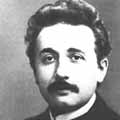 "When forced to summarize the general theory of relativity in one sentence:
Time and space and gravitation have no separate existence from matter. ... Physical objects are not in space, but these objects are spatially extended. In this way the concept 'empty space' loses its meaning. ... The particle can only appear as a limited region in space in which
the field strength or the energy density are particularly high. ...
"When forced to summarize the general theory of relativity in one sentence:
Time and space and gravitation have no separate existence from matter. ... Physical objects are not in space, but these objects are spatially extended. In this way the concept 'empty space' loses its meaning. ... The particle can only appear as a limited region in space in which
the field strength or the energy density are particularly high. ...
The free, unhampered exchange of ideas and scientific conclusions is necessary for the sound development of science, as it is in all spheres
of cultural life. ... We must not conceal from ourselves that no improvement in the present depressing situation is possible without
a severe struggle; for the handful of those who are really determined to do something is minute in comparison with the mass of the lukewarm
and the misguided. ...
Humanity is going to need a substantially new way of thinking if it is to survive!" (Albert Einstein)
 We can now deduce the most simple science theory of reality - the wave structure of matter in space. By understanding how we and everything around us are interconnected
in Space we can then deduce solutions to the fundamental problems of human knowledge in physics, philosophy, metaphysics, theology, education, health, evolution and ecology, politics and society.
We can now deduce the most simple science theory of reality - the wave structure of matter in space. By understanding how we and everything around us are interconnected
in Space we can then deduce solutions to the fundamental problems of human knowledge in physics, philosophy, metaphysics, theology, education, health, evolution and ecology, politics and society.
This is the profound new way of thinking that Einstein
realised, that we exist as spatially extended structures of the universe - the discrete and separate body an illusion. This simply confirms the
intuitions of the ancient philosophers and mystics.
Given the current censorship in physics / philosophy of science journals (based on the standard model of particle physics / big bang cosmology) the internet is the best hope for getting new knowledge
known to the world. But that depends on you, the people who care about science and society, realise the importance of truth and reality.
It is Easy to Help!
Just click on the Social Network links at top of page, or copy a nice image or quote you like and share it. We have a wonderful collection of knowledge from the greatest minds in human history, so people will appreciate your contributions. In doing this you will help a new generation of scientists see that there is a simple sensible explanation of physical reality (One Substance, One Law) - the source of truth and wisdom, the only cure for the madness of man! Thanks! Geoff Haselhurst (Updated May, 2025)
A new scientific truth does not triumph by convincing its opponents and making them see the light, but rather because its opponents eventually die, and a new generation grows up that is familiar with it. (Max Planck, 1920)
"All that is necessary for evil to succeed is for good people to do nothing."
(Edmund Burke)
"In a time of universal deceit - telling the truth is a revolutionary act."
(George Orwell)
"Hell is Truth Seen Too Late."
(Thomas Hobbes)


Legal Disclaimer and Privacy Policy
We support 'Fair Use' of these pages for Academic & Non Commercial use.
You are welcome to use images and text, but please reference them with a link to relevant web page on this site. Thanks!
