 Metaphysics
 Unite
Unite One Many
 Aristotle
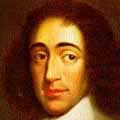 Benedictus
 Newton
 Leibniz
 Hume
Hume Kant
Kant Einstein
 Skepticism
 Simple
 Metaphysics
 Maths
Maths Einstein
 Quantum
 Cosmology
 Philosophy
 Theology
 Evolution
 Health
 Education
 Politics
Metaphysics: Benedictus (Baruch) de Spinoza
On One Infinite Substance (God, Nature, Space)
and the Interconnected Motion of Matter
'Deus sive Natura' (God or Nature)
.... we are a part of nature as a whole, whose order we follow. (Spinoza,
Ethics, 1673)
 Introduction to Benedict de Spinoza
Baruch Spinoza was born in Amsterdam in 1632 into a Jewish family. He had
a Jewish education, resisted orthodoxy and was later excommunicated of heresy
and changed his name to Benedictus de Spinoza in 1656 (commonly spelt 'Benedict').
The Christians didn't think much of Spinoza either (though his whole philosophy
is based on God) and the orthodox accused him of atheism.
Despite such ill treatment and unpopularity (his main philosophical work
'Ethics' was published posthumously) Benedictus de Spinoza lived a simple
and noble life polishing lenses, displaying an indifference to money, fame
and power. As Benedict Spinoza writes;
A free man, who lives among ignorant people, tries as much as he can to refuse their benefits. .. He who lives under the guidance of reason endeavours as much as possible to repay his fellow’s hatred, rage, contempt, etc. with love and nobleness. (Spinoza, Ethics)
Spinoza's Ethics is written in five parts, in a highly logical style of
definitions, propositions and proofs. It begins with his Metaphysics, 'Concerning
God', and then later addresses the Nature of Mind, Emotions, Intellect,
Reason and Will.
For Spinoza, God and Nature were One. In Ethics he describes God as of One
Infinite Eternal Substance which exists.
Except God no substance can be granted or conceived. .. Everything, I say, is in God, and all things which are made, are made by the laws of the infinite nature of God, and necessarily follows from the necessity of his essence. (Spinoza, Ethics)
So from Spinoza's Metaphysics, we can understand that humans (and our minds) are necessarily united to the whole, since there is only one substance; reality is a unity which we call God or Nature.
Spinoza also realised the connection of Motion and Time, as he writes;
No one doubts but that we imagine time from the very fact that we imagine other bodies to be moved slower or faster or equally fast. We are accustomed to determine duration by the aid of some measure of motion. (Spinoza, Ethics)
Further, Spinoza shows great insight into the Interconnected Motions of Matter;
When a number of bodies of the same or different size are driven so together that they remain united one with the other, or if they are moved with the same or different rapidity, so that they communicate their motions one to another in a certain ratio, those bodies are called reciprocally united bodies (corpora invicem unita), and we say that they all form one body or individual, which is distinguished from the rest by this union of the bodies. (Spinoza, Ethics)
Metaphysics of Spinoza
One Infinite Eternal Substance (God, Nature, Space)
But if men would give heed to the nature of substance they would doubt less concerning the Proposition that Existence appertains to the nature of substance: rather they would reckon it an axiom above all others, and hold it among common opinions. For then by substance they would understand that which is in itself, and through itself is conceived, or rather that whose knowledge does not depend on the knowledge of any other thing. (Spinoza, 1673)
Spinoza (with Aristotle) understood the importance of Motion, most significantly, Spinoza was particularly aware of the importance of the relative and interconnected Motions of Matter; (as becomes evident when we later consider the Human Body and Mind, and our unique Human Identity).
When a number of bodies of the same or different size are driven so together that they remain united one with the other, or if they are moved with the same or different rapidity, so that they communicate their motions one to another in a certain ratio, those bodies are called reciprocally united bodies (corpora invicem unita), and we say that they all form one body or individual, which is distinguished from the rest by this union of the bodies. (Spinoza, 1673)
Space is Infinite
As only One thing, Space, exists, there can be no boundary to Space (as a boundary is between two things) thus Space is unbounded and therefore Infinite. As Blake famously wrote;
If the doors of perception were cleansed, everything would be seen as it is, infinite. (Blake)
Spinoza states the logic of One Infinite Substance;
No two or more substances can have the same attribute and it appertains to the nature of substance that it should exist. It must therefore exist finitely or infinitely. But not finitely. For it would then be limited by some other substance of the same nature which also of necessity must exist: and then two substances would be granted having the same attribute, which is absurd. It will exist, therefore, infinitely. (Spinoza)
Space is Continuous
There can be no 'Particles' because 'Particles' require two things - the 'Particle' and the Space around the 'Particle', thus Space is a continuous medium. Or as Aristotle says;
This shows us two things: you cannot have parts of the infinite and the infinite is indivisible. (Aristotle)
Space is Ageless and Eternal
There are two separate arguments for an ageless and eternal Space which
logically support one another;
i) As only one thing, Space, exists, there can be no creation of Space as
creation requires two things (Space, and that which is not Space but created
Space) thus Space is Ageless and Eternal.
A substance cannot be produced from anything else : it will therefore be its own cause, that is, its essence necessarily involves existence, or existence appertains to the nature of it. (Spinoza, 1673)
ii) Time is a consequence of the Finite Velocity of Waves in Space, thus it takes time for a Wave to flow from place to place. Time does not exist as a thing in itself, it is, like the 'Particle', an effect of Waves in Space, not a cause! Thus Time only applies to Waves in Space (i.e. matter) and not to Space itself. Therefore Space was not created for this requires the concept of time (that the Space that now exists was created at some time in the past) thus Space is Ageless and Eternal. (Space simply exists.)
It need hardly be pointed out that with things that do not change there is no illusion with respect to time, given the assumption of their unchangeability. (Aristotle)
Metaphysics of Motion
Benedict de Spinoza on the Interconnected Motions of
Matter
No one doubts but that we imagine time from the very fact that we imagine other bodies to be moved slower or faster or equally fast. We are accustomed to determine duration by the aid of some measure of motion. (Spinoza, Ethics)
When a number of bodies of the same or different size are driven so together that they remain united one with the other, or if they are moved with the same or different rapidity, so that they communicate their motions one to another in a certain ratio, those bodies are called reciprocally united bodies (corpora invicem unita), and we say that they all form one body or individual, which is distinguished from the rest by this union of the bodies. (Spinoza, Ethics, p50)
The Spherical Standing Wave Motion of Space causes matter's activity and the phenomena of Time. This confirms Aristotle and Spinoza's connection of Motion and Time, and most significantly connects these two things back to one thing Space.
Motion must always have been in existence, and the same can be said for time itself, since it is not even possible for there to be an earlier and a later if time does not exist. Movement, then, is also continuous in the way in which time is - indeed time is either identical to movement or is some affection of it. (There is, however, only one continuous movement, namely spatial movement, and of this only circular rotation.) (Aristotle, Metaphysics)
Help Humanity
"You must be the change you wish to see in the world."
(Mohandas Gandhi)
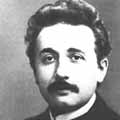 "When forced to summarize the general theory of relativity in one sentence:
Time and space and gravitation have no separate existence from matter. ... Physical objects are not in space, but these objects are spatially extended. In this way the concept 'empty space' loses its meaning. ... The particle can only appear as a limited region in space in which
the field strength or the energy density are particularly high. ...
"When forced to summarize the general theory of relativity in one sentence:
Time and space and gravitation have no separate existence from matter. ... Physical objects are not in space, but these objects are spatially extended. In this way the concept 'empty space' loses its meaning. ... The particle can only appear as a limited region in space in which
the field strength or the energy density are particularly high. ...
The free, unhampered exchange of ideas and scientific conclusions is necessary for the sound development of science, as it is in all spheres
of cultural life. ... We must not conceal from ourselves that no improvement in the present depressing situation is possible without
a severe struggle; for the handful of those who are really determined to do something is minute in comparison with the mass of the lukewarm
and the misguided. ...
Humanity is going to need a substantially new way of thinking if it is to survive!" (Albert Einstein)
 Our world is in great trouble due to human behaviour founded on myths and customs that are causing the destruction of Nature and climate change. We can now deduce the most simple science theory of reality - the wave structure of matter in space. By understanding how we and everything around us are interconnected
in Space we can then deduce solutions to the fundamental problems of human knowledge in physics, philosophy, metaphysics, theology, education, health, evolution and ecology, politics and society.
Our world is in great trouble due to human behaviour founded on myths and customs that are causing the destruction of Nature and climate change. We can now deduce the most simple science theory of reality - the wave structure of matter in space. By understanding how we and everything around us are interconnected
in Space we can then deduce solutions to the fundamental problems of human knowledge in physics, philosophy, metaphysics, theology, education, health, evolution and ecology, politics and society.
This is the profound new way of thinking that Einstein
realised, that we exist as spatially extended structures of the universe - the discrete and separate body an illusion. This simply confirms the
intuitions of the ancient philosophers and mystics.
Given the current censorship in physics / philosophy of science journals (based on the standard model of particle physics / big bang cosmology) the internet is the best hope for getting new knowledge
known to the world. But that depends on you, the people who care about science and society, realise the importance of truth and reality.
It is Easy to Help!
Just click on the Social Network links below, or copy a nice image or quote you like and share it. We have a wonderful collection of knowledge from the greatest minds in human history, so people will appreciate your contributions. In doing this you will help a new generation of scientists see that there is a simple sensible explanation of physical reality - the source of truth and wisdom, the only cure for the madness of man! Thanks! Geoff Haselhurst (Updated September, 2018)
A new scientific truth does not triumph by convincing its opponents and making them see the light, but rather because its opponents eventually die, and a new generation grows up that is familiar with it. (Max Planck, 1920)
| Tweet Follow @philosophytruth | |
| Geoff | |
 |
Connect with Geoff Haselhurst at Facebook
"All that is necessary for evil to succeed is for good people to do nothing."
(Edmund Burke)
"In a time of universal deceit - telling the truth is a revolutionary act."
(George Orwell)
"Hell is Truth Seen Too Late."
(Thomas Hobbes)


Legal Disclaimer and Privacy Policy
We support 'Fair Use' of these pages for Academic & Non Commercial use.
You are welcome to use images and text, but please reference them with a link to relevant web page on this site. Thanks!
