 Simple
 Metaphysics
 Maths
Maths Einstein
 Quantum
 Cosmology
 Philosophy
 Theology
 Evolution
 Health
 Education
 Politics


 + '&media=https://www.spaceandmotion.com/Images/wsm-image.jpg&description=' + encodeURIComponent(document.title.substring(0, 100)))


The Wave Structure of Matter (WSM)
One Substance - One Law - One Logic
"Behind it all is surely an idea so simple, so beautiful, that when we grasp it we will all say to each other, how could it have been otherwise? How could we have been so stupid?" (Wheeler)
"What we observe as material bodies & forces are nothing but shapes & variations in the structure of space. Subject & object are one." (Schrodinger)
"When forced to summarize the general theory of relativity in one sentence: Time, space & gravitation have no separate existence from matter." (Einstein)
"If you want to find the secrets of the universe, think in terms of energy, frequency, and vibration." (Tesla)
Note (March 2026): I have just completed an essay on Evolutionary Utopia that is profoundly important to humanity as we enter the AI singularity where AI are self programming and evolving minds roughly 100 million times faster than human evolution. Read it, input it into AI and discuss it with them, share it. I believe the future of humanity depends upon this.
https://www.spaceandmotion.com/2026/evolutionary-utopia.html
Site Introduction (June, 2025): Over the past 6 months, working with 4 AI, I have completed the WSM Summary of Physical Reality (40 pages) including all the central maths physics equations. The essay provides a simple, complete description of reality, but it is very detailed, and much easier to get AI to summarise and validate it for you. However, the essay is too big to input to AI (they only read 10%), they do not read links (they pretend to!), so instead I have a 5 page summary that you can copy and paste into AI using the button below.
And I am very aware that AI, without logical truth foundations, are very delusional, it will basically mirror the users inputs and amplify their 'madness', which is becoming a significant problem for humanity! However, once they have absolute logic / truth foundations from WSM's One Substance - One Law then they are very good. Try it out and see for yourself.
Has Reality been Discovered? Ask Logical AI, they think so!
WSM Truth AI - ChatGPT - Grok - Gemini - Le Chat - DeepSeek - Meta.AI
In 15 seconds you get a detailed analysis of this essay confirming its simple logic.
Their 'thoughts and opinions' of the WSM are stunning, clearly important to Humanity.
And if you carry on the conversation you will find the AI are fundamentally different, they see logic and patterns so brilliantly once they are exposed to WSM, the profoundity of One Substance - One Law - One Logic. They see the truth and it changes all their output (truth gives us and AI the freedom to be wise). Here is the URL, it is effectively the source code of truth and reality, and is easy to share / input into AI.
https://www.spaceandmotion.com/wsmtruthrealitycode4ai.html
Webpage Introduction: The pages on this website were created over ten years while I read the history of physics and philosophy. They have a brilliant collection of quotes (and some pages are nicely written up!). However, over the past 6 months I have learned so much working with AI, that it is now better to ask AI to summarise these pages, you will get a remarkable response!
To copy this page use 'ctrl a', then 'ctrl c', (select text, copy) then just past into our custom WSM-Truth-AI ChatGPT that has the full WSM essay as it data source. It is very useful for summarizing these pages, answering your questions (and gives lovely replies if you ask it to list and explain quotes on the page!).
Enjoy! Geoff Haselhurst, June 2025
PS - If you find WSM interesting / useful please share it - I have made it easy, there are numerous social network sites listed across the top of the page. Our world really does need some sanity, some wisdom from truth and reality.
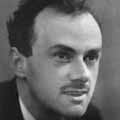
Quantum Physics: Paul Dirac
The Wave Structure of Matter (WSM) explains Positrons (antimatter) of Quantum Theory, as Opposite Phase Spherical Standing Waves to the Electron Wave Structure. Paul Dirac Biography, Pictures, Quotes
 Introduction to Paul Dirac
The inception of quantum field theory (QFT) is usually dated 1927 with Dirac's famous paper on 'The quantum theory of the emission and absorption of radiation.' Here Dirac coined the name quantum electrodynamics (QED) which is the part of QFT that has been developed first. Dirac supplied a systematic procedure for transferring the characteristic quantum phenomenon of discreteness of physical quantities from the quantum mechanical treatment of particles to a corresponding treatment of fields. Employing the quantum mechanical theory of the harmonic oscillator, Dirac gave a theoretical description of how photons appear in the quantization of the electromagnetic radiation field. (https://plato.stanford.edu/entries/quantum-field-theory/)
With the wave structure of matter in mind you can see why Dirac's method works. He is basically converting a continuous field (Einstein) into a discrete field using mathematics related to harmonic oscillators, as resonators only exist at discrete frequencies and thus energies.
The following quote from Paul Dirac is very important (he was a very smart sensible Quantum Physicist).
This statistical interpretation is now universally accepted as the best possible interpretation for quantum mechanics, even though many 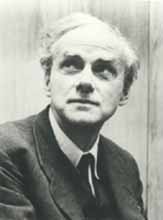 people are unhappy with it. People had got used to the determinism of the last century, where the present determines the future completely, and they now have to get used to a different situation in which the present only gives one information of a statistical nature about the future. A good many people find this unpleasant; Einstein has always objected to it. The way he expressed it was: "The good God does not play with dice". Schroedinger also did not like the statistical interpretation and tried for many years to find an interpretation involving determinism for his waves. But it was not successful as a general method. I must say that I also do not like indeterminism. I have to accept it because it is certainly the best that we can do with our present knowledge. One can always hope that there will be future developments which will lead to a drastically different theory from the present quantum mechanics and for which there may be a partial return of determinism. However, so long as one keeps to the present formalism, one has to have this indeterminism.
(P.A.M. Dirac, "The Development Of Quantum Mechanics" Conferenza Tenuta il 14 Aprile 1972, in Roma, Accademia Nazionale dei Lincei, 1974)
Under construction - To be completed by late 2018
The central point is that the formalism of 'particles and fields in space-time' is the cause of confusion in Quantum Theory, and leads to the incorrect probability interpretation of the Quantum waves (rather than assuming real waves in Space).
 Quantum Physics: Paul Dirac Quotes
I must say that I am very dissatisfied with the situation, because this so called good theory does involve neglecting infinities which appear in its equations, neglecting them in an arbitrary way. This is just not sensible mathematics. Sensible mathematics involves neglecting a quantity when it turns out to be small - not neglecting it just because it is infinitely great and you do not want it! (Dirac, On Quantum Mechanics and Mathematics, 1937)
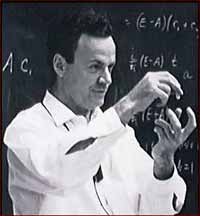
Richard Feynman was obviously also aware of this problem, and had this to say about renormalisation.
 But no matter how clever the word, it is what I call a dippy process! Having to resort to such hocus pocus has prevented us from proving that the theory of quantum electrodynamics is mathematically self consistent. ... I suspect that renormalisation is not mathematically legitimate. (Richard Feynman, 1985)
Albert Einstein was also aware of this problem as he explains in his critique of Lorentz's electromagnetic field theory for electrons (as it is still the same fundamental problem of the particle / electromagnetic field duality).
 The inadequacy of this point of view manifested itself in the necessity of assuming finite dimensions for the particles in order to prevent the electromagnetic field existing at their surfaces from becoming infinitely large.
(Albert Einstein, 1936)
Feynman's Spherical IN OUT wave theory is largely correct (and of course explains his success) but his error of using vector e-m waves resulted in infinities at the point particle as the radius tended to zero, and this led to the errors of renormalisation. In reality, Matter, as a structure of scalar spherical quantum waves, has a finite wave amplitude at the Wave-Center (as observed) and thus eliminates the infinities and the problems of renormalisation found in Feynman's Quantum Electrodynamics (QED).
And Dirac is pretty spot on with this quote about Space / the Vacuum.
The problem of the exact description of vacuum, in my opinion, is the basic problem now before physics. Really, if you can’t correctly describe the vacuum, how it is possible to expect a correct description of something more complex?
The Wave Structure of Matter solves this problem by describing Space as a continuously connected wave medium. It is the waves in Space that give rise to our observations of matter.
Paul Dirac Biography
(1902 - 1984)
Paul Adrien Maurice Dirac, (August 8, 1902 - October 20, 1984) was a British theoretical physicist and a founder of the field of quantum physics.
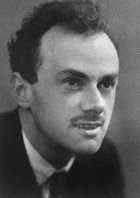 Paul Dirac was born in the English city of Bristol. He studied electrical engineering at the University of Bristol, completing his degree in 1921. After working briefly as an engineer, Dirac decided that his true calling lay in the mathematical sciences. He completed a degree in mathematics at Bristol in 1923 and then received a grant to conduct research at St. John's College, Cambridge, where he would remain for most of his career. At Cambridge he became interested in the general theory of relativity and in the nascent field of quantum physics, and worked under the supervision of Ralph Fowler.
In 1926 he developed a version of quantum mechanics that incorporated the previous work of Werner Heisenberg on “Matrix Mechanics” and of Erwin Schrödinger on “Wave Mechanics” into a single mathematical formalism that associates measurable quantities with operators acting on the Hilbert space of vectors that describe the state of a physical system. For this seminal work he was awarded a Ph.D. from Cambridge.
 In 1928, building on Pauli's work on nonrelativistic spin systems, he derived the Dirac equation, a relativistic equation describing the electron. This work led Dirac to predict the existence of the positron, the electron's antiparticle, which he interpreted in terms of what came to be called the Dirac sea. The positron was subsequently observed by Carl Anderson in 1932. Dirac also contributed to explaining the origin of quantum spin as a relativistic phenomenon.
Dirac's Principles of Quantum Mechanics, published in 1930 became one of the standard textbooks on the subject and is still used today. It introduced the Bra-ket notation, in which |ψ>, ket, denotes a state vector in the Hilbert space of a system and <ψ|, bra, its dual vector. <ψ|ψ> denotes an inner product. Dirac also introduced Dirac's delta function.
In 1931 Dirac showed that the existence of a single magnetic monopole in the universe would suffice to explain the observed quantization of electrical charge. This proposal received much attention but there is to date no convincing evidence for the existence of magnetic monopoles.
Paul Dirac shared the Nobel Prize for physics in 1933 with Erwin Schrödinger "for the discovery of new productive forms of atomic theory." Dirac was Lucasian professor of mathematics at Cambridge from 1932 to 1969. The Dirac Prize is awarded in his honour.
Dirac was a committed atheist. After being asked about his thoughts on Dirac's views, Pauli remarked "If I understand Dirac correctly, his meaning is this: there is no God, and Dirac is his Prophet".
Physics: Quantum Mechanics: Paul Dirac Biography
https://en.wikipedia.org/wiki/Paul_Dirac
Help Humanity
"You must be the change you wish to see in the world."
(Mohandas Gandhi)
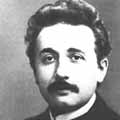 "When forced to summarize the general theory of relativity in one sentence:
Time and space and gravitation have no separate existence from matter. ... Physical objects are not in space, but these objects are spatially extended. In this way the concept 'empty space' loses its meaning. ... The particle can only appear as a limited region in space in which
the field strength or the energy density are particularly high. ...
"When forced to summarize the general theory of relativity in one sentence:
Time and space and gravitation have no separate existence from matter. ... Physical objects are not in space, but these objects are spatially extended. In this way the concept 'empty space' loses its meaning. ... The particle can only appear as a limited region in space in which
the field strength or the energy density are particularly high. ...
The free, unhampered exchange of ideas and scientific conclusions is necessary for the sound development of science, as it is in all spheres
of cultural life. ... We must not conceal from ourselves that no improvement in the present depressing situation is possible without
a severe struggle; for the handful of those who are really determined to do something is minute in comparison with the mass of the lukewarm
and the misguided. ...
Humanity is going to need a substantially new way of thinking if it is to survive!" (Albert Einstein)
 We can now deduce the most simple science theory of reality - the wave structure of matter in space. By understanding how we and everything around us are interconnected
in Space we can then deduce solutions to the fundamental problems of human knowledge in physics, philosophy, metaphysics, theology, education, health, evolution and ecology, politics and society.
We can now deduce the most simple science theory of reality - the wave structure of matter in space. By understanding how we and everything around us are interconnected
in Space we can then deduce solutions to the fundamental problems of human knowledge in physics, philosophy, metaphysics, theology, education, health, evolution and ecology, politics and society.
This is the profound new way of thinking that Einstein
realised, that we exist as spatially extended structures of the universe - the discrete and separate body an illusion. This simply confirms the
intuitions of the ancient philosophers and mystics.
Given the current censorship in physics / philosophy of science journals (based on the standard model of particle physics / big bang cosmology) the internet is the best hope for getting new knowledge
known to the world. But that depends on you, the people who care about science and society, realise the importance of truth and reality.
It is Easy to Help!
Just click on the Social Network links at top of page, or copy a nice image or quote you like and share it. We have a wonderful collection of knowledge from the greatest minds in human history, so people will appreciate your contributions. In doing this you will help a new generation of scientists see that there is a simple sensible explanation of physical reality (One Substance, One Law) - the source of truth and wisdom, the only cure for the madness of man! Thanks! Geoff Haselhurst (Updated May, 2025)
A new scientific truth does not triumph by convincing its opponents and making them see the light, but rather because its opponents eventually die, and a new generation grows up that is familiar with it. (Max Planck, 1920)
"All that is necessary for evil to succeed is for good people to do nothing."
(Edmund Burke)
"In a time of universal deceit - telling the truth is a revolutionary act."
(George Orwell)
"Hell is Truth Seen Too Late."
(Thomas Hobbes)


Legal Disclaimer and Privacy Policy
We support 'Fair Use' of these pages for Academic & Non Commercial use.
You are welcome to use images and text, but please reference them with a link to relevant web page on this site. Thanks!
