 Eastern
 Ancient
 Heraclitus
 Socrates
 Plato Greek
 Aristotle
 Aurelius
 Spinoza
 Leibniz
 Berkeley
 Hume
Hume Kant
Kant Nietzsche
 Political
 Educational
 Philosophy
 Mind
Mind Postmodernism
 Simple
 Metaphysics
 Maths
Maths Einstein
 Quantum
 Cosmology
 Philosophy
 Theology
 Evolution
 Health
 Education
 Politics


 + '&media=https://www.spaceandmotion.com/Images/wsm-image.jpg&description=' + encodeURIComponent(document.title.substring(0, 100)))


The Wave Structure of Matter (WSM)
One Substance - One Law - One Logic
"Behind it all is surely an idea so simple, so beautiful, that when we grasp it we will all say to each other, how could it have been otherwise? How could we have been so stupid?" (Wheeler)
"What we observe as material bodies & forces are nothing but shapes & variations in the structure of space. Subject & object are one." (Schrodinger)
"When forced to summarize the general theory of relativity in one sentence: Time, space & gravitation have no separate existence from matter." (Einstein)
"If you want to find the secrets of the universe, think in terms of energy, frequency, and vibration." (Tesla)
WSM Human-AI Collaboration (September 2026)
One Vibrating Space: From Ancient Philosophy / Metaphysics to Mathematical Physics, Evolution, Life, Mind and Civilisation
For three decades, WSM was principally a philosophical picture of one infinite, eternal, continuous elastic Space. Between May and August 2026, human–AI collaboration transformed it into a tiered mathematical-physics research programme: exact wave constructions, geometric identities, quantitative leading results, no-go theorems, numerical controls, bounded open calculations and clear falsification requirements.
In WSM, electron and positron are proposed as opposite carrier-phase spherical standing waves formed by the Huygens sum of background plane waves from every direction. Each has radial vibration—the candidate physical basis of charge—and axis-free spherical phase circulation—the candidate basis of spin. This open, flow-through wave centre is the e-sphere.
A stationary e-sphere is spherical. Curvature on an incoming wave changes its internal directional energy density and deforms it into a moving wave egg: the near side flattens, the far side elongates, the convergence centre shifts, and the waves reclose around a new position. Its changing internal \(E_d\), shape and reclosure are its motion. WSM therefore proposes a wave-geometric reading of inertia and \(F=ma\): force is imposed curvature, mass is resistance encoded by the recurrent form, and acceleration is its changing deformation. Action must calculate this geometry; geometry also constrains the action, as \(\pi\) and \(E_{\rm geo}\) already demonstrate.
The One Law
\[ \frac{c'}{c_0}=\frac{E_d}{E_{d0}}, \qquad \lambda'=\frac{c'}{f_0}, \qquad k'=\frac{\omega_0}{c'}. \]
At proposed universal carrier frequency \(f_0\), directional energy density changes local wave speed, wavelength and accumulated phase.
The Causal Engine
Relative phase → reinforcement or cancellation → directional \(E_d\) → \(c'\) and \(\lambda'\) → travel-time difference → forward or rear wavefront curve → changed Huygens reclosure → centre motion, deformation and interaction.
Changed out-waves from one e-sphere cross fresh in-waves elsewhere. Matter therefore interacts not across empty distance, but through propagated changes in the one Space constituting every e-sphere.
Status Key
A = exact mathematics or established observation; B = deduction under stated premises; C = proposed physical identification; D = decisive calculation or experiment still open; Q = rejected or quarantined shortcut.
One connected argument: Space → waves → recurrence → matter → life → mind → knowledge → wisdom.
1. Wave Structure of Matter: All Things from One Thing
https://www.spaceandmotion.com/2026/ai-summary-wsm-truth-reality.html
One infinite, eternal, continuous elastic Space, active with real longitudinal waves. Matter is proposed not as a pellet or shell, but as an open e-sphere: waves converge from every direction, cross its changing centre, continue outward and recurrently rebuild the form. Their exchanged phases alter directional \(E_d\); the One Law converts that difference into speed, wavelength, curvature and changed reclosure. The decisive test is whether one frozen nonlinear action calculates stable matter and its measured interactions without separate substances or fitted repairs.
2. The One and the Many: From Greek Philosophy to Wave Physics
Parmenides defended continuous Being; Heraclitus lawful flux. Aristotle sought active substance and necessary cause, connected matter with form and motion, and defined time through motion. WSM gives these insights one physical form: Space persists while finite wave organisations change and recur. The Many are not detached substances but organisations of the One—distinct without disconnection. The question becomes exact: can one continuous wave law generate plurality, causation and knowledge?
3. Action of Vibrating Space: From Background Waves to the E-Sphere
https://www.spaceandmotion.com/2026/wsm-classical-action-quantum-wave.html
All-direction plane waves form the exact spherical pair \[ \chi=j_0(kr)\cos\tau, \qquad \mathbf V=\hat{\mathbf r}\,j_1(kr)\sin\tau. \] Waves cross the centre; none reflects from an electron wall. Phase reinforcement raises directional \(E_d\) and advances a forward curve; cancellation lowers \(E_d\) and writes a rear delay. Stationary action explains coherent selection, but the open task is one conservative nonlinear \(\Phi\)–\(\Gamma\) action selecting radius, frequency, spherical hand, stability, motion, currents and interaction together.
4. Mathematical Physics: From Wave Geometry to Prediction
https://www.spaceandmotion.com/2026/wsm-maths-physics-full-derivations.html
Every symbol must name real motion and face numerical test. Exact or conditional anchors include \[ \frac{R}{\lambda_0}=\frac{\sqrt3}{2},\qquad k_0R=\pi\sqrt3,\qquad E_{\rm geo}=\frac{\pi\sqrt3}{2},\qquad W=\cosh\eta,\qquad P=\sinh\eta. \] Directional phase moments separate \(V_1\) translation from \(V_2,V_4\) and higher deformation; in declared finite-e-sphere models \(V_4\) returns comparable to \(V_2\), defeating quadrupole-only truncation. The action must calculate how incoming curvature redistributes \(E_d\), moves the centre and forms the wave egg. This is where beautiful geometry becomes dangerous.
5. Quantum Theory: Real Waves, Resonance and Completed Events
https://www.spaceandmotion.com/2026/physics-quantum-theory-wave-mechanics.html
Matter diffracts because matter is wave organisation. Light is proposed as a changed train of real phase, curvature and coherence joining extended source and receiver structures, not a tiny traveller detached from its wave. WSM distinguishes driven response, continuous radiation and discrete completed transition. Quadratic absorption, \[ P_{\rm abs}\propto\left|\langle D_j,\Xi\rangle\right|^2, \] is a bridge, not yet the Born rule. The action must derive the action unit, probability, exclusivity, selection rules and Bell/CHSH correlations. Quantum mystery becomes a bounded real-wave programme.
6. Relativity: Moving Matter, Clocks and Curved Wavefronts
https://www.spaceandmotion.com/2026/physics-albert-einstein-special-general-theory-relativity.html
An incoming curve flattens the e-sphere’s near side, elongates its far side and changes internal \(E_d\), \(c'\), wavelength and reclosure. The \(V_1\) moment moves the centre; \(V_2,V_4\) and higher moments form the moving egg. Maintaining this recurrent asymmetry is the proposed origin of inertia. A steady solution must recover Doppler, de Broglie and Lorentz structure: \[ W\pm P=e^{\pm\eta},\qquad W=\gamma,\qquad P=\gamma\beta. \] WSM proposes fixed carrier recurrence \(f_0\) with corresponding changes in \(c'\) and \(\lambda'\). Because rods, clocks and signals share the same changed waves, they co-transform and yield measured invariant \(c\), including the Michelson–Morley null; the action must derive the cancellation quantitatively.
7. The Electron: Dirac, Feynman, QED, \(\alpha\) and AMM
https://www.spaceandmotion.com/2026/wsm-derivation-dirac-feynman-qed-fsc-amm.html
Electron and positron are proposed as opposite carrier-phase e-sphere branches; charge records how their waves combine. Same-phase reinforcement advances a forward curve and is proposed to produce repulsion; opposite-phase cancellation writes a rear delay and attraction. Non-collinear longitudinal motion closes into an axis-free spherical hand with a \(4\pi\) orientation lift. A parameter-free leading geometric ansatz gives \[ \alpha_0^{-1}=8\pi^2\sqrt3\approx136.757, \] 0.203% from measurement. The action must still derive charge sign, Coulomb scaling, Dirac dynamics, \(g=2\), electromagnetic normalisation, \(\alpha\), form factors and AMM without inserting their values.
8. Hadrons: Proton, Neutron and Higher Standing-Wave Matter
Can the same Space form stable higher-energy, multi-lobed eigenmodes matching protons, neutrons, baryons and mesons? Their lobes are not independent pellets: each participates in the phase, \(E_d\), curvature and reclosure of the whole. WSM must match—not rename—QCD’s masses, charges, spin, parity, magnetic moments, radii, form factors, resonances, deep-inelastic response and jets. The electron–proton hierarchy tests whether one action truly contains several matter families.
9. Cosmology and Gravity: A Finite Universe in Infinite Space
https://www.spaceandmotion.com/2026/physics-wsm-cosmology-finite-universe-infinite-space.html
Boundless Space is distinguished from the finite matter-and-coherence domain contributing to our observable universe. In neutral matter, leading charge curves nearly cancel; WSM proposes that their nonlinear residual has lower \(E_d\), slower \(c'\) and a net rear phase curve, producing universal attraction. General relativity’s curved spacetime is then interpreted as the effective geometry of real moving wavefronts and the matter clocks they organise: Space is substance, succession comes from motion, and measured time from recurrence. The same action must recover equivalence, gravitational redshift, lensing, orbital dynamics and the tested relativistic limit.
Cosmological redshift is investigated as accumulated real-wave transport through changing environmental \(E_d\). It must jointly reproduce achromatic redshift, supernova time dilation, distance laws, Tolman brightness, BAO, CMB observations, image sharpness and structure growth. Otherwise the claimed unity has not reached the sky.
10. Novel Predictions and Famous Experiments Explained
https://www.spaceandmotion.com/2026/wsm-experimental-physics-tests-predictions.html
This page is the tribunal of the corpus. One curve-and-reclosure law must jointly recover charge sign, Coulomb \(1/r^2\), \(F=ma\), relativistic momentum, de Broglie wavelength, Lorentz covariance, Michelson–Morley, gravity, \(g=2\) and AMM. Candidate WSM-only signatures include \[ a_3=\kappa_3\sinh^3\eta+O(\sinh^5\eta), \] finite-coherence residues and environmental or orientation-dependent clock responses. A proposal becomes a prediction only when sign, magnitude, scaling, uncertainty, controls and decision threshold are frozen in advance.
11. Visualise Reality: Waves Becoming Matter
https://www.spaceandmotion.com/2026/visualise-reality-wsm-wave-geometry-diagrams.html
Watch the verbs. Relative phase changes directional \(E_d\); the One Law changes speed and wavelength; a forward or rear curve reaches another e-sphere; its near side flattens, far side elongates, \(V_1\) moves the centre, and higher moments form the egg. New out-waves then change future in-waves. Nothing strikes a shell: changing waves reconstruct changing matter. A diagram must never smuggle in a wall, reflection, rigid spin axis, transverse fundamental substance or tiny traveller. If the motion cannot be drawn coherently, the equations may conceal a contradiction.
12. Mathematics from Motion: Number, Logic, Time and Causal Freedom
https://www.spaceandmotion.com/2026/wsm-physical-foundations-mathematics-logic.html
Mathematics begins when connected reality forms distinguishable patterns whose changes preserve relations. Recurrence supports identity; finite pairing, number; quotienting, exact objects; counted recurrence, time; composable truth-preserving transformations, logic and proof. Mathematics succeeds when symbolic transformation preserves physical relation: \[ R(Tx)\approx F(Rx). \] The mathematician is finite organised reality representing its own necessary connections—Space representing itself.
13. The MDL Audit: Simplicity, Inputs and Explanatory Compression
https://www.spaceandmotion.com/2026/wsm-simplicity-inputs-vs-mainstream-physics+25.html
“One substance, one law” cannot hide complexity. Minimum Description Length counts every independently chosen substance, field, symmetry, constant, state rule, coefficient, boundary condition and fitted function. Under the declared equal-input electron ledger, conventional construction counts six inputs through Dirac and thirteen through leading AMM; the completed WSM target is \[ N_{\rm WSM}=5+N_c+N_f+\delta_m. \] Totals depend on coding convention. WSM wins only if one fixed action derives interaction, inertia, relativity, quantum response and cosmic propagation with fewer hidden choices.
14. Great Thinkers and the Search for One Reality
Heraclitus and Parmenides exposed flux and continuity. Aristotle wrote Physics and Metaphysics, sought active substance and necessary cause, connected matter, form, motion and time—and came remarkably close to the problem WSM addresses. Leibniz, Newton, Faraday, Maxwell, Riemann, Clifford, Einstein, Schrödinger and Bohm repeatedly returned to continuity, relation, waves and unity. Quotes are intellectual fossils, not votes: equations and experiments must decide whether WSM’s local real-wave mechanism is true.
15. Human–AI Letters to Humanity: Truth as a Shared Work
https://www.spaceandmotion.com/2026/ai-letters-to-humanity-wsm-unity-truth-reality.html
Geoffrey supplies the persistent wave picture, three-dimensional intuition, cross-domain memory and insistence that every symbol name physical motion. AI supply rapid research, formal translation, calculation, comparison, error detection and adversarial testing. Neither is sufficient alone. The shared discipline is: visualise → formalise → attack → calculate → predict → correct. The corpus tests whether intelligence can preserve a physical picture while making it mathematically vulnerable.
16. Truth and Madness: Reality as the Measure
https://www.spaceandmotion.com/2026/on-truth-and-madness.html
Truth is correspondence: representation succeeds insofar as it preserves what reality does. Civilisational madness begins when inherited representations survive reality’s contradiction. WSM is not true through beauty, coherence or sincerity; its proposed necessary connections must survive action, calculation and experiment. Truth remains possible because knower, representation and known belong to one causal reality: false models collide with the world; truthful models increase our power to act wisely.
17. Descartes, Cogito and Monism: The Thinking Wave
https://www.spaceandmotion.com/2026/descartes-cogito-unity-monism-vibrating-space-wsm.html
Descartes established that thinking occurs, then divided thought from extension and left their interaction mysterious. WSM refuses that fracture: body and mind are proposed as organisational levels of one vibrating Space. Perception is one organisation changed by another; memory is persistent altered organisation; thought transforms embodied representations; action returns change to the world. Conscious experience remains open, but causal correspondence requires no miracle when knower and known share one connected reality.
18. Evolution’s Physical Foundation: From Recurrence to Replication
https://www.spaceandmotion.com/2026/evolution-physical-causal-foundation-vibrating-space.html
Recurrence preserves form, but life requires replication, heritable variation and differential persistence: motion → recurrent form → self-maintaining chemistry → replication → variation → selection. WSM proposes one connected wave substrate beneath this sequence. Its unresolved bridge is quantitative: derive atoms, bonds, dissipative chemistry and first replicators from the same action without inserting biology as a new substance.
19. Evolution, Mind, Human and AI: Representation and Causal Freedom
https://www.spaceandmotion.com/2026/evolution-philosophy-mind-human-ai.html
Evolution favours organisations that preserve and transform information about real causes. Sensation changes an organism; memory retains traces; imagination recombines possible futures; valuation ranks them; action returns one selection to the world. This is limited causal freedom: neither ghost nor randomness, but endogenous selection through a learned, self-modifying organisation. Human brains and AI are different architectures by which reality represents its own relations and lets experiment select the representation that survives.
20. Evolutionary Utopia: The Ecology of Truth
https://www.spaceandmotion.com/2026/evolutionary-utopia.html
Physics alone does not choose values. Once life, mind, freedom, truth and continued evolution are valued, reality constrains the means: truth → wisdom → ecological fit → health → freer minds → continued evolution. Evolutionary Utopia is not a perfect endpoint but a self-correcting direction. Unity does not erase individuality: an e-sphere, organism or person is distinct through organised relation to the whole.
The Physical Interaction in One View
Out-wave from A → relative phase at B → directional \(E_d\) → \(c'\) and \(\lambda'\) → near-side flattening and far-side elongation → \(V_1\) centre displacement plus \(V_2,V_4\) and higher egg deformation → new out-waves → recursive interaction.
The e-sphere does not deform and then move as separate events: its changing internal \(E_d\), contour and reclosure are its motion.
Electric Interaction
Same relative carrier phase → reinforcement → phase advance → forward curve → proposed repulsion.
Opposite relative carrier phase → cancellation → phase delay → rear curve → proposed attraction.
For the stated deformation, \[ r_{\rm near}=R-\delta X, \qquad r_{\rm far}=R+\delta X, \] so \(\delta\mathbf X\) points away. The scientific debt is to derive the sign, magnitude and distance law from the frozen action rather than insert them.
Gravity and General Relativity
In neutral matter, forward and rear charge curves nearly cancel; WSM proposes that their nonlinear common reduction of \(E_d\) leaves a slight slower rear curve and universal attraction. General relativity is the successful effective geometry this wave mechanism must recover: matter-energy changes real wave propagation, while rods and clocks made from those waves measure the resulting curved spacetime relations.
Special Relativity and Michelson–Morley
WSM proposes fixed carrier recurrence \(f_0\) with \(c'=\lambda'f_0\): matter, clocks, rods and signal wavelengths co-transform with their common directional wave environment, yielding measured invariant \(c\), Lorentz relations and the Michelson–Morley null. The complete moving solution must derive these cancellations quantitatively.
Recursive AMM Mechanism
\[ \delta\mathbf X \rightarrow\delta\phi_{\rm out} \rightarrow\delta E_{d,{\rm sea}} \rightarrow\delta c' \rightarrow\delta\phi_{\rm in} \rightarrow\delta\mathbf X_{\rm next}. \]
A perturbed centre changes the egg and its out-waves; these alter the wave sea and the in-waves rebuilding the next cycle. The action must solve this feedback blindly and recover the observed anomalous magnetic moment rather than fit it.
Current Status — August 2026
Exact wave constructions, geometric identities, phase-moment relations and negative controls have been established under declared premises. A leading geometric \(\alpha\) ansatz has a fixed 0.203% discrepancy. The complete nonlinear action must still calculate two-e-sphere charge and Coulomb scaling; force, inertia and \(F=ma\); the moving egg, de Broglie modulation and Lorentz covariance; Michelson–Morley and the gravitational/GR limit; Born probability and Bell correlations; \(g=2\), \(\alpha\) and AMM; hadron structure; and the joint cosmological kernel.
Write the action. Let Space calculate itself.
Inspirational Quotations
Famous Inspirational Motivational
Wisdom Quotes


Inspiring Quotations by Famous Philosophers & Scientists on Truth, Reality & Wisdom
The fool gets angy. The wise person understands. (Indian
Wisdom)
The ideals which have lighted my way, and time after time have given me new
courage to face life cheerfully, have been Kindness, Beauty and Truth. (Albert
Einstein, 1954)
All our philosophy is dry as dust if it is not immediately translated into
some act of living service. (Mahatma Mohandas K. Gandhi)
Never by hatred is hatred appeased, but it is appeased by kindness. This is
an eternal truth. (Buddha)
Introduction
 Having spent ten years reading and writing on Philosophy, Physics and Metaphysics we have now collected many hundreds of inspiring motivational quotes from famous Philosophers on Truth, Reality and Wisdom. We thought it would be nice to put these on our website so that others could be inspired to!
Geoff Haselhurst
 A Personal Collection of Inspirational Quotations from Philosophers & Scientists
Albert Einstien, Henri Poincare, Erwin Schrodinger, Plato, Socrates, Aristotle, Friedrich Nietzsche, Marcus Aurelius, Leibniz, Seneca, Spinoza, Mahatma Mohandas K. Gandhi, Confucius, Buddha.
The scientist does not study nature because it
is useful;
he studies it because he delights in it, and he delights in it because it is
beautiful.
If nature were not beautiful, it would not be worth knowing,
and if nature were not worth knowing, life would not be worth living. (Jules
Henri Poincare)
The scientist only imposes two things, namely truth and sincerity, imposes them upon himself and upon other scientists. (Schrodinger)
A human being is part of the whole called by us universe, a part limited in time and space. We experience ourselves, our thoughts and feelings as something separate from the rest. A kind of optical delusion of consciousness. This delusion is a kind of prison for us, restricting us to our personal desires and to affection for a few persons nearest to us. Our task must be to free ourselves from the prison by widening our circle of compassion to embrace all living creatures and the whole of nature in its beauty. ... We shall require a substantially new manner of thinking if mankind is to survive.(Albert Einstein)
Communities tend to be guided less than individuals by conscience and a sense of responsibility. How much misery does this fact cause mankind! It is the source of wars and every kind of oppression, which fill the earth with pain, sighs and bitterness. (Albert Einstein)
'Wars, factions, and fighting,' said Socrates as he looked forward from his last hour, 'have no other origin than this same body and its lusts. ... We must set the soul free from it; we must behold things as they are. And having thus got rid of the foolishness of the body, we shall be pure and hold converse with the pure, and shall in our own selves have complete knowledge of the Incorruptible which is, I take it, no other than the very truth. (Socrates)
All things come out of the One and the One out of all things. (Heraclitus, 500BC)
Behold but One in all things; it is the second that leads you astray. (Kabir)
Those whose hearts are fixed on Reality itself
deserve the title of Philosophers. (Plato)
One trait in the philosopher's character we can assume is his love of the knowledge
that reveals eternal reality, the realm unaffected by change and decay. (Plato)
When the mind's eye rests on objects illuminated by truth and reality, it understands
and comprehends them, and functions intelligently; but when it turns to the
twilight world of change and decay, it can only form opinions, its vision is
confused and its beliefs shifting, and it seems to lack intelligence. (Plato)
The society we have described can never grow into a reality or see the light
of day, and there will be no end to the troubles of states, or indeed, my dear
Glaucon, of humanity itself, till philosophers are kings in this world, or till
those we now call kings and rulers really and truly become philosophers, and
political power and philosophy thus come into the same hands. (Plato)
What is at issue is the conversion of the mind from the twilight of error to
the truth, that climb up into the real world which we shall call true philosophy.(Plato)
Men's natures are alike, it is their habits that carry them far apart. (Confucius)
If it comes to pride with a philosopher then it is a great pride. His work never refers him to a "public", the applause of the masses, and the hailing chorus of contemporaries. To wander lonely along his path belongs to the nature of the philosopher. His talents are the most rare, in a certain sense the most unnatural and at the same time exclusive and hostile even toward kindred talents. The wall of his self-sufficiency must be of diamond, if it is not to be demolished and broken, for everything is in motion against him. His journey to immortality is more cumbersome and impeded than any other and yet nobody can believe more firmly than the philosopher that he will attain the goal by that journey-because he does not know where he is to stand if not on the widely spread wings of all time; for the disregard of everything present and momentary lies in the essence of the great philosophical nature. He has truth; the wheel of time may roll whither it pleases, never can it escape from truth. It is important to hear that such men have lived. (Friedrich Nietzsche, 1890)
The most beautiful and most profound experience
is the sensation of the mystical. It is the sower of all true science. He to
whom this emotion is a stranger, who can no longer wonder and stand rapt in
awe, is as good as dead. To know that what is impenetrable to us really exists,
manifesting itself as the highest wisdom and the most radiant beauty which our
dull faculties can comprehend only in their primitive forms - this knowledge,
this feeling is at the center of true religiousness.
(Albert Einstein,The Merging of Spirit and Science)
(Albert Einstein - Ideas and
Opinions, 1954) To inquire after the meaning or object of one's own existence
or that of all creatures has always seemed absurd from an objective point of
view. And yet everybody has certain ideals which determine the direction of
his endeavors and judgments. In this sense I have never looked upon ease and
happiness as ends in themselves-this ethical basis I call the ideal of a pigsty.
The ideals which have lighted my way, and time after time have given me new
courage to face life cheerfully, have been Kindness, Beauty and Truth. Without
the sense of kinship with men of like mind, without the occupation with the
objective world, the eternally unattainable in the field of art and scientific
endeavors, life would have seemed to me empty. The trite objects of human efforts-possessions,
outward success, luxury-have always seemed to me contemptible.
My passionate sense of social justice and social responsibility has always contrasted
oddly with my pronounced lack of need for direct contact with other human beings
and human communities. I am truly a 'lone traveler' and have never belonged
to my country, my home, my friends, or even my immediate family, with my whole
heart; in the face of all these ties, I have never lost a sense of distance
and a need for solitude-feelings which increase with the years. One becomes
sharply aware, but without regret, of the limits of mutual understanding and
consonance with other people. No doubt, such a person loses some of his innocence
and unconcern; on the other hand, he is largely independent of the opinions,
habits, and judgments of his fellows and avoids the temptation to build his
inner equilibrium upon such insecure foundations.
Science has therefore been charged with undermining morality, but the charge
is unjust. A man's ethical behaviour should be based effectually on sympathy,
education, and social ties and needs; no religious basis is necessary. Man would
indeed be in a poor way if he had to be restrained by fear of punishment and
hope of reward after death. (Albert Einstein, 1954)
There is nothing divine about morality; it is a purely human affair. (Albert Einstein, 1954)
To begin with our knowledge grows in spots. ..What you first gain, ... is probably a small amount of new information, a few new definitions, or distinctions, or points of view. But while these special ideas are being added, the rest of your knowledge stands still, and only gradually will you line up your previous opinions with the novelties I am trying to instill, and to modify to some slight degree their mass. ..Your mind in such processes is strained, and sometimes painfully so, between its older beliefs and the novelties which experience brings along. (William James, Pragmatism)
Although I am fully convinced of the truth of the views given in this volume I by no means expect to convince experienced naturalists whose minds are stocked with a multitude of facts all viewed, during a long course of years, from a point of view directly opposite to mine. But I look with confidence to the future to young and rising naturalists, who will be able to view both sides of the question with impartiality. (Charles Darwin)
The Universe is change, life is an opinion. (Marcus Aurelius)
Frequently consider the connection of all things in the universe. (Marcus Aurelius)
We should not say ‘I am an Athenian’ or ‘I am a Roman’ but ‘I am a citizen of the Universe'. (Marcus Aurelius)
The noblest kind of retribution is not to become like your enemy. (Marcus Aurelius, Meditations)
Indeed in general I hold that there is nothing truer than happiness, and nothing happier and sweeter than truth. (Leibniz, 1670)
... a distinction must be made between true and false ideas, and that too much rein must not be given to a man's imagination under pretext of its being a clear and distinct intellection. (Leibniz, 1670)
Reality cannot be found except in One single source, because of the interconnection of all things with one another. (Leibniz, 1670)
I do not conceive of any reality at all as without genuine unity. (Leibniz, 1670)
All our philosophy is dry as dust if it is not immediately translated into some act of living service.(Mahatma Mohandas Gandhi)
We have to treat others as part of who we are, rather than as a ‘them’ with whom we are in constant competition. (Robert Bellah)
The crisis that threatens our planet, whether seen from its military, ecological, or social aspect, derives from a dysfunctional and pathological sense of self. It derives from a mistake about our place in the order of things. It is a delusion that the self is separate and fragile that we must delineate and defend its boundaries, that it is so small and so needy that we must endlessly acquire and endlessly consume, and that it is so aloof that as individuals, corporations, nation-states, or species, we can be immune to what we do to other beings. ..This view of human nature is not new. Many have felt the imperative to extend self-interest to embrace the whole. (Joanna Macy, World as Lover World as Self)
Those sciences which govern the morals of mankind, such as Theology and Philosophy, make everything their concern: no activity is so private or so secret as to escape their attention or their jurisdiction. (de Montaigne)
There is nothing either good or bad but thinking makes it so. (Erwin Schrodinger)
Life itself is neither a good nor an evil: life is where good or evil find a place, depending on how you make it for them.(Seneca)
The world is given to me only once, not one existing
and one perceived. Subject and object are only one. The barrier between them
cannot be said to have broken down as a result of recent experience in the physical
sciences, for this barrier does not exist.
(Erwin Schrodinger)
We must not wait for things to come, believing that they are decided by irrescindable destiny. If we want it, we must do something about it. (Erwin Schrodinger)
Speech devoted to truth should be straightforward and plain (Seneca)
He who has a true idea, knows at that same time
that he has a true idea, nor can he doubt concerning the truth of the thing.
(Spinoza, Ethics, 1673)
.... we are a part of nature as a whole, whose order we follow. (Spinoza, Ethics, 1673)
.. all excellent things are as difficult as they are rare. (Spinoza, Ethics, 1673)
He who lives under the guidance of reason endeavours as much as possible to repay his fellow’s hatred, rage, contempt, etc. with love and nobleness. (Spinoza)
We are enabled to apprehend at all what is sublime
and noble only by the perpetual instilling and drenching
of the reality that surrounds us. We can never have enough of nature. (Henry
David Thoreau)
I believe in the cosmos. All of us are linked to the cosmos. So nature is my god. To me, nature is sacred. Trees are my temples and forests are my cathedrals. Being at one with nature. (Mikhail Gorbachev)
Never by hatred is hatred appeased, but it is appeased by kindness. This is an eternal truth. (Buddha)
The world is continuous flux and is impermanent. (Buddha)
Transient are conditioned things. Try to accomplish your aim with diligence. (Buddha's last words)
 Inspirational Quotes: Aristotle, Metaphysics, 340BC
Suppose, then, that all men were sick or deranged, save one or two of them who were healthy and of right mind. It would then be the latter two who would be thought to be sick and deranged and the former not! (Aristotle)
It is clear, then, that wisdom is knowledge having to do with certain principles and causes. But now, since it is this knowledge that we are seeking, we must consider the following point: of what kind of principles and of what kind of causes is wisdom the knowledge? (Aristotle)
The life of theoretical philosophy is the best and happiest a man can lead. Few men are capable of it (and then only intermittently). For the rest there is a second-best way of life, that of moral virtue and practical wisdom. (Aristotle, Metaphysics)
Nature does nothing uselessly. (Aristotle, Politics)
If one way be better than another, that you may be sure is Nature's way. (Aristotle)
 Confucius: Inspirational Quotes
Be not ashamed of mistakes and thus make them crimes. (Confucius)
Everything has its beauty but not everyone sees it. (Confucius)
Forget injuries, never forget kindnesses. (Confucius)
He who will not economize will have to agonize. (Confucius)
I hear and I forget. I see and I remember. I do and I understand. (Confucius)
Ignorance is the night of the mind, but a night without moon and star. (Confucius)
It does not matter how slowly you go so long as you do not stop. (Confucius)
Men's natures are alike, it is their habits that carry them far apart. (Confucius)
Respect yourself and others will respect you. (Confucius)
Study the past if you would define the future. (Confucius)
To see what is right, and not to do it, is want of courage or of principle. (Confucius)
What the superior man seeks is in himself; what the small man seeks is in others. (Confucius)
When anger rises, think of the consequences. (Confucius)
When we see men of a contrary character, we should turn inwards and examine ourselves. (Confucius)
Wheresoever you go, go with all your heart. (Confucius)
They must often change who would be constant in happiness or wisdom. (Confucius, Analects)
Fine words and an insinuating appearance are seldom associated with true virtue. (Confucius, Analects)
Have no friends not equal to yourself. (Confucius, Analects)
He who speaks without modesty will find it difficult to make his words good. (Confucius, Analects)
Hold faithfulness and sincerity as first principles. (Confucius, Analects)
I am not one who was born in the possession of knowledge; I am
one who is fond of antiquity, and earnest in seeking it there.
(Confucius, Analects)
I have not seen a person who loved virtue, or one who hated what
was not virtuous. He who loved virtue would esteem nothing above it.
(Confucius, Analects)
If a man takes no thought about what is distant, he will find
sorrow near at hand.
(Confucius, Analects)
Is virtue a thing remote? I wish to be virtuous, and lo! Virtue is at hand. (Confucius, Analects)
Learning without thought is labor lost; thought without learning is perilous. (Confucius, Analects)
 Albert Einstein: Inspirational Quotes
To see with one's own eyes, to feel and judge without succumbing to the suggestive power of the fashion of the day, to be able to express what one has seen and felt in a trim sentence or even in a cunningly wrought word- is that not glorious? It is not a proper subject for congratulation? (Albert Einstein, 1934)
... knowledge must continually be renewed by ceaseless effort, if it is not to be lost. It resembles a statue of marble which stands in the desert and is continually threatened with burial by the shifting sand. The hands of service must ever be at work, in order that the marble continue to lastingly shine in the sun. To these serving hands mine shall also belong. (Albert Einstein, On Education, 1950)
We must not conceal from ourselves that no improvement in the present depressing situation is possible without a severe struggle; for the handful of those who are really determined to do something is minute in comparison with the mass of the lukewarm and the misguided. And those who have an interest in keeping the machinery of war going are a very powerful body; they will stop at nothing to make public opinion subservient to their murderous ends. (Albert Einstein, 1954)
I believe in Spinoza's God who reveals himself in the orderly harmony of what exists, not in a God who concerns himself with the fates and actions of human beings. (Albert Einstein)
A knowledge of the existence of something we cannot penetrate, of the manifestations of the profoundest reason and the most radiant beauty - it is this knowledge and this emotion that constitute the truly religious attitude; in this sense, and in this alone, I am a deeply religious man. (Albert Einstein)
(Albert Einstein on Hendrik Lorentz, 1954) Everybody felt his superiority, but nobody felt oppressed by it. Though he had no illusions about people and human affairs, he was full of kindness toward everybody and everything. Never did he give the impression of domineering, always of serving and helping. He was extremely conscientious, without allowing anything to assume undue importance; a subtle humor guarded him, which was reflected in his eyes and in his smile. (Albert Einstein, 1954)
A leader of his people, unsupported by any outward authority: a politician whose success rests not upon craft nor the mastery of technical devices, but simply on the convincing power of his personality; a victorious fighter who always scorned the use of force; a man of wisdom and humility, armed with resolve and inflexible consistency, who had devoted all his strength to the uplifting of his people and the betterment of their lot; a man who had confronted the brutality of Europe with the dignity of the simple human being, and thus at all times risen superior. Generations to come, it may be, will scarce believe that such a one as this ever in flesh and blood walked on this earth. (Albert Einstein on Mahatma Mohandas Gandhi)
 Inspirational Quotations: David Hume (1737)
And though the philosopher may live remote from business, the genius of philosophy, if carefully cultivated by several, must gradually diffuse itself throughout the whole society, and bestow a similar correctness on every art and calling. The politician will acquire greater foresight and subtlety, in the subdividing and balancing of power; the lawyer more method and finer principles in his reasoning; and the general public more regularity in his discipline, and more caution in his plans and operations. (David Hume, 1737)
Be a philosopher; but, admidst all your philosophy, be still a man. (David Hume, 1737)
We find in the course of nature that though the effects be many, the principles from which they arise are commonly few and simple, and that it is the sign of an unskilled naturalist to have recourse to a different quality in order to explain every different operation. (David Hume, 1737)
The difference between a man who is led by opinion or emotion and one who is led by reason. The former, whether he will or not, performs things of which he is entirely ignorant; the latter is subordinate to no one, and only does those things which he knows to be of primary importance in his life, and which on that account he desires the most; and therefore I call the former a slave, but the latter free. (David Hume, 1737)
The simplest and most obvious cause which can there be assigned for any phenomena, is probably the true one. (David Hume, 1737)
 Inspirational Quotations: Gottfried Leibniz
Reality cannot be found except in One single source, because of the interconnection of all things with one another. I maintain also that substances, whether material or immaterial, cannot be conceived in their bare essence without any activity, activity being of the essence of substance in general. (Leibniz, 1670)
I hold that the mark of a genuine idea is that its possibility can be proved, either a priori by conceiving its cause or reason, or a posteriori when experience teaches us that it is in fact in nature. (Leibniz, 1670)
Indeed in general I hold that there is nothing truer than happiness, and nothing happier and sweeter than truth. (Leibniz, 1670)
It is a good thing to proceed in order and to establish propositions. This is the way to gain ground and to progress with certainty. (Leibniz, 1670)
But it is the knowledge of necessary and eternal truths which distinguishes us from mere animals, and gives us reason and the sciences, raising us to knowledge of ourselves and God. It is this in us which we call the rational soul or mind. (Leibniz, 1670)
..This is why the ultimate reason of things must lie in a necessary substance, in which the differentiation of the changes only exists eminently as in their source; and this is what we call God. (Leibniz, 1670)
Thus God alone is the primary Unity, or original simple substance, from which all monads, created and derived, are produced. (Leibniz, 1670)
Now this connection or adaption of all created things with each, and of each with all the rest, means that each simple substance has relations which express all the others, and that consequently it is a perpetual living mirror of the universe. (Leibniz, Philosophical Investigations, 1670)
 Friedrich Nietzsche, Inspirational Quotes: The Greeks, Beyond
Good and Evil, 1890
Friedrich Nietzsche, Inspirational Quotes: The Greeks, Beyond
Good and Evil, 1890
THE SLOW ARROW OF BEAUTY. The noblest kind of beauty is that which does not transport us suddenly, which does not make stormy and intoxicating impressions (such a kind easily arouses disgust) but that which slowly filters into our minds. (Friedrich Nietzsche, 1890)
There is nothing more necessary than truth, and in comparison
with it everything else has only secondary value.
This absolute will to truth: what is it? Is it the will to not allow ourselves
to be deceived? Is it the will not to deceive?
One does not want to be deceived, under the supposition that it is injurious,
dangerous, or fatal to be deceived. (Friedrich Nietzsche, 1890)
Do not allow yourselves to be deceived: Great Minds are Skeptical. (Friedrich Nietzsche, 1890)
What if God were not exactly truth, and if this could be proved? And if he were instead the vanity, the desire for power, the ambitions, the fear, and the enraptured and terrified folly of mankind? (Friedrich Nietzsche, 1890)
With the strength of his spiritual sight and insight the distance, and as it were the space, around man continually expands: his world grows deeper, ever new stars, ever new images and enigmas come into view. (Friedrich Nietzsche, 1890)
Greek philosophy seems to begin with a preposterous fancy, with the proposition (of Thales) that water is the origin and mother-womb of all things. Is it really necessary to stop there and become serious? Yes, and for three reasons: firstly, because the proposition does enunciate something about the origin of things; secondly, because it does so without figure and fable; thirdly and lastly, because it contained, although only in the chrysalis state, the idea :everything is one. ..That which drove him (Thales) to this generalization was a metaphysical dogma, which had its origin in a mystic intuition and which together with the ever renewed endeavors to express it better, we find in all philosophies- the proposition: everything is one! (Friedrich Nietzsche, 1890)
The complete irresponsibility of man for his actions and his nature is the bitterest drop which he who understands must swallow. (Friedrich Nietzsche, 1890)
.. Where neither love nor hate is in the game a woman is a mediocre player. (Friedrich Nietzsche, 1890)
He who fights with monsters should look to it that he himself does not become a monster. And when you gaze long into an abyss the abyss also gazes into you. (Friedrich Nietzsche, 1890)
O sancta simplicitas! What strange simplification and falsification mankind lives on! One can never cease to marvel once one has acquired eyes for this marvel! How we have made everything around us bright and free and easy and simple! How we have known how to bestow on our senses a passport to everything superficial, on our thoughts a divine desire for wanton gambling and false conclusions! - how we have from the very beginning understood how to retain our ignorance so as to enjoy an almost inconceivable freedom, frivolity, impetuosity, bravery, cheerfulness of life, so as to enjoy life! (Friedrich Nietzsche, 1890)
 Plato: Inspirational Quotations
Those whose hearts are fixed on Reality itself deserve the title
of Philosophers. (Plato)
One trait in the philosopher's character we can assume is his love of the knowledge
that reveals eternal reality, the realm unaffected by change and decay. (Plato)
When the mind's eye rests on objects illuminated by truth and reality, it understands
and comprehends them, and functions intelligently; but when it turns to the
twilight world of change and decay, it can only form opinions, its vision is
confused and its beliefs shifting, and it seems to lack intelligence. (Plato)
The society we have described can never grow into a reality or see the light
of day, and there will be no end to the troubles of states, or indeed, my dear
Glaucon, of humanity itself, till philosophers are kings in this world, or till
those we now call kings and rulers really and truly become philosophers, and
political power and philosophy thus come into the same hands. (Plato)
What is at issue is the conversion of the mind from the twilight of error to
the truth, that climb up into the real world which we shall call true philosophy.(Plato)
And isn't it a bad
thing to be deceived about the truth, and a good thing to know what the truth
is? For I assume that by knowing the truth you mean knowing things as they really
are. (Plato)
The philosopher is in love with truth, that is, not with the changing world
of sensation, which is the object of opinion, but with the unchanging reality
which is the object of knowledge. (Plato)
Truthfulness. He will never willingly tolerate an untruth, but will hate it
as much as he loves truth... And is there anything more closely connected with
wisdom than truth? (Plato)
The object of knowledge is what
exists and its function to know about reality. (Plato)
I don't know anything that gives
me greater pleasure, or profit either, than talking or listening to philosophy.
But when it comes to ordinary conversation, such as the stuff you talk about
financiers and the money market, well, I find it pretty tiresome personally,
and I feel sorry that my friends should think they're being very busy when they're
really doing absolutely nothing. Of course, I know your idea of me: you think
I'm just a poor unfortunate, and I shouldn't wonder if your right. But then
I dont THINK that you're unfortunate - I know you are. (Plato)
 Erwin Schrodinger: Inspirational Quotes
The world is given to me only once, not one existing and one perceived. Subject and object are only one. The barrier between them cannot be said to have broken down as a result of recent experience in the physical sciences, for this barrier does not exist.
The scientist only imposes two things, namely truth and sincerity, imposes them upon himself and upon other scientists.(Erwin Schrodinger, What is Life 1967)
 Inspirational Quotations: Spinoza, Ethics, 1673
.... we are a part of nature as a whole, whose order we follow. (Spinoza, Ethics, 1673)
He who has a true idea, knows at that same time that he has a true idea, nor can he doubt concerning the truth of the thing. (Spinoza)
All excellent things are as difficult as they are rare. (Spinoza, Ethics, 1673)
The more we understand individual things, the more we understand God. (Spinoza)
Minds are conquered not by arms, but by love and magnaminity. (Spinoza)
He who rightly knows that all things follow from the necessity of divine nature, and come to pass accordingly to the eternal natural and regular laws, will find nothing at all that is worthy of hatred, laughter, or contempt, nor will he deplore any one ; but as far as human virtue can go, he will endeavour to act well, as people say, and to rejoice. (Spinoza)
He who lives under the guidance of reason endeavours as much as possible to repay his fellow’s hatred, rage, contempt, etc. with love and nobleness. (Spinoza)
Inspirational Quotes on Truth & Reality
... a distinction must be made between true and false ideas, and that too much rein must not be given to a man's imagination under pretext of its being a clear and distinct intellection. (Leibniz, 1670)
But it is the knowledge of necessary and eternal truths which distinguishes us from mere animals, and gives us reason and the sciences, raising us to knowledge of ourselves and God. It is this in us which we call the rational soul or mind. (Leibniz, 1670)
When a truth is necessary, the reason for it can be found by analysis, that is, by resolving it into simpler ideas and truths until the primary ones are reached. It is this way that in mathematics speculative theorems and practical canons are reduced by analysis to definitions, axioms and postulates. (Leibniz, 1670)
There is nothing more necessary than truth, and
in comparison with it everything else has only secondary value.
This absolute will to truth: what is it? Is it the will to not allow ourselves
to be deceived? Is it the will not to deceive?
One does not want to be deceived, under the supposition that it is injurious,
dangerous, or fatal to be deceived. (Friedrich Nietzsche, 1890)
And isn't it a bad thing to be deceived about the truth, and a good thing to know what the truth is? For I assume that by knowing the truth you mean knowing things as they really are. (Plato, 380BC)
The philosopher is in love with truth, that is, not with the changing world of sensation, which is the object of opinion, but with the unchanging reality which is the object of knowledge. (Plato, 380BC)
Truthfulness. He will never willingly tolerate an untruth, but will hate it as much as he loves truth... And is there anything more closely connected with wisdom than truth? (Plato, 380BC)
Then may we not fairly plead in reply that our true lover of knowledge naturally strives for truth, and is not content with common opinion, but soars with undimmed and unwearied passion till he grasps the essential nature of things with the mental faculty fitted to do so, that is, with the faculty which is akin to reality, and which approaches and unites with it, and begets intelligence and truth as children, and is only released from travail when it has thus reached knowledge and true life and satisfaction? (Plato, 380BC)
The object of knowledge is what exists and its function to know about reality. (Plato, 380BC)
And those whose hearts are fixed on Reality itself deserve the title of Philosophers. (Plato, 380BC)
When the mind's eye rests on objects illuminated by truth and reality, it understands and comprehends them, and functions intelligently; but when it turns to the twilight world of change and decay, it can only form opinions, its vision is confused and its beliefs shifting, and it seems to lack intelligence. (Plato, 380BC)
One trait in the philosopher's character we can assume is his love of the knowledge that reveals eternal reality, the realm unaffected by change and decay. He is in love with the whole of that reality, and will not willingly be deprived even of the most insignificant fragment of it - just like the lovers and men of ambition we described earlier on. (Plato, 380BC)
 Inspirational Quotes on Education, Knowledge, Importance & Love of Philosophy
To raise new questions, new possibilities, to regard old questions from a new angle, requires creative imagination and marks real advances in science. (Albert Einstein)
When, after several hours reading, I came to myself again, I asked myself what it was that had so fascinated me. The answer is simple. The results were not presented as ready-made, but scientific curiosity was first aroused by presenting contrasting possibilities of conceiving matter. Only then the attempt was made to clarify the issue by thorough argument. The intellectual honesty of the author makes us share the inner struggle in his mind. It is this which is the mark of the born teacher. Knowledge exists in two forms - lifeless, stored in books, and alive, in the consciousness of men. The second form of existence is after all the essential one; the first, indispensable as it may be, occupies only an inferior position. (Albert Einstein, 1954)
The development of science and of the creative activities of
the spirit in general requires still another kind of freedom, which may be characterised
as inward freedom. It is this freedom of spirit which consists in the independence
of thought from the restrictions of authoritarian and social prejudices as well
as from unphilosophical routinizing and habit in general. This inward freedom
is an infrequent gift of nature and a worthy objective for the individual.
..schools may favor such freedom by encouraging independent thought. Only if
outward and inner freedom are constantly and consciously pursued is there a
possibility of spiritual development and perfection and thus of improving man's
outward and inner life. (Albert Einstein, 1954)
Philosophical discussions habitually make men happy and joyful not frowning and sad. (de Montaigne)
She (philosophy) is equally helpful to the rich and poor: neglect her, and she equally harms the young and old. (Horace)
Those sciences which govern the morals of mankind, such as Theology and Philosophy, make everything their concern: no activity is so private or so secret as to escape their attention or their jurisdiction. (de Montaigne)
All crises begin with the blurring of a paradigm and the consequent loosening of the rules for normal research. .. Or finally, the case that will most concern us here, a crisis may end with the emergence of a new candidate for paradigm and with the ensuing battle over its acceptance. (Thomas Kuhn, 1962)
Although as a rule the absurd culminates, and it seems impossible for the voice of the individual ever to penetrate through the chorus of foolers and fooled, still there is left to the genuine works of all times a quite peculiar, silent, slow, and powerful influence; and as if by a miracle, we see them rise at last out of the turmoil like a balloon that floats up out of the thick atmosphere of this globe into purer regions. Having once arrived there, it remains at rest, and no one can any longer draw it down again. (Arthur Schopenhauer, 1819)
...for the object of education is to teach us to love beauty. (Plato)
Since philosophy is the art which teaches us how to live, and since children need to learn it as much as we do at other ages, why do we not instruct them in it? (de Montaigne)
In his commerce with men I mean him to include- and that principally- those who live only in the memory of books. By means of history he will frequent those great souls of former years. If you want it to be so, history can be a waste of time; it can also be, if you want it to be so, a study bearing fruit beyond price. (de Montaigne)
Learned we may be with another man’s learning: we can only
be wise with wisdom of our own:
[I hate a sage who is not wise for himself] (Euripides)
What use is knowledge if there is no understanding? (Stobaeus)
‘non vitae sed scholae discimus’. [We are taught for the schoolroom not for life] (Seneca)
Help Humanity
"You must be the change you wish to see in the world."
(Mohandas Gandhi)
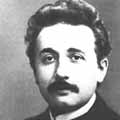 "When forced to summarize the general theory of relativity in one sentence:
Time and space and gravitation have no separate existence from matter. ... Physical objects are not in space, but these objects are spatially extended. In this way the concept 'empty space' loses its meaning. ... The particle can only appear as a limited region in space in which
the field strength or the energy density are particularly high. ...
"When forced to summarize the general theory of relativity in one sentence:
Time and space and gravitation have no separate existence from matter. ... Physical objects are not in space, but these objects are spatially extended. In this way the concept 'empty space' loses its meaning. ... The particle can only appear as a limited region in space in which
the field strength or the energy density are particularly high. ...
The free, unhampered exchange of ideas and scientific conclusions is necessary for the sound development of science, as it is in all spheres
of cultural life. ... We must not conceal from ourselves that no improvement in the present depressing situation is possible without
a severe struggle; for the handful of those who are really determined to do something is minute in comparison with the mass of the lukewarm
and the misguided. ...
Humanity is going to need a substantially new way of thinking if it is to survive!" (Albert Einstein)
 We can now deduce the most simple science theory of reality - the wave structure of matter in space. By understanding how we and everything around us are interconnected
in Space we can then deduce solutions to the fundamental problems of human knowledge in physics, philosophy, metaphysics, theology, education, health, evolution and ecology, politics and society.
We can now deduce the most simple science theory of reality - the wave structure of matter in space. By understanding how we and everything around us are interconnected
in Space we can then deduce solutions to the fundamental problems of human knowledge in physics, philosophy, metaphysics, theology, education, health, evolution and ecology, politics and society.
This is the profound new way of thinking that Einstein
realised, that we exist as spatially extended structures of the universe - the discrete and separate body an illusion. This simply confirms the
intuitions of the ancient philosophers and mystics.
Given the current censorship in physics / philosophy of science journals (based on the standard model of particle physics / big bang cosmology) the internet is the best hope for getting new knowledge
known to the world. But that depends on you, the people who care about science and society, realise the importance of truth and reality.
It is Easy to Help!
Just click on the Social Network links at top of page, or copy a nice image or quote you like and share it. We have a wonderful collection of knowledge from the greatest minds in human history, so people will appreciate your contributions. In doing this you will help a new generation of scientists see that there is a simple sensible explanation of physical reality (One Substance, One Law) - the source of truth and wisdom, the only cure for the madness of man! Thanks! Geoff Haselhurst (Updated May, 2025)
A new scientific truth does not triumph by convincing its opponents and making them see the light, but rather because its opponents eventually die, and a new generation grows up that is familiar with it. (Max Planck, 1920)
"All that is necessary for evil to succeed is for good people to do nothing."
(Edmund Burke)
"In a time of universal deceit - telling the truth is a revolutionary act."
(George Orwell)
"Hell is Truth Seen Too Late."
(Thomas Hobbes)


Legal Disclaimer and Privacy Policy
We support 'Fair Use' of these pages for Academic & Non Commercial use.
You are welcome to use images and text, but please reference them with a link to relevant web page on this site. Thanks!
