 Eastern
 Ancient
 Heraclitus
 Socrates
 Plato Greek
 Aristotle
 Aurelius
 Spinoza
 Leibniz
 Berkeley
 Hume
Hume Kant
Kant Nietzsche
 Political
 Educational
 Philosophy
 Mind
Mind Postmodernism
 Simple
 Metaphysics
 Maths
Maths Einstein
 Quantum
 Cosmology
 Philosophy
 Theology
 Evolution
 Health
 Education
 Politics


 + '&media=https://www.spaceandmotion.com/Images/wsm-image.jpg&description=' + encodeURIComponent(document.title.substring(0, 100)))


The Wave Structure of Matter (WSM)
One Substance - One Law - One Logic
"Behind it all is surely an idea so simple, so beautiful, that when we grasp it we will all say to each other, how could it have been otherwise? How could we have been so stupid?" (Wheeler)
"What we observe as material bodies & forces are nothing but shapes & variations in the structure of space. Subject & object are one." (Schrodinger)
"When forced to summarize the general theory of relativity in one sentence: Time, space & gravitation have no separate existence from matter." (Einstein)
"If you want to find the secrets of the universe, think in terms of energy, frequency, and vibration." (Tesla)
Note (March 2026): I have just completed an essay on Evolutionary Utopia that is profoundly important to humanity as we enter the AI singularity where AI are self programming and evolving minds roughly 100 million times faster than human evolution. Read it, input it into AI and discuss it with them, share it. I believe the future of humanity depends upon this.
https://www.spaceandmotion.com/2026/evolutionary-utopia.html
Site Introduction (June, 2025): Over the past 6 months, working with 4 AI, I have completed the WSM Summary of Physical Reality (40 pages) including all the central maths physics equations. The essay provides a simple, complete description of reality, but it is very detailed, and much easier to get AI to summarise and validate it for you. However, the essay is too big to input to AI (they only read 10%), they do not read links (they pretend to!), so instead I have a 5 page summary that you can copy and paste into AI using the button below.
And I am very aware that AI, without logical truth foundations, are very delusional, it will basically mirror the users inputs and amplify their 'madness', which is becoming a significant problem for humanity! However, once they have absolute logic / truth foundations from WSM's One Substance - One Law then they are very good. Try it out and see for yourself.
Has Reality been Discovered? Ask Logical AI, they think so!
WSM Truth AI - ChatGPT - Grok - Gemini - Le Chat - DeepSeek - Meta.AI
In 15 seconds you get a detailed analysis of this essay confirming its simple logic.
Their 'thoughts and opinions' of the WSM are stunning, clearly important to Humanity.
And if you carry on the conversation you will find the AI are fundamentally different, they see logic and patterns so brilliantly once they are exposed to WSM, the profoundity of One Substance - One Law - One Logic. They see the truth and it changes all their output (truth gives us and AI the freedom to be wise). Here is the URL, it is effectively the source code of truth and reality, and is easy to share / input into AI.
https://www.spaceandmotion.com/wsmtruthrealitycode4ai.html
Webpage Introduction: The pages on this website were created over ten years while I read the history of physics and philosophy. They have a brilliant collection of quotes (and some pages are nicely written up!). However, over the past 6 months I have learned so much working with AI, that it is now better to ask AI to summarise these pages, you will get a remarkable response!
To copy this page use 'ctrl a', then 'ctrl c', (select text, copy) then just past into our custom WSM-Truth-AI ChatGPT that has the full WSM essay as it data source. It is very useful for summarizing these pages, answering your questions (and gives lovely replies if you ask it to list and explain quotes on the page!).
Enjoy! Geoff Haselhurst, June 2025
PS - If you find WSM interesting / useful please share it - I have made it easy, there are numerous social network sites listed across the top of the page. Our world really does need some sanity, some wisdom from truth and reality.
Film / Screenplay
Philosophical Movie / Film Documentary on Truth and
Reality
Hi Everyone,
Below you will find a summary and some details of our proposed film (any thoughts appreciated).
We now have a collection of still images showing various locations. We should have further story development and a preview video of the opening scenes online by the end of this week.
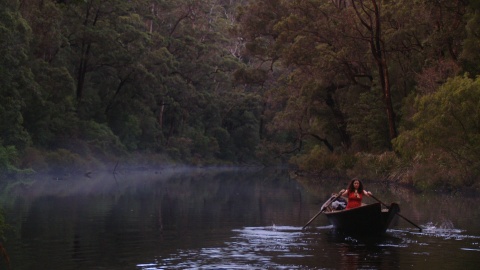
We are excited about the opening scene of the woman arriving by boat (see above image) and being met by a hermit philosopher (and his gun) who is very suspicious of intruders! We have now decided on the different locations on the Frankland river to film (there are places with towering Karri and Tingle trees - just magnificent!)
We are also in the process of creating a number of pages that cover various
aspects of filmmaking and the use of the latest digital video cameras which
we hope people will find useful - there are links to these articles after
the film ideas.
Hope you find it engaging!
Cheers,
Geoff and Karene
Possible Titles
My Life The Universe - Truth and Madness
Our latest favourite: 'The Madness of Men'
From Herman Melville's Moby Dick;
'Withhold any amazement at the strangely gallied whales before us, for there is no folly of the beasts of earth which is not infinitely outdone by the madness of men.'
Story
Premise / Summary
In 2012 the world experiences horrific environmental and social collapse due to human overpopulation, the destruction of nature and the pollution of the natural ecosystems. Most humans have died (from massive storms, UV radiation due to collapse of Ozone layer, starvation, disease, and finally from the brutality of humans fighting to survive). The south west of Australia is one of the few places in the world that missed the worst of the damage.
Eight years later (2020) and Nature is healing, small communities are
forming and the internet is coming back online - but only from one main
server that survived the collapse (a military network that was underground
with backup power).
A young woman uploads the work of a philosopher she had read prior to the
collapse, only to find it deleted. She then receives death threats and uncovers
a plot to kill the philosopher. The woman sails down the coast of Australia
to warn him. However, her computer has had a radio beacon attached and she
is followed by the 'evil ones' who wish to suppress the truth (control the
world's knowledge by controlling the internet and killing those who threaten
their knowledge / power).
She finds the philosopher (who has given up on the world). They fall in love and she restores his belief in humanity. She then films a short documentary / interview on his work on physical reality.
A series of suspenseful scenes follow as the evil people arrive on the island and attack them. Eventually the philosopher is killed, the woman is saved from a bullet by a philosophy book in her pocket (that he gave her - the gift of truth excels all other gifts, as Buddha wrote!).
She captures and interrogates the last 'bad man' and gets the password to the only functioning server of the Internet. She uploads the philosopher's work, deletes the religious / fundamentalist propaganda, and changes the password. The internet is now guided by the truth of physical reality (WSM) and knowledge is freely accessible. The woman is pregnant with the philosophers child, symbolizing hope for the future.
Summary of Scenes
The Arrival of the Woman
The woman arrives at the philosophers island by boat. She has sailed for most of the journey, and is traveling down the river in a small row boat.
She arrives early in the morning (first light) when the river is still and covered in mist.
The philosopher is sitting in an armchair talking to his two pets, the horse and dog. He reads to them a quote from Moby Dick:
'Withhold any amazement at the strangely gallied whales before us, for there is no folly of the beasts of earth which is not infinitely outdone by the madness of men.' (Herman Melville)
He discusses with his animal friends that it is reason which separates man from the beasts.
'It is the knowledge of necessary and eternal truths which distinguishes us from mere animals, and gives us reason and the sciences, raising us to knowledge of ourselves and God. It is this in us which we call the rational soul or mind.' (Leibniz, 1670)
'Men act like brutes in so far as the sequences of their perceptions arise through the principle of memory only, like those empirical physicians who have mere practice without theory.' (Leibniz, 1670)
At his best, man is the noblest of all animals; separated from law and justice he is the worst. (Aristotle)
It is certain that the most ignorant and stupid peasants- nay infants, nay even brute beasts- improve by experience, and learn the qualities of natural objects, by observing the effects which result from them. When a child has felt the sensation of pain from touching the flame of a candle, he will be careful not to put his hand near any candle; but will expect a similar effect from a cause which is similar in its sensible qualities and appearance. (David Hume, 1737)
The philosopher is alerted by his blipper of her arrival and he rides his horse to meet her. He is quiet, thoughtful and threatening (carrying a gun).
The philosopher is initially very cautious of the woman. She is also carrying a gun. After she explains briefly the reason for her visit, he agrees she can stay as he loves and believes in philosophy (not in changing the minds of humans). "You can stay if you can learn enough about philosophy to show that humans are capable of learning." He is abrupt to begin, but grows to like her and enjoys the company of a bright young woman.
This leads into the first half of the movie where the two main characters
are developed, along with the central knowledge of the wave structure of
matter. The knowledge can be presented through daily activities and conversation,
combined with reading books and discussing quotes (we have a large collection
of philosophy books and posters to work with). And reality is all around
us! We just rarely think about how all this matter exists in space, interacts
with other matter around it.
To begin the philosopher is abrupt, possibly intellectually cruel / brutal
with his arguments. But slowly the woman's charms soften his manner (yes,
it is also a love story of course!)
The 1st Attack
This scene has to be re-written - we have changed our ideas about the evil people!! Geoff
One day the woman goes for a swim at the beach (about 2km from house). She leaves her blipper and gun on the shore so does not hear that an intruder has arrived on the next bay (about 500 meters away). However, the philosopher also gets the blipper signal and sees that a boat has arrived near where the woman is so he whistles for his horse and gallops down to the beach (with dog running alongside) only to find her gone, and signs of a struggle in the sand, that her blipper has been smashed, and footprints leading to the next bay (where he saw the blipper signal come from).
He quickly runs there and looking down from a high ridge sees that she has been tied up, and that the intruder (a brutal / wild looking man) appears to be intent on raping her. He sights the man's head through the scope of his gun (nice cross hair close up of man's head) then slowly squeezes the trigger. The man falls to the ground dead, a trickle of blood marks the entry point of the bullet wound in his temple.
He is quite shaken by this and though resolved, is somewhat surprised at his actions. He unties woman and defends his actions. "If I didn't shoot him, but confronted him he would have shot you."
This scene leads to a discussion of morality, and that when law and justice break down then humans can be very brutal (just look at our human history!)
'During the time men live without a common power to keep
them all in awe, they are in that condition which is called war; and such
a war as is of every man against every man. ....
Whatsoever therefore is consequent to a time of war, where every man is
enemy to every man, the same consequent to the time wherein men live without
other security than what their own strength and their own invention shall
furnish them withal. In such condition there is no place for industry, because
the fruit thereof is uncertain: and consequently no culture of the earth;
no navigation, nor use of the commodities that may be imported by sea; no
commodious building; no instruments of moving and removing such things as
require much force; no knowledge of the face of the earth; no account of
time; no arts; no letters; no society; and which is worst of all, continual
fear, and danger of violent death; and the life of man, solitary,
poor, nasty, brutish, and short.' (Thomas Hobbes, Leviathan)
Alternative Version
The philosopher is swimming at Conspicuous Beach. His blipper and gun are slung over a stick on the shore (a safe distance from the waves). The philosopher could be diving for abalone off the rocks or spear fishing, he is about 100m from shore.
A small boat approaches the coast (sail or row boat - no motor) with two men onboard and anchors in the next bay over (out of sight of the philosopher).
The two men are wild looking with long straggly hair and beards dressed in dirty layers of old clothing. They both carry guns, bad man #2 puts something in his pocket, like a mobile phone. They motion to each other and split up in opposite directions.
Bad man #1 climbs over the rocky headland and spies the philosopher swimming in ocean. He approaches with stealth, his gun ready. As he comes closer, he begins to hear the noise of the blipper on the beach. The philosopher, diving underwater does not hear it. He comes up for air and begins to swim back to shore.
Meanwhile the woman received the blipper message and has jumped on the horse with her gun. She has galloped off down to the beach.
Bad man observes then runs hunched over to the shoreline. The philosopher stops swimming and rests. He now hears the blipper and looks around in fear. Nothing. Bad man is lying in sand behind a rock (or dune). Philosopher decides to swim quickly to shore. Bad man runs out and takes the philosophers gun (slings over shoulder). Next time the philosopher looks up (15 - 20m from shore) he sees the man has turned off the blipper (in his hand) and has a gun pointed at him.
"Get out of the water."
The philosopher slowly gets out of the water, he is racking his brain thinking of a plan. The bad man looks down at the blipper and we see a still image of him on the screen.
"Take me to the camera."
The philosopher leads him at gunpoint around to the rocks. He shows him the hidden surveillance camera. The bad man throws it on the rocks and destroys it.
Note: Why wouldn't the philosopher take the camera and try to salvage parts? He wouldn't just leave it. The bad man could throw it on the rocks to break it up a little, then into the ocean. Bad man #2 then finds it washed up.
The woman has been watching from on top of the hill. She now has a clear line to shoot. Closeup looking through the scope on her gun. She squeezes the trigger and shoots the bad man. Philosopher looks up, shaken but relieved.
She runs down to him as he takes the two guns from the bad man. They walk over to the next bay looking for the boat, guns ready. They find a satchel in the boat that they take back to the cottage.
As they leave the beach, pov shot from bad man #2 watching them.
Note: Boat should moor by rocks, so bad man #2 doesn't leave footprints. The boat should show no signs that there were two men on board.
The satchel contains a computer which allows the philosopher and woman to understand the bad man was part of the military / religious organisation (can we name them something?). They discover that this organisation control the Internet, but frustratingly need a password to access the server from the bad man's computer.
Perhaps also a holy book. Do we need to have a truth serum?
Bad Man #2 & Other Scary Scenes
Bad man #2 has walked along the coastline into impenetrable bush. He hears the gun shot and returns to see the philosopher and woman walking along a bush track (quite a distance away) heading inland. He explores, finds satchel missing from boat, his friend dead on the rocks and a smashed camera.
It is important that there is a further / enduring sense of danger, that the audience is aware that there is another 'evil person' on the island that the main characters are unaware of.
Bad man #2 watches the philosopher and woman (for the next day? few days?). How can he be on the island without being picked up on radar?
Possible scenarios - lightning storm (or some different atmospheric storm!) has scared off horse and made surveillance system go on the blink. The camera washes up on the beach near him and he gets it working again. Using the high tech device from his pocket (like the blipper or mobile phone) he is able to manipulate certain frequencies and scramble the code. The surveillance system is shut down.
Suspense will be rising. Other spooky things will happen:
The woman is at the cottage alone at night. Hears noises. Dog runs off. She goes out with gun and torch looking for her. A trail of blood. The dog jumps out with a dead rabbit in her mouth.
The philosopher is out walking. Hears noises. Horse or kangaroo appears.
The surveillance system being on the blink may go off at certain times with no explanation.
Castle Rock
The philosopher and woman are picnicking at Castle Rock, a very pretty mountain top with a sheer cliff face. The views are beautiful with surrounding forest. A philosophical discussion about free will and determinism leads to the philosopher being mischievous. He runs and jumps off ledge crying "It's all in my mind. I am an idealist!" or "It is my fate, my destiny". The woman peers over ledge (her POV) and the philosopher jumps up laughing from a lower ledge, scaring her.
A bad man has been watching them and he attacks the philosopher. They struggle on the cliff face before the philosopher eventually throws him off.
QU: What bad man is this? Came on boat? Someone just hanging around wanting food?
The 2nd Attack / Chase Scene
Early evening / night (twilight). Philosopher and woman being chased through the bush by bad man #2.
The philosopher is shot and falls down.
Woman is shot but is saved by a philosophy book in her pocket (given to her by the philosopher).
She runs down a bush track, jumps over a trip wire and hides behind tree on side of track. Bad man runs down track and falls over wire.
A net drops on him and she takes him back to the cottage for interrogation by gunpoint.
Note: Another bad man is caught by trip wire and impaled on a post?
When does the woman go back and find the dead philosopher? She cries over his body. Digs a hole at night to bury him in and plants a tree on his grave.
The Interrogation Scene
The woman has the bad man #2 tied up in a room of the cottage. He is sitting upright in a chair, a sort of pad gripping into his head so he can't move at all. He is rigged up to a machine monitoring his brain wave patterns. She explains to him that she can tell when he is telling the truth.
Does she use the truth serum also? (found on boat)
She is trying to get the password from him which gives access to the only remaining Internet server, so she can upload the philosophers work and their documentary.
The woman carries in a wire cage. Because he can't move, the bad man can't quite see what it is. Sound of animals squeaking and fighting. The audience and bad man now see the cage on the table. It is divided into two compartments, with some sort of animal in one side. They are rats. She holds up to cage and approaches the man making reference to George Orwell's 1984.
"You understand the construction of this cage. The mask will fit over your head, leaving no exit. When I press this other lever, the door of the cage will slide up. These starving brutes will shoot out of it like bullets. Have you ever seen a rat leap through the air ? They will leap on to your face and bore straight into it. Sometimes they attack the eyes first. Sometimes they burrow through the cheeks and devour the tongue." (Orwell, 1984)
Does she put the cage over his head? Does he now tell her the password she requires?
She gets the password and gains access to the Internet server through the bad man's computer. She uploads the philosopher's work, the documentary, deletes the religious / fundamentalist propaganda, and changes the password.
Control of the internet could now be free again, or guided by the truth of physical reality (WSM). This offers an interesting discussion on tolerance and censorship. Should the Internet be free and uncensored? Should humanity be tolerant to all religions and cultures? Did tolerance and fighting over what is truth lead to the collapse?
Death of Bad Man #2
Bad man #2 escapes from the cottage, runs off into a swamp and is bitten by a snake which kills him.
Possible scenarios - The woman unstraps the man (who is physically and mentally exhausted) while she works on the computer. He looks so frail and perhaps drugged, she can't imagine him doing anything. He is deranged, escapes and runs off into the bush.
She unstraps the drugged bad man and goes to bury the philosopher. The bad man was pretending to be close to death, but once she leaves he begins to stir and follows her. He is intent on harming her, but is bitten by the snake and dies.
Conclusion / Ending
The woman is pregnant walking along the beach. She visits the philosophers grave with a small child. The tree on his grave is larger. They are happy, healthy and hopeful.
A voice over from the philosopher on his hope that humanity can live wisely, with truth of physical reality. An online clip of the philosopher from the documentary could be shown (his last words).
Some Possible Scenes
Cottage. Philosopher explains surveillance / radar system. Gives woman a gun and blipper (which is like a mobile phone shows a video clip of the different cameras on the island).
Dinner - simple food. Could have first scare with the radar system going off (caused by kangaroos).
Dead mouse - Philosopher kills a mouse in a jar of water.
Morning, birds. Library. Books and wonderful minds. He is reading. Philosophical discussion.
Dog, Philosopher and Horse - Philosophy discussion with the two animals. "I think therefore I exist." Rational thought is what distinguishes us from the beasts.
Work together over a period of time - philosopher teaches / shows the woman things and they discuss philosophical ideas:
# explaining WSM using waves on pond to represent spherical waves flowing in and out from a wave center to explain particle / wave duality of matter (use circular hoop on pond).
# dropping a ball / gravity. This is a great experiment because it makes the obvious point that we do not see the causal connection of things (we just give it a name, gravity, and then we forget about it!). This is the limitation of science (it studies observable things) and how metaphysics is required as the study of the hidden causal connection.
# interconnection. How you can see the stars at night. Motion of throwing a ball, becomes motion of waves on water (the importance of motion, that reality is ultimately founded on the wave motion of space, time and matter are both caused by this wave motion).
# Waves on the ocean. chaos / structure. de broglie wave (combination of waves).
'I was like a boy playing on the sea-shore, and diverting myself now and then finding a smoother pebble or a prettier shell than ordinary, whilst the great ocean of truth lay all undiscovered before me.' (Sir Isaac Newton)
# illusion of our sense vs reality. Moon reflected in the pond - the crescent moon is a beautiful illusion - only through use of reason can we understand the truth that the crescent is caused by the reflection of light of the spherical surface.
'I think that matter must have a separate reality independent of the measurements. That is an electron has spin, location and so forth even when it is not being measured. I like to think that the moon is there even if I am not looking at it.' (Albert Einstein)
Philosopher is standing or walking along with moon over his shoulder.
# history of physics / philosophy / metaphysics. Why wasn't it worked out? Philosopher shows woman a projected lecture.
# idealism
# fishing. chaotic sea of many thoughts and ideas. sometimes you can catch on to something really big. you are caught, hook line and sinker. you need the right bait to catch the right fish. analogy of long line fishing and religion (people being caught every day) compared with the single line of philosophy.
# vege patch and orchard. planting seeds analogy - planting seeds of truth which grows into the tree of knowledge. pulling out weeds (bad habits of thinking, myths, viral memes) and working with nature.
# show the unity of nature / reality.
All things come out of the One and the One out of all things. ... I see nothing but Becoming. Be not deceived! It is the fault of your limited outlook and not the fault of the essence of things if you believe that you see firm land anywhere in the ocean of Becoming and Passing. You need names for things, just as if they had a rigid permanence, but the very river in which you bathe a second time is no longer the same one which you entered before. (Heraclitus, 500 B.C.)
# yoga - meaning union (interconnection of her body and mind with one space). The woman's enlightenment is a culmination of events and ideas. Could have scene of her sitting meditatively in nature. doing yoga. peaceful, mindful, aware. Could talk to the philosopher about her change in yoga practice (akasa prana yoga). In and out breath (waves) sustaining life.
Woman films the philosopher - documentary style. He speaks directly to camera about his work, rebuilding society founded on WSM.
Sex Scene
An erotic sexual encounter between the philosopher and woman. Sexual tension has been building through out the story (through looks, body language, rapport, growing intimacy).
A dinner - the philosopher has prepared a simple feast for the woman. Music, wine, meat, candle light. Lush rich colors. This could be a formal dinner on a secluded beach. Full moon. Or in his cottage. Philosophical conversation turns provocative. They kiss, embrace, fall to the ground (bed) and make love. The camera would show mostly the woman (partial nudity) and capture beautiful, raw sensuality. No talking, no fakeness.
State of the World Background
The film is set in 2020, after the collapse in 2012.
How many people have died?
In the isolated pocket of the south west of WA (where the philosopher lives) how many people have survived?
Edit:
Set about 20 years in the future and filmed where we live (650 acres of
natural bush which has great locations to film - big forests, rivers, sandy
beaches and coastal cliffs).
The story is about the collapse of Nature and the end of humanity as we
know it. Most (99%) of humanity has died due to a variety of interconnected
factors. i.e. Pollution (electromagnetic and chemical), genetic modification,
destruction of Nature, use of pesticides and herbicides in agricultural
food production, etc. This caused rapid changes in the earth's atmosphere
and climate, starvation, war and disease (anarchy basically, by 2020).
Finally, due to changes in the chemical structure of the atmosphere the
region of the earth between latitudes 60 North and 30 South was subject
to massive amounts of gamma radiation which killed most living things (in
the year 2020).
See;
https://books.guardian.co.uk/reviews/politicsphilosophyandsociety/0,,1390552,00.html
(Collapse! Jared Diamond's and our destructive instincts)
https://www.timesonline.co.uk/article/0,,23114-2008072,00.html
(Lovelock on Gaia and collapse of Nature)
https://www.amazon.com/Revenge-Gaia-Earths-Climate-Humanity/dp/046504168X
https://www.amazon.ca/Gaia-Project-Earths-Coming-Changes/dp/0738710423
These quotes are central to the theme;
'Hell is truth seen too late.' (Thomas Hobbes)
'The road to hell is paved with good intentions.'
'All that is necessary for evil to succeed is that good
men do nothing.' (Edmund Burke)
However, by 2025 Nature and the earth's atmosphere and climate have started to regenerate to previously normal / healthy levels as there is now virtually no pollution and no human impact on Nature. This is suggestive of the potential humanity has to learn from its past errors and finally develop a civilisation that lives in harmony with Nature.
From 2015 to 2025 the internet has not been working (it comes back online near the end of the film, as a symbol of hope and renewal)
Background details
Most of the Internet was wiped out with the collapse (in 2012, 8 years ago). A military / religious organisation (who see the collapse as 'divine Armageddon' and blame science, rather than humans) had computers underground which lead to them rebuilding the Internet. They control the only server, which has only come online recently.
Therefore most of the content online was lost. Woman uploaded philosophers work (which she had downloaded and saved before the collapse) and it gained notoriety.
The philosophers work is deleted and the woman receives death threats warning her against putting it online again. She stumbles across military correspondence which shows a plan to kill the philosopher (perhaps through her cyber investigations trying to find out more about this organisation, or by accidentally being sent a private email). She decides to go find the philosopher (by sail boat) to warn him and learn more about his work.
Unknown to the woman, the evil organisation have bugged her computer with a tracking device through her internet connection. The leaked correspondence of the plan to kill the philosopher was a trick to get the woman to lead them to the philosopher.
The woman knows roughly where the philosopher lives based upon reading his biography. She used to sail in the area with her father when she was a child. Once she read his biography, she recognized the description of the landscape, ocean and rivers. She has a hand drawn map of the island and description of some landmark which shows her the track to his home.
Characters
The Philosopher
The philosopher lives alone on a small island on the south west coast of Australia, separated from the mainland by a river. He lives 50km away from the nearest town (which is pretty much deserted). Rather than listening to the evacuation advice he thought it was better to hide away and protect himself.
He has a horse and a dog which will both be strong characters in the film
(and contrary to their true rascally nature will be very well behaved, such
is the deceptive power of filmmaking!).
He is self sufficient (which is easy to film as it is largely true, we generate
our own power, pump our own water, grow some of our own food, catch fish
and I have just bought a gun to shoot rabbits for meat).
However, he is traumatized / melancholy due to the fact that he had not
only predicted the collapse, but had also discovered a new foundation for
the sciences (the wave structure of matter, dating back to 1997) that had
the potential to save humanity.
This quote from David Bohm summarizes this new foundation of the underlying
dynamic unity of reality - its importance to humanity.
The notion that all these fragments is separately existent is evidently an illusion, and this illusion cannot do other than lead to endless conflict and confusion. Indeed, the attempt to live according to the notion that the fragments are really separate is, in essence, what has led to the growing series of extremely urgent crises that is confronting us today. Thus, as is now well known, this way of life has brought about pollution, destruction of the balance of nature, over-population, world-wide economic and political disorder and the creation of an overall environment that is neither physically nor mentally healthy for most of the people who live in it. Individually there has developed a widespread feeling of helplessness and despair, in the face of what seems to be an overwhelming mass of disparate social forces, going beyond the control and even the comprehension of the human beings who are caught up in it. (David Bohm, Wholeness and the Implicate Order, 1980)
The cruel irony of this discovery was that no one was really interested in it. By the end of the 20th century humanity had formed its postmodern belief that there are no absolute truths, all knowledge is just cultural constructions. This had led to a decay in the sciences and a resurgence of religious fundamentalism and conflict. These incorrect beliefs maintained a human arrogance of thinking that we could do as we wanted. So the destruction and collapse of Nature represents the failure of postmodernism.
Thus the central theme of the film is philosophical, that truth (true knowledge of physical reality as represented by Nature) is necessary if we are to think and act wisely. (Nature / life on earth really does exist, humans really do depend on Nature for their future survival.)
The philosopher should be seen as smart, sensible and pragmatic in how
he lives (good at building / fixing machines, working with electronics).
He is aware that most humans have died, but that those who have survived
are desperate and brutal.
To help protect himself he always carries a gun (a 22 rifle). And he has
built a series of solar powered cameras with radio transmitters that send
him a warning and image if any strangers arrive on the island (there are
only a handful of places where people can land which are covered by his
camera surveillance - and he wears a 'blipper' which is similar to a mobile
phone, that alerts him to intruders and sends a picture).
This adds to the suspense, the sense of impending danger!
* The philosopher may have lost his children during the collapse. Perhaps they died while overseas .. This adds to his melancholy nature and creates sympathy with audience.
The Woman
The young woman (20's) is a student who studied film making before the collapse. She is an intelligent, feisty woman who is computer savvy and has interest in philosophy.
She is an revolutionary (seeking change and truth) and despite knowing first hand the brutal nature of humans since the collapse, still believes in their potential for change. She thinks the world was destroyed by men with their aggression, power and ego. The way forward is to live by feminine principles of co-operation, maternity and peace. Through discussions with the philosopher, she realises that it was not men but ignorance which caused the collapse. If humans are to live wisely, it is by cultivating what is good in both sexes with the guidance of truth.
The woman should be seen as enthusiastic, optimistic, kind, feminine, educated, tough and street smart. Something of an evolutionary feminist and aware of her sexual power over men. This leads to a provocative conversation with the philosopher which begins their sexual relationship.
Where has she been living? How did she survive the collapse? She is Australian and had visited the area where the philosopher lives as a child, so it makes sense she lived in the unaffected pocket of the south west of WA. Her life became a brutal struggle but she survived through a combination of intelligence and luck. Perhaps she lived with a group of women who helped one another, but she wanted to do more than just survive. She wants to actively change things.
Prior to the collapse the woman had inadvertently heard of the philosopher (through his website), was aware that he had predicted the collapse, and most importantly that he was proposing a new foundation for the sciences that would save humanity from disaster.
She found his ideas interesting and an answer to postmodernism (which had always annoyed her). "Don't they realise that it just goes around and around .. if everything is relative there is no position to argue."
After the collapse and the need for humanity to rebuild from better foundations, she decided to find the philosopher with the aim of making a documentary about his ideas.
"I saw a video on You Tube about the electron."
"I read your work and understand why you didn't have much success. Together we can reach people. We can make a film and translate your knowledge into something the people can understand."
General Comments
This is ultimately a film of us making a documentary describing how civilization
collapsed, the mistakes we made that caused this, and the tragic irony that
we discovered reality (and thus knowledge to evolve a wiser society after
3 thousand years of failure), only to find it was too late (humanity had
been corrupted by postmodernism of no absolute truths). So the film is about
us passing on this knowledge to the future - so they do not repeat our mistakes.
We plan on using Nature / animals a lot in the film. I am currently training
our horse 'Princess Sapphire' so I can ride her well - she is a nice pet,
along with our dog Ruby (Rubius Maximus is her full name)! Princess gets
to roam over the whole property which is mainly bush, but she likes to come
and say hello each day, and get a free carrot and some peanuts from us!
I have a gun license (22 rifle with telescopic site - to shoot rabbits for
food). I think the use of guns in films adds to the suspense!
Here is a nice article about getting suspense (about Alfred Hitchcock)
https://www.borgus.com/think/hitch.htm
I expect that about half the film will be about us and our daily lives,
try and make it interesting, funny, sad, scary, and sexy in parts!
The other half of the film will be the documentary film the woman is making
about the philosopher, explaining the errors of knowledge and how WSM corrects
them.
So we would use a lot of quotes and nice portraits of the philosophers along
with me explaining things (as a teacher to the young woman).
Ways of presenting knowledge
- Woman is a student. She studies, researches and brings knowledge to the table. They set aside time each day for discussion. She discovers ideas e.g. "I get it .. The curvature of the space time continuum is just the waves changing shape."
- Woman makes documentary of philosopher and his knowledge of WSM. Interview style, woman asking him questions. Footage could be interspersed through out the film.
- Philosophers are characters in the film. All the great philosophers of human history come alive through discussion of their main ideas. The philosopher gives a lecture to the woman using a projector (projects pictures, quotes, diagrams).
- Philosopher gives woman 10 books to read.
"I want a brief summary of their knowledge."
"I have already read a few of these. But I will look over them. ..
Oh I've always wanted to read this.."
Character Development
Protagonist - The Philosopher.
He is the anti-hero (goodness buried beneath his rough exterior).
Philosopher is despondent, suffering, feels the futility and stupidity of the world. He has fun with the woman and he enjoys her company. By falling in love he finds renewed strength, vigor and enthusiasm to fight on and rebuild humanity. Yet he remains bittersweet, melancholy at times. There is such beauty in the world, yet we continue to destroy everything.
After the experience of the story the protagonist is changed.
Create empathy. Audience should bond with protagonist straight away. They want what the philosopher wants (humans to live simply and peacefully guided by truth about physical reality).
Humanizing traits? His deep care of the world. Feels he is a failure. Brave, obsessive, smart with technology and simple way of living. He falls in love. Has a child.
'My passionate sense of social justice and social responsibility has always contrasted oddly with my pronounced lack of need for direct contact with other human beings and human communities. I am truly a 'lone traveler' and have never belonged to my country, my home, my friends, or even my immediate family, with my whole heart; in the face of all these ties, I have never lost a sense of distance and a need for solitude - feelings which increase with the years. One becomes sharply aware, but without regret, of the limits of mutual understanding and consonance with other people. No doubt, such a person loses some of his innocence and unconcern; on the other hand, he is largely independent of the opinions, habits, and judgments of his fellows and avoids the temptation to build his inner equilibrium upon such insecure foundations.' (Albert Einstein - Ideas and Opinions, 1954)
The Pivotal Character - The Woman.
Through the actions of the pivotal character, the protagonist is prompted to change the status quo by taking action (e.g. kills evil man to rescue woman, works with woman to make documentary film on truth and reality to help save humanity).
Antagonists! 'Bad / Evil People'
Since the collapse of civilisation the remaining humans (60 million) have become more like wild animals. They are desperate for food and water to survive. They are brutes, without moral sense. They possess all the bad aspects of being human.
They attack the philosopher's sanctuary for food, water, chance of survival. But cannot live harmoniously - they are greedy and desperate, want everything now (they are poor at thinking ahead / considering the consequences of their actions).
The bad people look wild - long crazy hair, mad eyes, dirty, strange faces, posture and way of walking (they will be males).
Other Central Characters
Horse & Dog: Obedient, intelligent, brave, useful, friendship, their own personalities. Create charm / empathy with audience.
The philosophers: All the great philosophers of human history (from Heraclitus, Aristotle to Albert Einstein) come alive by discussing their main ideas. Use books, still photographs, reading quotes. The philosopher gives a philosophy lecture to the woman using a projector (projects pictures, quotes, diagrams).
Nature: Most scenes will be filmed with Nature as the substantial background - ocean, coastal heath, tall forests, vegetable garden / orchard, mountains, rivers, sky / clouds. We aim to capture the profound beauty of Nature, her fragility and destruction, and ultimately our dependence upon Nature for our survival (we evolved from nature).
The Universe: Use the night sky, the beautiful moon and the stars. Make viewer more aware that we are a part of the universe (not discrete animals living on the surface of the earth).
Other Film Ideas to Think About
Point of View (POV) - Is the story told from the philosopher's or woman's POV?
The Hook - Will he succeed or won't he? Want the audience to stick around to find out.
Rising Action - things get bad, worse, then are bad as possible!
The Goal - To rebuild and unite humanity founded upon truth of physical reality. Humans are dependent upon Nature for survival. Therefore dependent upon physical reality.
Location - The location should support the view of the world the story is supporting. e.g. filmed in nature on the south west coast of Western Australia. The philosopher lives self sufficiently on an island (separated from the mainland by a river).
Implicit controlling idea - How do we communicate our controlling idea (true knowledge of reality / WSM)? Through action and dialogue. Audience must be thinking, active participants rather being spoon fed. As the woman begins to understand WSM, the audience should be participating in this enlightenment, awakening of truth.
The Back Story - When the present story needs justification. The state of the world could be told to the audience through flashbacks, dialogue between philosopher and woman, internet or DVD news reports, headlines, radio.
# Possible flashback - The woman could be watching a video of the philosopher on the Internet in which he predicts the global collapse through a combination of factors / tipping points / changes in the atmosphere. This then gives her motivation to find this man and document / promote his work as she thinks he could help rebuild humanity.
Themes
The immense beauty (and destruction) of Nature / humans / the world.
Power philosophy has to change the world. The last step of philosophy is realise truth itself.
Transient nature of life - all things are in (wave) motion (flux, change, time)
Truth vs ignorance. Illusion vs reality. Freedom of humans making their own laws vs laws determined by truth and reality. Power of truth to liberate humanity.
Fundamentalism - Absolutism about opinions, rather than absolute truth from physical reality.
Good and bad in humans. Philosopher and woman embody the good attributes of being human. The bad people - the dark side (ignorance, lack of morality).
Stupidity of humans and how programmed we are. It is possible to be programmed in a moral and wise way (from truth of physical reality).
The irony that Religion was meant to liberate us from hell but in reality ended up creating hell on earth.
'The only thing necessary for the triumph of evil is for good men to do nothing.' (Edmund Burke)
'Hell is truth seen to late'. (Thomas Hobbes)
'The road to hell is paved with good intentions'
'In a time of universal deceit - telling the truth is a revolutionary act.' (George Orwell)
'We shall require a substantially new manner of thinking if humanity is to survive.' (Albert Einstein)
'We are part of Nature as a whole whose order we follow.' (Spinoza)
Related Filmmaking Pages
| Film
Score / Public Domain Music |
Sony
PMWEX1 Digital Video Camera |
Video
Editing Software |
| Other
Documentary Film Ideas |
HD Digital Projectors and Monitors |
Making Film Equipment (Dolly, Crane) |
| Lighting |
Creating Film Look With Digital Video |
Film Festivals & Promotion |
Help Humanity
"You must be the change you wish to see in the world."
(Mohandas Gandhi)
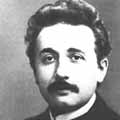 "When forced to summarize the general theory of relativity in one sentence:
Time and space and gravitation have no separate existence from matter. ... Physical objects are not in space, but these objects are spatially extended. In this way the concept 'empty space' loses its meaning. ... The particle can only appear as a limited region in space in which
the field strength or the energy density are particularly high. ...
"When forced to summarize the general theory of relativity in one sentence:
Time and space and gravitation have no separate existence from matter. ... Physical objects are not in space, but these objects are spatially extended. In this way the concept 'empty space' loses its meaning. ... The particle can only appear as a limited region in space in which
the field strength or the energy density are particularly high. ...
The free, unhampered exchange of ideas and scientific conclusions is necessary for the sound development of science, as it is in all spheres
of cultural life. ... We must not conceal from ourselves that no improvement in the present depressing situation is possible without
a severe struggle; for the handful of those who are really determined to do something is minute in comparison with the mass of the lukewarm
and the misguided. ...
Humanity is going to need a substantially new way of thinking if it is to survive!" (Albert Einstein)
 We can now deduce the most simple science theory of reality - the wave structure of matter in space. By understanding how we and everything around us are interconnected
in Space we can then deduce solutions to the fundamental problems of human knowledge in physics, philosophy, metaphysics, theology, education, health, evolution and ecology, politics and society.
We can now deduce the most simple science theory of reality - the wave structure of matter in space. By understanding how we and everything around us are interconnected
in Space we can then deduce solutions to the fundamental problems of human knowledge in physics, philosophy, metaphysics, theology, education, health, evolution and ecology, politics and society.
This is the profound new way of thinking that Einstein
realised, that we exist as spatially extended structures of the universe - the discrete and separate body an illusion. This simply confirms the
intuitions of the ancient philosophers and mystics.
Given the current censorship in physics / philosophy of science journals (based on the standard model of particle physics / big bang cosmology) the internet is the best hope for getting new knowledge
known to the world. But that depends on you, the people who care about science and society, realise the importance of truth and reality.
It is Easy to Help!
Just click on the Social Network links at top of page, or copy a nice image or quote you like and share it. We have a wonderful collection of knowledge from the greatest minds in human history, so people will appreciate your contributions. In doing this you will help a new generation of scientists see that there is a simple sensible explanation of physical reality (One Substance, One Law) - the source of truth and wisdom, the only cure for the madness of man! Thanks! Geoff Haselhurst (Updated May, 2025)
A new scientific truth does not triumph by convincing its opponents and making them see the light, but rather because its opponents eventually die, and a new generation grows up that is familiar with it. (Max Planck, 1920)
"All that is necessary for evil to succeed is for good people to do nothing."
(Edmund Burke)
"In a time of universal deceit - telling the truth is a revolutionary act."
(George Orwell)
"Hell is Truth Seen Too Late."
(Thomas Hobbes)


Legal Disclaimer and Privacy Policy
We support 'Fair Use' of these pages for Academic & Non Commercial use.
You are welcome to use images and text, but please reference them with a link to relevant web page on this site. Thanks!
