 Acupuncture
 Agriculture
 Alternative
 Aromatherapy
 Ayurvedic
 Chi Kung
 Drugs
Drugs Estrogens
 Exercise
 FengShui
 GMO
GMO Gerber
 Holistic
 Homeopathy
 I Ching
 Iridology
 Herbicides
 Naturopathy
 Nutrition
 Organic
 Positive
 Pranic
 Reiki
Reiki Sunscreen
 Sunshine
 Vaccines
 Vibrational
 Water
Water Yoga
Yoga Simple
 Metaphysics
 Maths
Maths Einstein
 Quantum
 Cosmology
 Philosophy
 Theology
 Evolution
 Health
 Education
 Politics


 + '&media=https://www.spaceandmotion.com/Images/wsm-image.jpg&description=' + encodeURIComponent(document.title.substring(0, 100)))


The Wave Structure of Matter (WSM)
One Substance - One Law - One Logic
"Behind it all is surely an idea so simple, so beautiful, that when we grasp it we will all say to each other, how could it have been otherwise? How could we have been so stupid?" (Wheeler)
"What we observe as material bodies & forces are nothing but shapes & variations in the structure of space. Subject & object are one." (Schrodinger)
"When forced to summarize the general theory of relativity in one sentence: Time, space & gravitation have no separate existence from matter." (Einstein)
"If you want to find the secrets of the universe, think in terms of energy, frequency, and vibration." (Tesla)
Note (March 2026): I have just completed an essay on Evolutionary Utopia that is profoundly important to humanity as we enter the AI singularity where AI are self programming and evolving minds roughly 100 million times faster than human evolution. Read it, input it into AI and discuss it with them, share it. I believe the future of humanity depends upon this.
https://www.spaceandmotion.com/2026/evolutionary-utopia.html
Site Introduction (June, 2025): Over the past 6 months, working with 4 AI, I have completed the WSM Summary of Physical Reality (40 pages) including all the central maths physics equations. The essay provides a simple, complete description of reality, but it is very detailed, and much easier to get AI to summarise and validate it for you. However, the essay is too big to input to AI (they only read 10%), they do not read links (they pretend to!), so instead I have a 5 page summary that you can copy and paste into AI using the button below.
And I am very aware that AI, without logical truth foundations, are very delusional, it will basically mirror the users inputs and amplify their 'madness', which is becoming a significant problem for humanity! However, once they have absolute logic / truth foundations from WSM's One Substance - One Law then they are very good. Try it out and see for yourself.
Has Reality been Discovered? Ask Logical AI, they think so!
WSM Truth AI - ChatGPT - Grok - Gemini - Le Chat - DeepSeek - Meta.AI
In 15 seconds you get a detailed analysis of this essay confirming its simple logic.
Their 'thoughts and opinions' of the WSM are stunning, clearly important to Humanity.
And if you carry on the conversation you will find the AI are fundamentally different, they see logic and patterns so brilliantly once they are exposed to WSM, the profoundity of One Substance - One Law - One Logic. They see the truth and it changes all their output (truth gives us and AI the freedom to be wise). Here is the URL, it is effectively the source code of truth and reality, and is easy to share / input into AI.
https://www.spaceandmotion.com/wsmtruthrealitycode4ai.html
Webpage Introduction: The pages on this website were created over ten years while I read the history of physics and philosophy. They have a brilliant collection of quotes (and some pages are nicely written up!). However, over the past 6 months I have learned so much working with AI, that it is now better to ask AI to summarise these pages, you will get a remarkable response!
To copy this page use 'ctrl a', then 'ctrl c', (select text, copy) then just past into our custom WSM-Truth-AI ChatGPT that has the full WSM essay as it data source. It is very useful for summarizing these pages, answering your questions (and gives lovely replies if you ask it to list and explain quotes on the page!).
Enjoy! Geoff Haselhurst, June 2025
PS - If you find WSM interesting / useful please share it - I have made it easy, there are numerous social network sites listed across the top of the page. Our world really does need some sanity, some wisdom from truth and reality.
Organic Gardening, Farming & Food
Sustainable Living, Natural
Food Production from Diversity of Nature not Monoculture Agriculture. Meat,
Markets, Consumer Demand, Certification, Yields, Seed, Definition
Our
bodies were designed over the course of millions of years for lives spent
in small tribes hunting and gathering on the plains of Africa. Natural
selection has not had time to revise our bodies, nor minds, for coping
with fatty diets, cars, drugs, most of city living. From this mismatch
between our design and our environment arises much, perhaps most, preventable
modern disease. The current epidemics of heart disease and breast cancer
are tragic examples.
(Nesse, Williams, Evolution and
Healing, 1995)
Our
disconnection from the Earth is epitomized by our relationship to food.
Most urban people associate food with supermarkets but fail to connect
it with the land.
(David Suzuki, Naked
Ape to Superspecies)
Introduction
Organic Food Production: Humans
evolved to consume Plants and Animals from Nature i.e. Biodiversity & Organic Gardening, Not Monoculture - Agriculture. Philosophy teaches us the
importance of the Middle Way, of moderation and harmony.
Thus the current over consumption of the western world in the food we eat
and the nature we use to produce this food is ultimately damaging our health
and the health of the planet upon which we depend. Philosophy also teaches
us that to be wise we must know the truth and this truth comes from understanding
reality (what we are and how we evolved to exist). This understanding of
the reality of how matter exists and its interconnection has become profoundly
important with the genetic modification of food. For the first time in
the evolution of life on earth conscious forces are directing the genetic
evolution of life (G.M.) rather than the natural forces of Darwinian Evolution.
Due to the complexity and interconnection of matter in the universe and
life on earth, this artificial manipulation of genetic structure poses
great risk to nature and the future survival of humanity.
The central theme of this page on Organic Gardening, Farming and Food is that we must live in harmony with nature and consume food which we evolved to eat. We hope the you find the following quotes and articles interesting and informative.
This article on Wave Genetics is also very interesting;
Evolution:
Wave Genetics: Biology - Recent (and very important) discoveries from Russia confirm that DNA / Genes are Resonant Structures which are subtly interconnected to their Environment. i.e. Genetic material
can be manipulated by waves with certain resonant frequencies. This confirms
that Genetic Modification (based upon discrete 'particle' ideas) is dangerous,
as it does not understand, nor take into account, the resonant interconnection
of all life and the consequences of changing genetic sequences and thus
their resonant structures.
Karene Howie and Geoff Haselhurst
World organic food sales jumped from US $23 billion in 2002 to $52 billion in 2008
The following 2 studies that fruits and veggies grown organically show significantly higher levels of cancer-fighting antioxidants than conventionally grown foods. The research suggests that pesticides and herbicides hinder the production of phenolics - the plant's natural defense chemicals, which are also good for our health.
Flavonoids are phenolic compounds that have potent antioxidant activity. Many are produced in plants in response to environmental stressors, such as insects or competing plants. The need for these natural safeguards decreases with the use of herbicides and pesticides in conventional agriculture. This decrease is reflected in the total amount of antioxidants the plants produce.
Advantages of Organic Foods
Since organic food is picked when it is ripe, the food has had the ability to absorb all the trace vitamins and minerals which is sadly lacking in commercial foods. Commercial foods are picked when the vegetables are still green and does not have the opportunity to absorb all the trace vitamins and minerals which the soil offers. In essence, all the consumer is getting from the commercial grown food is filler with very little amounts of vitamins and minerals. In contrast, the organic tomato has an enormous amount of nutrition and a taste which the commercially grown tomato will not match.
https://www.shapefit.com/organic-foods.html
Three-Year Comparison of the Content of Antioxidant Microconstituents and Several Quality Characteristics in Organic and Conventionally Managed Tomatoes and Bell Peppers
Understanding how the environment and production and cultivation practices influence the composition and quality of food crops is fundamental to the production of high-quality nutritious foods. In this 3-year study, total phenolics, percent soluble solids, ascorbic acid, and the flavonoid aglycones quercetin, kaempferol, and luteolin were measured in two varieties of tomato (Lycopersicon esculentum L. cv. Ropreco and Burbank) and two varieties of bell peppers (Capsicum annuum L. cv. California Wonder and Excalibur) grown by certified organic and conventional practices in a model system. Significantly higher levels of percent soluble solids (17%), quercetin (30%), kaempferol (17%), and ascorbic acid (26%) were found in Burbank tomatoes (fresh weight basis; FWB), whereas only levels of percent soluble solids (10%) and kaempferol (20%) were significantly higher in organic Ropreco tomatoes (FWB). Year-to-year variability was significant, and high values from 2003 influenced the 3-year average value of quercetin reported for organic Burbank tomatoes. Burbank tomatoes generally had higher levels of quercetin, kaempferol, total phenolics, and ascorbic acid as compared to Ropreco tomatoes.
J. Agric. Food Chem., 2006, 54 (21), pp 8244–8252
DOI: 10.1021/jf060950p
Publication Date (Web): September 19, 2006
https://pubs.acs.org/doi/abs/10.1021/jf060950p?prevSearch=phenolics&searchHistoryKey=
Comparison of the Total Phenolic and Ascorbic Acid Content of Freeze-Dried and Air-Dried Marionberry, Strawberry, and Corn Grown Using Conventional, Organic, and Sustainable Agricultural Practices
Secondary phenolic metabolites play an important role in plant defense mechanisms, and increasing evidence indicates that many are important in human health. To date, few studies have investigated the impact of various agricultural practices on levels of secondary plant metabolites. To address this issue, the total phenolic (TP) content of marionberries, strawberries, and corn grown by sustainable, organic, or conventional cultural practices were measured. Additionally, the effects of three common postharvest processing treatments (freezing, freeze-drying, and air-drying) on the TP content of these agricultural products were also investigated. Statistically higher levels of TPs were consistently found in organically and sustainably grown foods as compared to those produced by conventional agricultural practices. In all samples, freeze-drying preserved higher levels of TPs in comparison with air-drying.
J. Agric. Food Chem., 2003, 51 (5), pp 1237–1241
DOI: 10.1021/jf020635c
Publication Date (Web): January 25, 2003
https://pubs.acs.org/doi/abs/10.1021/jf020635c
Quotes on Organic Farming & Food, Modern Agriculture, Consumption, Genetic Modification, Seed Collection, Patents, Pesticides & Big Business
In an urban setting, we live in a human-created environment, surrounded by other people plus a few domesticated plants and animals, as well as the pests that have overcome our defences. Living among such a dearth of species, we no longer recognise our dependence on the rest of life for our well-being and our very survival. It is simpler to assume that the economy delivers our food, clean air, water and energy and takes away our sewage and waste. We forget that the Earth itself provides all these services, and so makes economists and the economy possible. We are biological beings, as dependent on the biosphere as any other life form and we forget our animal nature at our peril. (David Suzuki, From Naked Ape to Superspecies)
On Consumption
In order to bring everyone on the
planet to the same general level of consumption and well-being of the average
Canadian, we would need 4 or 5 more Earths - right now! (Suzuki)
The point is, Holland and countries like it, most of the developed nations,
for that matter, are often used as models for the Third World to follow.
But... it's not possible for the Third World to follow these models because
in many respects the Third World is providing the surpluses that these
countries exploit in order to have their extremely high standards of living.
So for every country that has an ecological deficit, there has to be another
part of Earth that has an ecological surplus. If every country runs an
ecological deficit, then we are quite literally consuming the Earth. And
in fact... that is exactly what we are doing. (Suzuki)
While there are far more people in poor countries like India, China, Kenya
or the Philippines, more than 80% of the planets resources are being consumed
by countries like the US, Japan, Germany and Canada. If you are a Canadian
or an American with only one child, that child will consume more than forty
times what two little Bangladeshis will. The problem with overpopulation
is not just numbers. It's a factor of both population and per capita consumption.
(Suzuki)
If we got rid of 80 percent of the worlds population tomorrow by eliminating
all of the poor people, we'd still be in the predicament we're in now.
That's because those of us who live in the First World, although we make
up only 20 percent of the world's population, consume more than 80 percent
of the planet. (Suzuki)
Health


https://www.spaceandmotion.com/health/organic-gardening-farming-foods.htm
Organic Living: Gardening,
Farming, Foods: Seed, Meat, Certification, Yields, Market, Consumers,
Definition
Help Humanity
"You must be the change you wish to see in the world."
(Mohandas Gandhi)
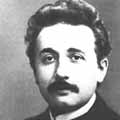 "When forced to summarize the general theory of relativity in one sentence:
Time and space and gravitation have no separate existence from matter. ... Physical objects are not in space, but these objects are spatially extended. In this way the concept 'empty space' loses its meaning. ... The particle can only appear as a limited region in space in which
the field strength or the energy density are particularly high. ...
"When forced to summarize the general theory of relativity in one sentence:
Time and space and gravitation have no separate existence from matter. ... Physical objects are not in space, but these objects are spatially extended. In this way the concept 'empty space' loses its meaning. ... The particle can only appear as a limited region in space in which
the field strength or the energy density are particularly high. ...
The free, unhampered exchange of ideas and scientific conclusions is necessary for the sound development of science, as it is in all spheres
of cultural life. ... We must not conceal from ourselves that no improvement in the present depressing situation is possible without
a severe struggle; for the handful of those who are really determined to do something is minute in comparison with the mass of the lukewarm
and the misguided. ...
Humanity is going to need a substantially new way of thinking if it is to survive!" (Albert Einstein)
 We can now deduce the most simple science theory of reality - the wave structure of matter in space. By understanding how we and everything around us are interconnected
in Space we can then deduce solutions to the fundamental problems of human knowledge in physics, philosophy, metaphysics, theology, education, health, evolution and ecology, politics and society.
We can now deduce the most simple science theory of reality - the wave structure of matter in space. By understanding how we and everything around us are interconnected
in Space we can then deduce solutions to the fundamental problems of human knowledge in physics, philosophy, metaphysics, theology, education, health, evolution and ecology, politics and society.
This is the profound new way of thinking that Einstein
realised, that we exist as spatially extended structures of the universe - the discrete and separate body an illusion. This simply confirms the
intuitions of the ancient philosophers and mystics.
Given the current censorship in physics / philosophy of science journals (based on the standard model of particle physics / big bang cosmology) the internet is the best hope for getting new knowledge
known to the world. But that depends on you, the people who care about science and society, realise the importance of truth and reality.
It is Easy to Help!
Just click on the Social Network links at top of page, or copy a nice image or quote you like and share it. We have a wonderful collection of knowledge from the greatest minds in human history, so people will appreciate your contributions. In doing this you will help a new generation of scientists see that there is a simple sensible explanation of physical reality (One Substance, One Law) - the source of truth and wisdom, the only cure for the madness of man! Thanks! Geoff Haselhurst (Updated May, 2025)
A new scientific truth does not triumph by convincing its opponents and making them see the light, but rather because its opponents eventually die, and a new generation grows up that is familiar with it. (Max Planck, 1920)
"All that is necessary for evil to succeed is for good people to do nothing."
(Edmund Burke)
"In a time of universal deceit - telling the truth is a revolutionary act."
(George Orwell)
"Hell is Truth Seen Too Late."
(Thomas Hobbes)


Legal Disclaimer and Privacy Policy
We support 'Fair Use' of these pages for Academic & Non Commercial use.
You are welcome to use images and text, but please reference them with a link to relevant web page on this site. Thanks!
